

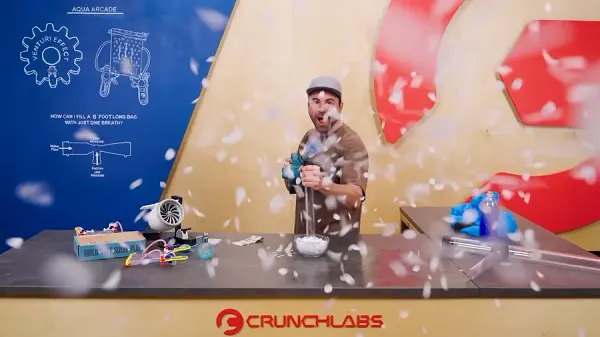
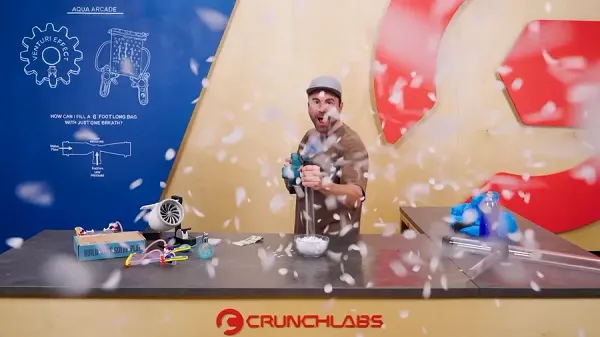
In an era where digital consumption dominates the attention spans of students, YouTube is making a definitive move to transform from a passive entertainment platform into a cornerstone of global pedagogy. The platform has officially announced a high-profile partnership with former NASA engineer and viral science communicator Mark Rober. The initiative, titled "Class CrunchLabs," aims to bring Rober’s signature brand of high-energy, hands-on scientific experimentation into the formal classroom environment, specifically targeting students in grades three through eight.
This collaboration represents a significant milestone in YouTube’s long-term strategy to curate and validate educational content, moving beyond casual hobbyist videos into a structured, curriculum-aligned academic resource.
The Genesis of Class CrunchLabs: A New Paradigm for STEM
The core of the initiative lies in the fusion of Mark Rober’s proven storytelling mechanics—which have garnered him tens of millions of subscribers—with the pedagogical rigor required for classroom instruction. By leveraging the National Science Teaching Association (NSTA) as a partner, YouTube is ensuring that the "banger" videos that define Rober’s channel are anchored in established educational standards.
The Mechanics of the Program
The curriculum is not merely a collection of videos; it is a comprehensive educational ecosystem. The program will feature:
- Hundreds of Hands-on Challenges: Interactive exercises designed to force students to apply the scientific method in real-time.
- Over 1,000 High-Engagement Videos: Content that mimics the high-production value and "hook" style of Rober’s main channel, specifically modified to maintain academic integrity.
- Multilingual Accessibility: To ensure global utility, all content will be localized into 34 different languages, reflecting YouTube’s status as a borderless educational tool.
- Timeline for Launch: The full suite of resources is scheduled for a broad release in time for the 2026 back-to-school season.
Chronology: YouTube’s Evolution Toward Educational Dominance
YouTube’s journey into the classroom did not happen overnight. It is the result of a multi-year effort to pivot the platform’s reputation from a source of distraction to a pillar of supplementary education.
- 2020–2022: The "Pandemic Pivot": As schools shifted to remote learning, YouTube became an involuntary lifeline for teachers worldwide. The platform saw an unprecedented surge in searches for "how-to" and academic content.
- June 2025: The "Player for Education" Program: YouTube launched its dedicated educational player, which allows creators to offer content without the distraction of algorithmic recommendations or advertisements. This was the first major step in monetizing and professionalizing educational content creators.
- October 2025: Data-Driven Validation: YouTube released a proprietary study highlighting the reliance of the modern classroom on the platform. The report revealed that 84% of teachers utilize YouTube in their lesson plans, while 74% of students use the site as a primary resource for self-directed learning.
- Current Day (2026): The Rober Partnership: With the announcement of Class CrunchLabs, YouTube is moving from a passive host to an active curriculum developer, signaling a move toward direct involvement in the formal education sector.
Supporting Data: Why YouTube is Essential for Modern Pedagogy
The statistics supporting this move are compelling. The modern student is a "visual learner by default." When teachers leverage video, the cognitive load of abstract concepts—such as fluid dynamics or Newtonian physics—is significantly reduced.
According to internal surveys and independent academic sentiment analysis:
- The Engagement Gap: Traditional textbooks often fail to engage students raised on short-form, high-visual-fidelity content. Rober’s videos bridge this gap by using "hook-based" learning, where a problem is presented, and the science is revealed as the solution.
- Teacher Dependence: With nearly 85% of teachers utilizing the platform, YouTube is effectively already the "unspoken curriculum" of the 21st-century classroom. By formalizing this with Class CrunchLabs, YouTube is simply providing the infrastructure that teachers have been improvising for years.
- Global Reach: The commitment to 34 languages is a strategic play to penetrate markets where high-quality STEM resources are scarce, potentially positioning YouTube as a foundational pillar for international education equity.
Official Responses and Strategic Intent
Representatives from YouTube have framed this partnership as part of a broader "Academic Mission."
"Our goal is to make YouTube a primary destination for high-quality, reliable academic content," a company spokesperson stated. "By working with innovators like Mark Rober and experts like the NSTA, we aren’t just uploading videos; we are building a library of experiences that help students think like engineers and scientists."
Mark Rober himself has long advocated for "accessible science." His background at NASA, combined with his transition to full-time content creation, has given him a unique perspective on the "missing link" in education: the failure to make science feel "cool" or relevant to everyday life. "If you can capture their imagination with a glitter bomb or a robot, you’ve earned the right to teach them the physics behind it," Rober has noted in previous interviews regarding his teaching philosophy.
Implications: The Future of EdTech
The launch of Class CrunchLabs carries profound implications for the EdTech industry, traditional textbook publishers, and the future of classroom management.
The Disruption of the Textbook Model
Traditional educational publishers may find their market share challenged by a platform that is free, high-production, and constantly updated. When a teacher can access a dynamic, interactive challenge that is aligned with NSTA standards for free, the value proposition of a static, expensive textbook diminishes significantly.

Balancing Safety and Exploration
However, the move is not without controversy. Critics have long argued that YouTube’s recommendation algorithm is designed for retention, not pedagogical value. While Class CrunchLabs will exist on a dedicated channel, the risk remains that students navigating to the platform may be steered toward "problematic rabbit holes."
YouTube has acknowledged these concerns, implementing supervisory tools and teen-focused privacy protections to mitigate the risks of harmful exposure. The challenge for the platform will be to wall off the "educational garden" from the "algorithmic jungle."
The "Creator-Educator" Hybrid
This partnership signals the rise of a new professional class: the Creator-Educator. As platforms offer more monetization pathways and institutional support, we are likely to see a migration of top-tier academic experts from universities and research labs to digital-first educational platforms. This democratization of expertise could reshape how students perceive authority and information.
Conclusion: A Turning Point for Digital Literacy
The partnership between YouTube and Mark Rober is more than just a marketing collaboration; it is a signal of the maturation of digital learning. By blending the high-energy, high-retention format of social media with the structured, rigorous standards of the NSTA, YouTube is attempting to solve the engagement crisis in STEM education.
For the student in the third grade, this may mean a more exciting science class. For the educator, it provides a powerful, free, and vetted resource that speaks the language of their students. As we look toward the 2026 launch and beyond, the success of Class CrunchLabs will serve as a bellwether for whether a social media giant can successfully pivot into the role of a trusted global educator.
While the "banger" terminology may be informal, the underlying intent is serious: to ensure that the next generation of engineers and scientists finds their inspiration not in a dusty library, but on the screen where they already spend their time. The challenge ahead lies in execution—ensuring that the content remains safe, accurate, and truly transformative. If YouTube succeeds, it will have fundamentally altered the landscape of modern education, proving that the most effective classroom is often the one where curiosity is the primary instructor.










