Ali Ikhwan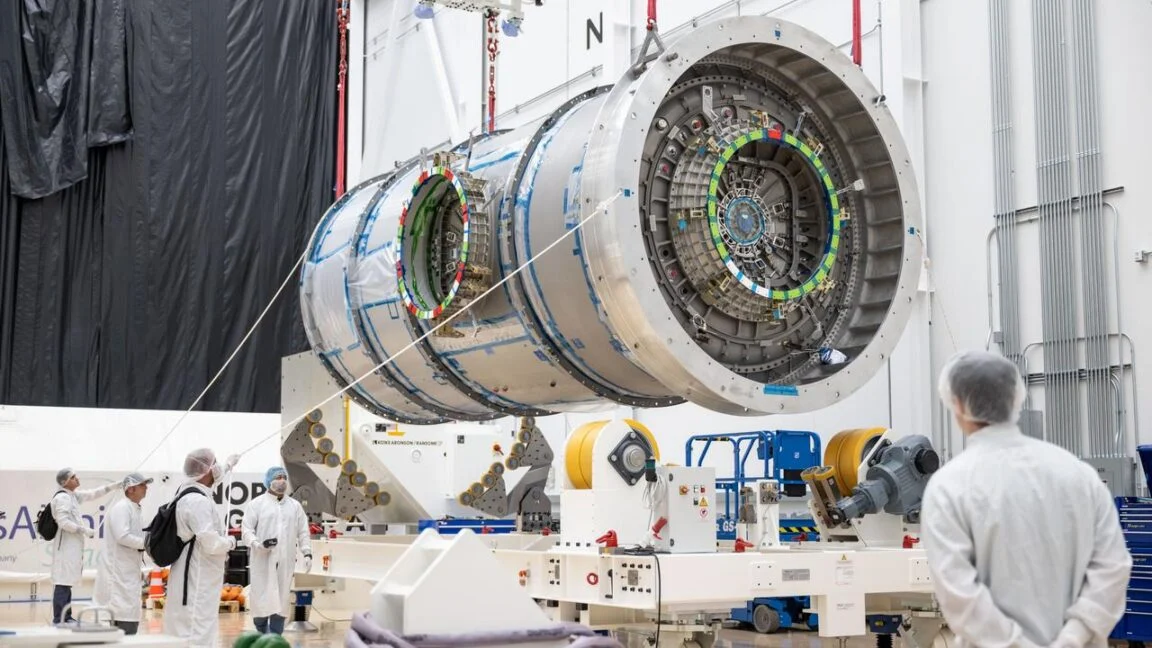
Main Facts: A Shift in Lunar Ambitions
Three months ago, NASA held a high-profile event at its Washington, D.C. headquarters that fundamentally altered the trajectory of human space exploration. The agency announced a tectonic shift in its Artemis-era lunar strategy: moving away from the "Lunar Gateway"—a planned space station to orbit the Moon—in favor of establishing a permanent, sustainable base directly on the lunar surface.
This pivot signals the effective death of the Gateway project as originally conceived. While the agency had spent years positioning the Gateway as the essential "staging ground" for lunar surface sorties and future Mars missions, the new directive prioritizes surface operations, resource utilization, and long-term habitation on the Moon itself. Consequently, the two most mature elements of the Gateway—the Power and Propulsion Element (PPE) and the Habitation and Logistics Outpost (HALO)—are being stripped of their original missions. While the PPE is slated for repurposing into a nuclear-electric propulsion testbed, the future of the HALO module has grown increasingly bleak, with recent reports indicating a total cessation of development work.
Chronology: From Orbital Hub to Surface Base
The timeline of the Lunar Gateway reflects the volatile nature of long-term government space policy.
- 2019–2021: NASA formalizes the Gateway architecture, envisioning it as a small space station orbiting the Moon. It was marketed as a "gateway" to the surface, allowing for crew transfers and extended scientific research in lunar orbit.
- 2022: Northrop Grumman secures significant contracts to design and build the HALO module, while Paragon Space Development Corp. is brought on to develop the critical Environmental Control and Life Support System (ECLSS) for the module, a contract valued at over $100 million.
- March 2026: In a sudden reversal, NASA announces at its D.C. headquarters that it is pivoting away from the orbital station concept. The agency cites the need for a more permanent, surface-focused presence. The Power and Propulsion Element is reassigned to deep-space nuclear propulsion research.
- April–May 2026: Northrop Grumman engages in intensive lobbying efforts, attempting to convince NASA leadership to integrate the already-designed HALO module into the new surface base architecture.
- June 2026: The initiative falters. Reports emerge that Paragon Space Development Corp. has been issued a "stop-work" order, effectively halting development of the life-support systems that were the heart of the HALO module.
Supporting Data: The Cost of Cancellation
The abandonment of the Gateway is not merely a policy shift; it represents a significant sunk-cost event for American taxpayers and aerospace contractors.
The financial footprint of the HALO module is substantial. NASA awarded Northrop Grumman roughly $1.1 billion for the design, integration, and construction of the 6.1-meter pressurized module. This module was designed to be the primary living quarters for astronauts, housing the life-support systems, storage, and control interfaces necessary for extended lunar missions.
The involvement of Paragon Space Development Corp. highlights the depth of the supply chain disruption. Their contract, exceeding $100 million, focused on the complex engineering required to maintain a breathable, temperature-controlled environment in the vacuum of space. By issuing a stop-work order to Paragon, NASA is signaling that it no longer sees a path forward for the specific engineering solutions developed over the last four years. When one considers the overhead, the thousands of engineering hours, and the integration tests already performed, the total value of "lost" work on the Gateway architecture likely nears the $1.5 billion mark, raising questions about NASA’s procurement and planning consistency.
Official Responses and Internal Tensions
The reaction from NASA headquarters has been carefully measured, emphasizing "strategic agility" over "cancellation." However, the friction between the agency and its contractors is palpable.
Following the March announcement, Northrop Grumman officials reportedly met with NASA administrators to explore "re-platforming" the HALO module. Their pitch was logical: since the module is pressurized and designed for habitation, it could theoretically be repurposed as a surface habitat or a logistics depot on the Moon. However, sources close to the project suggest that the structural engineering of HALO—optimized for the microgravity of lunar orbit—is ill-suited for the harsh, gravity-bearing, and dust-heavy environment of the lunar surface.
NASA has remained largely tight-lipped regarding the stop-work order issued to Paragon. In official communications, the agency continues to speak in broad strokes about "realigning resources toward surface sustainability." When pressed, a NASA spokesperson stated, "The agency is continuously evaluating its lunar architecture to ensure it aligns with the most efficient path for long-term exploration. Decisions regarding specific contracts are part of this ongoing optimization process."
Implications: What This Means for the Future
The collapse of the Gateway project carries profound implications for the Artemis program and the broader commercial space sector.
1. The Loss of the "Staging" Philosophy
For years, the Artemis program was defined by the concept of "the gateway." It was meant to serve as a hub where Orion capsules would dock, crew would acclimatize, and landers would wait. By abandoning this, NASA is moving to a "direct-to-surface" architecture. While this may shorten the timeline for boots on the ground, it eliminates the safety redundancy of having an orbital station to retreat to in the event of an aborted landing or an emergency.
2. Eroding Contractor Confidence
The suddenness with which major contracts are being terminated or redirected sends a chilling signal to the private space industry. If billion-dollar contracts can be rendered obsolete by a single policy pivot, companies may demand higher risk premiums or government-backed "termination for convenience" clauses that further inflate the cost of future missions. The loss of momentum for partners like Northrop Grumman and Paragon could lead to a brain drain, as specialized talent moves to more stable sectors of the industry.
3. The Pivot to Nuclear-Electric Propulsion
The repurposing of the Power and Propulsion Element (PPE) suggests that NASA is prioritizing Mars over the Moon in the long run. By using the PPE as a demonstrator for nuclear-electric propulsion, the agency is signaling that its ultimate objective is not just staying on the Moon, but moving through the solar system. This could be a "win" for deep-space science, but it comes at the expense of the infrastructure that was supposed to make the Moon a permanent human neighborhood.
4. The Geopolitical Race
With China and its international partners aggressively pursuing their own lunar surface base plans, NASA’s pivot is likely driven by a need for speed. An orbital station is a luxury; a surface base is a claim of territory and capability. The shift reflects a growing realization that in the new space race, possession of the lunar surface—and its water ice resources—is the primary strategic objective.
Conclusion: A New Era of Uncertainty
The decommissioning of the Lunar Gateway marks a definitive end to a specific vision of 21st-century exploration. NASA has chosen to gamble on the surface of the Moon, betting that a leaner, more direct approach will yield faster results and more tangible benefits. However, as the HALO module gathers dust in a hangar and contractors pack away their blueprints, the agency must now convince Congress and the American public that this latest pivot will not end in the same way the last one did: with a billion-dollar lesson in the volatility of space policy.
As the industry waits for the next phase of the "Moon-to-Mars" architecture, one thing is clear: the path to the Moon has never been more ambitious, yet never more precarious. The Gateway may be gone, but the ghost of its design will linger in every surface module NASA attempts to build in the years to come.


 Pevita Pearce
 Ammar Sabilarrohman