Lina Irawan
By [Your Name/Editorial Staff]
Published: August 28, 2025
The intersection of pop culture and public behavior has long been a fascination for sociologists, but rarely does a single piece of media exert such a tangible, measurable impact on a nation’s economy as the works of Ryo Tatsuki. In the wake of July 5, 2025—a date once whispered about in hushed tones across social media platforms—Japan’s tourism sector is grappling with a peculiar "hangover." Despite the predicted apocalypse failing to materialize, regional hubs like Takamatsu Airport are reporting a stubborn slump in visitor numbers, particularly from Hong Kong.
This phenomenon raises a critical question for the travel industry: How does a decades-old manga create a lasting "geopolitical anxiety" that outlives its own expiration date?
Main Facts: The Manga That Moved an Industry
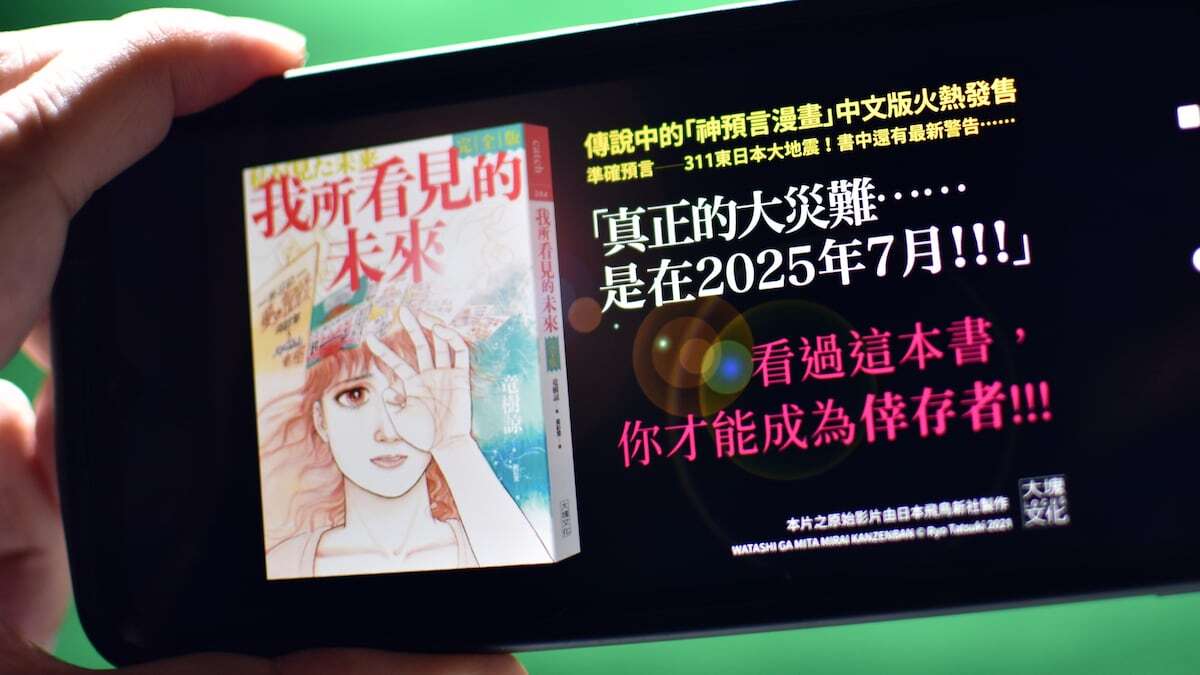
At the heart of this controversy is Watashi no Mieru Mirai (The Future as I See It), a manga originally published in 1999 by Ryo Tatsuki. The author, who claimed to have prophetic dreams, gained legendary status after her book allegedly predicted the 2011 Great East Japan Earthquake with chilling precision. However, it was her prediction for July 5, 2025, that sent shockwaves through the 2020s.
Tatsuki’s revised 2021 edition of the book specifically warned of a colossal disaster—a "Great Disaster"—occurring at 4:18 AM on July 5, 2025. She described a massive undersea explosion or earthquake in the Pacific Ocean, south of Japan, triggering tsunamis far greater than those seen in 2011, affecting Japan, Taiwan, and the Philippines.
As the date approached, the impact on tourism became quantifiable. In early 2025, travel agencies in Hong Kong reported a significant surge in cancellations for Japan-bound trips scheduled for the first week of July. While the date has now passed without the predicted cataclysm, the economic ripples continue to be felt. Recent reports from Takamatsu Airport in Kagawa Prefecture confirm that passenger loads from Hong Kong have not returned to their pre-prophecy levels, suggesting that the "fear factor" has a longer shelf life than the prophecy itself.
Chronology: From Dreams to Economic Downturn
To understand the current crisis, one must trace the timeline of Ryo Tatsuki’s influence, which spans over a quarter of a century.
1999: The Initial Publication
Ryo Tatsuki publishes Watashi no Mieru Mirai. The cover famously featured the text "Great Disaster March 2011." At the time, the book received modest attention, and Tatsuki retired from the manga industry shortly thereafter.
March 2011: The Prophecy Validated
When the 9.0 magnitude earthquake and subsequent tsunami struck the Tohoku region on March 11, 2011, internet sleuths rediscovered Tatsuki’s book. The accuracy of the date on the cover propelled the out-of-print manga to cult status, with used copies selling for thousands of dollars.
2021: The Re-emergence and the 2025 Warning
Capitalizing on the mystery, a new edition of the manga was released. In this version, Tatsuki clarified her visions, stating that her dreams had shown her a much larger disaster occurring in the summer of 2025. This sparked a viral frenzy on platforms like TikTok, YouTube, and X (formerly Twitter), particularly in East Asian territories.
January – June 2025: The Tourism Chill
As July 5 loomed, the "2025 Prophecy" became a mainstream topic in Hong Kong. Travel forums were flooded with users advising against visiting Japan during the "danger window." Regional airports in Japan, which rely heavily on direct flights from Hong Kong, began to see a dip in forward bookings.
July 5, 2025: The Non-Event
The day passed quietly. No undersea explosions occurred; no tsunamis struck the coast. For most of the world, it was a normal Saturday.
July 30, 2025: The Russian "Pivot"
A massive 8.8 magnitude earthquake struck a remote region of Russia. While geographically distant from the predicted epicenter in the Nankai Trough or the Philippine Sea, internet theorists quickly moved the goalposts. They argued that because it was a "Great Earthquake" within the same month, Tatsuki’s vision was "spiritually" or "broadly" correct. This goalpost-shifting has allowed the anxiety to persist, preventing a full recovery in tourism numbers.
Supporting Data: The Hong Kong Anomaly
The decline in tourism is not uniform across all demographics, but the drop from Hong Kong is particularly stark. Data from regional Japanese transportation authorities indicates that while Western tourism remains robust, the "superstition-sensitive" markets of East Asia are reacting differently.
Takamatsu Airport Case Study
Takamatsu Airport serves as a vital gateway for the Shikoku region. Historically, the Hong Kong-Takamatsu route has been one of its most profitable international connections. However, during a recent city council meeting in August 2025, airport officials revealed that flight occupancy from Hong Kong remains significantly below 2024 levels.
"We expected a ‘rebound effect’ once July 5 passed," an airport spokesperson noted. "Instead, we are seeing a ‘wait-and-see’ attitude. The narrative on social media has shifted from ‘the disaster is coming’ to ‘the disaster was delayed or moved,’ which continues to suppress demand."
The "Confirmation Bias" of the Russian Earthquake
The July 30 earthquake in Russia (8.8 magnitude) has played a bizarre role in the data. Search engine trends in Hong Kong for "Japan earthquake" and "Ryo Tatsuki" spiked after the Russian quake, even though the events were unrelated. This suggests that a segment of the traveling public is looking for reasons to remain cautious, fueled by the "near-miss" narrative circulating online.
Official Responses: Combating Myth with Promotion
The Japanese government and local municipalities are now tasked with a difficult PR challenge: debunking a prophecy without giving it more oxygen.
Takamatsu’s Strategic Pivot
In response to the dwindling numbers, Takamatsu Airport and Kagawa Prefecture have announced a series of "New Initiatives." These include:
- Targeted Social Media Campaigns: Partnering with Hong Kong influencers to showcase the safety and serenity of the region.
- Economic Incentives: Potential subsidies for airlines to maintain flight frequencies despite lower load factors.
- Cultural Transparency: Emphasizing Japan’s state-of-the-art early warning systems to reassure travelers that the nation is prepared for any eventuality, regardless of "prophecies."
The Skeptic’s View from Within
Not everyone in Japan blames the manga. During the SoraNews24 reportage on the airport’s struggles, local residents and economic analysts offered a more grounded perspective. One analyst noted, "The decline in tourists from China and Hong Kong isn’t just about a manga; it’s about the economic cooling of the real estate market in those regions. People have less disposable income."
However, the consensus among airport staff remains that the timing of the slump aligns too closely with the "July 5 window" to be a mere economic coincidence.
Implications: The Power of "Narrative Risk"
The Ryo Tatsuki phenomenon highlights a growing challenge in the modern travel industry: Narrative Risk. In an era of instant information, a "meme" or a "prophecy" can become a financial liability for a specific geographic location.
1. The Vulnerability of Regional Tourism
Major hubs like Tokyo and Osaka are "too big to fail" in the face of such rumors. However, regional airports like Takamatsu, which depend on a few key international routes, are highly vulnerable. A single viral trend in a key market like Hong Kong can threaten the viability of an entire flight path.
2. The Persistence of Post-Truth Superstition
The fact that the Russian earthquake is being used to "validate" a failed prophecy about Japan demonstrates the power of confirmation bias. For the tourism industry, this means that simply waiting for a "danger date" to pass is not enough. The industry must actively work to reclaim the narrative.
3. Legal and Ethical Questions
The online discourse has even touched upon the legality of such predictions. Some Japanese commenters have suggested that individuals who profit from disaster predictions—which subsequently damage local businesses—should be held liable. While the Japanese constitution protects freedom of expression, the real-world economic damage caused by "psychic" claims is sparking a debate about the responsibilities of authors and social media platforms in curbing mass hysteria.
4. A New Model for Promotion
To recover, Japan’s regional tourism boards may need to move beyond traditional "beautiful scenery" ads. They may need to adopt "psychological marketing"—directly addressing the anxieties of their target markets and providing data-driven reassurance that counters the nebulous fears of the "prophecy" community.
Conclusion: Moving Beyond the "Rearview Mirror"
As of late August 2025, July 5 is indeed in the "rearview mirror," but the shadow it cast remains long. The case of Ryo Tatsuki’s manga is a stark reminder that in the digital age, the line between fiction and financial reality is increasingly blurred. For Takamatsu Airport and the countless businesses that rely on international visitors, the goal is now to turn the page on the "Great Disaster" and convince the world that Japan’s future is not written in the dreams of a mangaka, but in the enduring hospitality and resilience of its people.
The "prophecy" failed, but the lesson remains: in the global tourism market, perception is often more powerful than reality. Japan now waits to see if the travelers from Hong Kong will finally decide that the coast is clear.


 Laily UPN
 Lina Hope