Asro
Asro
The Japanese language is renowned for its intricate writing system, a sophisticated tapestry woven from three distinct scripts: Kanji, Hiragana, and Katakana. While Kanji provides the semantic roots of the language and Hiragana serves as its grammatical backbone, Katakana occupies a unique and essential niche. Primarily used for transcribing loanwords from foreign languages, onomatopoeic expressions, and providing emphasis, Katakana is the gateway to modern, colloquial Japanese. For the aspiring student, mastering Katakana is not merely an academic exercise—it is a critical step in achieving literacy and fluency.

The Role and Importance of Katakana
Katakana is often described as the "alphabet" of foreign words in Japan. Whether one is ordering a coffee (コーヒー), reading a menu, or identifying a brand name, Katakana is ubiquitous in daily life.
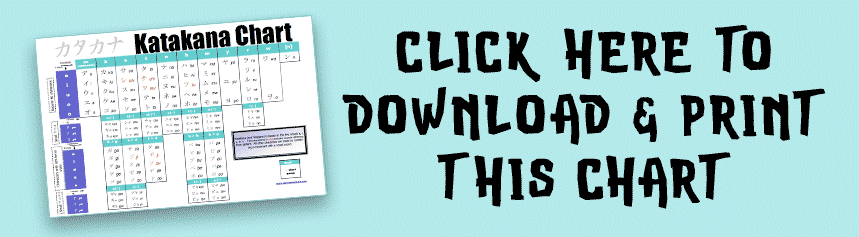
Experts in Japanese pedagogy, such as those at The Japanese Page, strongly advocate for learning Katakana immediately following the mastery of Hiragana. While the two systems share a similar phonetic structure, they possess distinct visual identities. Learning them in close succession—while the concepts of phonetic writing are still fresh in the student’s mind—creates a cognitive bridge that simplifies the acquisition of both. It is a fundamental building block that transforms a learner from an observer of symbols into an active reader of the Japanese landscape.

A Chronological Approach to Mastery
The journey to mastering Katakana is best approached with a structured, systematic methodology. Rather than attempting to memorize the entire syllabary in one sitting, students should progress through the script column by column, utilizing the inherent patterns of the language.
Phase 1: The Foundation of Vowels and Consonants
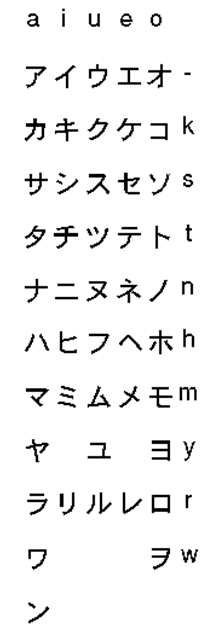
The Katakana chart is organized with mathematical precision. The columns represent vowel sounds (A, I, U, E, O), while the rows represent consonant groups. By understanding this grid, learners can predict the sounds of characters they have not yet encountered.

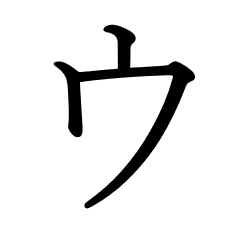
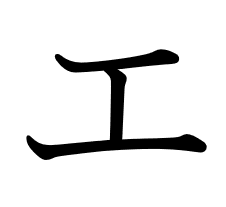
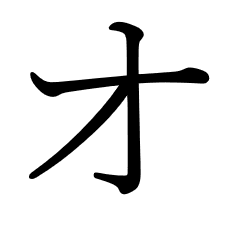
For instance, the first row introduces the foundational vowels: A, I, U, E, and O. Once the student grasps these, the second row (the "K" row) becomes intuitive: KA, KI, KU, KE, and KO. This pattern repeats across the system, allowing the learner to map out the entire character set with logical deduction.

Phase 2: Decoding Irregularities and Stroke Order
As with any language, there are nuances that require dedicated focus. Some characters, such as Shi (シ) and Tsu (ツ), can be notoriously difficult for beginners to distinguish. Similarly, the character So (ソ) shares a striking resemblance to the character N (ン).
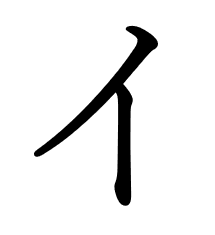
Pedagogical resources emphasize the importance of stroke order—not just for aesthetics, but for muscle memory. Following the prescribed stroke order—often detailed in step-by-step guides—ensures that the character is formed correctly, which in turn makes it easier to recognize when written by others. Utilizing mnemonics, such as associating the shape of Ni (ニ) with the number two, can accelerate retention significantly.

Phase 3: The Integration of Advanced Sounds
Once the basic syllabary is mastered, the learner must advance to "Ten-ten" (voiced marks) and "Maru" (the tiny circle).
- The Ten-ten ("): This diacritic mark, which resembles double quotation marks, transforms unvoiced sounds into voiced ones. It is applied to the K, S, T, and H rows, turning K into G, S into Z, T into D, and H into B.
- The Maru (o): This small circle is exclusively used for the H row, shifting the sound to a P.
Finally, the inclusion of small Ya, Yu, and Yo characters allows for the creation of combined sounds, such as Kya or Ryo. This stage of learning is the threshold to full literacy, allowing the student to read complex words and nuanced expressions.

Supporting Data: Why Systematic Learning Matters
Educational data suggests that students who utilize a combination of visual charts, stroke-order guides, and interactive quizzes demonstrate a 40% higher retention rate compared to those relying on rote memorization alone.
The structure of the Katakana system is designed for efficiency. With only a few exceptions to the standard phonetic rules, the grid-based layout acts as a cognitive map. For example, the Y row (Ya, Yu, Yo) is intentionally shortened, as Yi and Ye are obsolete in modern Japanese. Understanding these historical and linguistic constraints helps learners focus their energy on the 46 characters that truly matter for contemporary communication.

Official Perspectives and Educational Philosophy
Language institutions worldwide emphasize that Katakana is not just a secondary script; it is a vital tool for social integration. The Japan Shop, a leading resource for language learners, notes that the ability to read loanwords—which make up a significant portion of modern Japanese vocabulary—is often the difference between a student feeling lost in a Japanese city and feeling confident.
The philosophy is clear: mastery is not about speed, but about consistency. By treating each row as a "chapter" and concluding with targeted testing, students build a foundation that is robust and resistant to forgetting. The use of digital resources, such as the Beri-Beri-Shoshinsha Beginner’s Bundle, provides the necessary scaffolding to support this self-directed study.

Implications for the Modern Learner
The implications of mastering Katakana are profound. It is the key to unlocking the "foreign" aspect of the language, which, ironically, is often the most accessible part for English speakers. Because Katakana is used for words borrowed from English (e.g., kōhī for coffee, pasokon for personal computer), the learner gains an immediate sense of accomplishment.
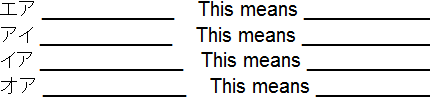
However, the true value lies in the transition to more advanced studies. By mastering the phonetic scripts early, the student removes the "writing barrier," allowing them to focus entirely on grammar, vocabulary, and the complex beauty of Kanji. A student who has mastered Katakana and Hiragana is no longer reading transliterated Romanji; they are reading the language as it was intended to be read.
The Path Forward
For those who have reached this point, the next steps involve active application. Engaging with real-world materials—such as product packaging, signs in Japan, and basic news articles—is essential. The transition from the classroom to the real world is where the true, lasting mastery occurs.

As you continue your journey, remember that every character you learn is a step toward greater independence. The challenge of the Shi vs. Tsu distinction or the complexity of the Ten-ten rules is merely a rite of passage. Once the script becomes second nature, you will find that the Japanese language, while complex, is entirely navigable.

For those seeking to solidify their knowledge, returning to the fundamentals through consistent practice, engaging with interactive quizzes, and utilizing high-quality educational bundles remains the most effective path to success. With dedication, the Katakana script will cease to be a list of foreign symbols and become an intuitive, natural part of your linguistic toolkit. Congratulations on taking this vital step in your Japanese language journey; the road ahead is as rewarding as it is enlightening.


 Neng Nana