Reynand Wu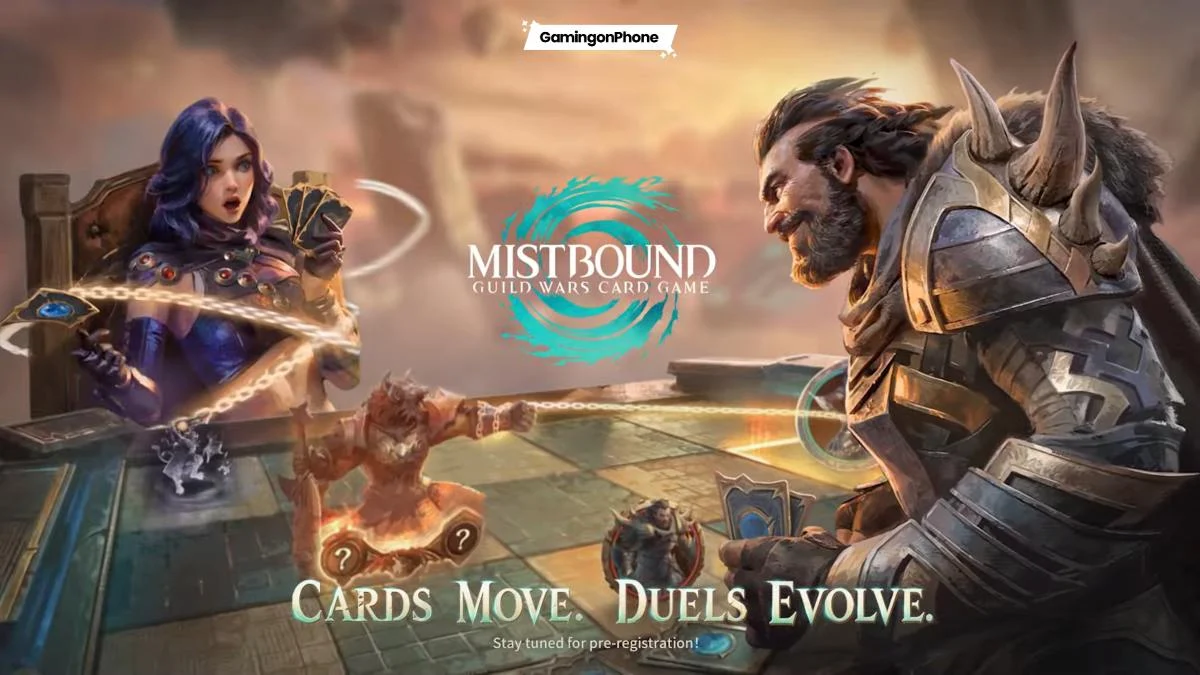
SEATTLE, WA – [Date of Article Generation] – The venerable Guild Wars universe, a cornerstone of the massively multiplayer online role-playing game (MMORPG) genre for nearly two decades, is charting a new course. ArenaNet, the acclaimed developer behind the beloved franchise, has officially unveiled MISTBOUND: Guild Wars Card Game, a strategic tactical card battler poised to transport players back to the iconic world of Tyria in a fresh, grid-based format. Developed in a collaborative effort between ArenaNet, Chinese digital giant bilibili, and NCSoft, the upcoming free-to-play title is slated for an initial launch exclusively on PC in China, with mobile platforms likely to follow and global expansion contingent on its regional reception.
This announcement marks a significant diversification for the Guild Wars intellectual property (IP), which has predominantly focused on its expansive MMORPG roots. MISTBOUND promises to weave familiar lore, characters, and classes into a new gameplay paradigm, challenging players with strategic deck building and positional tactics on a dynamic 5×3 grid battlefield. While a precise release date remains undisclosed, the revelation has ignited considerable discussion among the franchise’s dedicated fanbase and observers of the competitive digital card game market.
Main Facts: A New Chapter for Tyria
The core of the announcement centers on MISTBOUND: Guild Wars Card Game, a free-to-play tactical card battler. This new venture is a strategic collaboration involving ArenaNet, the original creators of Guild Wars; bilibili, a prominent Chinese online entertainment and gaming platform that will handle publishing duties in the region; and NCSoft, ArenaNet’s parent company and a major player in the global gaming industry. The game is designed for both PC and mobile platforms, aligning with current market trends that emphasize cross-platform accessibility and the burgeoning mobile gaming sector.
Crucially, MISTBOUND is set to embark on a "China-first" release strategy. This regional exclusivity for its initial launch is a common approach for Western developers seeking to enter or expand within the highly competitive and regulated Chinese market, often allowing for localized testing, refinement, and strategic adjustments before a potential broader rollout. The game’s setting in the Guild Wars universe ensures that players will encounter recognizable characters, iconic locations, and established lore, appealing to both long-time fans and potentially new audiences drawn by the IP’s reputation.
Chronology: The Guild Wars Legacy and Its Evolving Path
The journey of the Guild Wars franchise began in 2005 with the release of the original Guild Wars. Developed by ArenaNet, a studio founded by former Blizzard Entertainment employees, it quickly distinguished itself in the crowded MMORPG landscape with its innovative instanced gameplay, compelling narrative, and, perhaps most notably, its pioneering "buy-to-play" model that eschewed traditional monthly subscriptions. This approach garnered a loyal following, and the game received several critically acclaimed expansions, including Factions, Nightfall, and Eye of the North.
In 2012, ArenaNet launched Guild Wars 2, a highly anticipated sequel that further refined the franchise’s unique blend of action-oriented combat, dynamic event systems, and rich storytelling. Guild Wars 2 continued the "buy-to-play" model for its base game, offering content updates and expansions like Heart of Thorns, Path of Fire, End of Dragons, and Secrets of the Obscure as separate purchases. Over the years, Guild Wars 2 has maintained a robust player base, celebrated for its vibrant world of Tyria, diverse professions, and engaging player-versus-environment (PvE) and player-versus-player (PvP) content.
The announcement of MISTBOUND comes at a time when ArenaNet is actively exploring new avenues for the Guild Wars IP. Earlier reports and developments, such as the upcoming Guild Wars Reforged – another title hinted at making a mobile debut – indicate a strategic push to diversify the franchise beyond its core MMORPG experience. This expansion into different genres, particularly mobile-friendly ones, reflects a broader industry trend where established IPs are leveraged across various platforms to reach wider demographics and extend their longevity. MISTBOUND thus represents a deliberate step in this ongoing evolution, aiming to translate the strategic depth and rich lore of Tyria into a format accessible to card game enthusiasts.
Supporting Data: Unpacking MISTBOUND’s Tactical Core
MISTBOUND: Guild Wars Card Game distinguishes itself from many digital card games by integrating a tactical grid-based battlefield, moving beyond the traditional front-and-back row systems or purely abstract play spaces. Matches unfold on a 5×3 grid board, where the physical positioning of cards becomes as critical as the composition of one’s deck. This spatial element introduces a layer of strategic depth reminiscent of tactical RPGs or auto-battlers, requiring players to consider movement, range, area-of-effect abilities, and line-of-sight when deploying their units.
Players will construct decks comprised of various Squad cards, each representing units with distinct strengths, weaknesses, and strategic roles. The game draws directly from the established Guild Wars lore, allowing players to build squads using familiar classes that have defined the MMORPGs for years. These include:
- Warrior: Often serving as front-line damage dealers and tanks, Warriors in MISTBOUND are likely to focus on direct combat, high health pools, and potentially abilities that control enemy positions or enhance adjacent allies.
- Mesmer: Known for their illusions, debuffs, and control capabilities, Mesmer units could specialize in disrupting enemy formations, creating decoys, or applying powerful status effects that turn the tide of battle.
- Necromancer: Masters of death and dark arts, Necromancers might summon minions, drain life from foes, or spread conditions that slowly whittle down opponents. Their strategic value often lies in sustained pressure and board presence.
- Ranger: Experts in ranged combat and animal companions, Rangers could offer versatile damage output from a distance, utilize traps, or deploy animal companions that provide additional tactical options and board control.
Beyond these fundamental class units, MISTBOUND introduces Commander units, powerful leaders who act as the lynchpin of a player’s strategy. These Commanders possess unique passive traits and active abilities that can dramatically influence the flow of a match. Their presence on the board is designed to provide strategic direction, allowing players to build decks and tactical approaches centered around their chosen Commander’s strengths.
Adding a significant layer of fan service and lore integration, several familiar faces from the Guild Wars universe are confirmed to return as playable Commanders. These include:
- Trahearne: A prominent Sylvari character from Guild Wars 2, known for his role in the personal story and his connection to the Elder Dragon Zhaitan. As a Commander, he might embody defensive strategies, support capabilities, or abilities linked to nature and growth.
- Nika: A legendary Assassin from the original Guild Wars (specifically the Factions expansion), known for her agility and lethal strikes. Her Commander abilities could focus on high burst damage, swift repositioning, or eliminating key enemy units.
- Knut Whitebear: A respected Norn leader from Guild Wars 2, representing strength and resilience. As a Commander, he might bolster the durability of his allies, provide powerful area-of-effect buffs, or directly engage in combat with imposing force.
Each Commander is envisioned to foster different playstyles, drawing inspiration from the intricate profession systems of Guild Wars 2. This design philosophy encourages players to experiment with various Commander-led strategies, fostering replayability and catering to diverse tactical preferences. The game will offer both single-player content, likely in the form of narrative-driven campaigns or challenge modes, and robust online PvP battles, which will form the competitive core of the experience. The inclusion of PvP is particularly crucial for a free-to-play tactical card game, as it drives engagement, community building, and long-term player retention.

Official Responses: ArenaNet’s Strategic Approach and Market Intent
The official announcement from ArenaNet regarding MISTBOUND‘s launch strategy has been met with careful consideration by the Guild Wars community. The developers have explicitly stated that the game will initially debut exclusively in China, with bilibili taking on the crucial role of publisher for the region. This decision is not uncommon for Western developers looking to tap into the immense potential of the Chinese gaming market.
ArenaNet’s public statement regarding a potential global launch has been framed with caution, indicating that a broader release would be "considered in the future depending on the game’s reception" within China. This measured approach is a pragmatic one. Launching in China first allows ArenaNet and bilibili to:
- Gather Critical Data: Collect valuable feedback on gameplay mechanics, balance, monetization strategies, and server performance in a live environment.
- Adapt to Local Preferences: The Chinese gaming market has unique tastes and expectations. A regional launch allows for specific culturalizations, content adjustments, and marketing strategies tailored to local players.
- Navigate Regulatory Landscape: China has strict regulations for game releases, including content review and licensing. A focused regional launch streamlines this complex process.
- Test Monetization Models: Free-to-play games rely heavily on effective monetization. The China-first launch provides an opportunity to refine in-game purchases, battle passes, or other revenue streams before a global rollout.
The partnership with bilibili is particularly significant. bilibili is not just a publisher but a massive online platform in China, known for its video hosting, live streaming, and gaming services. Their deep understanding of the Chinese market, extensive user base, and marketing capabilities make them an ideal partner for launching a new IP in the region. NCSoft’s involvement as the parent company provides overarching strategic direction and resources, reinforcing the seriousness of this new venture.
While no global launch plans are set in stone, ArenaNet’s willingness to even "consider" it suggests optimism about MISTBOUND‘s potential beyond China. The success of Guild Wars 2 in various international markets provides a strong foundation for this new title, and a positive reception in China could pave the way for a worldwide release, potentially bringing MISTBOUND to a much wider audience of Guild Wars fans and card game enthusiasts alike.
Implications: Reshaping the Guild Wars Franchise and Market Dynamics
The announcement of MISTBOUND carries significant implications for the Guild Wars franchise, the broader digital card game market, and ArenaNet’s strategic direction.
For the Guild Wars Franchise:
- Diversification and Reach: MISTBOUND represents a crucial step in diversifying the Guild Wars IP beyond the traditional MMORPG. By entering the tactical card game genre, ArenaNet aims to attract new players who might not engage with MMORPGs but are interested in strategy games or card battlers. This expansion could introduce the rich lore of Tyria to a fresh demographic.
- Brand Extension: A successful MISTBOUND could strengthen the Guild Wars brand, demonstrating its versatility and ability to translate effectively across different game genres. It also provides an additional revenue stream and keeps the IP active and relevant between major Guild Wars 2 expansions.
- Potential for Lore Expansion: While a card game, MISTBOUND still offers opportunities to explore minor lore details, introduce new characters, or delve deeper into existing narratives through its single-player content and card art.
- Risk of Fan Alienation: Some long-time Guild Wars fans, particularly those who prefer the traditional MMORPG experience, might view this as a distraction from the core game or a "cash grab." ArenaNet will need to balance the development of MISTBOUND with continued support and content for Guild Wars 2 to maintain goodwill within its established community.
For the Digital Card Game Market:
- Competitive Landscape: The digital card game market is fiercely competitive, dominated by established giants like Hearthstone, Magic: The Gathering Arena, Legends of Runeterra, and newer entrants like Marvel Snap. MISTBOUND will need to carve out a unique niche. Its 5×3 grid system and emphasis on positional tactics could be a key differentiator, offering a strategic depth that sets it apart from more purely card-centric games.
- IP Strength: The Guild Wars IP is a significant asset. Its established lore, recognizable characters, and loyal fanbase provide a built-in audience and a narrative framework that many new card games lack. This brand recognition could help MISTBOUND stand out in a crowded market.
- Free-to-Play Monetization: As a free-to-play title, MISTBOUND will likely rely on standard monetization strategies such as selling card packs, cosmetic items (card backs, avatars), and battle passes. The fairness and generosity of its monetization model will be critical for its long-term success and player retention, especially against games known for their player-friendly economies.
For ArenaNet and NCSoft:
- Strategic Growth: This venture signifies ArenaNet’s commitment to growth and innovation beyond its flagship MMORPG. It’s an opportunity to test new game design philosophies and expand their development capabilities into different genres.
- Market Penetration: The China-first strategy, especially with bilibili as a partner, is a clear move to capture a share of the world’s largest gaming market. Success in China could be a massive boon for ArenaNet and NCSoft’s global portfolio.
- Learning and Adaptation: The phased release allows for agile development, where lessons learned from the Chinese launch can be applied to a potential global version, ensuring a more polished and market-ready product for international audiences.
The mention of Guild Wars Reforged also suggests a broader strategy to embrace mobile gaming. If MISTBOUND follows a similar trajectory and eventually arrives on mobile platforms globally, it would align with the industry’s shift towards mobile-first or cross-platform experiences, significantly expanding its potential player base.
The Road Ahead: Anticipation and Future Outlook
As MISTBOUND: Guild Wars Card Game prepares for its initial debut in China, the gaming community awaits further details. The immediate next steps will likely involve a pre-registration phase for Chinese players, followed by closed beta tests to fine-tune gameplay and gather early feedback. These tests will be crucial for identifying bugs, balancing cards, and optimizing the player experience before a full launch.
The release date, currently unannounced, will be a critical piece of information. Once launched in China, the reception there will be closely monitored by ArenaNet and NCSoft. Factors such as player engagement, community feedback, competitive scene development, and monetization performance will dictate the likelihood and timeline of a global release. Should MISTBOUND prove successful in its initial market, the development team will likely begin discussions and preparations for localizing the game for other regions, including translations, regional servers, and marketing campaigns.
Ultimately, MISTBOUND: Guild Wars Card Game represents an exciting and strategic expansion of one of gaming’s most cherished universes. It embodies ArenaNet’s ambition to innovate and diversify, bringing the rich tapestry of Tyria to a new audience through a fresh and engaging gameplay experience. While the path to global success is challenging, the strength of the Guild Wars IP, coupled with a well-executed tactical card game, holds significant promise for the future of the franchise. Fans worldwide will undoubtedly be keeping a close eye on its journey, hopeful for the day they too can step into the Mists and command their own Guild Wars legions.


 Lina Irawan
 Sagoh
Sagoh