Evan Lee Salim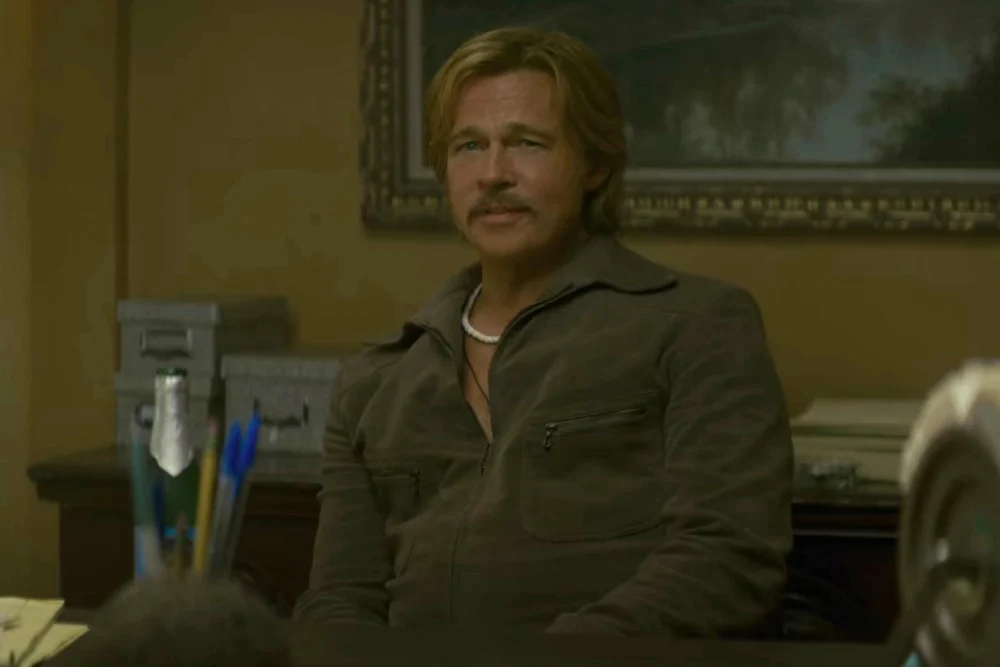
The cinematic landscape of 2025 is set to shift dramatically this winter as Netflix unveils the official trailer for The Further Mis-Adventures of Cliff Booth. The film, a highly anticipated spiritual successor to Quentin Tarantino’s 2019 critical darling Once Upon a Time in Hollywood, marks a rare collaborative transition in modern auteur cinema. Brad Pitt, who secured an Academy Award for Best Supporting Actor for his portrayal of the laconic, enigmatic stuntman Cliff Booth, steps back into the character’s boots for a narrative that jumps forward to the grit and disillusionment of 1977.
With David Fincher—a titan of suspense and meticulous craft—assuming the director’s chair, the film represents a high-profile passing of the torch. It will debut in IMAX theaters on November 25, offering audiences a premium, large-format experience before it makes its global streaming debut on Netflix on December 23.
A New Era in a Changing Hollywood
The original film concluded in the sweltering, psychedelic haze of 1969. The Further Mis-Adventures of Cliff Booth skips ahead eight years to 1977, a period defined by the decline of the New Hollywood movement, the rise of the blockbuster era, and the encroaching shadow of punk rock and urban decay.
Netflix’s official logline notes that the film captures a "very different Hollywood," signaling a tonal shift from the sun-drenched, revisionist fairy tale of the original to something perhaps darker, more cynical, or structurally precise—hallmarks of a David Fincher production. While the film retains the DNA of Tarantino’s vision, the collaboration between two of the most influential directors of the last thirty years has created a unique hybrid aesthetic that fans have been clamoring for since the project was teased during a cryptic one-minute Super Bowl spot earlier this year.
The Ensemble: Familiar Faces and Fresh Entanglements
The absence of Leonardo DiCaprio, who played the troubled actor Rick Dalton in the first installment, leaves a significant void in the narrative. However, the production has compensated by expanding the world of the original film. Timothy Olyphant is confirmed to return as the dapper James Stacy, a character whose presence bridges the gap between the 1969 timeline and the late 70s.
The supporting cast is an eclectic mix of industry veterans and rising stars. Scott Caan, Elizabeth Debicki, Yahya Abdul-Mateen II, Carla Gugino, Holt McCallany, and JB Tadena join the fray. The inclusion of Holt McCallany, a frequent collaborator of Fincher, suggests that the director is leaning into the taut, atmospheric tension for which he is renowned. Whether these new characters represent figures from the real-life 1970s industry or fictionalized archetypes remains to be seen, though early reports suggest a plot that dives deeper into the precarious, stunt-heavy world of late-70s television production.
Tarantino’s Relinquished Role: A Philosophy of Uncharted Territory
The decision for Quentin Tarantino to hand over the directorial reins is as fascinating as the film itself. In an August 2025 appearance on the The Church of Tarantino podcast, the filmmaker offered a candid, philosophical explanation for his withdrawal from the project.
"I love this script, but I’m still walking down the same ground I’ve already walked," Tarantino confessed. "It just kind of unenthused me. This last movie, I’ve got to not know what I’m doing again. I’ve got to be in uncharted territory."
For a director who has long maintained that his career will consist of exactly ten feature films, this decision carries immense weight. Once Upon a Time in Hollywood was his ninth film. By refusing to direct the sequel, Tarantino is protecting his self-imposed legacy, ensuring that his final project is something entirely new rather than a retread of previous successes.
However, Tarantino’s lack of interest in directing the sequel is not a reflection of the script’s quality. On the contrary, he spoke glowingly about the involvement of David Fincher. "I think me and David Fincher are the two best directors," Tarantino said. "So the idea that David Fincher actually wants to adapt my work, to me, shows a level of seriousness towards my work that I think needs to be taken into account."
This mutual respect between the two icons underscores the prestige surrounding the production. It is a rare instance of a major studio film being treated with the same intellectual rigor usually reserved for independent arthouse projects.
Technical Mastery and Production Logistics
Beyond the narrative, the film promises a visual experience consistent with Fincher’s obsessive attention to detail. Erik Messerschmidt, the cinematographer who worked with Fincher on Mank and The Killer, serves as the Director of Photography. The film was shot on-location in Los Angeles, capturing the specific geography of a city that was rapidly changing during the late 1970s.
The production team is a powerhouse of industry talent. Alongside Tarantino, the film is produced by Brad Pitt, David Heyman, Ceán Chaffin, and Stacey Sher. This group brings a wealth of experience in balancing high-concept storytelling with commercial viability. The involvement of Chaffin—Fincher’s long-time producing partner—ensures that the director’s vision remains uncompromised despite the massive scale of a Netflix-backed project.
Implications: The Future of Auteur Sequels
The release of The Further Mis-Adventures of Cliff Booth sets a fascinating precedent for the future of the industry. Historically, sequels are handled by the original director or by a new filmmaker hired to "mimic" the original style. This, however, is a meeting of two distinct auteurs. The implications are significant:
- The "Auteur Exchange": This project suggests that high-profile directors may become more comfortable "handing off" their worlds to peers. If successful, it could pave the way for other iconic directors to see their scripts or worlds brought to life by different masters of the craft.
- Streaming vs. Theatrical: By premiering in IMAX a month before its digital release, Netflix is signaling its continued commitment to the theatrical experience. It is an acknowledgment that a film directed by David Fincher and starring Brad Pitt requires the scale of a cinema screen to be fully appreciated.
- Legacy Preservation: Tarantino’s refusal to direct a sequel serves as a masterclass in professional integrity. By prioritizing his "ten-film rule" over the potential comfort of a franchise, he highlights the difference between a product and an artistic body of work.
A Cultural Snapshot of 1977
While the plot remains tightly under wraps, the choice of 1977 as the setting is deliberate. It was a year of profound transition. The "New Hollywood" era of the late 60s and early 70s—the very world that Once Upon a Time in Hollywood romanticized—was fading. The industry was shifting toward the high-concept, franchise-heavy models that dominate today.
Cliff Booth, a man defined by his physical grace and stoic adherence to an older way of life, finds himself in a world that is becoming increasingly digital, cynical, and detached. Whether he is struggling to find work as a stuntman in an era of encroaching special effects or navigating the shifting social mores of post-Vietnam America, the narrative tension between the "old guard" and the "new world" is inevitable.
Closing Thoughts: Anticipation for the Premiere
As the November 25 IMAX release approaches, the anticipation is palpable. Audiences are not just waiting for another story about a stuntman; they are waiting to see how the clinical, icy precision of a David Fincher film will synthesize with the warm, nostalgic, and often chaotic world that Quentin Tarantino built in 2019.
Will it be a somber exploration of aging and obsolescence? Or will it lean into the thriller elements that both directors have mastered throughout their careers? With the trailer now live, the public has their first glimpse into the aesthetic of this unique collaboration. The film is more than just a sequel; it is a creative dialogue between two of the greatest cinematic minds of our time.
As the industry watches with bated breath, one thing is certain: the world of Cliff Booth is in the hands of a director who never settles for anything less than perfection. Whether or not the film captures the lightning-in-a-bottle magic of the original, it will undoubtedly be one of the most studied and discussed entries in the modern cinematic canon.
For fans of the original, the wait for late November is a countdown to a new chapter—a trip back to a version of Hollywood that, for all its beauty and danger, feels as alive and relevant today as it did in 1969.


 Ammar Sabilarrohman
 Neng Nana