Pevita Pearce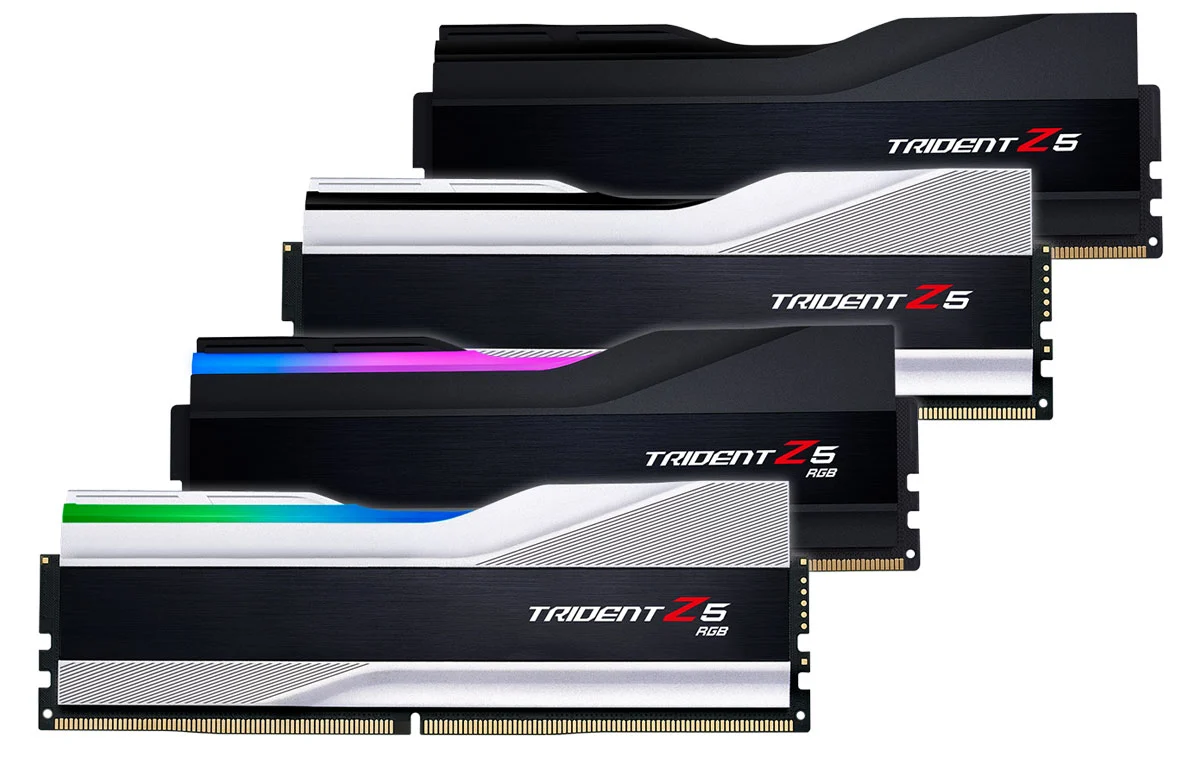
As the computing industry stands on the precipice of a significant architectural shift, the race to define the standards of next-generation memory has reached a fever pitch. With consumer desktop platforms finally poised to embrace DDR5, manufacturers are vying for supremacy in a market where speed, latency, and thermal efficiency are the ultimate currencies. While Corsair initially turned heads in May with teasers of its DDR5-6400 modules, G.Skill has effectively shifted the goalposts, announcing its high-performance Trident Z5 DDR5-6600 CL36 memory kits—a development that promises to reshape expectations for high-end system builds.
Main Facts: Breaking the Speed Barrier
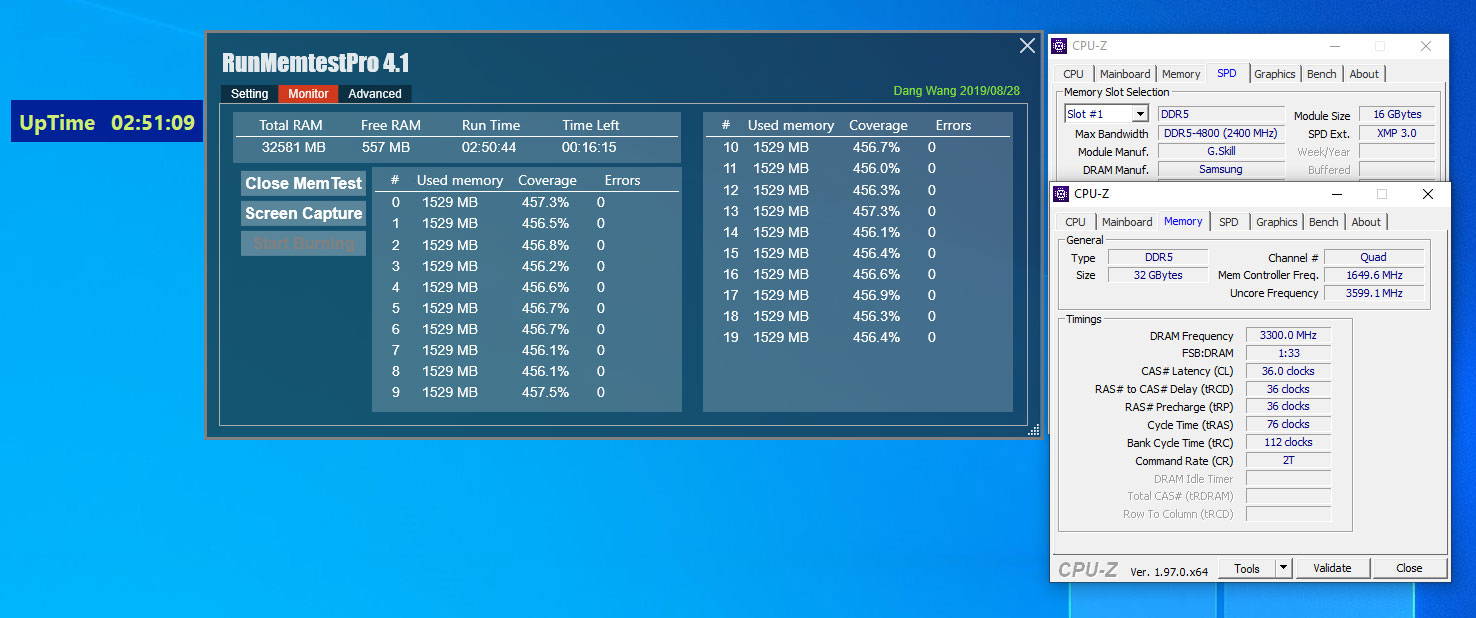
G.Skill’s latest announcement introduces the Trident Z5 series, a flagship memory line engineered to push the boundaries of the new DDR5 standard. The headline specification of these kits—DDR5-6600 with ultra-tight timings of CL36-36-36-76—represents a significant leap in both raw bandwidth and responsive performance.
The kits, sold as 32GB dual-channel sets (2x16GB), are designed to operate at frequencies that were once the exclusive domain of extreme liquid-nitrogen overclocking. By achieving a CAS latency of 36, G.Skill is directly challenging the industry-standard CL40 timings that have characterized the early wave of DDR5 production. This combination of higher data transfer rates and lower latency positions the Trident Z5 as a premier choice for enthusiasts looking to squeeze every drop of performance from the upcoming generation of high-core-count processors.
Chronology: The Race to DDR5 Supremacy
The transition to DDR5 has been a long-gestating process, marked by incremental disclosures and competitive maneuvering between memory giants.
- Early 2021: As specifications for DDR5 solidified, the industry began preparing for the transition from the mature, high-yield DDR4 architecture.
- May 2021: Corsair became one of the first major players to publicly tease the potential of the new standard, showcasing early prototypes of its DDR5-6400 memory. This announcement set a benchmark for the industry and signaled that the 6000MHz barrier would be the first major milestone for consumer-grade DDR5.
- October 2021: G.Skill entered the fray with a tactical move, bypassing the 6400MHz plateau and validating its Trident Z5 modules at 6600MHz. By securing this speed with remarkably tight timings, G.Skill managed to overshadow the earlier announcements of its competitors, establishing a new "gold standard" for launch-day performance.
- Post-Announcement: The industry now watches with bated breath as motherboard manufacturers finalize BIOS updates and QVL (Qualified Vendor Lists) to ensure compatibility with these high-speed modules as the next generation of desktop CPUs hits the shelves.
Supporting Data: Engineering the Trident Z5
The secret to G.Skill’s performance claims lies in its rigorous binning process. Much like its successful history with high-frequency DDR4 kits, the company sources premium Samsung DDR5 integrated circuits (ICs). These components are subjected to stringent testing protocols to identify those capable of maintaining stable operation at higher frequencies with lower voltage and tighter latency.
The Technical Edge
DDR5 memory is not merely a frequency increase over DDR4; it incorporates fundamental architectural changes, including on-DIMM power management integrated circuits (PMICs) and on-die ECC (Error Correction Code). G.Skill’s implementation of these features, combined with its manual selection process, allows the Trident Z5 to achieve:
- Increased Bandwidth: DDR5 provides double the bank groups and burst length compared to DDR4, allowing for faster data processing in memory-intensive tasks like video rendering and scientific modeling.
- Optimized Latency: By achieving CL36 at 6600MHz, G.Skill effectively minimizes the "latency penalty" often associated with early-generation memory technology, ensuring that CPU pipelines remain saturated with data.
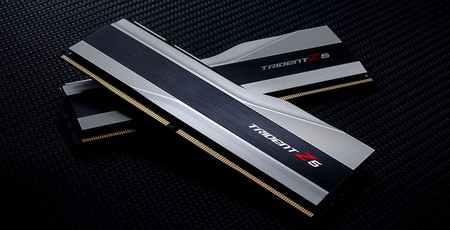
- Thermal Management: The Trident Z5 series features a newly designed heatspreader, available in both brushed aluminum and piano black finishes, designed to dissipate the heat generated by the increased power demands of high-frequency DDR5 operation.
Official Responses and Product Vision
In its official communication, G.Skill has framed the Trident Z5 series as the culmination of years of R&D. According to the company, these kits are "the ultimate performance choice for gamers, enthusiasts, and overclockers."
The product strategy for the Trident Z5 is bifurcated to appeal to different segments of the enthusiast market. The standard Trident Z5 series features a sleek, minimalist aesthetic with a piano black top bar, aimed at builders who prefer a professional, understated look. Simultaneously, the company confirmed the upcoming launch of the Trident Z5 RGB series. This version will feature a translucent light bar optimized for fluid, multi-zone lighting effects, catering to the aesthetic-focused gaming segment. G.Skill emphasizes that the transition to the new lighting design is intended to provide a cleaner, more refined look compared to the jagged light bars of previous generations.
Implications for the Consumer Market
The release of the DDR5-6600 Trident Z5 kits brings both excitement and concern to the consumer landscape. While the performance gains are undeniable, the transition to DDR5 is not without its costs.
The Performance Outlook
For professional users and high-end gamers, the move to DDR5-6600 represents a meaningful upgrade. Applications that are highly sensitive to memory throughput—such as AAA gaming titles at high refresh rates, professional-grade workstation tasks, and real-time streaming—will likely see a tangible benefit from the reduced latency and increased bandwidth offered by G.Skill’s top-tier kits.
The Pricing and Availability Challenge
The primary obstacle remains the cost of entry. Early reports and industry analysis suggest that consumers should brace for a significant price premium—estimated at up to 50 percent compared to equivalent capacities of DDR4 memory. This price gap is driven by:
- Manufacturing Complexity: The integration of PMICs and the complexity of producing high-speed DDR5 ICs.
- Supply Chain Constraints: The ongoing global semiconductor shortage, which continues to impact the availability of high-end memory components.
- Market Positioning: As a "halo" product, the DDR5-6600 kit is priced as a premium offering, targeted at early adopters who are willing to pay a premium for "world-first" performance.
Future-Proofing
Despite the cost, the arrival of these kits signals that DDR5 is ready for the mainstream. Builders looking to assemble systems that will remain relevant for the next four to five years are increasingly viewing DDR5 as a mandatory requirement. As the industry matures and manufacturing yields improve, the price gap between DDR4 and DDR5 is expected to narrow. However, for those who demand the absolute peak of performance today, G.Skill’s latest announcement provides a clear roadmap for what the next generation of desktop computing will look like.
In conclusion, G.Skill’s announcement of the DDR5-6600 Trident Z5 is more than just a marketing victory; it is a testament to the rapid evolution of memory technology. While the market waits for official pricing and local availability, the message from the hardware community is clear: the era of DDR5 has arrived, and it is faster than many had dared to predict. As platforms from Intel and AMD fully embrace the new standard, the performance benchmark set by G.Skill will serve as the target for the rest of the industry to chase.

 Nana Muazin
 Lina Hope