Lina Hope
In a historic milestone that underscores the relentless transformation of the global technology sector, Advanced Micro Devices (AMD) has officially crossed the $1 trillion market capitalization threshold. This achievement, reached during a meteoric rally in the early trading sessions of September 2026, places the Santa Clara-based chipmaker into the most exclusive echelon of corporate finance, joining the ranks of elite tech titans like Nvidia, Apple, and Microsoft.
For years, the semiconductor industry has been the engine room of the modern digital economy. However, the surge in demand for high-performance computing, coupled with the insatiable appetite for artificial intelligence infrastructure, has turned companies like AMD from hardware providers into the architects of the future.
The Path to the Trillion: A Chronology of Growth
The journey to a $1 trillion valuation was neither linear nor overnight. It is the culmination of years of strategic pivoting under the leadership of CEO Dr. Lisa Su.
The Foundation (2014–2019)
When Dr. Su took the helm in 2014, AMD was struggling to maintain relevance against a dominant Intel. The company underwent a radical restructuring, focusing on high-performance x86 architecture and the "Zen" CPU microarchitecture. This era was defined by the reclamation of market share in both the consumer desktop space and the burgeoning data center market.
The Acceleration (2020–2023)
The global pandemic accelerated the digital transformation, putting massive pressure on supply chains. AMD’s decision to outsource manufacturing to TSMC allowed it to leverage cutting-edge process nodes, effectively leapfrogging competitors who were grappling with internal fabrication delays. By 2023, as Nvidia began its own historic run to $1 trillion, AMD was quietly solidifying its position as the premier alternative in the high-performance GPU and CPU space.
The Breakout (2026)
The final ascent began in earnest in the late summer of 2026. Following a series of strong earnings reports and the successful rollout of its latest generation of AI-optimized accelerators, investor confidence reached a fever pitch. At the close of market on Friday, September 18, 2026, AMD shares were trading at approximately $557. Following a weekend of market anticipation, trading opened on Monday morning at $607, a rapid surge that propelled the company’s total market value across the psychological $1 trillion barrier.
Supporting Data: By the Numbers
To understand the scale of this achievement, one must look at the financial velocity of the semiconductor sector.
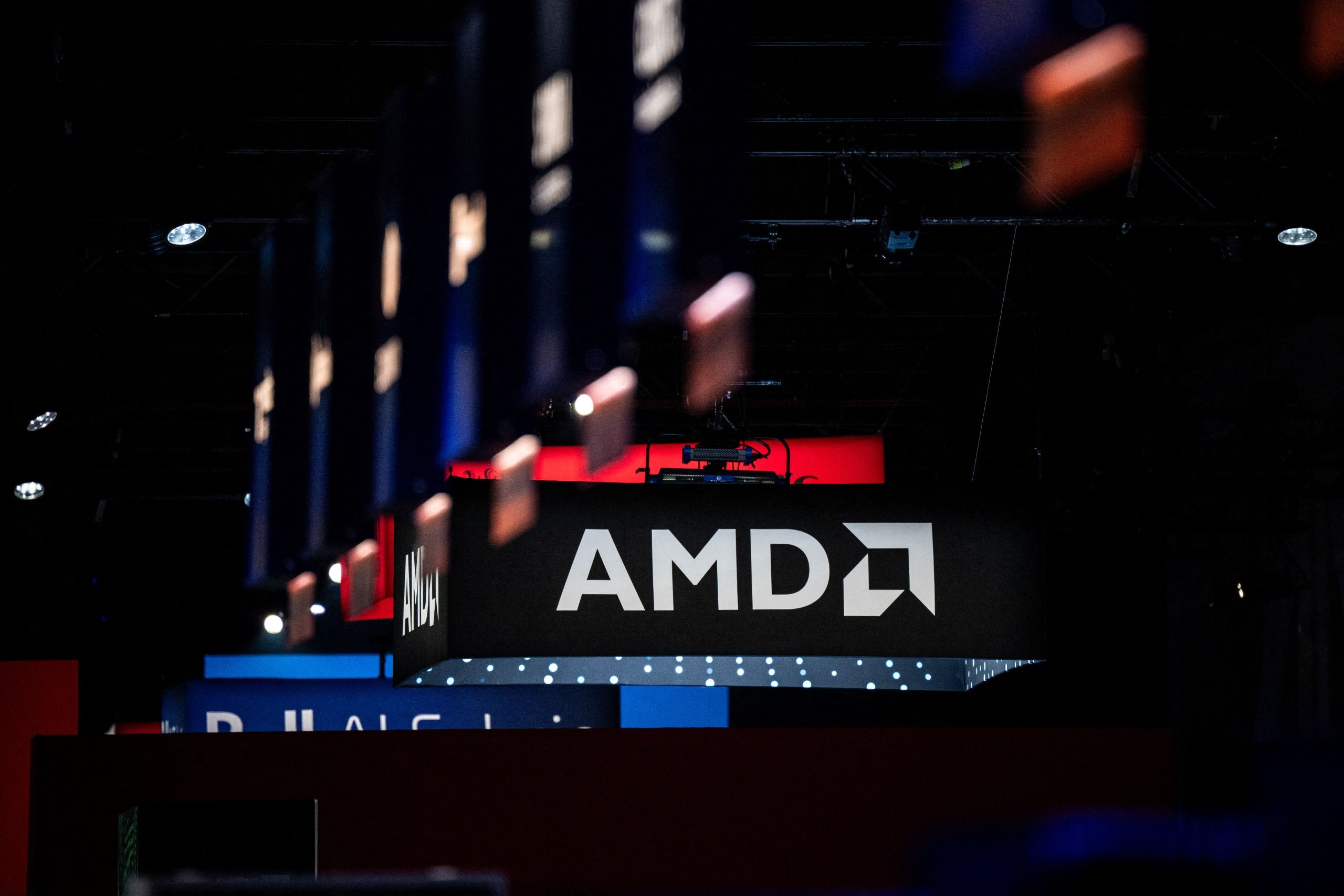
- Market Cap Milestone: AMD officially surpassed the $1 trillion valuation on September 21, 2026.
- Share Price Momentum: The jump from $557 to $607 in a single opening session represents a significant bullish sentiment among institutional investors.
- Sector Comparison: While Nvidia remains the leader in AI-specific hardware, AMD’s diverse portfolio—spanning CPUs, server processors (EPYC), and AI accelerators—has provided a level of revenue stability that analysts now view as a "must-have" for long-term tech portfolios.
The growth is not merely speculative. It is backed by consistent quarterly revenue growth and a dominant share in the server market, where AMD’s EPYC processors have successfully chipped away at Intel’s long-standing monopoly.
Industry Implications: A Duopoly Reimagined
The rise of AMD to a $1 trillion valuation has profound implications for the tech industry, specifically regarding the "Nvidia-AMD" dynamic.
The AI Infrastructure Wars
For years, the narrative in the financial markets was that Nvidia held a near-monopoly on the hardware required for generative AI. However, as developers look for alternatives to mitigate supply shortages and reduce costs, AMD’s Instinct line of accelerators has emerged as the primary rival. The market’s recognition of AMD as a trillion-dollar entity signifies that investors now view the AI hardware market as a long-term duopoly, rather than a winner-take-all scenario.
Competitive Pressure on Intel
With AMD now sitting at the trillion-dollar table, the pressure on its primary rival, Intel, has never been greater. Intel’s ongoing struggle to modernize its manufacturing process (the "foundry" model) stands in stark contrast to AMD’s "fabless" model, which has proven to be incredibly agile in the face of shifting market demands.
Impact on Global Supply Chains
As a trillion-dollar company, AMD now wields significant influence over global supply chains. Its partnerships with TSMC are no longer just business agreements; they are critical geopolitical nodes. The ability of AMD to secure advanced packaging and high-bandwidth memory (HBM) is now a central concern for the broader tech ecosystem, affecting everything from cloud computing costs to the price of consumer gaming hardware.
The Analyst Perspective: What Comes Next?
Market analysts remain divided on the sustainability of such rapid growth, but the consensus points toward a "new normal."
"Crossing the $1 trillion mark is a signal that the market believes in the long-term utility of AMD’s architecture," says industry veteran and Senior CPU Analyst at Tom’s Hardware, Jake Roach. "It’s not just about the hype cycle of AI; it’s about the sheer ubiquity of AMD silicon in the data centers that power the cloud, the streaming services we use, and the workstations that drive innovation."
However, challenges remain. Regulatory scrutiny in the U.S. and the EU regarding semiconductor competition, potential cooling of AI investment, and the looming transition to even smaller process nodes (below 2nm) represent significant hurdles.
Official Responses and Investor Sentiment
Social media and financial forums erupted following the announcement, with industry observers marking the moment as a watershed for the "underdog" company.
On X (formerly Twitter), financial analysts noted the rarity of such a feat: "AMD has officially joined one of the most exclusive clubs in the market." The sentiment among the investor community is one of validation. Having fought for decades to overcome the stigma of being the "budget-friendly" alternative, AMD is now firmly entrenched as a premium technology leader.
While the company has maintained a professional stance, focused on the upcoming quarterly roadmap, the internal morale at AMD is reportedly at an all-time high. The milestone is viewed as the ultimate vindication of the strategic vision laid out by the executive team nearly a decade ago.
Conclusion: A New Benchmark for Innovation
The $1 trillion valuation is more than just a number; it is a barometer for the state of the modern world. We are living in an era defined by silicon. Every advancement in medicine, every breakthrough in climate modeling, and every leap in autonomous systems is underpinned by the processing power delivered by companies like AMD.
As AMD moves forward, the challenge will be to maintain this valuation while navigating an increasingly volatile global landscape. If history is any indicator, the company will likely continue to focus on its core strengths: aggressive engineering, strategic partnerships, and a relentless focus on the high-performance computing market.
For now, the tech world pauses to acknowledge a new heavyweight. The $1 trillion club has a new member, and the race to define the next generation of computing technology has just entered its most competitive phase yet.


 Suro Senen
 Ali Ikhwan