Neng Nana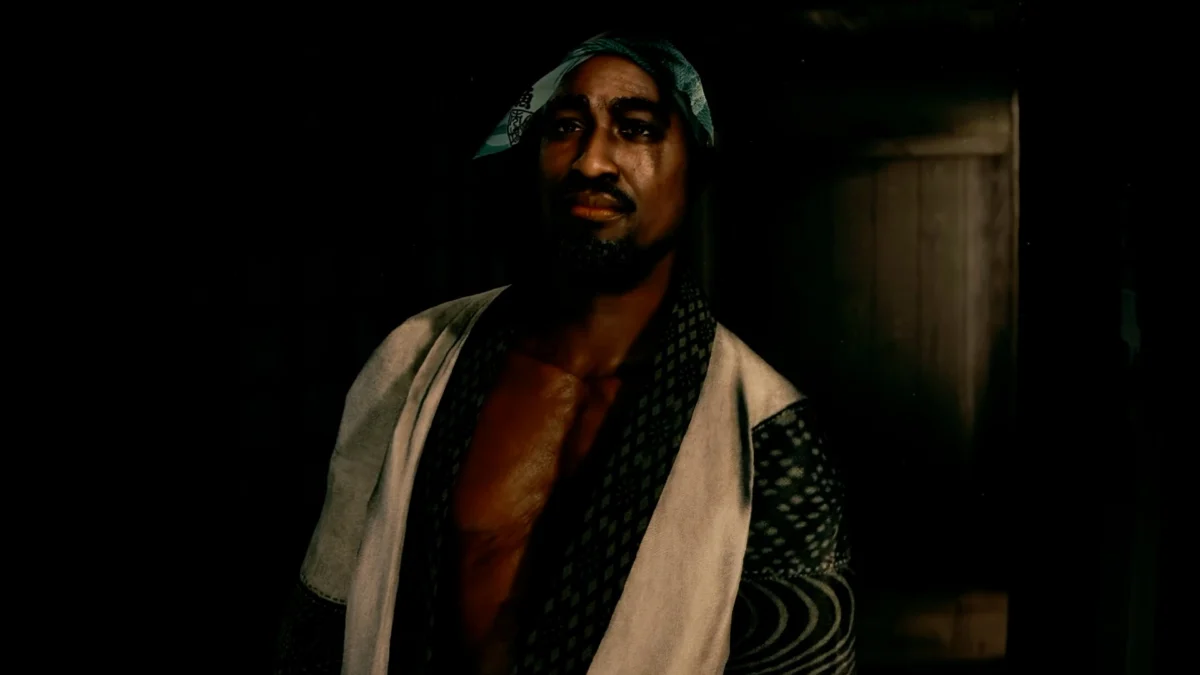
In the world of video game development, the line between "immersive casting" and "stunt marketing" is often razor-thin. For RGG Studio, the prolific creators behind the Like a Dragon (formerly Yakuza) franchise, this boundary has become a point of intense public contention. With the upcoming release of Stranger Than Heaven—a genre-bending historical brawler—and the recent discourse surrounding Yakuza Kiwami 3 & Dark Ties, the studio finds itself in an awkward position: their pursuit of star power is increasingly threatening to eclipse the very games they are working so hard to build.
The Genesis of the Controversy: A "Tupac" Moment
The friction began in earnest during the Summer Game Fest, where the reveal trailer for Stranger Than Heaven reached its crescendo. As the screen flashed the name "TUPAC" in bold, capital letters, the gaming community was instantly electrified—and equally divided.
The digital resurrection of Tupac Shakur, who was tragically murdered nearly 30 years ago, became the singular focus of the industry’s conversation. For weeks, the nuances of the game’s combat mechanics, its historical setting, and its narrative aspirations were sidelined by a singular, persistent question: Why include a deceased icon in a digital playground?
For RGG Studio, this was not the intended reaction. They had envisioned a creative homage; the public, however, saw a provocative grab for headlines.
Chronology of a Casting Philosophy
To understand why RGG Studio continues to walk this tightrope, one must look at the studio’s evolution since Yakuza 0. For years, RGG has pioneered a "photorealistic casting" technique, where Japanese celebrities are scanned into the game and voiced by their real-life counterparts.
- The Yakuza 0 Benchmark: In Yakuza 0, the studio introduced the Dojima lieutenants—Hiroki Awano, Keiji Shibusawa, and the iconic Daisaku Kuze. These performances were lauded universally. The characters felt authentic, grounded, and essential to the plot. The actors, while famous in Japan, disappeared into the roles.
- The Shift in Strategy: Following the success of Yakuza 0, the studio began experimenting with higher-profile global figures. This culminated in the casting of Snoop Dogg for Stranger Than Heaven, which paved the way for the inclusion of Tupac Shakur.
- The Kiwami 3 Complication: Concurrently, the studio faced a massive public relations firestorm regarding Yakuza Kiwami 3 & Dark Ties. The decision to cast actor Teruyuki Kagawa—who had been the subject of widely reported allegations of sexual assault—sparked a petition from fans demanding a recast. The controversy was only deepened when director Ryosuke Horii justified the casting by noting that Kagawa’s "slimy" real-world reputation helped sell the character’s villainy, effectively blurring the lines between art and problematic reality.
Understanding the "Director’s Intent"
Masayoshi Yokoyama, the studio head at RGG, has been forced to defend these choices repeatedly. In a candid discussion with Automaton, Yokoyama sought to distance his team from the perception that they are merely "fanboys" collecting celebrity cameos.
"To be completely honest, my intention as a game creator isn’t to make our casting choices take the spotlight and overshadow everything else," Yokoyama stated. "I want people to focus on the gameplay and the narrative experience itself."
Yokoyama’s defense rests on the idea that high-profile actors elevate the work through their craft. He argues that when he writes a character, he often does so with a specific person in mind, treating the performance as a central pillar of the narrative architecture rather than a superficial addition. He cites the Yakuza 0 experience as his North Star: when a casting choice is "perfect," the audience stops seeing the celebrity and starts seeing the character.
The Problem of "Suffocating" Shadows
Despite Yokoyama’s noble intentions, the reality on the ground is different. When a game centers its marketing around the digital resurrection of a legend like Tupac, or forces players to navigate the baggage of an actor like Kagawa, the "shadow" becomes the product.
In the case of Stranger Than Heaven, the inclusion of Tupac is inescapable. It is not a subtle nod or a hidden Easter egg; it is a fundamental selling point. Consequently, players enter the game with a pre-formed opinion, whether they are proponents of the creative license taken by the developers or critics who view it as a distasteful commercialization of a life cut short.
The Kiwami 3 situation is even more complex. By citing the actor’s "slimy" nature as a justification for the role, RGG inadvertently validated the public’s discomfort. When the creator admits that the casting was chosen to elicit a specific visceral reaction based on the actor’s personal life, the character no longer exists in a vacuum. The player is no longer playing a game; they are participating in a conversation about industry ethics.
Implications for Future Development
The implications for RGG Studio are significant. By prioritizing high-profile faces, they have inadvertently shifted the focus of their community management from "How does the game play?" to "How should we feel about this casting?"
The Risk of Aesthetic Dilution
When a game’s identity is tied to the real-world reputations of its cast, it risks losing its internal consistency. If the audience is constantly reminded of the celebrity behind the screen, the immersion—a core goal of the Like a Dragon series—is broken.
The Marketing Paradox
Yokoyama’s frustration is understandable. He wants the world to discuss the "gameplay and narrative experience." However, marketing is a two-way street. If a studio highlights a celebrity’s involvement in a reveal trailer, they are effectively asking the public to prioritize that celebrity over the game’s mechanics. If the studio wants the spotlight on the game, they must consider a marketing strategy that prioritizes the virtual world over the real-world star power.
A Call for Re-evaluation
If RGG Studio intends to maintain its reputation for excellence, they must reconcile their casting philosophy with their audience’s expectations. The "star-chasing" approach is a high-risk, high-reward strategy that is currently yielding more risk than reward.
To regain control of the narrative, the studio may need to:
- De-emphasize Cameos in Marketing: If a cameo is meant to be a surprise or a narrative enhancement, it should not be the primary hook of a reveal trailer.
- Prioritize Narrative over Notoriety: Casting choices should be scrutinized not just for their "fit" for the character, but for the potential distraction they pose to the player’s experience.
- Acknowledge Public Sentiment: The outcry over Kiwami 3 demonstrated that the modern gaming audience is highly sensitive to the values of the individuals cast in their favorite titles. Dismissing these concerns as mere "noise" risks alienating a dedicated fanbase.
Conclusion: The Burden of Stardom
RGG Studio is at a crossroads. They have built an empire on the back of incredible, grounded storytelling and a unique, cinematic approach to game design. Their ambition to push boundaries is what makes their games so compelling, but that same ambition can lead to miscalculations.
Masayoshi Yokoyama says he does not want his casting choices to overshadow the work. If that is truly the case, the path forward is clear: let the characters speak for themselves. If the game is as good as the developers believe it to be, it will find its audience based on its own merits, not on the faces that populate its cast list. In the end, a masterpiece does not need a celebrity to sell it—it only needs to be a masterpiece.


 Asro
Asro
 Muslim