Nana Wu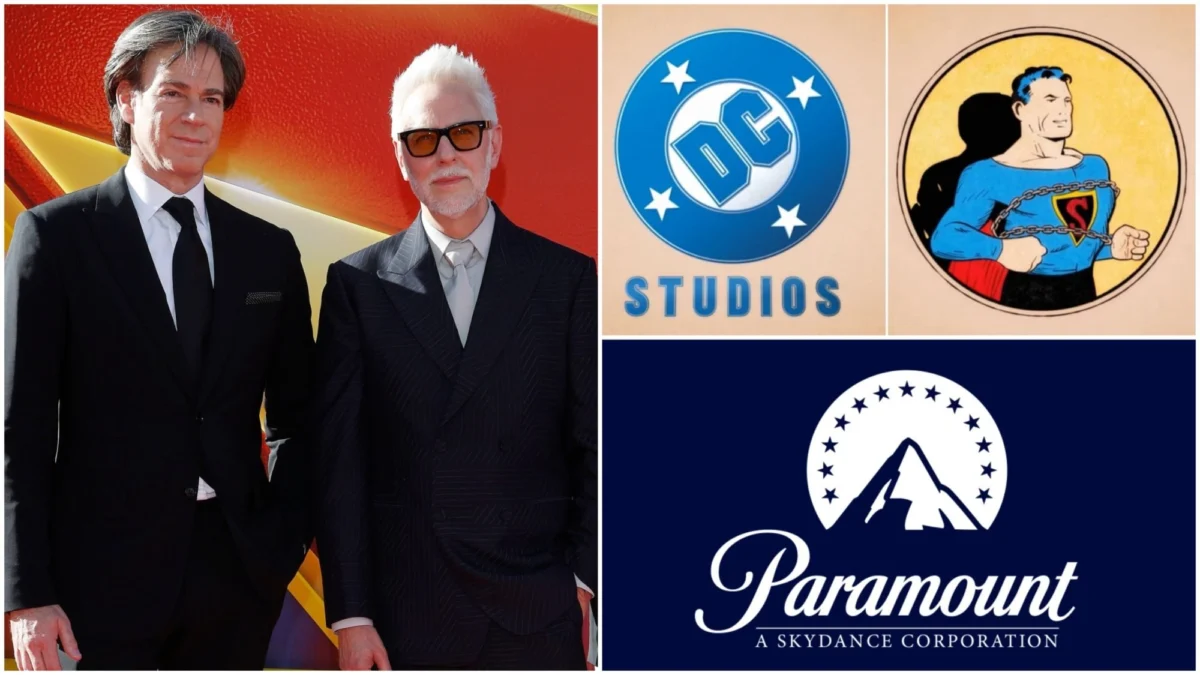
As the landscape of Hollywood media continues to undergo a seismic transformation, the proposed merger between Warner Bros. Discovery (WBD) and Paramount Skydance has become the industry’s most closely watched corporate saga. While the deal remains ensnared in a complex web of domestic and international regulatory hurdles, the shadow of a potential transition is already forcing key creative players to prepare for a new power dynamic. Central to this uncertainty is the fate of DC Studios, led by the high-profile co-CEO duo of James Gunn and Peter Safran. Recent developments have confirmed that the architects of the new DC Universe (DCU) have already begun direct dialogues with the man poised to lead the combined entity: Paramount Skydance’s David Ellison.
Main Facts: A Meeting of the Minds at Trilith
The narrative surrounding the potential WBD-Paramount union shifted from speculative boardroom chatter to concrete operational reality this week. Lars P. Winther, the executive producer for the highly anticipated Supergirl film, confirmed that DC Studios’ leadership has engaged in face-to-face discussions with David Ellison.

The meeting reportedly took place at Trilith Studios in Atlanta, Georgia—the primary production hub for DC’s recent slate of films. According to Winther, the site visit served as an opportunity to provide Ellison with a comprehensive look at the logistical and creative infrastructure that Gunn and Safran have meticulously built over the past few years. "He came to Trilith already," Winther noted in an interview with The Hollywood Reporter. "That’s where we shoot all our movies that James directs. He came to Atlanta, we showed him everything, and we’re having discussions with him."
This interaction underscores a crucial strategic maneuver by Ellison. If the merger proceeds, Ellison appears intent on retaining the creative visionaries who have successfully stabilized the DC brand, even as the corporate structure above them undergoes a complete overhaul.
Chronology of a Corporate Shifting
The road to this potential merger has been characterized by rapidly changing fortunes. For much of 2025, industry analysts anticipated that Netflix would emerge as the dominant bidder for Warner Bros. Discovery. However, in a surprise move, David Ellison’s Paramount Skydance secured the upper hand, bolstered by a significant influx of international capital that the streaming giant was unwilling or unable to match.
- Mid-2025: The acquisition race intensifies as WBD faces pressure to address its debt load and streaming strategy.
- October 2025: Bloomberg reports that David Ellison’s primary mandate for a post-merger Warner Bros. Discovery is to preserve the integrity of the existing studio creative teams. The reports specifically highlighted a desire to consolidate back-office functions—such as marketing and distribution—while insulating the content-creation divisions from the friction of the merger.
- Late 2025: Speculation mounts regarding the long-term stability of the DCU. Interviews with James Gunn, particularly a notable appearance on BobaTalks, see the filmmaker speaking with uncharacteristic hesitation about his ability to see his long-term roadmap through to completion, fueling rumors that the DC leadership was contingency planning.
- June 2026: Official confirmation from the Supergirl production camp confirms that the dialogue between Gunn, Safran, and Ellison is active and ongoing.
Supporting Data: The Strategic Value of the DCU
The urgency behind these meetings is driven by the sheer scale of the investment Warner Bros. Discovery has poured into the DC Universe. The current DCU slate, which includes the upcoming Man of Tomorrow starring David Corenswet, Rachel Brosnahan, and Nicholas Hoult, represents a multi-year, multi-billion-dollar commitment.

For David Ellison, acquiring WBD is not merely about gaining a library of intellectual property; it is about acquiring the engine room of the DC franchise. By meeting with Gunn and Safran, Ellison is acknowledging that the "Gunn-Safran" brand has become a distinct entity that requires a level of autonomy. Retaining these two executives would signal to investors and fans alike that the merger is intended to be a constructive evolution rather than a disruptive dismantling of the current creative hierarchy.
The logistical importance of Trilith Studios cannot be overstated in this context. By hosting the meeting at the site of actual production, the DC team provided Ellison with a tangible look at the "DC machine." This is a significant step beyond simple administrative briefings; it is a demonstration of workflow, cost-efficiency, and creative synergy that is designed to convince a potential owner that the status quo is the most profitable path forward.
Official Responses and Public Sentiment
The public response to the potential merger has been a mixture of cautious optimism and intense anxiety. Fans of the DCU, particularly those invested in the long-term storytelling arcs of the new franchise, have been vocal on social media regarding the uncertainty.
James Gunn’s own public statements have mirrored this duality. In his October 2025 interview, when pressed on whether the interconnected storylines of Superman and Peacemaker Season 2 would remain intact under potential new ownership, his answer was measured: "Whether or not that’ll be me that’s able to fulfill that promise depends on a lot of things in life."
This comment was interpreted by many as an admission that while he is committed to the vision, he is a realist regarding the volatility of corporate acquisitions. By now engaging directly with Ellison, Gunn and Safran are effectively taking control of their own narrative, ensuring that they are active participants in their future rather than passive recipients of a corporate directive.
Implications for the Future of Hollywood
If the merger between WBD and Paramount Skydance is finalized, the industry will witness one of the largest consolidations in the history of the entertainment sector. The implications for the DCU, and for Gunn and Safran specifically, are profound.

1. The Autonomy Question
The most immediate question is how much independence DC Studios will maintain. Under current WBD management, Gunn and Safran have operated with a significant degree of creative freedom. If they remain, it is likely they will demand, and receive, contractual guarantees that protect their creative roadmap from the cost-cutting measures typically associated with major studio mergers.
2. The Talent Retention Ripple Effect
The retention of Gunn and Safran would be a bellwether for other high-level talent at the studio. Directors, producers, and top-tier actors often sign deals based on the leadership currently in place. If the creative "captains" are confirmed to stay, it will likely stabilize the talent pool and prevent a "brain drain" of creatives who might otherwise fear for the stability of their projects.
3. Distribution and Marketing Consolidation
While Ellison has expressed a desire to keep creative teams intact, the consolidation of marketing and distribution is inevitable. This could lead to a more efficient, albeit more homogenized, release strategy for future DC films. The challenge will be for Gunn and Safran to leverage this massive new distribution network without losing the distinct identity of the DCU.
4. The Global Market Strategy
The mention of "foreign money" in the initial reports of the merger suggests that the new entity will be aggressively targeting global expansion. DC, as a globally recognized brand, is the cornerstone of this strategy. The meetings in Atlanta suggest that Ellison recognizes that the DCU is not just a film franchise, but a global ecosystem that requires careful, expert cultivation.

Conclusion
As the industry waits for regulatory approval for the WBD-Paramount merger, the fact that James Gunn and Peter Safran are already in conversation with David Ellison is the most positive indicator of continuity to date. It suggests a future where, despite the shifting sands of corporate ownership, the creative direction of the DC Universe remains firmly in the hands of those who built it. For the fans who have been concerned about the stability of the upcoming slate, the message from Atlanta is clear: the work continues, the plans are in motion, and the lines of communication are open.


 Sagoh
Sagoh
 Ammar Sabilarrohman