Reynand Wu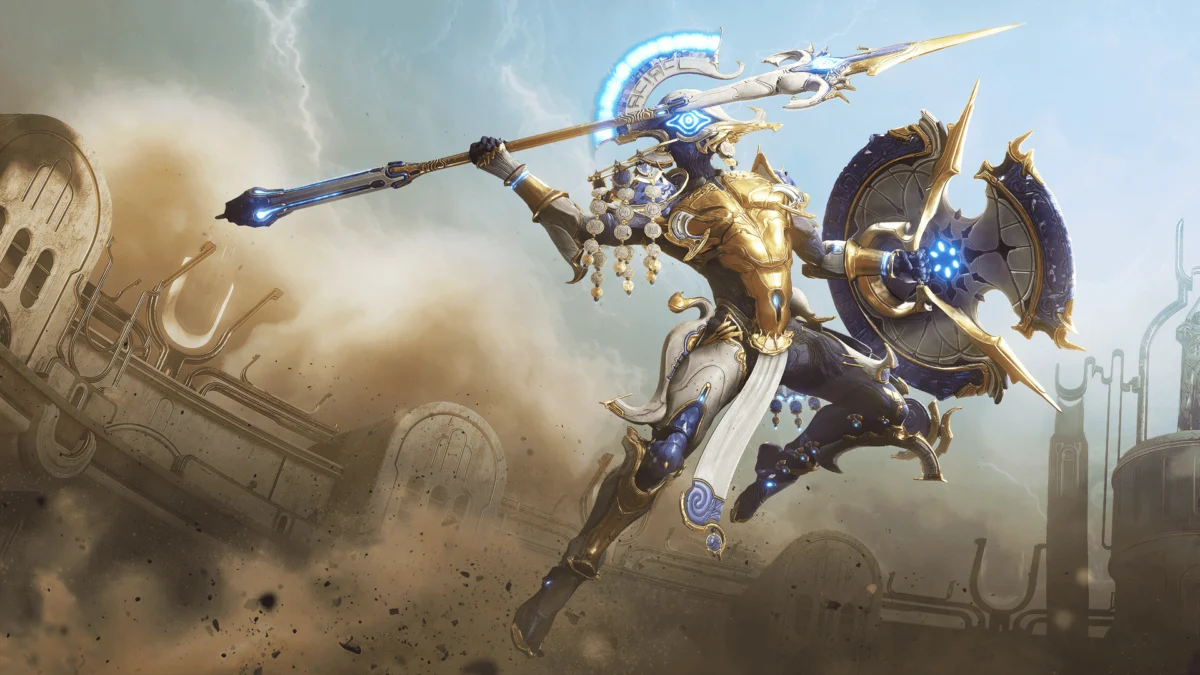
In the cutthroat landscape of the modern gaming industry, the narrative is almost always written in terms of conquest. When a titan falls, the prevailing expectation is that its rivals will celebrate, eager to absorb the displaced player base and capitalize on the vacuum left behind. Yet, in the wake of Bungie’s announcement that Destiny 2 is ceasing live service support, the mood within the halls of Digital Extremes—the studio behind the long-running sci-fi epic Warframe—is anything but celebratory.
For years, Warframe and Destiny 2 were viewed as the two immovable objects of the looter-shooter genre. While fans frequently engaged in spirited debates over which title reigned supreme, the developers behind Warframe view the end of Destiny 2 not as a victory, but as a profound, "earth-shattering" loss for the industry.
The Sunset of a Legend: A Chronology of the End
The decline of Destiny 2 was not an overnight collapse, but a gradual winding down that culminated in a definitive finality. For over a decade, Bungie’s space-faring shooter defined the live-service model, creating a legacy of complex raids, deep lore, and high-octane gunplay. However, the announcement that the game would move to a maintenance-only state sent shockwaves through the community.
The timeline leading to this moment was punctuated by the realization that the "Monument of Triumph" update, released on June 9, would serve as the final major expansion for the game. As news broke, the player base reacted with an outpouring of nostalgia, flooding the game’s servers for one last "hurrah." This mass migration back to the servers was a testament to the game’s cultural impact, even as it signaled the closing of a chapter.
For Digital Extremes, watching this conclusion unfold was a sobering experience. The studio went as far as to curate a special in-game tribute to Destiny 2, acknowledging the shared space these two giants occupied in the gaming ecosystem.
Industry Impact: More Than Just Market Share
The rivalry between Warframe and Destiny 2 was, in many ways, the engine that kept the genre evolving. Megan Everett, Community Director and Live Ops Lead at Digital Extremes, has been at the forefront of this community dynamic for years. In a recent interview, she articulated a sentiment that runs counter to the standard corporate "winner-take-all" mentality.

"No one is celebrating the fact that this has happened to Destiny, and its players, and that story," Everett stated. "I know people have obviously compared us in terms of being ‘direct competitors,’ but I think a game is healthy when you have competitors."
This perspective highlights a fundamental truth about the gaming industry: innovation rarely happens in a vacuum. When one studio pushes the boundaries of narrative, mechanics, or monetization, the other is forced to respond. By having Destiny 2 as a benchmark, Warframe was consistently pushed to refine its own systems, expand its reach, and maintain its standard of quality. The loss of that competitive pressure is viewed by many industry analysts as a net negative for the looter-shooter genre.
A Tale of Two Stars: Differences in Design
Despite the frequent comparisons, the two games served fundamentally different psychological and mechanical needs for players. Destiny 2 was celebrated for its tight, precision-based gunplay—the "Bungie feel"—and its structured, high-stakes endgame content. Warframe, by contrast, built its identity on unparalleled mobility, power fantasy, and an almost overwhelming breadth of customization.
Everett touched on this distinction, noting that the "competition" was often a surface-level assessment. "We tried the PvP thing, and we’re not a PvP game," she noted, contrasting Warframe’s focus against the competitive shooter elements that were once central to Destiny. "If you’re coming to Warframe trying to scratch that [PvP] itch, you’re going to have that itch for a long time."
The two games essentially occupied different ecological niches. Players often treated them as complementary experiences rather than mutually exclusive choices. The idea that a player would "switch sides" entirely is a simplification that ignores how gamers actually consume content. Most veterans of the genre played both, toggling between the two depending on whether they wanted a curated, competitive experience or an expansive, grind-heavy sandbox.
The Human Cost: The Personal Side of Development
Beyond the numbers and the market analysis, there is a human element to this story that is often overlooked in press releases. Game development is a tight-knit community; developers move between studios, share ideas at conferences, and build relationships that transcend corporate branding.

"I have close friends who play Destiny over Warframe," Everett revealed. "We have friends over there; to see this happen to them is devastating to the industry. To live in a reality where they’re gone isn’t a positive one."
This sentiment underscores a lack of tribalism at the developer level. For those who create these worlds, the goal is not to "destroy" the competition, but to be part of a vibrant, thriving gaming culture. The departure of a team as talented as Bungie’s, after years of navigating turbulent industry waters, serves as a grim reminder of the precarity of live service games. It forces developers everywhere to confront the reality that even the most iconic titles have a shelf life.
Implications for the Future of Live Service
The end of Destiny 2 leaves a massive void, not just for the players, but for the industry at large. What does the landscape look like without one of the genre’s primary pillars?
- The "Burnout" Risk: As Everett pointed out, having only one major title in a genre creates a vacuum that is difficult to fill. If players are forced to play a single game to get their "fix," they are significantly more likely to burn out. Competition is not just about sales; it is about providing the variety necessary to keep a community healthy and engaged over the long term.
- The Evolution of Warframe: Even without its primary rival, Digital Extremes has no intention of slowing down. The recent launch of the Jade Shadows: Constellations update on June 17 proves that the studio is committed to its own trajectory. However, the challenge for Warframe now is to innovate without the external pressure of Destiny.
- Industry Consolidation: The closure of a major live-service project is often a harbinger of broader shifts. Studios are increasingly cautious about the massive investments required to maintain a game-as-a-service. The Destiny 2 situation may lead to a more conservative approach in the industry, where developers focus on smaller, more sustainable updates rather than the monumental, "forever-game" expansions that defined the last decade.
Conclusion: A Legacy of Mutual Growth
It is rare to see a developer speak so candidly about the necessity of their rival. Yet, the story of Warframe and Destiny 2 serves as a poignant reminder that in the creative arts, the presence of others is not a threat—it is a catalyst.
Digital Extremes’ refusal to celebrate the downfall of Destiny 2 is a testament to the respect shared between creators. While the servers may eventually go dark and the final updates may be deployed, the influence that these two games had on one another will remain etched into the fabric of the industry. Warframe continues its journey, but it does so in a landscape that feels slightly emptier. For the players and the developers who grew up alongside these two titans, the end of Destiny 2 is not the beginning of a new era of dominance, but the end of a golden age of competition that made both games better, stronger, and more enduring.


 Nana Muazin