Sagoh
Sagoh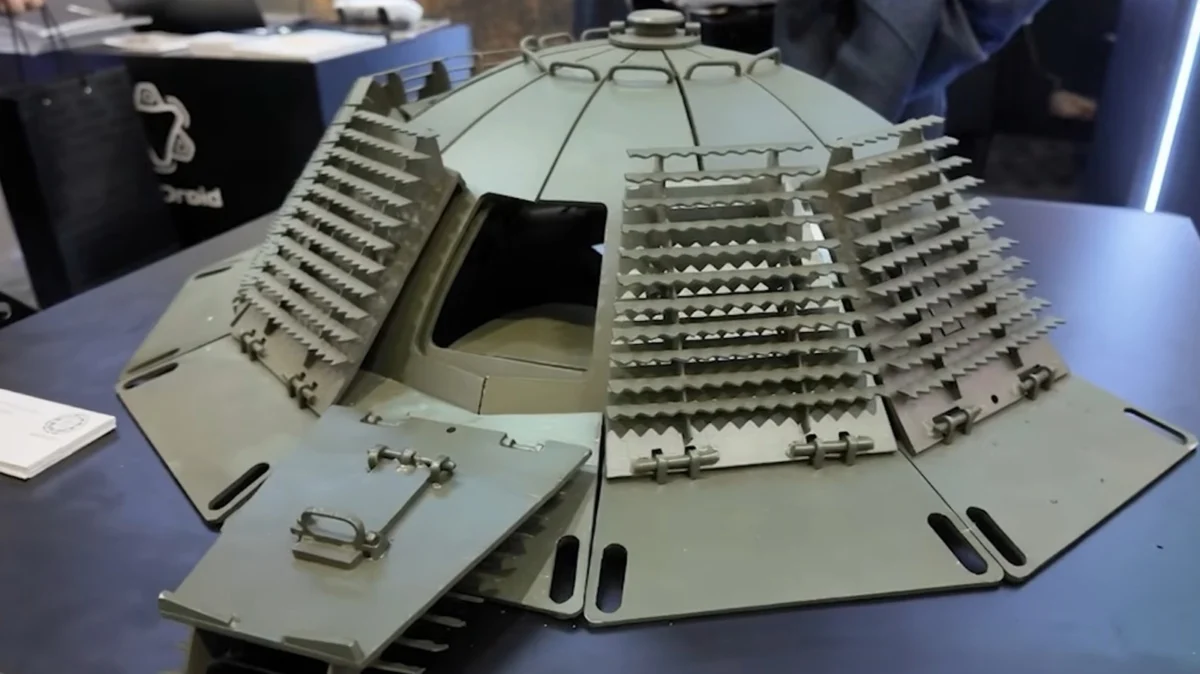
The ongoing Russo-Ukrainian War has served as a crucible for modern military innovation. From the deployment of experimental anti-aircraft laser arrays like the "Sunray" to the sophisticated integration of AI-driven interceptor drones, the conflict has forced a rapid acceleration in defense technology. Among the most recent and practical developments to emerge from this theater is a new class of portable, armored defensive capsules unveiled by the Ukrainian firm Parabella.
Showcased at the Eurosatory international defense exhibition in Paris—the world’s premier land and air-land defense event held from June 15 to 19—these modular bunkers represent a significant shift in frontline fortification. Designed specifically for rapid deployment in high-intensity combat zones, the bunkers offer a balance of mobility, structural integrity, and situational awareness that marks a departure from the static, labor-intensive fortifications of the past.
The Engineering Behind the Parabella Capsule
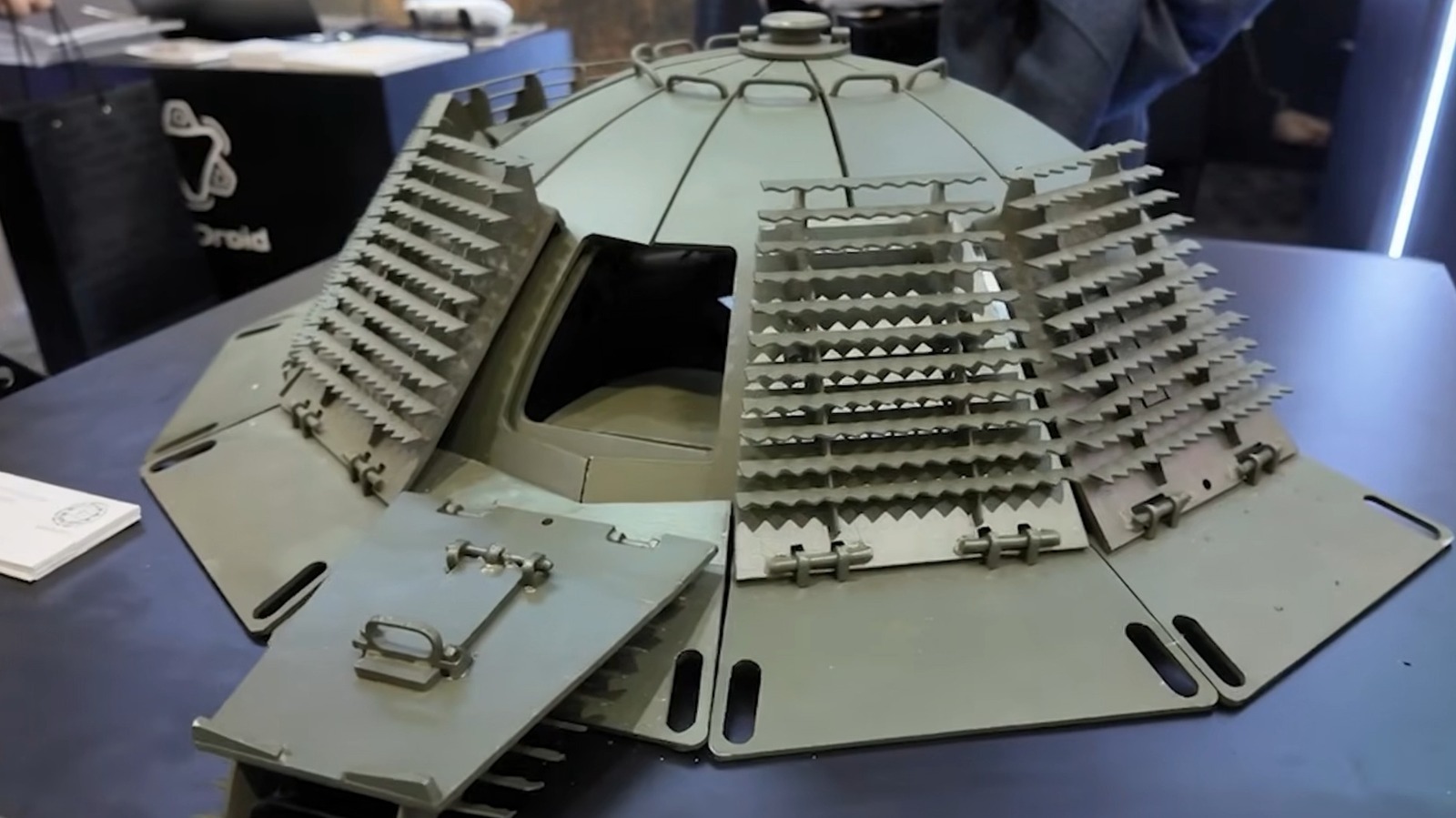
At its core, the Parabella bunker is designed to address the most dangerous reality of modern trench warfare: the vulnerability of infantry to artillery, mortar, and small-arms fire. According to technical reports from Militarnyi, the structure is built to withstand substantial ballistic impacts, serving as a "safe room" for soldiers operating in the most exposed sectors of the front line.
The engineering specifications are impressive for a modular unit. The capsule features a 16-mm-thick (0.63 inches) three-layer armored steel body. This multi-layered approach is designed to dissipate the kinetic energy of projectiles, preventing penetration and reducing the risk of spalling—where fragments of the interior wall break off due to high-impact hits.
Beyond mere protection, the designers have prioritized survivability through sensory awareness. The bunker is equipped with observation apertures shielded by reinforced metal screens. These screens allow soldiers to maintain a 360-degree field of view, ensuring that the occupants are not "blind" to enemy movements. Capable of housing up to 10 personnel, the capsule functions as a command post, a defensive firing position, or a temporary shelter during shelling. Its design facilitates rapid installation, meaning that as a frontline shifts, the bunker can be extracted and redeployed with minimal heavy equipment.
A Chronology of Battlefield Fortification
To understand the significance of the Parabella bunker, one must view it within the broader history of military engineering. The concept of the "small bunker" is not new, but its application has evolved significantly over the last century.
The Pillbox Era (WWI and WWII)
During the First and Second World Wars, European battlefields were dominated by "pillboxes"—small, concrete-reinforced fortifications. These structures were often semi-buried, allowing only the gunports to remain visible. While effective at denying territory to the enemy, they were fundamentally static. Once a concrete pillbox was poured, it remained a permanent fixture, often becoming a liability if the frontline moved or if the position was bypassed by flanking maneuvers.
The Mid-Conflict Transition (2014–2022)
Ukraine’s experience with mobile defense began long before the full-scale invasion of 2022. Following the initial annexation of Crimea and the conflict in the Donbas, the Ukrainian military sought to move away from heavy concrete. In 2015, the introduction of the MOS-2—a hexagonal metal shelter—marked a pivotal moment. The MOS-2 was designed to be easily transported and assembled, providing a hard-shell defense against small-arms fire and shell fragments. It was a clear signal that the military command prioritized modularity over mass.
The Era of Industrial Scale (2022–Present)
Following the 2022 invasion, the need for mass-produced, high-durability shelters became an industrial imperative. The Metinvest Group, a major Ukrainian steel producer, pivoted its manufacturing capacity to create tube-like steel shelters. Unlike the MOS-2, these were designed for deep-trench integration. Capable of withstanding 152-mm artillery fire, these "bunker-in-a-box" units were equipped with basic life-support essentials: beds, wood-burning stoves, and secure storage for ammunition. These units could be moved without the need for cranes, relying on basic winch systems or military transport vehicles.
Comparative Analysis: Why Modularity Matters
The transition from the static concrete of the 20th century to the modular steel of the 21st represents a shift in military philosophy. Modern warfare is characterized by high-volume artillery and the constant surveillance of overhead drones. A static bunker is a high-value target; once identified, it can be zeroed in by enemy artillery with precision.
The Parabella bunker’s advantage lies in its "deploy-and-relocate" capability. Because it does not require massive foundation work or long-term construction, it can be placed in a position, utilized for a specific mission, and removed or repurposed. This "disposable" or "reusable" nature aligns with the high-attrition, high-speed reality of modern Ukrainian combat.
Furthermore, the integration of 360-degree observation screens suggests that the designers have accounted for the "urban-rural hybrid" nature of the war. Whether placed in a bombed-out building or a forest clearing, the bunker allows for continuous monitoring of the environment, a necessity in an age where infantry squads are often surrounded by enemy reconnaissance drones.
Supporting Data: The Logistics of Steel
The use of 16-mm armored steel is not arbitrary. It is generally sufficient to stop standard-issue 7.62mm rifle rounds at close range and provides significant protection against the fragmentation of high-explosive artillery shells—the primary cause of casualties in the current conflict.
- Material Integrity: The three-layer steel construction provides a "redundant" defense. If a projectile breaches the outer layer, the subsequent layers are designed to capture the remaining energy.
- Logistical Footprint: By maintaining a size that accommodates 10 individuals, the capsule fits within the transport capacity of standard military logistics trucks. This is a critical factor in a conflict where supply lines are frequently under fire.
- Human Factor: The inclusion of observation ports and ventilation systems addresses the psychological and physiological toll of being enclosed. Previous iterations of mobile shelters often struggled with poor air circulation and sensory deprivation; the Parabella design attempts to mitigate these issues.
Official Responses and Strategic Implications
While the Ukrainian Ministry of Defense has not issued a detailed procurement schedule for the Parabella bunkers, the visibility of the product at an international venue like Eurosatory indicates a dual purpose: domestic defense procurement and potential export interest.
Military analysts suggest that the deployment of such bunkers serves a strategic role in maintaining troop morale. By providing a "guaranteed" level of protection, commanders can encourage defensive holds that might otherwise be deemed too dangerous for infantry.
"The bunker is not just a shield; it is a force multiplier," says a defense analyst familiar with Eastern European military trends. "When soldiers feel that their immediate defensive position is engineered to survive a direct artillery hit, their performance in defensive operations increases. It reduces the ‘cower effect’ caused by constant shelling."
Future Outlook: A New Paradigm of Defense
The Parabella bunker is likely only the beginning of a larger trend in "modular frontline infrastructure." As drone warfare becomes more sophisticated, we may see these bunkers evolving to include anti-drone shielding, such as integrated electronic warfare (EW) jammers or top-mounted slat armor to deflect suicide drone strikes.
The evolution from static concrete pillboxes to mobile, armored capsules mirrors the larger transformation of the Ukrainian military: from a Soviet-style, hierarchical, and rigid force into a modern, agile, and technology-driven combatant. While the bunker will not win the war on its own, it represents the kind of practical, bottom-up innovation that has allowed Ukrainian forces to hold ground against a numerically superior adversary for years.
As the conflict continues to drive technological development, the lessons learned from the Parabella bunker will likely influence military doctrines worldwide. The era of the "unmovable fortress" has passed, replaced by the era of the "agile stronghold"—a testament to the ingenuity required to survive on the modern battlefield. Whether in the muddy plains of the Donbas or the urban ruins of frontline cities, the ability to rapidly secure a small, hardened, and observable position is now a fundamental requirement for any infantry unit. Parabella’s contribution is a significant milestone in that ongoing, life-saving mission.


 Ali Ikhwan
 Lina Hope