Pevita Pearce
Even years after its initial release, Bethesda Game Studios’ Fallout 4 remains a titan of the open-world genre. While the title famously polarized the long-time fanbase upon its 2015 launch—largely due to the introduction of a voiced protagonist and a shift toward more streamlined dialogue options—the game’s mechanical foundations have proven remarkably resilient. By iterating on the classic Bethesda formula while introducing innovative systems that rewarded player curiosity, Fallout 4 created a version of the Boston Commonwealth that is arguably more addictive than any of its predecessors.

The Evolution of the Wasteland: A Chronology of Design
To understand the enduring appeal of Fallout 4, one must look at the trajectory of the Fallout franchise under Bethesda’s stewardship. When the studio took over the reins from Interplay/Black Isle, they translated the isometric CRPG experience into the immersive, first-person "Creation Engine" environment seen in Fallout 3.

- 2008: Fallout 3 set the stage, establishing the core tenets of the series: post-apocalyptic exploration, V.A.T.S. combat, and the iconic "Vault-Tec" aesthetic.
- 2010: Obsidian Entertainment’s Fallout: New Vegas expanded on this, focusing heavily on narrative branching and faction-based power struggles.
- 2015: Fallout 4 arrived with a paradigm shift. It prioritized "moment-to-moment" gameplay, physical world-building, and a robust crafting economy, moving away from the purely text-heavy RPG roots to become a more tactile, action-oriented survival simulator.
This evolution was not without its critics, but in retrospect, it was this pivot toward a more interactive environment that solidified the game’s "hook."

The Pillars of Engagement: Supporting Data
What makes Fallout 4 so difficult to put down? It isn’t just one system; it is the interplay of several mechanics that encourage the player to constantly push into the unknown.
1. The Mastery of Environmental Storytelling
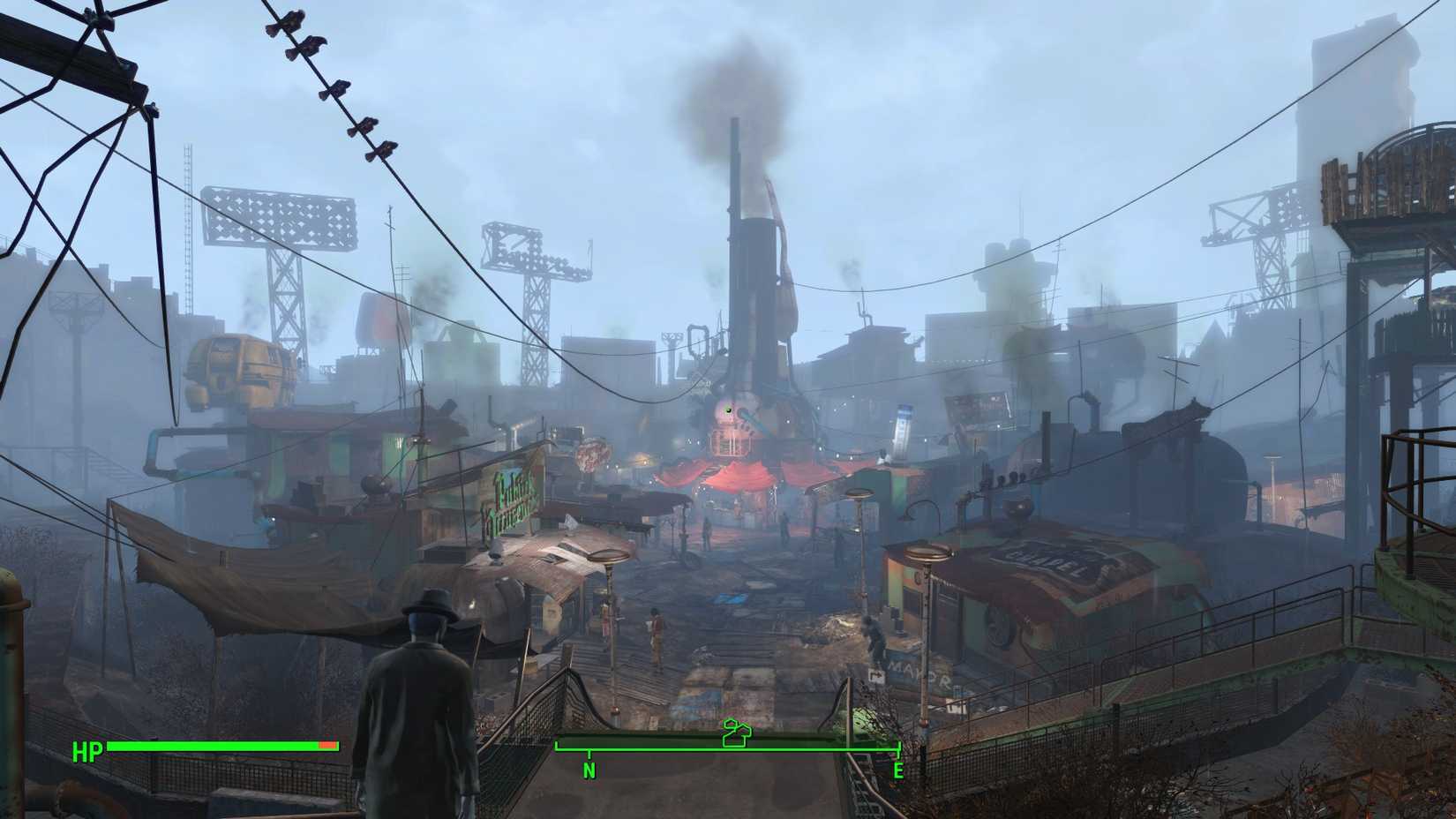
Bethesda has always been the industry leader in "environmental storytelling"—the art of letting a room or a scene tell a story without a single line of dialogue. Fallout 4 takes this to an extreme. Whether it is the tragic skeletal remains of a family huddling in a bathtub or the bizarre, unsettling dioramas created with teddy bears, the game is filled with silent vignettes that reward the observant player. This encourages a "slow-burn" style of exploration where every abandoned office building or raider camp feels like a tangible location with a history.

2. The Loop: Loot, Scrap, and Craft
Perhaps the most significant addition to the series was the robust crafting system. In previous games, junk was merely weight to be sold for currency. In Fallout 4, every screwdriver, desk fan, and circuit board has a tangible value. This creates a psychological loop: you go out to explore, you find rare materials, you return to your settlement to upgrade your gear, and then you realize you need more materials, which drives you back out into the wasteland. It is a brilliant, circular economy that ensures players never feel they have "nothing to do."

3. Emergent Gameplay: Settlement Attacks
The settlement system, while divisive, provides a dynamic heartbeat to the world. Unlike the static towns of Fallout 3, your settlements are reactive. They can be attacked by super mutants, synths, or the Brotherhood of Steel. This forces the player to return to previously cleared areas, effectively "re-animating" the map. When you hear the siren wail, you are pulled back into the world, transforming from an explorer into a protector.

Official Perspectives and Community Reception
Bethesda’s design philosophy for Fallout 4 was explicitly aimed at "reducing friction." Todd Howard, the director at Bethesda Game Studios, often spoke about the goal of making exploration "intuitive and rewarding." The design choice to include random encounters—such as the famous "Art vs. Art" synth doppleganger debate—was intended to make the world feel alive and independent of the player’s direct actions.
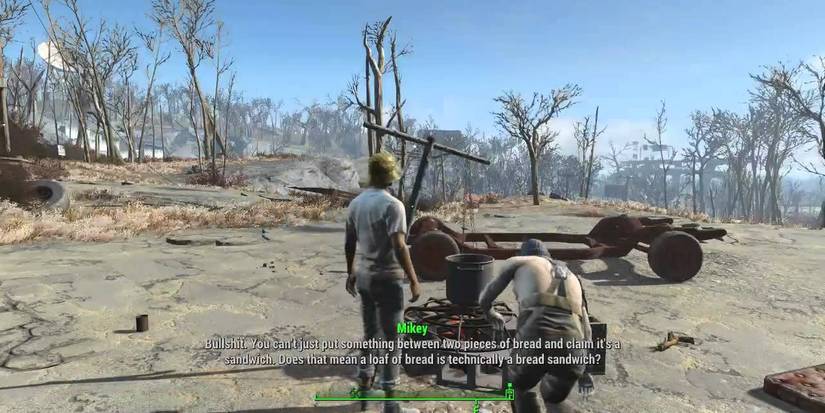
While the community was initially divided, the subsequent years have seen a massive resurgence in appreciation for these systems. Modding communities have further bolstered this, proving that the foundation provided by the base game—specifically the settlement building and the varied landscape—is robust enough to support years of additional content.
Implications: The Legacy of the Commonwealth
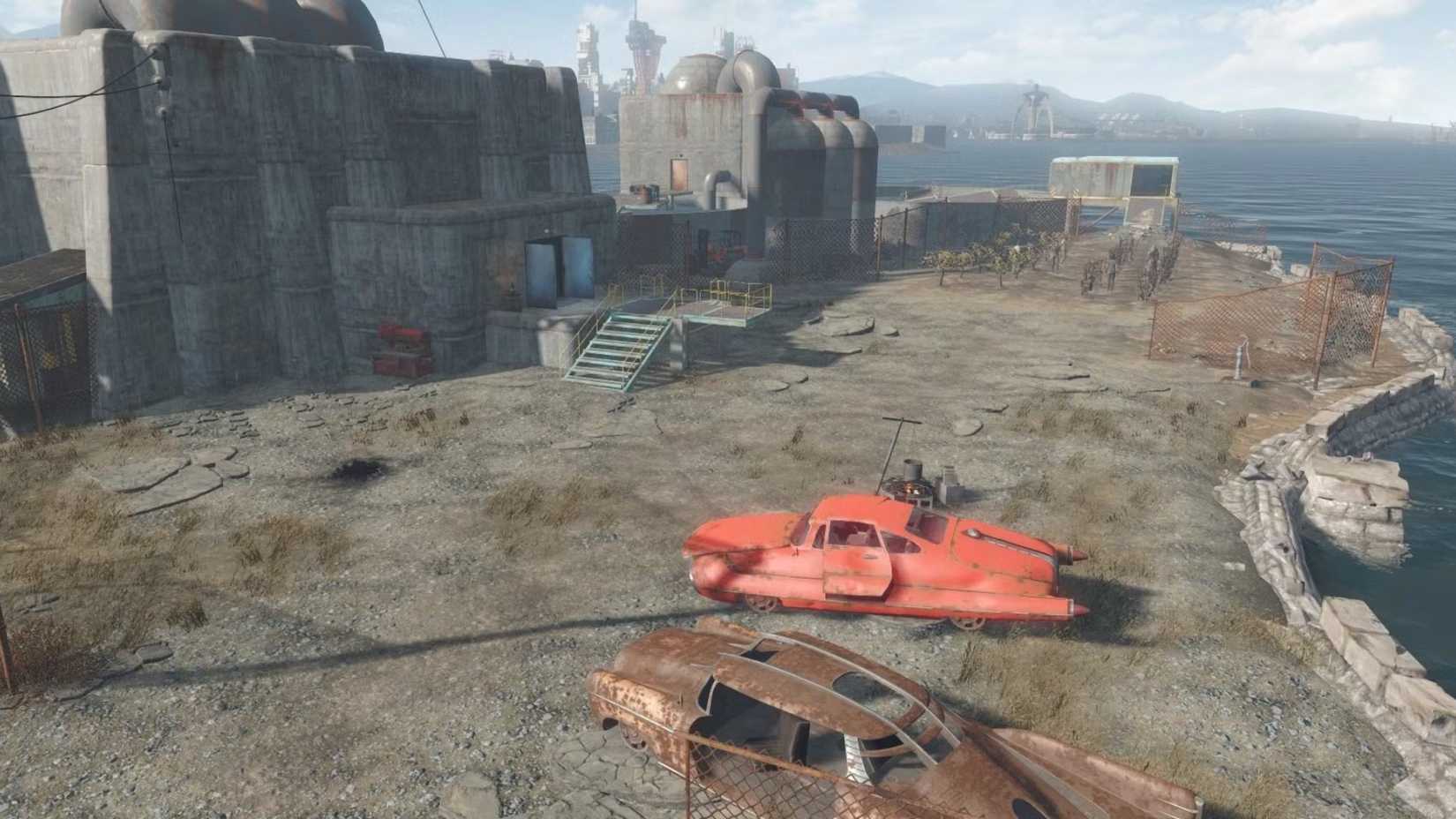
The success of Fallout 4’s exploration loop has had profound implications for how open-world games are designed today. It moved away from the "checklist" style of map clearing seen in many Ubisoft-style games and toward a "discovery-based" model.

Survival Mode: The Ultimate Test
The inclusion of "Survival Mode" served as the ultimate validation of the game’s design. By removing fast travel, requiring sleep to save, and introducing hunger, thirst, and illness, Bethesda transformed the Commonwealth from a sandbox into a survival horror experience. In this mode, the world becomes dangerous and daunting. Every trip to a new location requires careful preparation, map planning, and resource management. This mode essentially forced players to engage with the world at a granular level, proving that the map design was capable of supporting much more than just casual wandering.

Legendary Enemies and Character Growth
The "Legendary" enemy system was another stroke of genius for replayability. By randomizing the loot pool and giving enemies unique, powerful traits, the game created a "gambler’s itch." Every time you encounter a Legendary bloatfly or super mutant, there is a distinct excitement—what unique, game-breaking weapon might they drop? This system effectively turned combat into an extension of the looting loop, further incentivizing players to seek out the most dangerous and unexplored corners of the map.

Conclusion: A World That Keeps on Giving
Fallout 4 may not be the deepest narrative RPG in the series, but as a simulator of a post-apocalyptic world, it remains largely peerless. By layering environmental storytelling, a deep crafting economy, and reactive systems like settlements and survival mechanics, Bethesda created an experience where the map itself is the primary character.

Whether you are scouring the glowing ruins of the Glowing Sea for rare tech, or simply spending three hours perfecting the architecture of a settlement at The Castle, the game constantly gives you a reason to keep moving forward. It is this constant, subtle pull—the feeling that there is always something over the next ridge, under the next floorboard, or inside the next terminal—that keeps Fallout 4 relevant. It is a testament to the idea that in a truly great open-world game, the journey is not just the objective; it is the reward. As long as there is a wasteland to wander, players will find a reason to return to the Commonwealth, driven by the eternal, addictive question: "What’s over there?"


 Ali Ikhwan
 Nana Wu