Nana
Nana
The modern landscape of PC gaming is currently dominated by a singular, polarizing metric: frame generation. As GPU manufacturers race to push higher frame counts through AI-driven interpolation, a divide has emerged within the enthusiast community. On one side, proponents argue that technologies like NVIDIA’s Frame Generation have breathed new life into aging hardware, allowing users to experience demanding titles at smooth frame rates that were previously unattainable. Conversely, critics maintain that the technology has become a crutch—a "get out of jail free" card for developers to ship titles with poor optimization, relying on the rendering pipeline to mask inefficiencies.
While this debate continues to rage across forums and social media, a critical point is often overlooked: frame generation is merely one tool in a much larger, more sophisticated kit. Achieving a premium gaming experience—characterized by visual fidelity, minimal input latency, and impeccable frame pacing—does not require a reliance on synthetic frames. In fact, for many users, leveraging advanced upscaling, thermal management, and post-processing AI yields superior results.
The Evolution of DLSS: Why Version 4.5 Is a Game-Changer
Since its inception, NVIDIA’s Deep Learning Super Sampling (DLSS) has been the gold standard for image reconstruction. However, the introduction of DLSS 4.5 at CES 2026 marked a significant inflection point in the technology’s trajectory.
The Technological Leap
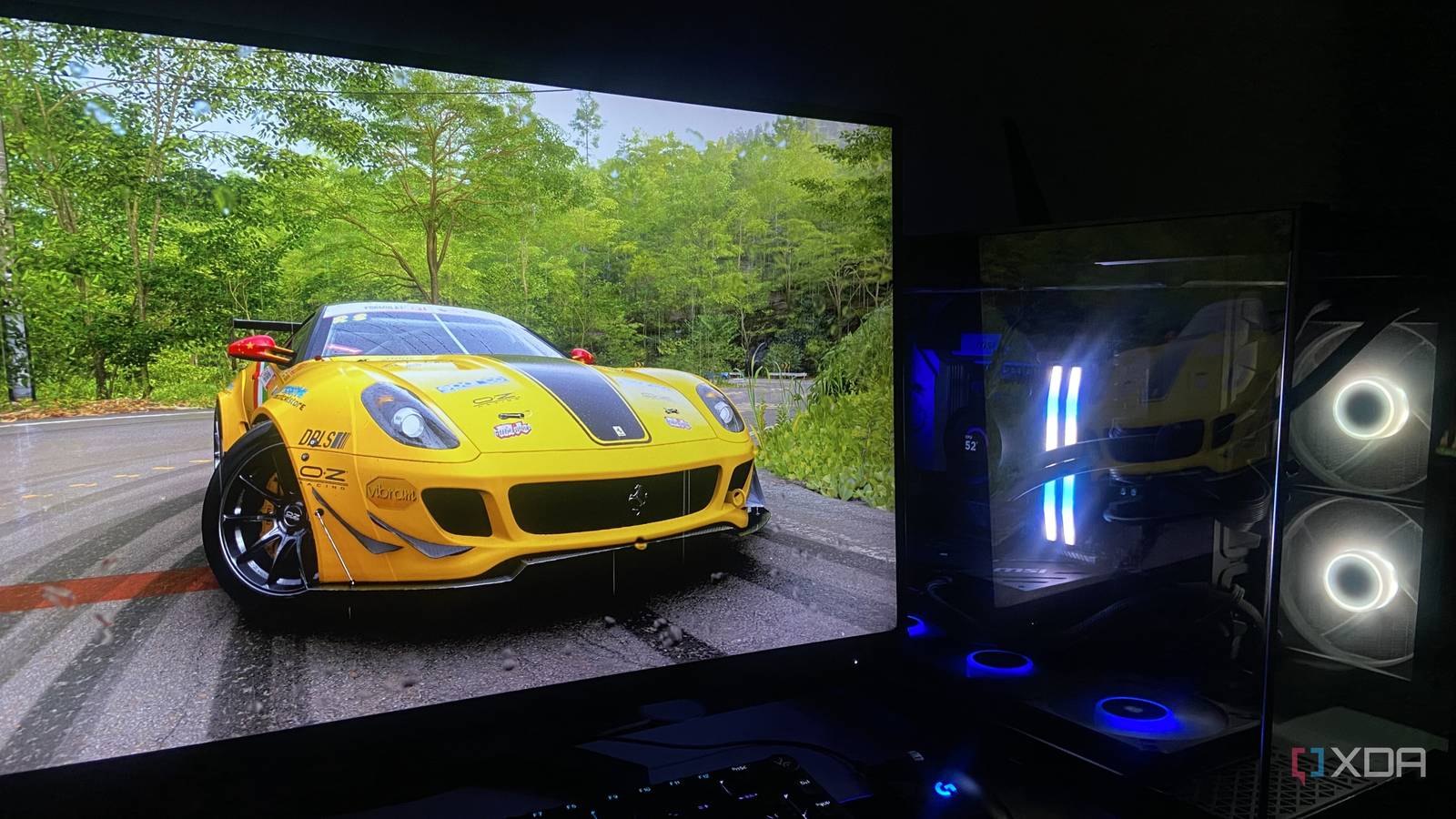
DLSS 4.5 is powered by a second-generation transformer model, representing a massive leap in capability over its predecessor. The underlying model was trained on five times the compute power of previous iterations, utilizing an exponentially expanded dataset. This allows the algorithm to possess a more profound "understanding" of scene composition, motion vectors, and pixel sampling.
For the end user, this means that even without frame generation enabled, the Super Resolution component of DLSS 4.5 provides a cleaner, sharper, and more temporally stable image than ever before. It is not merely an upscaler; it is an intelligent reconstruction engine that makes native-resolution rendering increasingly difficult to justify.
Democratizing High-End Visuals
Perhaps the most impressive aspect of DLSS 4.5 is its accessibility. Available across the entire RTX GPU lineup, it provides a lifeline to users with older hardware. Testing on an RTX 2070 Super reveals that the latest version of DLSS can make an aging Turing-architecture card behave with the visual fidelity and temporal stability of a GPU from a full generation later. By enabling this through the NVIDIA app, users can reclaim performance in titles that were previously unplayable, without the latency penalties often associated with frame generation.

The Art of Optimization: Overclocking Meets Undervolting
While software-based upscaling handles the visual workload, the raw performance of the graphics card remains the foundation of the gaming experience. The traditional approach to extracting more power—overclocking—is often executed incorrectly, leading to thermal throttling and inconsistent frame times.
Breaking the Thermal Ceiling
Most users instinctively push core and memory clocks to their limits. However, doing so in isolation ignores the thermal ceiling. As a GPU draws more power, it generates more heat; when the card hits its thermal limit, it down-clocks, leading to stuttering and inconsistent frame pacing.
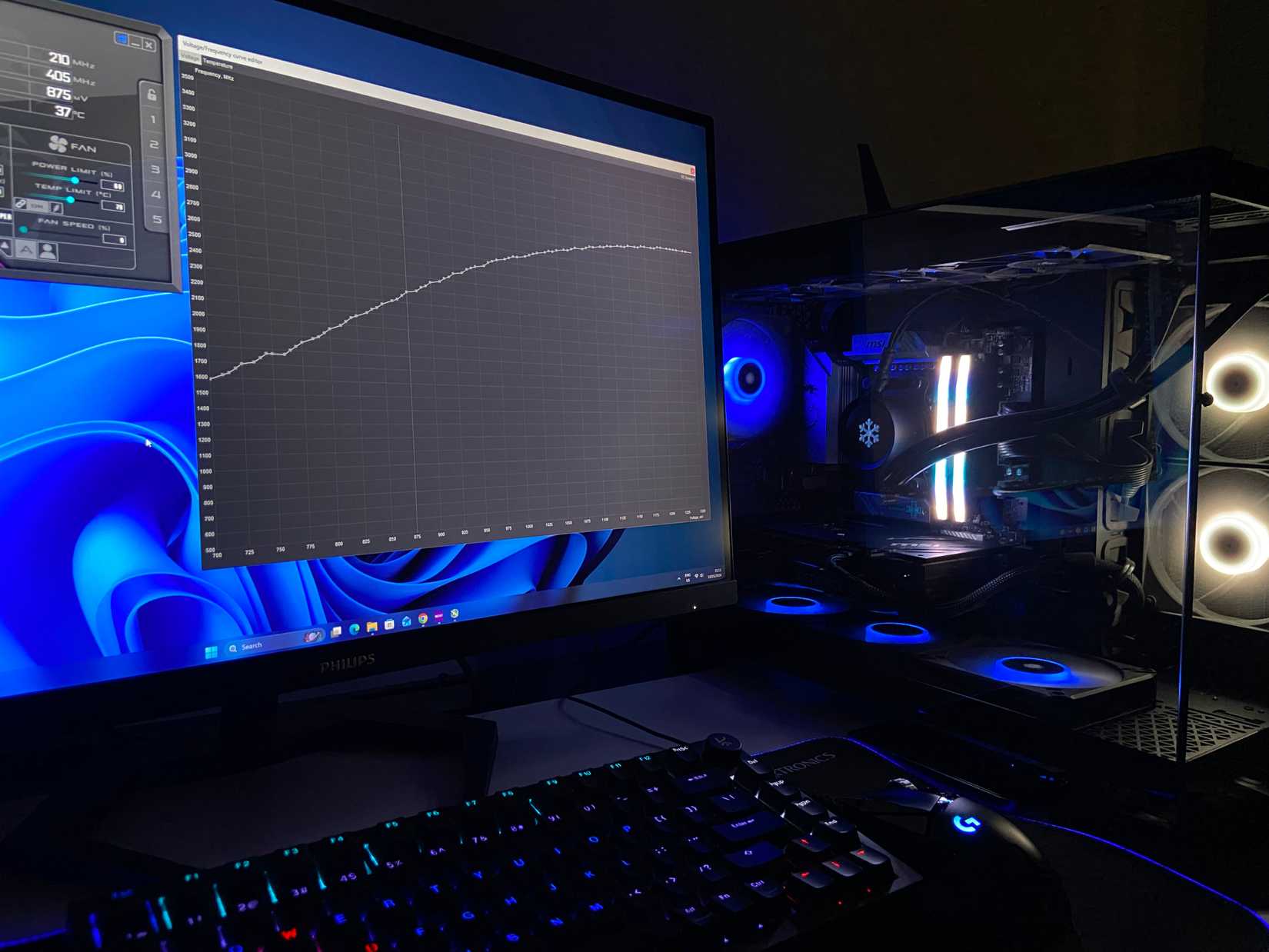
The solution favored by seasoned enthusiasts is the simultaneous application of overclocking and undervolting. By manually adjusting the voltage-frequency curve, users can pull the voltage down while pushing the frequency target higher. This counterintuitive approach results in a GPU that operates at higher sustained clock speeds while running cooler and consuming less power. The result is a more stable, consistent frame delivery that provides a smoother experience than a high-but-unstable raw overclock.

AI-Driven Visuals: RTX Dynamic Vibrance and RTX HDR
Beyond raw performance, the visual "vibe" of a game—its color depth, contrast, and lighting—often dictates the level of immersion. NVIDIA’s suite of AI-driven features, specifically RTX Dynamic Vibrance and RTX HDR, has become a mandatory inclusion for any high-end PC setup.
Solving the HDR Dilemma
Windows has historically struggled with a consistent and satisfying implementation of High Dynamic Range (HDR) across its gaming library. Many older titles lack native HDR support entirely, leaving them looking washed out or flat. RTX HDR solves this by intelligently reconstructing lighting and color data, breathing new life into titles that predate the HDR era.
The Role of Dynamic Vibrance
RTX Dynamic Vibrance acts as an intelligent post-processing filter. Unlike static color saturation settings that can leave an image looking garish or unnatural, the "dynamic" aspect of this feature adjusts saturation and contrast on a scene-by-scene basis. It enhances the vibrancy of a forest in a fantasy RPG or the neon lights of a cyberpunk city without causing "color clipping" or oversaturating skin tones. When used in tandem with RTX HDR, these tools provide a visual "completeness" that is difficult to abandon once experienced.

The Chronology of Modern GPU Discourse
- 2018–2020: The rise of dedicated ray-tracing hardware and the infancy of DLSS 1.0. The focus was primarily on proving that AI could effectively replace traditional anti-aliasing.
- 2021–2023: The "Frame Generation Era" begins. NVIDIA introduces DLSS 3, shifting the focus to frame interpolation. Critics begin to question the impact on input latency.
- 2024–2025: A period of optimization. Users begin pushing back against poor game optimization, leading to a broader discourse on "effective" versus "raw" performance.
- 2026: The release of DLSS 4.5 and the maturation of AI-assisted post-processing. The industry shifts toward a "quality-first" mindset, emphasizing temporal stability and color accuracy over raw frame-counting.
Implications for the Future of PC Gaming
The discourse surrounding frame generation serves as a proxy for a much larger struggle in the PC gaming industry: the balance between developer efficiency and consumer experience. When developers rely on frame generation to hide poor optimization, the end-user experience suffers through increased input latency and visual artifacts.
However, the availability of tools like DLSS 4.5, undervolting profiles, and AI-driven post-processing empowers the user to take control of their own experience. The goal of PC gaming should not be to chase the highest number on a frame-rate counter, but to achieve a state of "visual completeness."
Conclusion: Reclaiming the Narrative
As we move deeper into 2026, it is imperative that the conversation shifts. We must stop letting frame generation dominate the narrative of what constitutes a "good" gaming experience. Whether you are running a cutting-edge RTX 40-series card or a veteran of the 20-series, there are numerous ways to enhance your gameplay that do not rely on synthetic interpolation.
By prioritizing temporal stability, thermal efficiency, and color accuracy, players can create an experience that feels fluid, responsive, and deeply immersive. PC gaming has always been defined by its customizability and the agency it gives to the user. By utilizing the full breadth of the tools available today, you can ensure that your setup is not just running games, but elevating them. The next time you find yourself frustrated by a game’s performance, remember: there is more to the story than just the frame rate.


 Ali Ikhwan
 Lina Hope