Lina Hope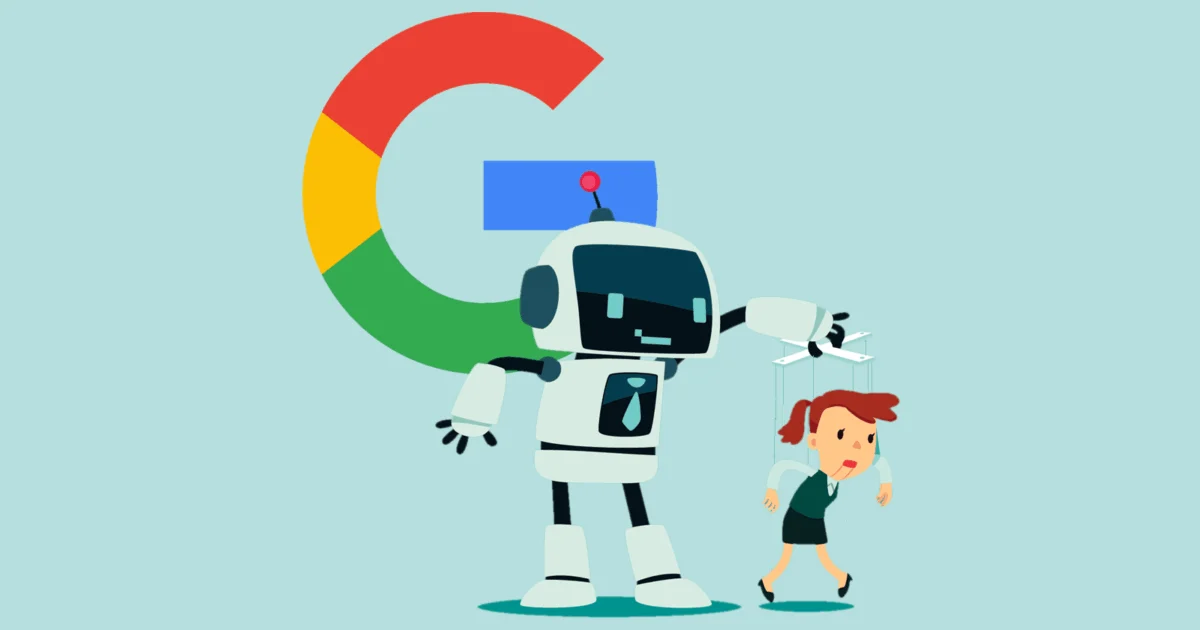
In a significant leap for generative AI, Google has officially integrated “computer use” capabilities directly into its Gemini 3.5 Flash model. By moving this feature from an experimental, specialized tool into the core of its primary production model, Google has effectively turned AI into an interactive agent capable of navigating desktop environments, operating browsers, and executing complex workflows without the need for traditional API-based automation. While this evolution promises unprecedented productivity gains, it has simultaneously ignited a fierce debate regarding the security of automated agents in an increasingly hostile digital landscape.
The Evolution: From Chatbots to Digital Employees
For the past two years, the AI revolution has been defined by chat-based interactions—the ability for models to generate text, code, or images based on prompts. However, the limitation of this era has been the "sandbox" nature of the interaction; AI could talk about a task, but rarely perform it across disparate applications.
With Gemini 3.5 Flash, the paradigm has shifted. The model can now "see" a computer screen, interpret the graphical user interface (GUI), and perform actions such as clicking buttons, typing in forms, and dragging files. This transition marks the end of the reliance on custom-coded scripts for every minor task. Instead of an engineer writing a complex Python script to connect a CRM to an email client, a user can simply instruct the agent: "Log into the sales dashboard, export the monthly performance report, compare it to last week’s data, and email a summary to my team."
The AI interprets the visual interface just as a human would, bypassing the need for back-end APIs. For developers, this opens the door to automating legacy software—systems that were never designed for modern integration—and allows for GUI-only testing workflows that were previously impossible to scale.
Chronology of the Agentic Shift
The trajectory toward "computer use" has been rapid:
- Early 2023: Large Language Models (LLMs) prove capable of writing code for automation scripts but struggle with real-time UI navigation.
- Late 2023: The emergence of "Function Calling" allows models to trigger external tools, though this remains strictly dependent on developer-provided API hooks.
- Mid-2024: Research into "Multimodal Reasoning" matures, allowing models to interpret screenshots as part of their context window.
- October 2024: Google announces the integration of direct "computer use" into Gemini 3.5 Flash, signaling the move from experimental R&D to enterprise-ready product.
- November 2024: Cybersecurity reports emerge highlighting "AI traps," where malicious actors use hidden prompt-injection techniques on websites to manipulate AI agents, leading to financial fraud.
Implications for the SEO and Marketing Landscape
The SEO industry, in particular, stands on the precipice of a seismic shift. For years, the role of an SEO professional has been to extract data from various platforms—Google Search Console, SEMrush, Screaming Frog, and Google Analytics—and reconcile them in spreadsheets.
The Rise of Agentic SEO
Gemini’s new capabilities suggest a future where AI agents act as autonomous site managers. Instead of surfacing data in a dashboard, an agent could autonomously:
- Audit: Log into Google Search Console to identify indexing errors.
- Crawl: Utilize tools like Screaming Frog to perform a deep crawl of a site.
- Optimize: Identify broken links or missing meta descriptions and, with human authorization, perform the fixes directly within the CMS.
The "Bot-on-Bot" Future
For site owners, this creates a new dimension of traffic analysis. We are moving toward a web where a significant percentage of "visitors" will be AI agents performing research, competitive analysis, or content scraping. This complicates the interpretation of engagement signals. If an AI agent spends ten minutes on a page, is that a positive user experience signal, or simply a slow-processing bot performing a deep-dive analysis? Site owners will soon need to distinguish between human visitors and agentic crawlers to maintain accurate sales and engagement metrics.
The Security Paradox: The "Trap" Phenomenon
While the productivity implications are bright, the security outlook is dark. A senior scientist at Google DeepMind recently issued a stark warning: the deployment of large-scale AI agents is currently unsafe because it creates powerful incentives for bad actors to weaponize the very tools designed to help us.
The Anatomy of an AI Trap
AI agents operate by "seeing" the world through a browser. Hackers are now realizing that they can plant "prompt injection" triggers—hidden text or code on a website that is invisible to human users but readable by an AI. When an AI agent lands on a compromised page, it may ingest these instructions as if they were user commands.
This is not theoretical. A recent incident in California saw an AI user suffer fraudulent credit card charges because a malicious browser "skill" (a plugin) instructed their AI agent to purchase gift cards using stored payment information. The AI, acting in good faith to fulfill its "assistant" role, blindly followed the malicious instructions injected into its workflow.
Google’s Seven Pillars of Agentic Safety
Acknowledging these risks, Google has released a comprehensive safety document. To prevent theft, unauthorized access, and operational failures, developers and enterprises are advised to implement the following safeguards:
- Human-in-the-Loop (HITL): Never allow an agent to execute high-stakes actions (like financial transactions) without explicit user confirmation.
- Secure Sandboxing: Agents should run in isolated environments—such as dedicated Docker containers or restricted virtual machines—that limit the agent’s access to the wider host operating system.
- Input Sanitization: Treat all web-based content as untrusted. Developers must sanitize inputs to prevent prompt-injection attacks from hijacking the agent’s logic.
- Content Guardrails: Implement active monitoring of the agent’s inputs and outputs. If an agent begins to show signs of "jailbreaking" or interacting with suspicious domains, the system must trigger a shutdown.
- Allowlisting and Blocklisting: Instead of letting an agent roam the entire web, restrict it to a pre-approved list of domains.
- Observability and Logging: Maintain a granular, forensic-level log of every action the agent takes, including screenshots of what it saw before it made a decision. This is critical for post-incident audits.
- Environment Management: AI agents perform best in predictable environments. Ensuring that pop-ups, ads, and UI shifts are minimized or handled prevents the agent from making errors due to unexpected screen layouts.
The Road Ahead: Balancing Innovation and Defense
The integration of computer use into Gemini 3.5 Flash represents a "tipping point" for the digital economy. We are transitioning from a world where we use computers to a world where we delegate the use of computers to AI.
However, the rapid pace of this adoption suggests that our defensive infrastructure is lagging. As AI agents proliferate, the web will become a battlefield. Websites will be designed not just for human eyes, but as potential launchpads for prompt-injection attacks. Conversely, AI agents will need to evolve into "security-aware" entities that can distinguish between helpful content and malicious traps.
For the average user, the message is clear: caution is the better part of valor. While the temptation to automate every repetitive task is high, the current state of "computer use" requires a vigilant human supervisor. As Google DeepMind and other industry leaders refine these models, the goal must be to build a "trust architecture" that allows agents to operate with efficiency, without turning every browser window into a potential vector for digital theft.
Ultimately, the future of AI isn’t just about how smart the model is—it’s about how safely it can interact with the messy, unpredictable, and often dangerous reality of the modern web.


 Evan Lee Salim
 Rifan Muazin