

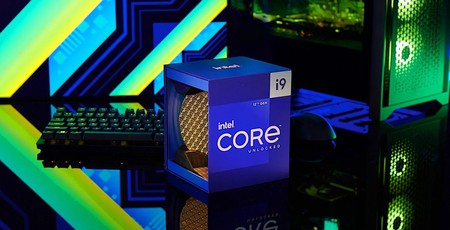
In a move that marks the most significant architectural shift for the company in over a decade, Intel officially unveiled its 12th Generation "Alder Lake-S" desktop processors this past Wednesday. This launch represents not just a new series of chips, but the debut of Intel’s "Intel 7" process node and a radical shift toward a hybrid architecture designed to redefine the performance landscape for both gaming enthusiasts and professional content creators.
The Dawn of a New Architecture: Main Facts
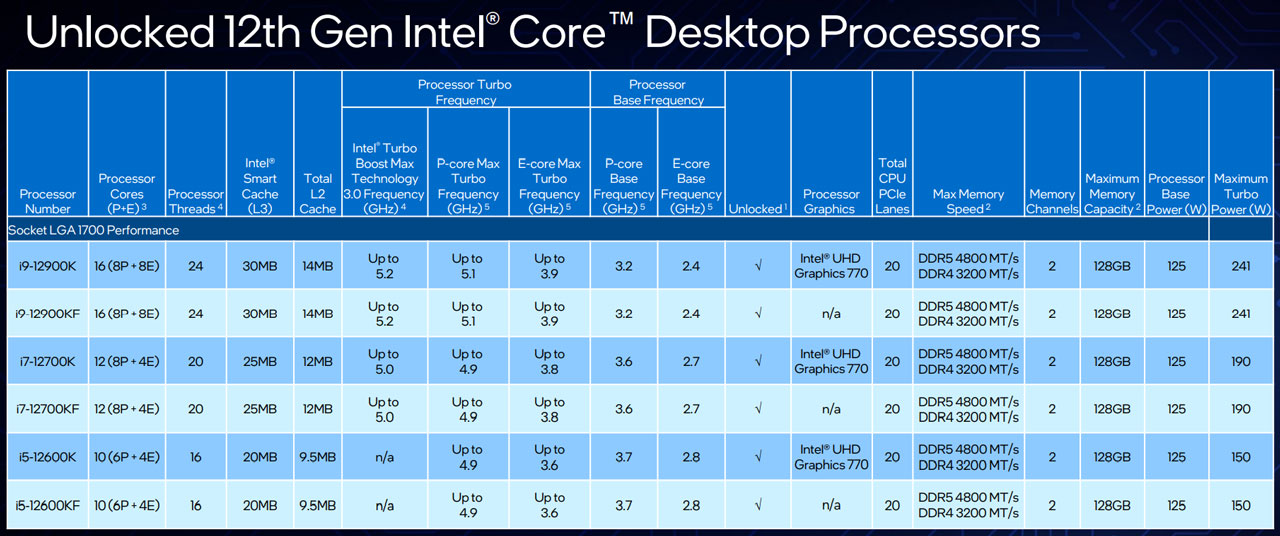
The initial rollout focuses on the high-end enthusiast market, featuring six distinct SKUs: the Core i9-12900K/KF, the Core i7-12700K/KF, and the Core i5-12600K/KF. These processors are all multiplier-unlocked, catering to the overclocking community. The "KF" variants, which have become a staple of Intel’s recent product stacks, offer the same performance profiles as their "K" counterparts but lack an integrated GPU (iGPU), providing a cost-saving option for users who intend to pair their system with a dedicated graphics card.
The defining feature of Alder Lake is its hybrid architecture, which bifurcates the CPU into two distinct types of cores: Performance-cores (P-cores) and Efficient-cores (E-cores). By combining high-frequency cores designed for heavy, single-threaded tasks with smaller, power-efficient cores designed for background processes and multi-threaded scaling, Intel aims to achieve a balance between peak performance and thermal efficiency that was previously unattainable on monolithic silicon.
A Chronological Progression: From Architecture Day to Retail Shelves
The journey to this launch began in earnest during Intel’s Architecture Day in August 2021, where the company first teased the potential of the Alder Lake design. At that time, the industry was left with more questions than answers regarding specific clock speeds, power limits, and the reality of the ecosystem support for the new LGA 1700 socket.
Following the formal announcement this week, the industry is now in a holding pattern. While technical specifications and Intel’s internal benchmarks are public, the embargo on third-party reviews remains firmly in place. Consumers and enthusiasts will have to wait until November 4, 2021, when both the processors and the supporting hardware (PCs and standalone chips) hit retail shelves, to see independent verification of these bold performance claims.
Supporting Data: Power, Performance, and Pricing
Intel has provided a detailed breakdown of the technical specifications for these new chips, highlighting a complex interplay between Processor Base Power (PBP) and Maximum Turbo Power (MTP). While the PBP figures are listed at more modest levels, Intel has been transparent that enthusiast-grade Z690 motherboards will default to the higher MTP limits to extract every ounce of performance. For the flagship i9-12900K, this means the chip can, and likely will, consume over 240W under sustained heavy loads, necessitating high-end cooling solutions.
The Performance Landscape
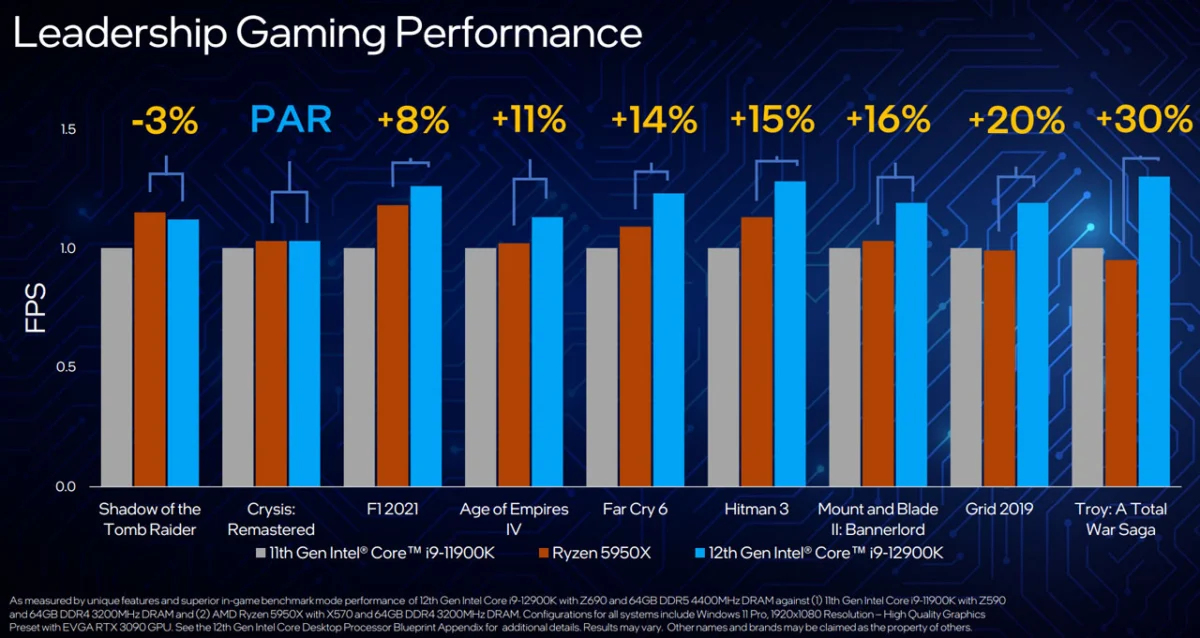
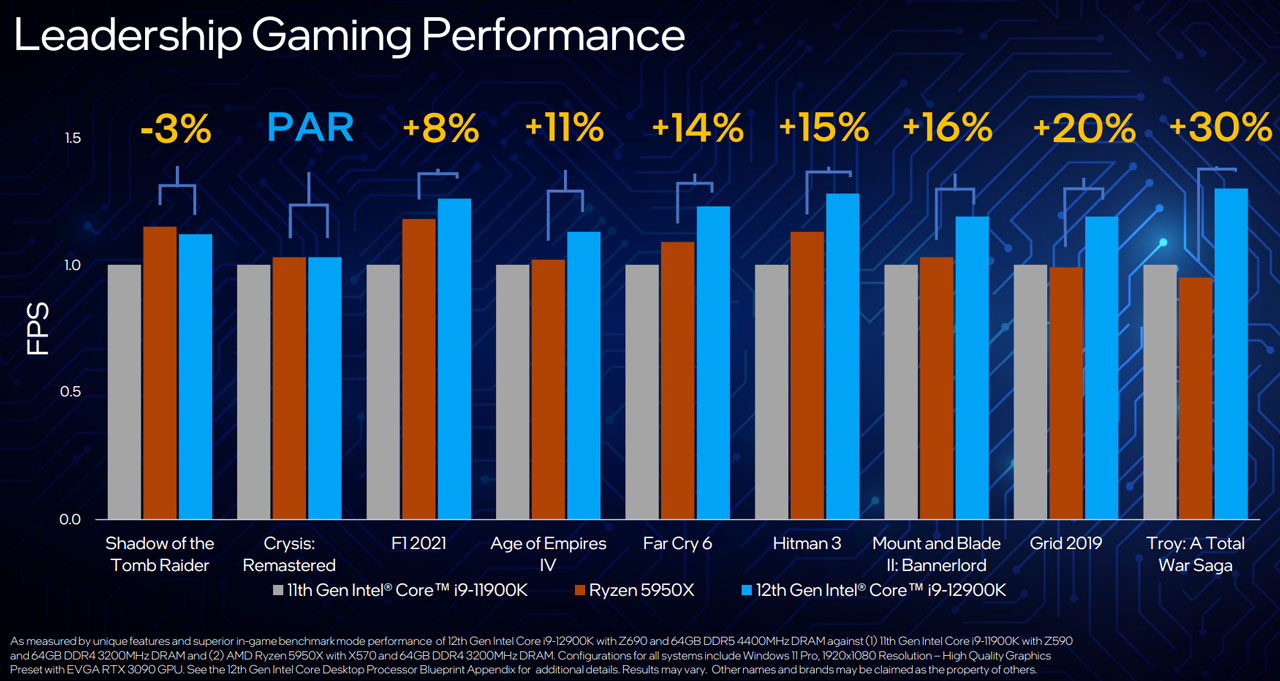
Intel’s internal testing paints a picture of dominance, particularly in the gaming sector. The company claims the i9-12900K is the "world’s best gaming processor," boasting 16 cores (8 P-cores and 8 E-cores) and 24 threads, with a boost frequency reaching up to 5.2GHz.
In side-by-side comparisons, Intel’s data suggests the i9-12900K holds a 12% lead over the AMD Ryzen 9 5950X in modern gaming titles. However, these figures are accompanied by a notable caveat. The test systems used for the AMD comparison were reportedly running on Windows 11 configurations that had not yet received the L3 cache latency patches, an oversight that could artificially suppress AMD’s performance by up to 15%. This nuance serves as a reminder that architectural gains in the real world are often dependent on the software stack’s ability to communicate effectively with the hardware.
Beyond gaming, the gains in productivity are substantial. Intel reports that in processor-intensive creative workflows, the 12th Gen chips are at least 33% faster than their 11th Gen (Rocket Lake) predecessors. This leap is attributed to the increased core count and the efficiency of the hybrid architecture in handling multi-threaded workloads.
The Pricing Strategy
The pricing for the launch lineup is positioned to remain competitive within the high-end desktop market:
- Intel Core i9-12900K: $590
- Intel Core i7-12700K: $410
- Intel Core i5-12600K: $290
The 600-Series Ecosystem: Motherboards and Memory
A new processor architecture requires a new platform, and Intel is launching the 600-series chipset, led by the Z690, alongside these chips. This platform is a significant leap forward in I/O capabilities, bringing native support for PCIe 5.0 and DDR5 memory.
The ecosystem support from Intel’s partners is massive. Manufacturers such as Asus, Gigabyte, and MSI have already unveiled an array of motherboards to suit every form factor, from compact Mini-ITX builds to massive E-ATX workstations. Asus alone has announced nineteen distinct Z690 models, indicating the depth of industry support for this transition. Furthermore, memory manufacturers like G.Skill are already pushing the boundaries of the new DDR5 standard, boasting extreme speeds—such as DDR5-6800—to ensure that memory bandwidth does not become a bottleneck for the new silicon.
Official Responses and Industry Implications
Intel’s strategy with Alder Lake is clearly aimed at reclaiming the performance crown from AMD, which has held a significant lead in core counts and efficiency for several years. By embracing a hybrid architecture, Intel is signaling a long-term shift in how it designs processors, moving away from a "bigger is better" approach to one that prioritizes task-specific processing.
Industry analysts are watching the move to DDR5 and PCIe 5.0 closely. While these technologies offer clear bandwidth advantages, they also represent a "platform tax" for early adopters, as they require new motherboards and potentially expensive new RAM kits. The decision to support both DDR4 and DDR5 on the Z690 platform is a tactical masterstroke by Intel, allowing users to transition to the new 12th Gen processors without being forced to pay the premium for early-adopter memory modules if they choose not to.
Looking Ahead: The November 4th Milestone
The period between the launch announcement and the November 4th availability date is a critical window for Intel. The company is betting heavily that the hybrid architecture will be transparent to the user, managed effectively by the new Intel Thread Director in Windows 11. This software-hardware integration is the "secret sauce" that ensures the OS knows exactly when to assign a task to a high-performance P-core versus an efficient E-core.
If the performance holds up under independent scrutiny, Intel may have effectively neutralized the momentum that AMD built over the last four years. However, if the thermal demands of the i9-12900K prove too difficult to tame, or if the thread scheduling shows inconsistency in real-world applications, the "best gaming processor" title may be short-lived.
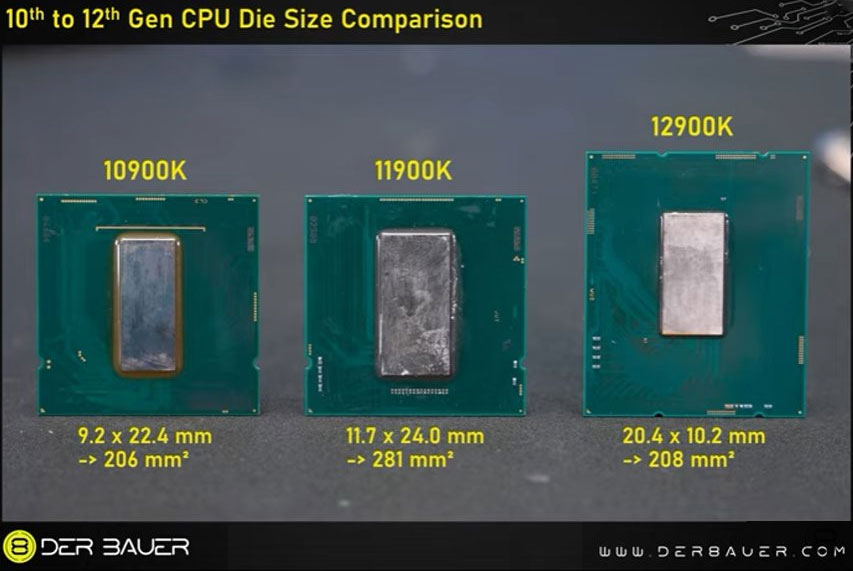
As the tech community prepares for the November release, the consensus is clear: the desktop CPU market has entered its most dynamic phase in a decade. With Alder Lake, Intel is not just playing catch-up; it is attempting to dictate the future of computing architecture by forcing the industry toward a hybrid, high-efficiency, high-performance paradigm. Whether this translates into a sustained dominance in the market will be determined by the benchmarks, the thermals, and, ultimately, the user experience of those who make the jump to the LGA 1700 platform later this year.










No comments yet. Be the first to join the conversation!