

In a significant move designed to bridge the conversion gap for service-based businesses, Meta has unveiled a new feature for Facebook lead ads: embedded appointment bookings. This update allows advertisers to integrate third-party scheduling platforms directly into the lead generation workflow. By enabling users to transition from an ad engagement to a confirmed appointment without ever leaving the Facebook ecosystem, Meta is tackling one of the most persistent hurdles in digital marketing: the rapid decay of consumer intent.
The Core Innovation: Closing the Conversion Gap
For years, the standard lead generation funnel has been fraught with "drop-off points." A prospective customer sees an ad, clicks, fills out a form, and is then either redirected to a landing page or forced to wait for a follow-up email or phone call. In this time, the "warm" lead often goes cold.
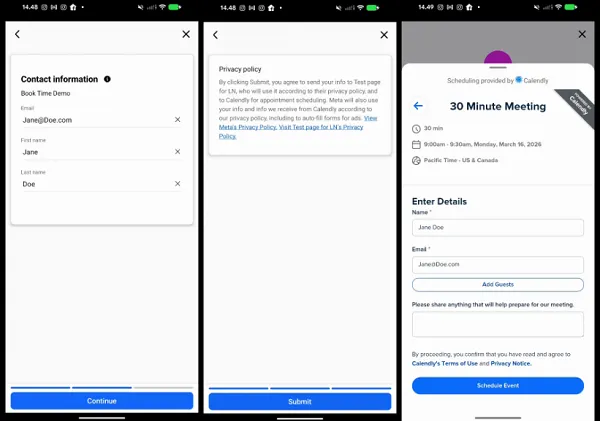
Meta’s new embedded appointment booking feature eliminates this latency. By allowing a scheduling interface to appear immediately after a user submits their contact information, the advertiser captures the lead at the precise moment of maximum interest. This seamless transition is intended to boost conversion rates significantly, as it removes the need for manual scheduling follow-ups and decreases the steps required for a customer to secure a time slot.
Chronology of the Development and Rollout
The announcement of this feature follows a broader trend within Meta’s advertising ecosystem to prioritize "native" experiences—keeping users within the platform to maximize engagement and data fidelity.
- Initial Testing Phase: Meta identified that the time lag between form submission and appointment booking was a primary point of failure for service-based advertisers, such as clinics, law firms, and consulting agencies.
- Official Announcement: Meta officially introduced the integration, highlighting that it currently supports major scheduling tools like Calendly and HighLevel.
- Phased Integration: The rollout began with select partners, focusing on seamless API connectivity.
- Upcoming Milestones: While support for HubSpot is slated for an early August release, Meta has confirmed that global availability for the feature across all relevant Facebook ad accounts is expected to be achieved by October.
Supporting Data: Why "Frictionless" Matters
The digital marketing landscape is increasingly defined by the battle against friction. According to industry benchmarks, every additional click or page load required in a signup process results in a drop-off rate of approximately 20% to 30%.
For service businesses, the "intent window" is notoriously narrow. Studies show that a lead’s likelihood of booking an appointment decreases by nearly 40% if they are not contacted or given a clear path to book within the first hour of their initial interest. By embedding the booking tool directly into the ad’s "thank you" or post-submission screen, Meta is effectively providing a "zero-latency" booking path. This architecture mimics the success of e-commerce "Buy Now" buttons, applying that same immediacy to the service sector.
Official Stance and Strategic Rationale
Meta’s product team has been vocal about the necessity of this update, noting that the traditional model—collecting a lead and hoping for a manual follow-up—is becoming obsolete in an era of instant gratification.
"The gap between form submission and appointment booking has always been a challenge for service-based advertisers," a Meta spokesperson noted in the official release. "A lead might fill out your form with genuine interest, but by the time they receive a follow-up email or navigate to your booking site hours later, that intent has cooled. With embedded appointment booking, you eliminate that gap entirely. The booking experience appears immediately after form submission, right when the lead’s interest is at its peak."
This strategic shift reflects Meta’s commitment to providing tools that drive "direct response" rather than just "brand awareness." For the advertiser, the benefit is twofold: higher conversion volume and cleaner data, as the booking is linked directly to the ad campaign’s tracking parameters.
Technical Implementation: Accessibility for All
One of the most noteworthy aspects of this update is the technical barrier to entry—or lack thereof. Meta has engineered this feature to be essentially "plug-and-play," ensuring that small business owners without dedicated development teams can leverage the technology.
To implement the feature, advertisers follow a simplified workflow:
- Select the Lead Ad Objective: Choose the lead generation campaign type.
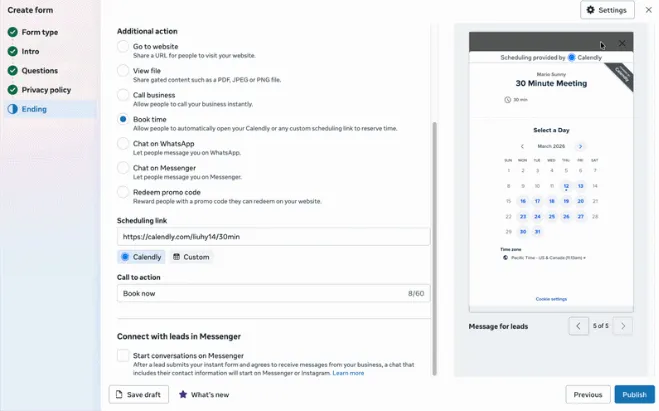
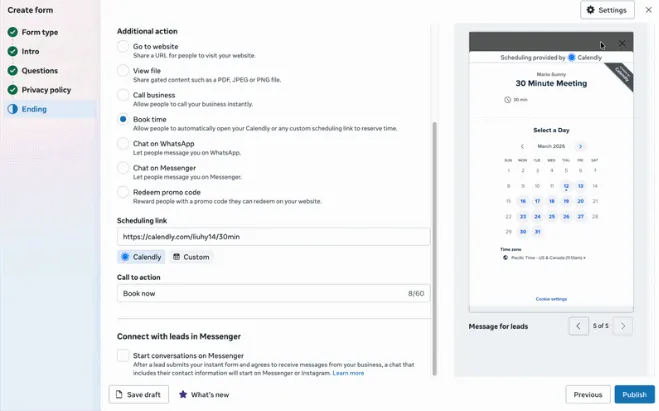
- Define the Call-to-Action (CTA): Within the ad creation dashboard, the advertiser selects "Book Time" as the primary CTA.
- Link Integration: The advertiser pastes their scheduling link (from Calendly, HighLevel, etc.).
- Auto-Detection: The system automatically detects the provider, pulls in the scheduling interface, and embeds it into the post-submission screen.
No custom coding, API keys, or complex webhooks are required, lowering the threshold for adoption among SMBs (Small to Medium Businesses).

Implications for the Marketing Industry
The introduction of embedded bookings has several far-reaching implications for the digital advertising ecosystem.
1. Shift in Lead Quality Expectations
With a frictionless path to booking, advertisers will likely see an increase in the quantity of bookings. However, this also forces businesses to be more prepared. Since leads are now booking appointments directly into a calendar, businesses must ensure their availability is updated in real-time to avoid double-bookings or scheduling conflicts.
2. The Power of Third-Party Ecosystems
By partnering with platforms like Calendly and HighLevel, Meta is acknowledging the strength of the existing "marketing stack." Rather than trying to build its own calendar software, Meta is positioning itself as the central hub that connects to the tools businesses already use. This "open platform" approach is likely to encourage more SaaS providers to integrate with Meta’s lead ads, further expanding the ecosystem.
3. Heightened Importance of Data Privacy
As Meta continues to collect more data within its own interface, the importance of privacy compliance becomes paramount. By keeping the booking process within Facebook, Meta ensures that the data is handled within its secure environment, which may be a relief to advertisers navigating complex GDPR or CCPA regulations, as it reduces the need to send user data to third-party tracking pixels in some instances.
4. A Challenge to Competitors
This move puts pressure on other advertising platforms, such as LinkedIn and Google Ads, to offer similar native integrations. If Facebook becomes the "easiest" place to book an appointment, it may command a larger share of the service-sector advertising budget, forcing competitors to accelerate their own product roadmaps.
The Future of Service-Based Ads
Looking ahead, the logical evolution of this feature would be the introduction of automated reminders and CRM syncing that goes beyond the current capabilities. If Meta can successfully integrate the entire lifecycle of a lead—from discovery to appointment confirmation to automated SMS/email reminders—they will have effectively created a self-contained CRM for small businesses.
Furthermore, as the feature matures, we may see the integration of payment gateways. Imagine a user seeing an ad for a consultation, booking the time, and paying the deposit fee without ever leaving the Facebook interface. This would complete the loop from "Interest" to "Revenue," marking a significant milestone in the history of social media advertising.
Conclusion: A Win for Efficiency
Meta’s embedded appointment booking is a classic example of "feature optimization" that serves both the user and the advertiser. For the user, it provides a convenient, instant way to engage with a business. For the advertiser, it provides a direct path to revenue that bypasses the traditional, leaky funnel.
As businesses continue to navigate an increasingly competitive digital marketplace, the ability to act on consumer intent immediately is the ultimate competitive advantage. By removing the friction from the booking process, Meta has not only provided a new tool; they have fundamentally altered the mechanics of how service-based lead generation will function in the coming years. As the October global rollout approaches, businesses that adopt this integration early will likely find themselves ahead of the curve, capturing the leads that their competitors are currently losing to the "waiting game."











