


By Alfredo Federico Robelo | June 26, 2026
Television and cinema have long functioned as dream factories, crafting narratives that transport viewers into alternate versions of reality. However, there is one particular element of set design that consistently breaks the fourth wall of logic: the apartment. From Manhattan brownstones to sprawling Los Angeles lofts, screenwriters and set designers frequently curate living spaces that are aesthetically breathtaking but economically impossible. While audiences often suspend their disbelief for the sake of a compelling plot, the glaring discrepancy between a character’s on-screen salary and their square footage has become a subject of intense, recurring debate among fans and real estate experts alike.

The Logistics of Fantasy: Why Sets Need to Breathe
To understand why these apartments exist, one must first understand the logistical constraints of production. Filming a television show requires significant space for cameras, lighting rigs, boom operators, and the cast to maneuver. A realistic New York City apartment—often a cramped, claustrophobic shoebox—would be a cinematographer’s nightmare.
"The camera needs a place to go," explains production designer Sarah Jenkins. "We build these sets to accommodate the action. If we filmed in a real-world equivalent, the characters would be pinned against the walls, and the audience would never see the ensemble interact." Consequently, the "unrealistic apartment" is often a necessary compromise between the visual language of television and the gritty reality of urban living.

A Chronology of Cinematic Real Estate Inflation
The history of the "aspirational apartment" mirrors the evolution of the television landscape.
- The 1960s-70s: During this era, characters like Holly Golightly (Breakfast at Tiffany’s) set the archetype. Her Manhattan apartment was a chic, albeit sparse, space that symbolized urban independence, even if her lack of traditional income suggested a lifestyle subsidized by invisible means.
- The 1990s: This was the golden age of the "impossible rent." Friends redefined the sitcom landscape with Monica Geller’s West Village apartment. Despite the show’s attempt to justify the space via "rent control," the reality of a chef and a waitress holding down such prime real estate remains the gold standard for television implausibility.
- The 2000s: Shows like Sex and the City and How I Met Your Mother pushed the trend further. Carrie Bradshaw’s Upper East Side sanctuary became a cultural icon, representing the "writer’s life" that thousands of young professionals moved to the city to replicate—only to find that such spaces simply do not exist at that price point.
- The 2010s-Present: The trend has shifted toward "aspirational lofts" in shows like New Girl, The Mindy Project, and You. These spaces are characterized by industrial-chic aesthetics, soaring ceilings, and high-end finishes, catering to the modern viewer’s obsession with interior design and home renovation content.
Breaking Down the Economics: Case Studies
The disconnect between occupation and habitation is profound. Below is an examination of several characters whose living situations defy standard financial planning.

Monica Geller (Friends)
While the show provides the "rent-controlled grandmother" defense, the sheer volume of the space—a massive two-bedroom with a balcony in the West Village—is astronomical. In today’s market, such a space would demand a salary far beyond that of a line cook or a struggling actress.
Carrie Bradshaw (Sex and the City)
Carrie’s apartment is perhaps the most romanticized set in history. However, as any New Yorker will note, a freelance columnist for a single newspaper column would struggle to maintain that level of stability in a neighborhood like the Upper East Side.

Jessica Day (New Girl)
The loft in New Girl is a masterclass in production design. It is a four-bedroom industrial masterpiece. Even with four tenants, the sheer square footage and the "loft" classification in the Los Angeles rental market would command a premium that surely exceeds the modest earnings of a teacher and her eclectic group of roommates.
Frasier Crane (Frasier)
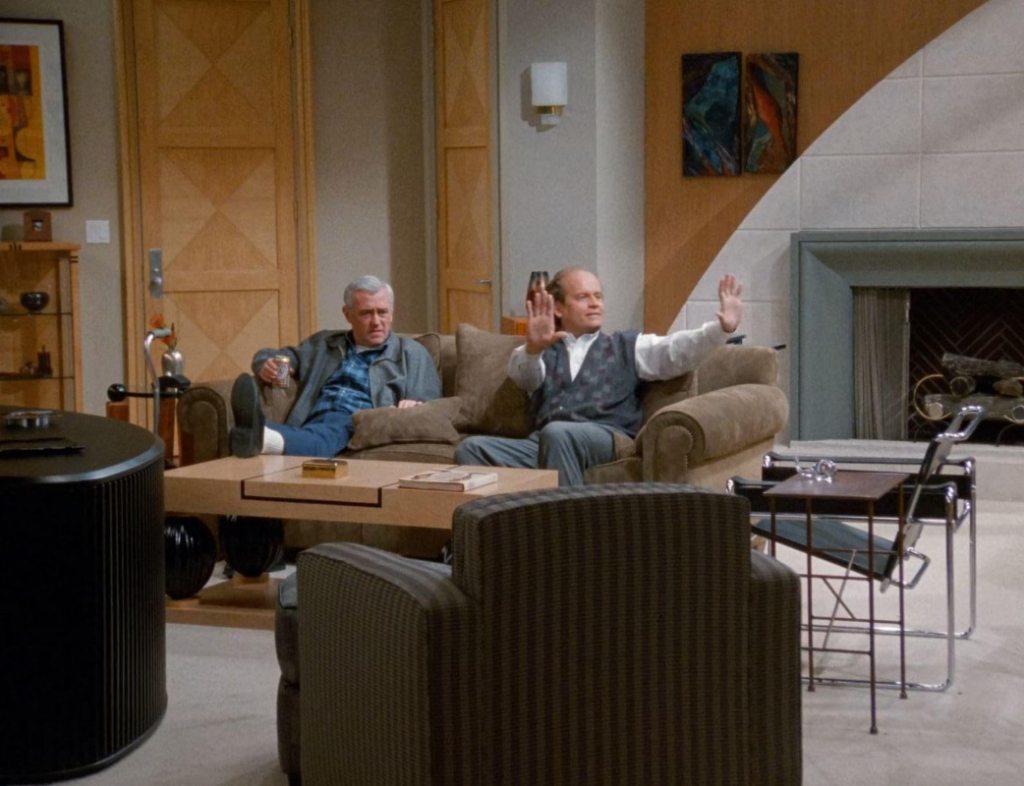
Frasier is perhaps the most egregious outlier. While he is a successful radio psychiatrist, his apartment—complete with a view of the Seattle Space Needle, designer furniture, and high-end art—is consistently cited by architectural critics as a residence that would typically belong to a high-net-worth individual or a billionaire, not a local radio host.

Joe Goldberg (You)
The irony of You is that Joe, a bookstore manager, occupies a space in New York that is clean, well-lit, and spacious. Given the city’s notoriously high cost of living and the relatively low pay of retail management, his apartment remains a persistent plot hole that viewers are forced to overlook to maintain the tension of his character’s narrative.
The Reality Check: Supporting Data
According to real estate data from 2026, the average rent in prime neighborhoods of New York, Los Angeles, and Seattle has reached record highs. A standard one-bedroom apartment in these locales now requires a household income that often triples the character’s stated professional salary.

For instance, the apartment in The Big Bang Theory, inhabited by Penny (a waitress) and situated across from two highly-paid scientists, would, in reality, be priced based on the building’s location in Pasadena. While scientists Leonard and Sheldon might afford the rent, Penny’s portion—even with the inherent camaraderie of the show—would be an impossibility without significant financial strain, yet she is rarely seen struggling with the same economic realities as her real-world counterparts.
Official Responses and Creative Justification
In various interviews, creators have addressed the "apartment problem." When asked about the unrealistic size of her apartment in The Mindy Project, Mindy Kaling noted that the layout was intentionally exaggerated to create an "aspirational" vibe.
"We want the audience to want to live there," says showrunner Marcus Thorne. "Television is escapism. If we put our characters in the reality of damp walls, leaky ceilings, and windowless bedrooms, the viewer might find it too depressing to engage with. The apartment is essentially another character in the show—it needs to be beautiful, not just accurate."
Implications: Does It Matter?
Does the lack of realism hurt the viewing experience? For some, it creates a sense of detachment. The "lifestyle inflation" depicted on screen can create unrealistic expectations for young viewers who move to major cities, only to experience "housing shock" when they realize that the apartments they see on TV are not representative of entry-level salaries.

However, from a narrative standpoint, the "unrealistic apartment" serves a critical function: it establishes the character’s status or their dreams. When a character like Emily Cooper in Emily in Paris moves to a stunning, light-filled studio in a prime neighborhood, it tells the audience immediately that she has "arrived," regardless of how little sense it makes on a balance sheet.
Conclusion
While these apartments are, by every metric of the real estate market, impossible, they remain integral to the magic of television. They represent the "dream version" of our own lives—a space where we can work, love, and grow, all while having enough room for a camera crew to capture our most intimate moments. As long as the story remains compelling, the audience will likely continue to forgive the impossible square footage, happily trading architectural reality for the comfort of a well-designed set.










