
 Layla Zulfa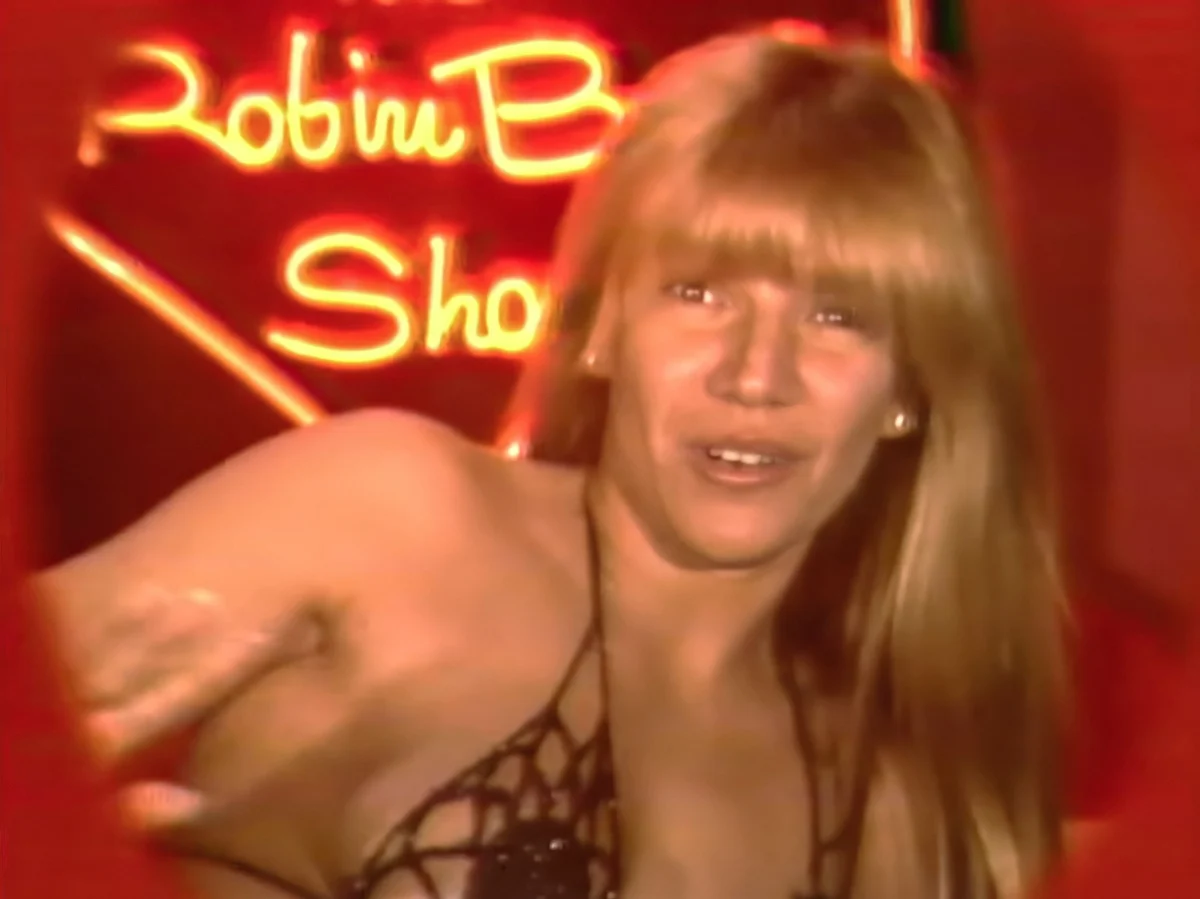
For those who navigated the nocturnal landscape of New York City in the 1980s and 1990s, the experience of late-night television was synonymous with a specific, grainy frequency. If you happened to land on Channel 35 after 10:00 PM, you were greeted by a vision of unabashed, campy eroticism: a blonde dynamo in a black mesh bikini, gyrating against a backdrop of heart-shaped sets and flickering neon. She was Robin Byrd, and for two decades, she was the unofficial, unapologetic queen of New York’s public access airwaves.
Today, at 71, Byrd is no longer just a local cult legend. With the release of the HBO documentary Bang My Box: The Robin Byrd Story, directed by Jyllian Gunther and Stephanie Schwam, the cultural impact of her eponymous show is being re-examined. Far from being a mere footnote in the annals of smut, Byrd is now being hailed as a pioneer of sex-positive advocacy, a defender of First Amendment rights, and a precursor to the internet-age influencer.
The Genesis of an Icon: A Chronology of the Airwaves
Robin Byrd’s trajectory began long before she became the face of cable access. A former adult film star, Byrd transitioned to broadcasting in 1977, an era when public access television was the Wild West of the media landscape.
- 1977: The Robin Byrd Show premieres on New York City public access, introducing the city to her signature blend of rockabilly music—specifically her anthem, "Baby, Let Me Bang Your Box"—and interview-style erotica.
- 1980s–1990s: The show becomes a staple of the NYC underground. Byrd’s set, characterized by its low-budget, garish aesthetics, becomes a cultural touchstone. Her catchphrases—"Lie back, get comfortable," and "Don’t forget to wear your rubbers"—become embedded in the local vernacular.
- 1990s: Byrd faces legal challenges as Time Warner Cable attempts to censor her content by forcing viewers to "opt-in" to the channel. Byrd fights back, leading a landmark legal battle for freedom of speech.
- 1998: The original run of the show concludes, though reruns continue to circulate through the analog cable ecosystem for years to come.
- 2024: The HBO documentary Bang My Box brings her life and career to a national audience, cementing her status as a sex-positive icon.
The Philosophy of "Tit for Tat"
The success of The Robin Byrd Show was rooted in its radical accessibility and its inherent, charming frugality. In an era before the polished, high-definition productions of modern adult content, Byrd operated on a shoestring budget. She famously did not pay her guests in currency; instead, she offered them high-quality tapes of their appearances to use for their own promotion.
"I called it tit for tat and dick for dat," Byrd tells Wired. This transactional honesty underscored the show’s ethos. While critics often dismissed the show as low-brow, Byrd saw herself as a community builder. She interviewed porn stars, exotic dancers, and queer performers with a level of warmth and genuine curiosity that was rarely afforded to them in mainstream media.
Byrd’s show was also a vital, if unlikely, platform for safe-sex education during the height of the HIV/AIDS epidemic. Amidst the gyrations and the simulated intimacy, Byrd consistently reminded her audience to "wear their rubbers." She provided a space where sex was discussed openly, without the shame often imposed by societal structures of the time.
Legal Battles and the Fight for Expression
One of the most significant chapters of Byrd’s career involved her confrontation with media giant Time Warner Cable. In the 90s, the cable provider sought to scramble her show, requiring viewers to proactively request access. This, Byrd argued, was a form of censorship that violated the spirit of public access—a medium designed to give voice to those ignored by major networks.
Her victory in that legal struggle remains a seminal moment for independent media. Byrd’s stance was clear: the privacy of one’s home is a sanctuary, and the state or corporate entities have no business dictating what a consenting adult watches in their own living room. This perspective remains relevant today, as debates over age-verification laws and digital censorship continue to dominate the discourse around adult content.
The Digital Divide: Why Byrd Faded from the Screen
The transition to the digital age proved to be a turning point for Byrd. As Michael Musto notes in the HBO documentary, Byrd’s retirement in the late 90s was not merely a result of aging, but a reaction to the changing nature of the industry.
"The internet is open to the world," Byrd explains. "Here in New York City, people got it. But to be open on the internet to some rural religious towns—they wouldn’t have gotten it. In New York, we accept everybody… but in other parts of the country, they don’t like that."
Furthermore, Byrd laments the loss of the "art" of adult film. To her, the transition from analog to digital stripped the industry of its mystique. "It was soft, it was artsy," she says of the era of the Nekagami camera. "Digital is very harsh. It’s like the difference between an old-timey bulb and an LED. It was very distant, very cold."
Implications: A Legacy of Self-Acceptance
Perhaps the most poignant aspect of Bang My Box is the final scene, in which a 71-year-old Byrd walks along the beach, fully nude. It is a bold, defiant act of self-love that serves as the final rebuttal to the ageism and body shaming that permeates the modern media landscape.
"Everybody has that fantasy, of that girl with the bitching body," Byrd says. "But then I said to myself, ‘Well, what kind of hypocrite am I to be naked for all these years, telling you to love your body, respect your body?’ And I’m not a hypocrite. This is who I am, and this is what a 71-year-old Robin Byrd looks like."
Byrd’s legacy is complex. She was a woman who "wore boobs as a hat" to get a laugh, yet she was also a woman who stood before judges to defend the First Amendment. She was a television personality who operated out of a heart-shaped set, but she was also a community leader who advocated for the LGBTQ population long before it was fashionable to do so.
As we look back at the era of analog smut, it is clear that Robin Byrd was never just about the shock value. She was about the freedom to be seen, the right to be curious, and the importance of owning one’s narrative. In a digital world characterized by algorithms and curated perfection, the raw, unfiltered, and deeply human spirit of Robin Byrd serves as a reminder that sometimes, the most radical thing one can do is simply be oneself—on camera, in public, and without apology.
Whether she is remembered as a camp icon, a legal trailblazer, or the woman who taught a generation to "lie back and get comfortable," Robin Byrd’s place in the history of New York City media is secure. She was the television that raised a generation, and in doing so, she became the city itself: loud, unapologetic, and profoundly resilient.


 Raul Delapena Setiawan
 Neng Nana




