

In the digital landscape of modern Japanese cuisine, few figures command as much influence—or incite as much controversy—as the YouTuber known simply as Ryūji. With a staggering 5.6 million subscribers to his channel, Buzz Recipe, Ryūji has built an empire on the philosophy of otsumami: quick, accessible, and addictive small dishes designed to pair perfectly with alcohol. Yet, his meteoric rise has been shadowed by a persistent, polarizing debate that touches on culinary science, cultural identity, and health misinformation: the liberal use of monosodium glutamate (MSG).
To his detractors, Ryūji is a provocateur who prioritizes convenience over wellness. To his supporters, he is a culinary pragmatist cutting through the pseudo-scientific stigma surrounding the world’s most misunderstood flavor enhancer. As the debate rages from the comments sections of Tokyo to the boardrooms of global food giants, the story of Ryūji is ultimately a reflection of a deeper, decades-long battle between tradition, health anxiety, and the global science of flavor.
The "Marie Kondo of the Kitchen" and the Drunken Critic
Ryūji’s persona is singular. He often broadcasts from his home kitchen, frequently seen nursing a Dewar’s highball as he demonstrates recipes that prioritize ease and intense flavor. For some viewers, the casual nature of his broadcasts—often filmed in the early afternoon with a visible buzz—has raised concerns about his health. However, it is not his drinking habits that have drawn the sharpest vitriol from the Japanese public; it is his unrepentant, heavy-handed use of Aji-no-moto (The Root of Taste).
The backlash against Ryūji has been fierce. Critics have labeled him a "murderer" of health, accusing him of poisoning his audience with chemicals. In 2023, the tension reached a boiling point, prompting Ryūji to publish a book specifically to dismantle the arguments of his detractors. In a candid moment, he observed a pattern: "Everyone who says MSG is bad for you is, without exception, anti-vaccine. Why is that?" His comment highlights a sociological reality—that the rejection of MSG is rarely rooted in chemistry, but rather in a broader distrust of processed, "industrial" foods that mirrors the logic of other modern conspiracy movements.
A Chronological History of Umami and the MSG Stigma
1908: The Discovery of the Fifth Taste
The story begins in 1908 with chemist Ikeda Kikunae. Having returned to Japan after training in Germany, Ikeda was determined to address what he perceived as the blandness of the Japanese diet. Through meticulous extraction, he isolated 30 grams of glutamic acid from 12 kilograms of konbu (kelp). He identified the sensation as umami—a savory, meaty depth that had no equivalent in the Western understanding of sweet, sour, salty, and bitter.
1909–1937: Marketing the "Civilized" Flavor
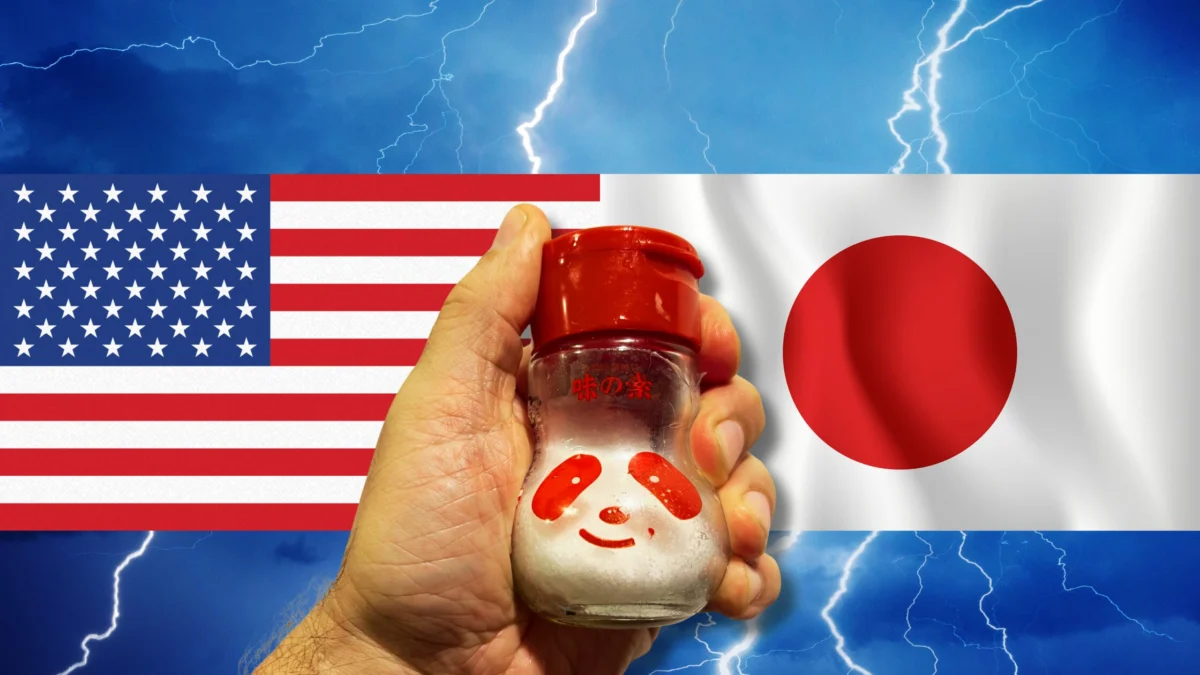
Suzuki Saburosuke, an iodine manufacturer, recognized the commercial potential and partnered with Ikeda to launch Aji-no-moto in 1909. Initially, the product struggled to find a market among professional chefs. The breakthrough came through a massive, strategic marketing campaign targeting housewives. By packaging the product in elegant, perfume-style glass bottles, the company rebranded MSG as a hallmark of "hygiene" and "modernity." Between 1922 and 1937, the company cemented its hold on the Japanese kitchen by mailing free samples and cookbooks to every female high school graduate in the country.
1930s–1941: The American Embrace
During the interwar period, the United States became the largest consumer of Aji-no-moto outside of Japan and Taiwan. Industrial giants like Campbell’s recognized the ingredient’s ability to enhance the flavor profile of canned goods, integrating it into the American pantry long before the public became aware of its existence.
1968: The "Chinese Restaurant Syndrome"
The turning point for MSG in the West came in 1968, when a physician wrote a letter to the New England Journal of Medicine claiming he experienced numbness after eating at Chinese restaurants. Despite a lack of rigorous scientific evidence, the media seized upon the narrative. The term "Chinese Restaurant Syndrome" was coined, and MSG became a scapegoat for a variety of vague health complaints. This skepticism soon intersected with a long-standing tradition of American xenophobia, where food perceived as "foreign" or "alien" was held to different—and often harsher—health standards than domestic counterparts.
![[Insider] Japan Invented MSG. Why Do Even Some Japanese Call It “Poison”?](https://media.unseen-japan.com/wp-content/uploads/2026/06/Ajinomoto-controversy-1.jpg)
Supporting Data: The Global Market vs. Domestic Anxiety
Despite the loud voices of the mutenka (anti-additive) movement in Japan, the global data tells a different story. Today, the Ajinomoto Group operates in over 130 countries, reporting consolidated revenue of approximately ¥1.53 trillion (roughly $9.6 billion) for the fiscal year ending March 2025.
China remains the world’s largest producer and consumer of MSG by tonnage. The ingredient is a staple of global culinary infrastructure, yet Japan remains uniquely caught between its status as the birthplace of the seasoning and the site of a persistent, conspiracy-laden backlash. The mutenka movement, which gained momentum following mass food poisoning incidents in the 1950s and 60s, successfully rebranded "additive-free" as the gold standard for health, casting products like Aji-no-moto as the antithesis of "natural" eating.
Official Responses and Scientific Consensus
The scientific community has consistently maintained that MSG is safe. The U.S. Food and Drug Administration (FDA) classifies MSG as "Generally Recognized as Safe" (GRAS), noting that the body metabolizes the glutamate in MSG the same way it metabolizes the glutamate found in tomatoes, cheese, and mushrooms.
International health bodies, including the World Health Organization (WHO) and the European Food Safety Authority (EFSA), have echoed these findings, emphasizing that there is no credible clinical evidence linking moderate consumption of MSG to long-term health issues. The "toxicity" often associated with MSG is largely a cultural construct—a legacy of the 1960s moral panic that has proven remarkably difficult to eradicate, even in the age of readily available information.
The Implications: Why It Still Matters
The ongoing controversy surrounding Ryūji and his kitchen habits is not just about a single ingredient; it is about the intersection of social media influence and the erosion of scientific literacy. When a popular figure uses their platform to challenge long-held myths, they face the full weight of the "echo chamber" effect.
The fact that Ryūji’s critics often overlap with anti-scientific movements is telling. It suggests that the stigma against MSG is a symptom of a larger, systemic skepticism toward institutional science and global industry. In Japan, the tension is further complicated by the country’s intense cultural pride in its culinary heritage, where the "purity" of ingredients is often held as an aesthetic and moral virtue.
As the digital discourse continues to evolve, Ryūji’s refusal to back down represents a significant pushback against the performative purity of the mutenka movement. Whether or not he is an alcoholic is a personal matter, but his role as a lightning rod for the MSG debate is a public service of sorts. He forces his audience to confront a simple, inconvenient truth: that the flavor they love in their favorite restaurant dishes is, in fact, the same ingredient they have been taught to fear in their own homes.
Ultimately, the "Umami Wars" are a reminder that in the kitchen, as in life, the most potent ingredients are often the ones we choose to ignore in favor of a more comfortable narrative. For Ryūji, the path forward is clear: more highballs, more seasoning, and a continued insistence that if something tastes good, it shouldn’t have to be a moral failing.











