Nila Kartika Wati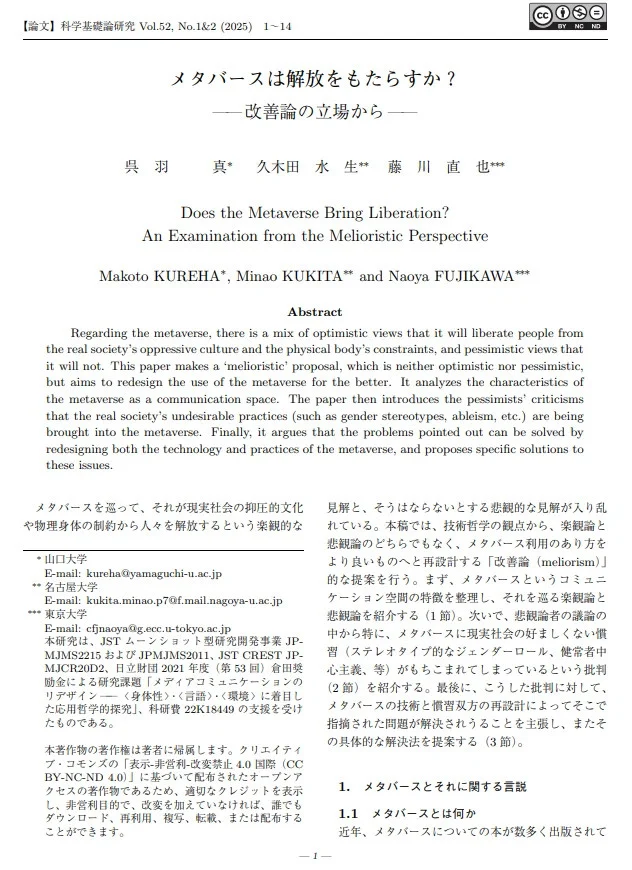
The rapid evolution of virtual content creation has transcended simple entertainment, establishing itself as a significant sociological phenomenon. Recent academic research published in the Journal of Basic Principles (Vol. 52, Issue 1-2, 2025) provides a comprehensive analysis of the "VTuber" (Virtual YouTuber) ecosystem, tracing its trajectory from a niche subculture to a global digital industry. As these avatars become increasingly integrated into the mainstream, the academic community is turning its focus toward the implications of virtual identity, parasocial dynamics, and the intersection of artificial persona and human labor.
Main Facts: The Anatomy of a Virtual Phenomenon
A VTuber is defined as a content creator who uses a computer-generated avatar to interact with an audience, typically via live-streaming platforms such as YouTube or Twitch. While the technology—ranging from sophisticated motion capture to basic facial tracking—has become more accessible, the core of the VTuber movement lies in the performance of "melioristic" identities.
Unlike traditional influencers who rely on their physical appearance and real-world environment, VTubers utilize digital masks to create a layer of abstraction. This allows for a unique form of storytelling where the boundary between the "character" and the "human performer" becomes intentionally porous. Research highlights that this medium is not merely a technical innovation but a profound shift in how identity is constructed and perceived in digital spaces.
Chronology: From Experimental Roots to Industrial Scale
The history of virtual creators is relatively short but marked by exponential growth.
- 2016-2017: The term "VTuber" is popularized by pioneers like Kizuna AI, who utilized basic motion capture and facial recognition software to engage with audiences. This period established the foundational "character-first" approach to streaming.
- 2018-2020: The industry saw a professionalization phase. Talent agencies began to emerge, managing groups of virtual performers with coordinated marketing, professional-grade 3D assets, and structured lore.
- 2021-2022: The "VRSNS" (Virtual Reality Social Networking Service) boom, driven by platforms like VRChat, allowed creators to inhabit persistent virtual worlds. Academic focus shifted during this period to the psychological impact of inhabiting an avatar.
- 2023-2025: The current era is characterized by global expansion and deeper integration into mainstream media. Academic inquiries have moved beyond the "novelty" phase, focusing instead on the labor rights of performers, the ethics of AI integration, and the sociological impact of parasocial relationships.
Supporting Data: Understanding the Audience and Industry
The scale of the VTuber economy is staggering. Industry reports indicate that top-tier creators regularly draw concurrent viewership numbers in the tens of thousands, with total engagement metrics often dwarfing those of traditional celebrities in similar demographics.

According to data cited in recent publications, the "virtual" nature of the content does not diminish its perceived authenticity. In fact, for many younger demographics, the avatar acts as a more "honest" representation of the creator’s personality, as it is a deliberate, curated expression of self rather than a biological happenstance.
Surveys of active viewers reveal that the primary appeal is the "liveness" of the experience. Unlike pre-produced content, the real-time interaction between a digital avatar and a live chat creates a unique sense of shared space. This phenomenon is currently being studied under the lens of "Telepresence," where the physical distance between the creator and the audience is rendered irrelevant by the synchronous nature of the stream.
Official Perspectives and Academic Analysis
The recent academic discourse, spearheaded by researchers such as Liudmila Bredikhina, emphasizes that the VTuber medium represents a "digital theater." In her analysis, the avatar is a tool for liberation. It allows performers—who might otherwise face societal bias or physical constraints—to present themselves in a way that aligns with their internal identity.
However, this freedom comes with complex challenges. The "parasocial" nature of these relationships, where viewers form deep emotional bonds with a character, presents significant mental health considerations for both the creator and the audience. Academic institutions are currently conducting longitudinal studies on how the "persona" impacts the long-term psychological stability of the performer, particularly when the lines between the individual’s private life and their public, virtual identity become blurred.
Furthermore, the industry is grappling with the ethics of intellectual property. Who owns the character? Is it the agency that funded the development of the 3D model, or the performer who breathes life into it? These questions are at the forefront of the legal and sociological debates surrounding the future of digital labor.

Implications: The Future of Digital Identity
The implications of the VTuber movement extend far beyond the realm of gaming and entertainment. As companies look toward the "Metaverse" and persistent virtual work environments, the technologies and social norms pioneered by VTubers are being adopted by corporate sectors.
- Workplace Integration: The use of avatars in professional settings, such as virtual meetings or customer service, is increasingly normalized.
- Cultural Shifts: We are witnessing a transition from the "Selfie Era"—defined by the hyper-curation of one’s physical self—to the "Avatar Era," where identity is treated as a malleable, creative asset.
- Sociological Impact: The ability to curate one’s presence in a virtual space provides a new framework for inclusivity, allowing individuals to transcend the physical limitations of their environment.
Conclusion
As the findings in the Journal of Basic Principles suggest, the rise of the VTuber is not a fleeting trend but a fundamental shift in how human beings interact within digital infrastructures. As technology continues to lower the barrier to entry, the distinction between "virtual" and "real" will continue to erode, necessitating a more robust framework for ethics, labor, and human connection in the digital age. The industry stands at a crossroads: it can continue to function as a speculative entertainment bubble, or it can evolve into a meaningful, sustainable platform for human expression in the 21st century.
References & Further Reading:
- Journal of Basic Principles, Vol. 52, 2025: "Virtual Personas and the Evolution of Digital Labor."
- PANORA: "Virtual Reality Japan – The Architecture of Avatars."
- KAI-YOU: "The Sociological Impact of Parasocial Dynamics in VTubing."
- Note.com: "Liudmila Bredikhina on the Future of Digital Identity."


 Muslim