In what may be the most significant historical discovery in the annals of PC gaming, Valve Corporation has inadvertently opened a digital vault containing over a decade of its own history. Unlike the malicious cyberattacks that frequently plague the tech industry, this massive exposure of internal data—totaling between 12 and 13 terabytes—was not the result of a sophisticated hack or a security breach. Instead, it was a simple, albeit monumental, administrative oversight: Valve left an endpoint to its legacy infrastructure publicly accessible, allowing archivists and curious developers to stumble upon a treasure trove of source code, prototype assets, and discarded game concepts.
The data, which spans the formative years of the Steam platform from 2003 to 2013, serves as a comprehensive time capsule of a pivotal era in gaming. It captures the transition from Valve’s early proprietary distribution methods to the modern SteamPipe system, offering an unprecedented look at how one of the world’s most influential gaming companies built its empire.
The Nature of the Exposure: A Legacy Infrastructure Oversight
To understand the scope of this discovery, one must look at how Steam functioned in its infancy. Between 2003 and 2013, Valve utilized proprietary file formats known as NCF (No-Cache File) and GCF (Grid Cache File) to deliver content to users. These systems were the backbone of the "Steam2" era. In March 2013, the company transitioned to a more efficient, standard HTTP-based file-tree system known as SteamPipe.
The 12TB of data discovered by researchers represents the "lost" content servers from that previous era. Because the infrastructure was essentially left "open," researchers were able to pull down a vast archive of files that had been sitting in digital limbo for over a decade. While Valve has remained silent on the matter, the sheer age of the data—with the most recent files dating back roughly 13 years—suggests that this was not a compromise of active, sensitive trade secrets, but rather an embarrassing housekeeping error regarding legacy hardware.
Chronology of a Digital Excavation
The investigation into the archive is ongoing, but early analysis by community members and archivists has already begun to paint a clearer picture of Valve’s internal creative process during the mid-to-late 2000s.

The "Left 4 Dead" Foundation
Among the most immediate findings was a comprehensive build of Left 4 Dead dating back to June 2008. For fans of the franchise, this build is a goldmine. It features a starkly different heads-up display (HUD), voice lines that were eventually cut from the final release, and map geometries that deviate significantly from the retail version. Perhaps most revealing is the presence of early assets recycled from the Terror Strike mod—a project that originally started as a Counter-Strike: Condition Zero modification before being expanded into the Left 4 Dead we know today.
The "Portal 2" Core Hub Era
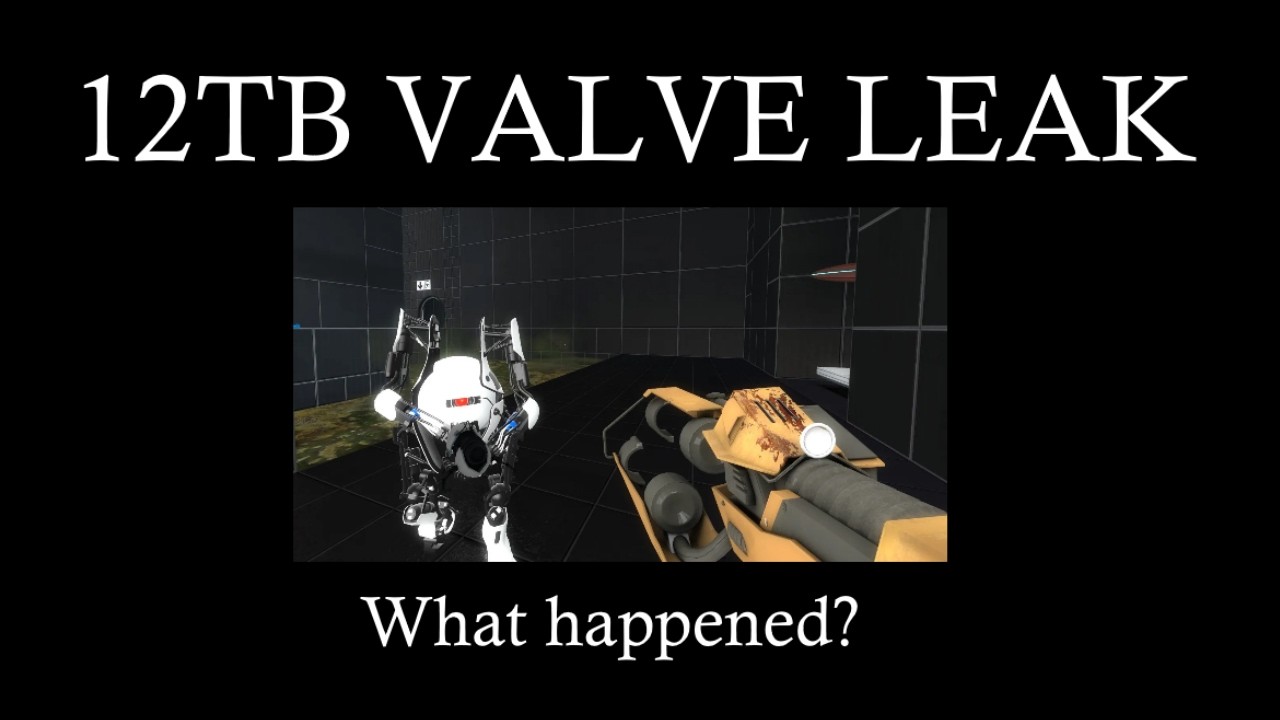
Portal 2 appears to have been the project most impacted by the leak. Archivists have managed to reconstruct a playable build from July 2009, capturing the game when it was still in its "Core Hub" development phase. In this version, the game was a more direct sequel with a different narrative trajectory before the team pivoted to the final, more polished product.
This build also includes early assets for F-Stop, the mysterious, long-rumored prequel that was in development around 2008. The discovery confirms that F-Stop relied heavily on camera-based mechanics, which were meant to be central to the gameplay loop. Even more fascinating is the early iteration of GLaDOS; in these files, she appears as a more passive character with distinct animations and voice work, and many of the environmental scenes rely on placeholder assets from Team Fortress and Half-Life to fill in the gaps.
The "Weaponizer" and the Ghost of Episode 3
Perhaps the most sentimental discovery for the Half-Life community is a 3D model for the "Weaponizer." This weapon has been a subject of intense speculation and lore for years. Originally intended for the canceled Half-Life 2: Episode 3, the weapon was designed to convert objects into ammunition. While it was never included in a finished game, the fact that it exists within a 2009 build of Portal 2 provides physical proof of how closely Valve was integrating its various projects during that time. It serves as a haunting reminder of the Half-Life project that never was.
Supporting Data: The Evolution of CS:GO
The archives also provide a granular look at the early development of Counter-Strike: Global Offensive. Before CS:GO became the global esport titan it is today, Valve was primarily focused on porting the original Source engine to consoles.

The leaked files reveal an early version of the game that looks more like a Source engine port than the final CS:GO. It features a stylized user interface, alpha-stage map layouts, and even an "MP5-Active" weapon that suggests the SMG was intended to be part of the original launch roster. Furthermore, the presence of a "Riot Shield" from Counter-Strike 1.6 suggests that Valve was experimenting with bringing legacy mechanics into the Source environment. The eventual pivot to CS:GO—largely driven by the extensive work done by Hidden Path Entertainment—was clearly a result of these iterative experiments found in the 2011 builds.
Official Responses and Corporate Silence
As of this writing, Valve Corporation has issued no formal statement regarding the exposure. In the world of cybersecurity, a "leak" of this magnitude involving proprietary code and assets usually triggers a flurry of legal activity and "take-down" notices. However, the nature of this event is unique.
Because the data is strictly legacy content—some of it dating back two decades—it poses little risk to the current security of the Steam platform or Valve’s active, multi-billion-dollar business model. Experts suggest that Valve’s lack of response is likely a calculated decision to avoid drawing further attention to the oversight. For a company that guards its internal culture and development processes with legendary secrecy, the exposure is certainly an embarrassment, but it is unlikely to be treated as a high-priority security threat.
The Broader Implications for Gaming History
The significance of this discovery cannot be overstated for historians and enthusiasts of game development. We live in an era where digital content is notoriously fragile; online services shut down, servers are decommissioned, and source code is often lost to time.
1. The Value of Preservation
This leak acts as a massive, unintended act of digital preservation. By recovering these files, the gaming community has essentially salvaged a "black box" recording of one of the most successful game studios in history. This allows for a deeper academic understanding of how mechanics are iterated, how art styles evolve, and how projects are scrapped when they no longer fit a developer’s vision.
2. The Risks of Infrastructure Management
From a technical standpoint, this incident serves as a stern warning to other tech giants. Even a company as technically sophisticated as Valve is not immune to the risks of legacy infrastructure. The "forget-and-leave" approach to old server endpoints is a common vulnerability that can lead to massive data exposure. As cloud storage and server migration become more complex, the need for robust decommissioning protocols is more apparent than ever.
3. The Future of Source Code Access
The community’s ability to "reconstruct" playable builds from these fragments of code is a testament to the dedication of modern modders. This raises interesting questions about the future of open-source access. While Valve certainly didn’t intend to release these files, the fact that they have been released has empowered the community to create "museum-grade" reconstructions of games that were previously only known through blurry screenshots or developer interviews.
Conclusion: A Window Into the Valve "Black Box"
The 12TB Valve leak is, in essence, the ultimate behind-the-scenes documentary. While the company may not have planned for the world to see the messy, unfinished, and discarded versions of its most iconic franchises, the result is an invaluable look at the creative reality of game development.
From the Half-Life weapon that never fired to the Portal labs that were never built, these files tell a story of a studio in transition—a studio that was constantly iterating, experimenting, and refining its identity. Whether or not Valve eventually moves to secure these endpoints or address the discovery, the damage (if it can be called that) is done. The data is now a part of gaming history, ensuring that the legacy of these projects will be studied, played, and preserved by the community for years to come.
As researchers continue to parse through the remaining terabytes, we can expect even more revelations to surface. For now, the gaming world watches and waits, not out of concern for a security breach, but out of a shared, deep-seated curiosity for the secrets that were hiding in plain sight on a forgotten server.