Jia Lissa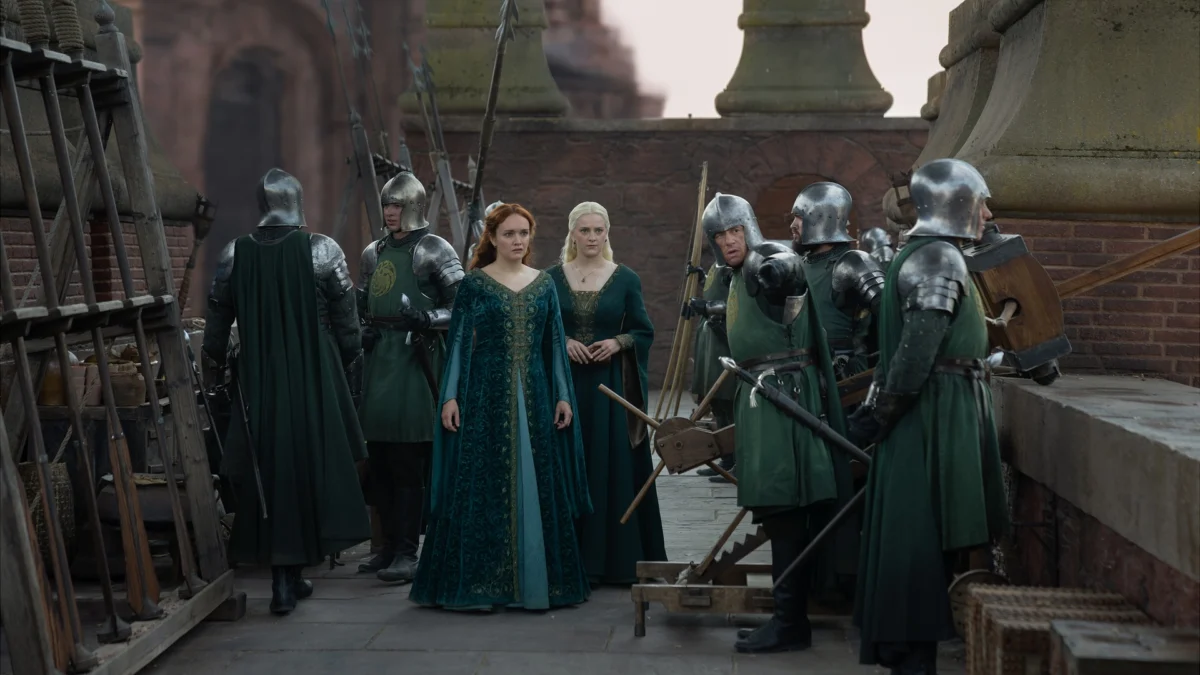
The sprawling, fire-drenched landscapes of House of the Dragon have long been the gold standard for prestige fantasy, yet as the third season progresses, a palpable chill has settled over the fandom. Following the release of the second episode of Season 3, viewers and critics alike are beginning to voice a growing concern: while the dragons remain as majestic as ever, the political maneuvering and, more importantly, the dialogue have begun to fray. In a television landscape where A Knight of the Seven Kingdoms has set a high bar for narrative tight-roping, House of the Dragon appears to be struggling with the weight of its own legacy.
The Disconnect: Where the Dialogue Fails
The primary grievance articulated by long-time devotees of George R.R. Martin’s universe is not a lack of plot, but a drift in character voice. For a series rooted in the dense, archaic, and Machiavellian political discourse of the Seven Kingdoms, the script in Season 3, Episode 2 feels jarringly modern.
Lines such as Daemon Targaryen’s "Well, well, well," or Larys Strong’s suspiciously Whedonesque, "I was mistaken, I am surprised!" pull the viewer out of the immersion. These are not the voices of noblemen and schemers in a medieval-inspired fantasy; they are the voices of contemporary television writers. When compared to the sharp, cutting wit of Game of Thrones—where a single sentence could serve as a death warrant—the current script often defaults to clichés. Phrases like "I have business with him" or the clunky "I underestimated your slipperiness" lack the gravitas required for a show of this scale.
This erosion of verisimilitude is problematic because House of the Dragon relies on the illusion of history. Because the source material, Fire & Blood, is written as a chronicle, the show has the unique burden of translating "historical" accounts into human drama. When the language fails, the suspension of disbelief crumbles, leaving the audience to notice the seams in the production.
Chronology of a Consequential Hour
Episode 2 serves as a pivot point for the entire series, packing enough narrative density to fill an entire season finale. The pacing, however, feels erratic. The episode tracks several critical movements:
- The Mourning and the Move: Rhaenyra Targaryen (Emma D’Arcy) grapples with the loss of Jace, delivering a performance of raw, visceral grief.
- The Fall of Harrenhal: Aemond Targaryen (Ewan Mitchell) makes a terrifying, spectacle-filled arrival at Harrenhal, asserting dominance in a scene that captures the visceral horror of dragon warfare.
- The Capitulation: In a turn of events that feels rushed, Rhaenyra successfully claims King’s Landing, culminating in the shocking, if somewhat inevitable, beheading of Ser Otto Hightower.
- The Vale’s Gambit: Rhaena Targaryen attempts to secure political asylum, a subplot that, while theoretically fraught with tension, suffers from poor staging and an over-reliance on literal, on-the-nose dialogue.
Supporting Data: The Cost of Weak Writing
The decline in dialogue quality has a cascading effect on the show’s structural integrity. A prime example is the confrontation between Rhaena and Lady Jeyne Arryn. The scene is meant to be a high-stakes negotiation regarding political asylum and the aftermath of Jace’s death. Instead of a tense, subtext-heavy exchange, the characters are positioned at an awkward physical distance, shouting their demands. The line, "Do you want a dragon or not?" strips away any remaining subtext, turning a potentially complex power dynamic into a transactional, hollow exchange.
Similarly, the narrative threads on Driftmark involving Baela and Alyn of Hull feel purely expository. The characters are tasked with searching for Corlys Velaryon, not because the plot requires a genuine mystery, but because the writers need a vehicle to have characters "bleat" about family ties. This lack of organic character development turns key players into mere vessels for plot-dumping.
Alicent Hightower: The Burden of Contrivance
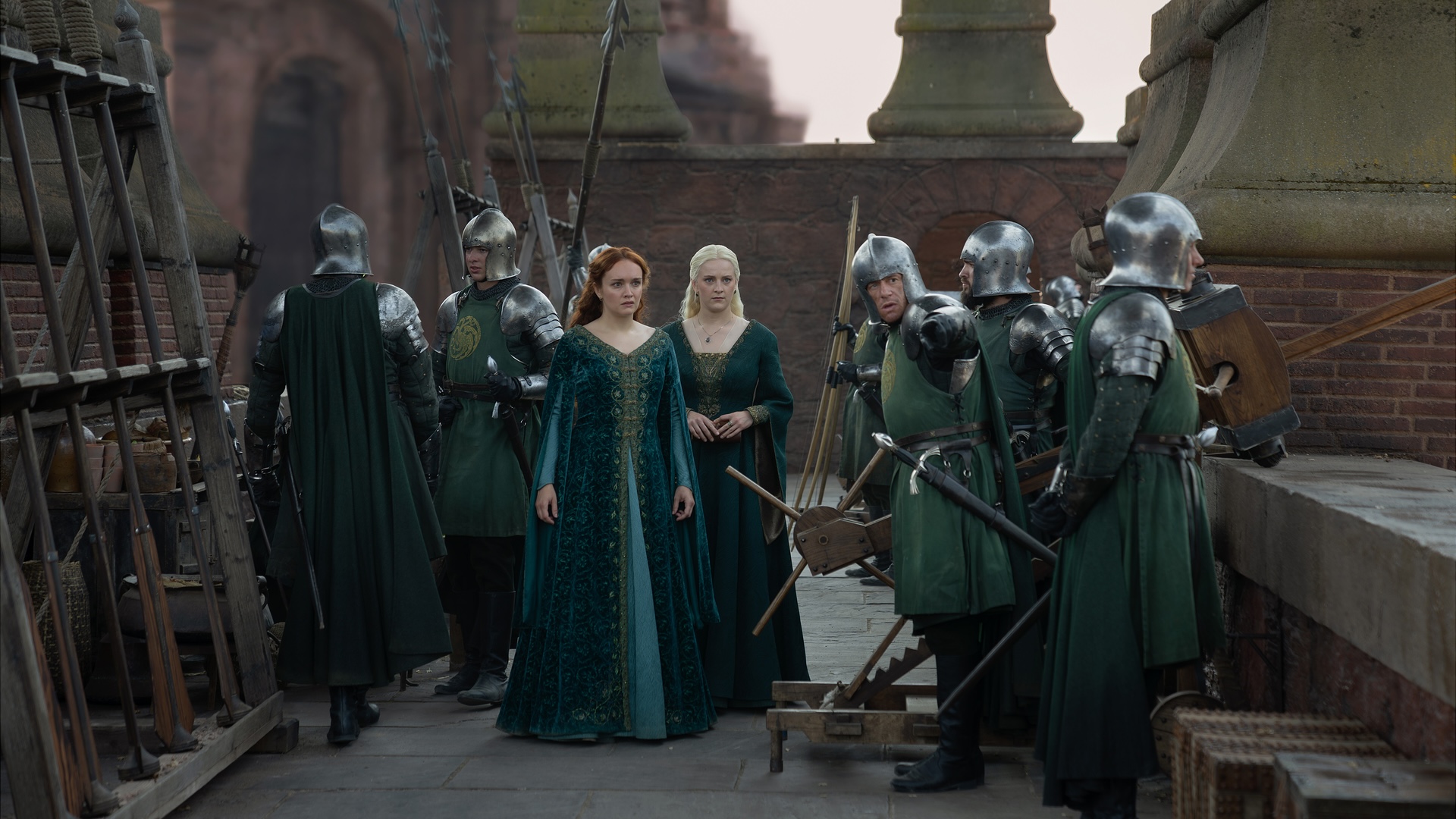
Alicent Hightower, played with immense skill by Olivia Cooke, continues to suffer from the show’s need to force historical synthesis into the script. Rather than acting as a nuanced political player, Alicent spends much of the episode rushing from one location to another, performing actions that seem designed solely to move the pieces into place for the invasion.
Her attempt to prepare the city for Rhaenyra—which involves bluntly informing the City Watch and the scorpion-wielding troops of the inevitable—feels forced. Even the attempts at showing courtly dissent, such as the interaction with Lord Jasper "Ironrod" Wylde, fall flat, ending in a predictable, violent outburst that feels more like a tired trope than a genuine character beat.
Implications: Can the Dragon Recover?
The implications for the remainder of the season are significant. While the series is visually ambitious and boasts a cast capable of elevating even the most mediocre lines, the lack of a consistent, high-caliber script threatens to alienate the core audience.
However, there is still hope. The moments where the show shines—Emma D’Arcy’s silent, agonized performance over Jace’s body, or the terrifying, fire-streaked arrival of Aemond at Harrenhal—prove that the creative team is still capable of greatness. These moments work because they rely on visual storytelling and raw emotion rather than dialogue that leans on the crutch of modern idiom.
The show is at a crossroads. To maintain its status as the flagship of the Game of Thrones universe, it must reconcile its visual grandeur with a return to the sharp, sophisticated, and authentic voice that made its predecessor a global phenomenon. If the writers continue to lean on "Well, well, well" instead of the nuanced, historical-style prose that defined George R.R. Martin’s world, they risk turning one of television’s most anticipated epics into a show that is grand in scale but small in soul.
Final Verdict
As we look toward the season finale on August 9, the pressure is on. The audience expects more than just dragons and beheadings; they expect the complex, deeply human, and often brutal politics that define the Iron Throne. While the acting talent remains top-tier, the script is currently the weakest link in the chain. Whether the showrunners can course-correct before the final embers of the season die out remains to be seen. For now, we are left with a series that is fighting to keep its footing, slouching towards a King’s Landing that feels less like a kingdom and more like a stage set.


 Laily UPN
 Muslim