

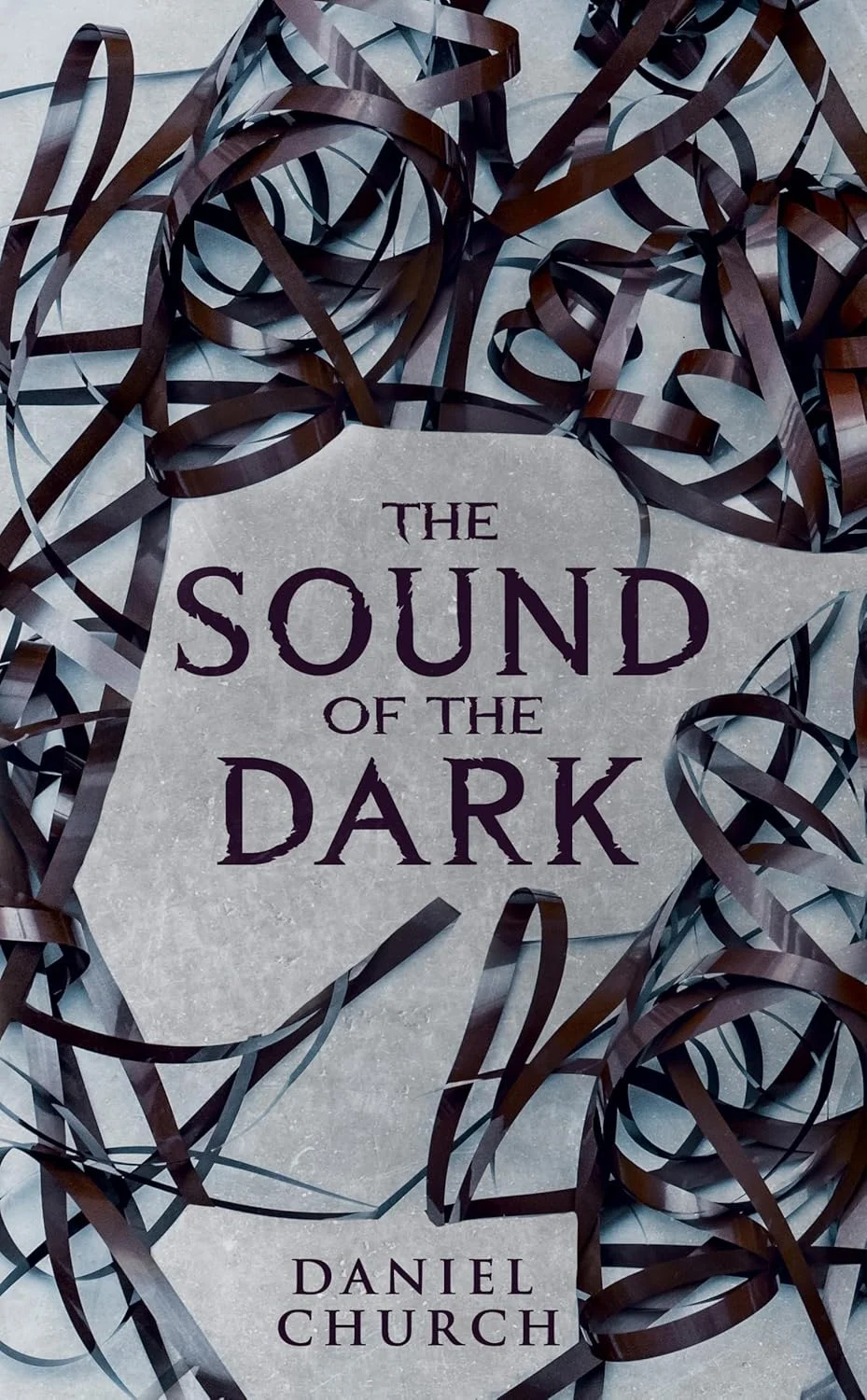
In the landscape of contemporary horror literature, few novels manage to bridge the gap between the grounded, methodical pace of investigative true-crime procedural and the chaotic, visceral descent of cosmic dread. Daniel Church’s latest offering, The Sound of the Dark, achieves this volatile synthesis with unsettling efficiency. Centered on a protagonist whose own internal struggles mirror the external, otherworldly forces she uncovers, the novel serves as a masterclass in atmospheric tension and the perils of obsession.
Main Facts: A Descent into Auditory Terror
At the heart of The Sound of the Dark is Cally Darker, a Manchester-based true crime podcaster battling the dual weight of depression and an unfulfilling domestic life. Her trajectory shifts dramatically when an anonymous tip leads her to investigate a decades-old family massacre.
In 1983, Tony Mathias, an experimental artist known for his mild-mannered disposition and dedication to his family, embarked on a sound-collage project at Warden Fell, an abandoned RAF base. The investigation into the site was cut short by a horrific tragedy: Mathias returned to his caravan and murdered his wife and children before taking his own life. While the event is not a "whodunit"—witnesses confirmed the sequence of events—the "why" remains an impenetrable mystery. Cally’s journey to uncover the motive behind this inexplicable violence serves as the primary catalyst for the narrative, leading her from the urban isolation of Manchester to the rural, shadowed corners of the English countryside.
Chronology of a Curated Nightmare
The narrative structure of The Sound of the Dark operates on a deliberate, bifurcated timeline that tests the reader’s patience before rewarding them with a terrifying payoff.
The Investigative Phase (The Slow Burn)
The first quarter of the novel functions as a leisurely, almost pastoral investigation. Cally’s approach is strictly boots-on-the-ground, characterized by a series of interviews with those who knew Mathias: his sister, his agent, and the former landlady of his caravan park. These chapters are steeped in the rich textures of regional UK life, capturing the cadence of local accents and the lingering grief of those left behind.
During this phase, the novel feels reminiscent of Agatha Christie’s darker, more introspective works. While the interviews occasionally tread repetitive ground—focusing on the "gentle soul" Mathias once was—they succeed in building a vivid, humanizing portrait of a man whose life was derailed by an unseen force.
The Auditory Awakening (The Turning Point)
The novel’s tagline, "DON’T PRESS PLAY," acts as a narrative anchor. It is not until the midpoint of the book that Cally finally engages with the archival tapes left behind by Mathias. This moment marks the transition from psychological mystery to unchained horror. Upon listening to the recordings—which document both Mathias’s audio diaries and his field recordings from Warden Fell—the paranormal elements bleed into the narrative. Cally begins to experience vivid, terrifying nightmares, suggesting that the "contagion" of Warden Fell is not bound by time or distance.
The Gonzo Climax
The final act abandons the subtlety of the investigative opening, pivoting into a high-stakes, Lovecraftian struggle. Cally, alongside a cast of allies and adversaries, converges on Warden Fell in a desperate bid to cleanse the site and prevent the manifestation of an ancient, cosmic evil. This sequence echoes the claustrophobic dread of John Carpenter’s In the Mouth of Madness, successfully blending human-scale stakes with the existential horror of a world on the brink of unraveling.
Supporting Data: The Mechanics of Fear
While the novel is categorized as horror, it is heavily structured around the conventions of true-crime media. Cally’s podcast serves as a framing device, providing a lens through which the reader views the mystery. However, author Daniel Church intentionally avoids the common trap of over-analyzing the ethics of the genre, opting instead to use the medium as a vehicle for the plot.
The character development—particularly that of Cally—is tied closely to the auditory medium. The tapes are not merely plot devices; they are the vectors of the horror. The progression from simple curiosity to a full-blown existential crisis mirrors the degradation of the audio quality on the tapes themselves.
Furthermore, the author’s inclusion of extensive exposition—often delivered during long conversations or dream sequences—serves to ground the supernatural elements in a sense of history. While some critics may find these long-winded monologues from secondary characters (such as the brief, impactful appearance of an unnamed informant or the dream-state shaman) to be a narrative drag, they provide the necessary connective tissue that makes the eventual "gonzo" horror feel earned rather than abrupt.
Official Responses and Literary Implications
The Sound of the Dark has garnered attention for its unique handling of the "cursed object" trope. Unlike many modern horror novels that rely on fourth-wall-breaking meta-narratives—where the author explicitly warns the reader that they are now part of the story—Church opts for a more insidious approach. By weaving the horror so tightly into the internal state of the protagonist, the reader is left to wonder if they, too, have been "infected" by the secondary exposure to the descriptions of the tapes.
The "Podcast" Potential
The novel’s reliance on audio tapes as a central plot point raises an interesting question regarding the medium of storytelling. Given the surge in popularity of fictional, investigative podcasts (such as The Black Tapes or Limetown), The Sound of the Dark feels tailor-made for an audio adaptation. Its pacing, which is inherently tied to the act of listening, suggests that the story might have found a natural home in the podcast format. However, in print form, Church manages to translate the sonic experience into evocative, shudder-inducing prose.
Mental Health as a Narrative Mirror
A significant implication of the book is its thematic parallel between Cally’s mental health and the supernatural corruption of Warden Fell. Cally’s depression is not cured by the mystery; it is complicated by it. By framing the "evil" at Warden Fell as something that feeds on the vulnerable, the book creates a compelling allegory for the way trauma and mental illness can color one’s perception of reality. It refuses to offer a clean, clinical solution, choosing instead a climax that is as ambiguous as it is explosive.
Conclusion: A Leap of Faith
The Sound of the Dark is a demanding read, one that requires the audience to surrender to its slow-burn pacing in exchange for a payoff that is as harrowing as it is grand. While it occasionally suffers from an over-reliance on exposition, these moments do little to diminish the overall impact of the book’s atmospheric brilliance.
Daniel Church has crafted a story that functions on multiple levels: as a tribute to the allure of true crime, as a chilling piece of folk-horror, and as a poignant study of a woman seeking clarity in the face of insurmountable darkness. For those who enjoy their horror served with a side of investigative grit and cosmic scale, The Sound of the Dark is an essential addition to the genre. It is a reminder that some sounds, once heard, can never be silenced—and that the most dangerous mysteries are those that refuse to be solved, but instead choose to consume.










No comments yet. Be the first to join the conversation!