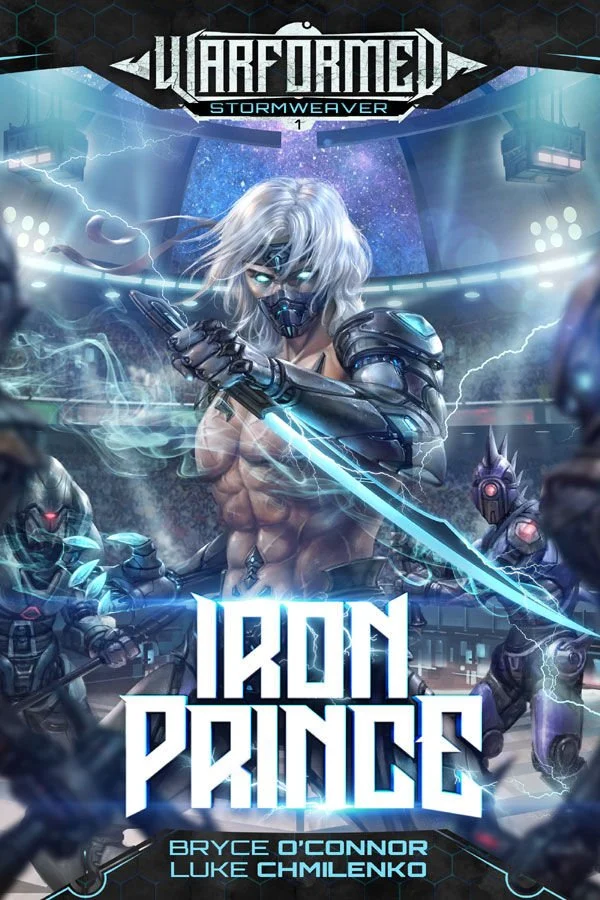
In the rapidly evolving landscape of modern speculative fiction, few subgenres have seen a meteoric rise quite like "progression fantasy." Defined by its focus on incremental growth, power scaling, and the relentless pursuit of self-improvement, the genre has transcended its niche origins in web-novels to become a literary juggernaut. Standing at the vanguard of this movement is Warformed: Iron Prince, a collaborative masterpiece by authors Bryce O’Connor and Luke Chmilenko.
By blending the high-octane spectacle of shounen anime with the gritty, tactical depth of military science fiction, Warformed has carved out a unique space in the hearts of readers. At its core, the novel tells the story of Reidon "Rei" Ward, a physically frail orphan who defies the constraints of his biology to become a force of nature. As the series gains momentum, it invites a deeper look into the mechanics of its world-building, its adherence to classic narrative tropes, and the potential trajectory of its burgeoning franchise.
The Narrative Foundation: A Journey from Obscurity to Ascendance
The premise of Warformed: Iron Prince is deceptively simple, echoing the "zero-to-hero" arcs found in staples like Naruto or My Hero Academia. Reidon Ward enters the narrative as a ward of the state, born into a world where his genetic predisposition to a debilitating bone condition leaves him sidelined and ignored. Abandoned by his biological parents, Rei has been forced to cultivate an iron-willed tenacity just to survive.
However, the trajectory of his life shifts irrevocably when he secures a position at the Galens Institute, one of the Collective’s most prestigious military academies. The catalyst for this change is the Combat Assistance Device (CAD)—a piece of alien technology that acts as both a weapon and a suit of power armor. Unlike the traditional tropes of magic-wielding protagonists, Rei’s advancement is tethered to the unique, evolving nature of his specific CAD.
Chronology of the Rise
The story follows a structured progression:
- The Arrival: Rei arrives at Galens, physically disadvantaged and ostracized by his peers due to his unimpressive initial CAD statistics.
- The Revelation: Through his struggle, it becomes evident that his device possesses a unique growth metric—it learns from defeat.
- The Crucible: Rei endures constant combat simulations and sparring sessions, using his losses to fuel the exponential growth of his device.
- The Transformation: As his CAD evolves, Rei shifts from a laughingstock to a formidable competitor, setting the stage for the high-stakes tournament circuits that dominate the Collective’s culture.
The Mechanics of Progression: Science Fiction Meets Shounen
To understand Iron Prince, one must appreciate its structural DNA. The authors have effectively transplanted the "power-level" logic of the Dragon Ball Z universe into a futuristic military setting. In this world, the CAD is not merely a tool; it is a bio-integrated partner that reads and enhances human capability.
The "Saiyan" Evolution
Rei’s progression is governed by a growth curve that mirrors the legendary "Saiyan" power-scaling. The more he struggles and the more devastating his defeats, the more data his CAD collects to calibrate his next iteration. This creates a compelling "slow-burn" beginning that eventually explodes into an exponential power curve.
This mechanism serves a dual purpose: it provides the reader with the catharsis of watching an underdog overcome insurmountable odds, while simultaneously building tension regarding how far the "ceiling" of his power truly goes. The narrative avoids the pitfalls of "instant gratification" by emphasizing the grueling, often painful, training montages that define Rei’s daily existence at the Academy.
Supporting Data: The Anatomy of a Successful Power Fantasy
A power fantasy is only as strong as its resistance. Warformed excels here by curating a diverse cast of antagonists and allies that force the reader to engage with the power hierarchy.
The Social Hierarchy of Galens
The Galens Institute serves as a microcosm of the larger societal struggle. The narrative utilizes several archetypal structures to ground its fantasy:
- The Elite: Students born into privilege who possess inherent talent and believe success is a birthright.
- The Rival: Prodigies who view Rei’s growth with a mixture of confusion, horror, and eventual begrudging respect.
- The Mentor Figures: The veteran characters who provide the "upper bound" for power, showing the reader exactly what a fully realized CAD user looks like.
This environment fosters a sense of "narrative claustrophobia." Because we know how Rei operates—and because the students around him are often cruel or dismissive—the reader feels an acute sense of urgency for his success. When a prodigy finally recognizes Rei’s potential and shifts from bully to sparring partner, the emotional payoff is significant. It validates the character’s internal work while advancing the plot in a meaningful way.
Official Critiques and Perspectives: Avoiding Genre Pitfalls
While Warformed: Iron Prince is widely lauded for its execution of the "progression" formula, it is not without its risks. As the genre matures, authors must navigate the "relevancy trap."
The "Side-Character" Risk
A recurring critique of the shounen genre is the marginalization of the supporting cast as the protagonist approaches god-like status. If the narrative trajectory continues to focus solely on Rei’s exponential growth, the supporting characters—like his best friend, Viviana Arada—risk becoming mere spectators. Critics of the genre note that for a series to sustain long-term engagement, it must provide opportunities for the "secondary" cast to receive their own boons and power-ups, ensuring that the team dynamic remains essential to the plot.
Power Escalation and Global Stakes
The authors have wisely teased the broader conflict: the alien source of the CAD technology. This serves as a vital anchor for the series. If the story remains confined to the walls of the Galens Institute, the power escalation will eventually hit a wall of absurdity. By foreshadowing an intergalactic threat, O’Connor and Chmilenko have provided a legitimate reason for Rei’s god-like growth: he is not just training for a tournament; he is potentially preparing for the survival of the human race.
Implications for the Future of the Franchise
The success of Warformed: Iron Prince has set a high bar for contemporary progression science fiction. For potential readers, the decision to commit to the series often hinges on the "waiting game"—the reality that long-form, complex series require significant time to complete.
A Call for Consistency
The prevailing advice from the literary community regarding this series is one of patience. Given the intricacies of the world-building and the sheer volume of character development planned, readers are often encouraged to treat the series as a long-term investment. The "Stormweaver" arc is clearly designed as a multi-volume saga. For those who enjoy the thrill of the ascent, the camaraderie of a tightly knit team, and the methodical breakdown of tactical combat, the wait for subsequent installments is a small price to pay.
Ultimately, Warformed: Iron Prince is more than just a book about getting stronger. It is a commentary on the nature of potential, the cruelty of social stratification, and the importance of resilience. By leveraging the tropes of anime and combining them with the technical rigor of military sci-fi, Bryce O’Connor and Luke Chmilenko have created a modern classic that satisfies both the craving for explosive action and the need for meaningful character growth. As the series continues to unfold, one thing is certain: the rise of the Stormweaver is a story that will influence the progression genre for years to come.