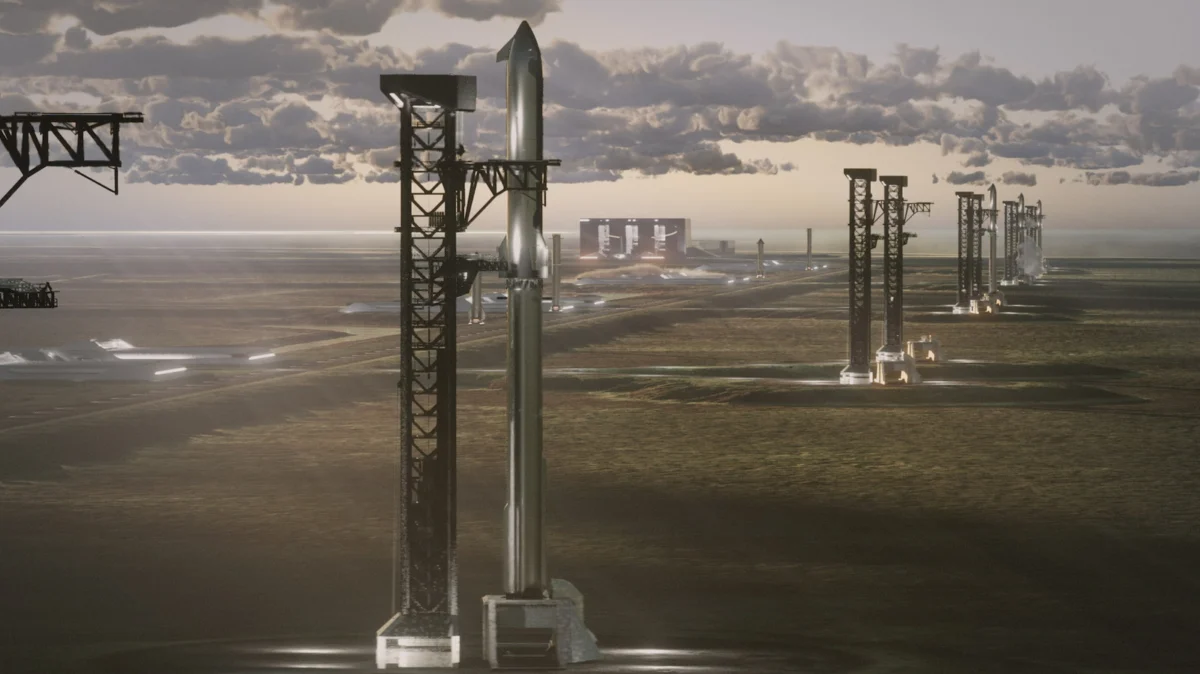
In a move that promises to redefine the landscape of commercial spaceflight, SpaceX has officially unveiled plans for a colossal new launch facility situated on the southern coast of Louisiana. The project, dubbed "Starbase Louisiana," represents a staggering $100 billion investment aimed at creating a permanent, high-cadence gateway to Earth orbit, the Moon, and eventually, Mars. Spanning 125,000 acres—approximately 195 square miles—the facility is set to become the most ambitious private infrastructure project in the history of the aerospace industry.
Main Facts: A City of Rockets
The proposed site, located in the Pecan Island region of Louisiana, is not merely a launch pad; it is envisioned as a self-sustaining ecosystem for interplanetary exploration. According to technical specifications released by SpaceX, the site will feature five distinct launch complexes, each equipped with two high-capacity launch pads. This design is intended to support an unprecedented frequency of Starship flights, aiming for a launch cadence that proponents suggest will make orbital travel as routine as commercial aviation.
Beyond the launch infrastructure, the campus will include a massive propellant production facility. Leveraging Louisiana’s abundant access to natural gas, SpaceX plans to synthesize methane-based fuel on-site, drastically reducing the logistical overhead of transporting volatile propellants. The campus will also incorporate vehicle processing hangars, advanced power generation systems, and dedicated residential housing for the thousands of engineers, technicians, and their families who will form the backbone of this new space-faring community.
Chronology: From Litigation to Launchpad
The transformation of the Pecan Island site is a story of environmental reclamation meeting industrial ambition. The land was previously held by ExxonMobil, which returned the property to the state of Louisiana as part of a landmark settlement following extensive litigation regarding coastal land loss and environmental degradation.
- Pre-2026: The Pecan Island site remained dormant, subject to state reclamation efforts and environmental remediation planning.
- August 2026: SpaceX formally announces the $100 billion project in partnership with the State of Louisiana, marking the beginning of the "Starbase Louisiana" initiative.
- 2027: Official commencement of site construction and initial land development.
- 2028: Completion of core propellant manufacturing facilities and the first major residential sector for personnel.
- 2029: Targeted date for the inaugural launch from the Louisiana complex.
The rapid timeline, while aggressive for a project of this magnitude, reflects SpaceX’s "move fast" philosophy, which has defined the company’s operations in Texas and Florida.
Supporting Data and Strategic Utility
The choice of Louisiana is far from coincidental. While SpaceX’s Texas Starbase remains a primary hub for development and testing, the Louisiana facility serves a specific strategic function: polar orbit access.
By launching southward from the Gulf Coast, SpaceX can place its next-generation "Starmind" data center satellites into polar orbits—a maneuver that is geographically restricted from the company’s current launch sites. These satellites are the centerpiece of Elon Musk’s vision to "blanket the skies" with orbital AI-driven data centers.
The integration of these satellites with the company’s broader technological ecosystem—including the recently announced "Terafab" chip foundry in Texas—creates a vertically integrated pipeline. The Terafab project is designed to produce specialized AI processors for the SpaceXAI division, which will operate these orbiting data centers. By controlling the chip manufacturing, the launch vehicle, the fuel source, and the orbital hardware, SpaceX is positioning itself as the infrastructure layer for the next century of global computing and connectivity.
Official Responses and Political Alignment
The project has received strong backing from the Louisiana state government. Governor Jeff Landry has characterized the partnership as a "new era of commercial spaceflight," emphasizing the economic revitalization the project brings to the region.
"This is not just about rockets; this is about jobs, education, and placing Louisiana at the epicenter of the new space economy," Governor Landry stated during the project launch ceremony.
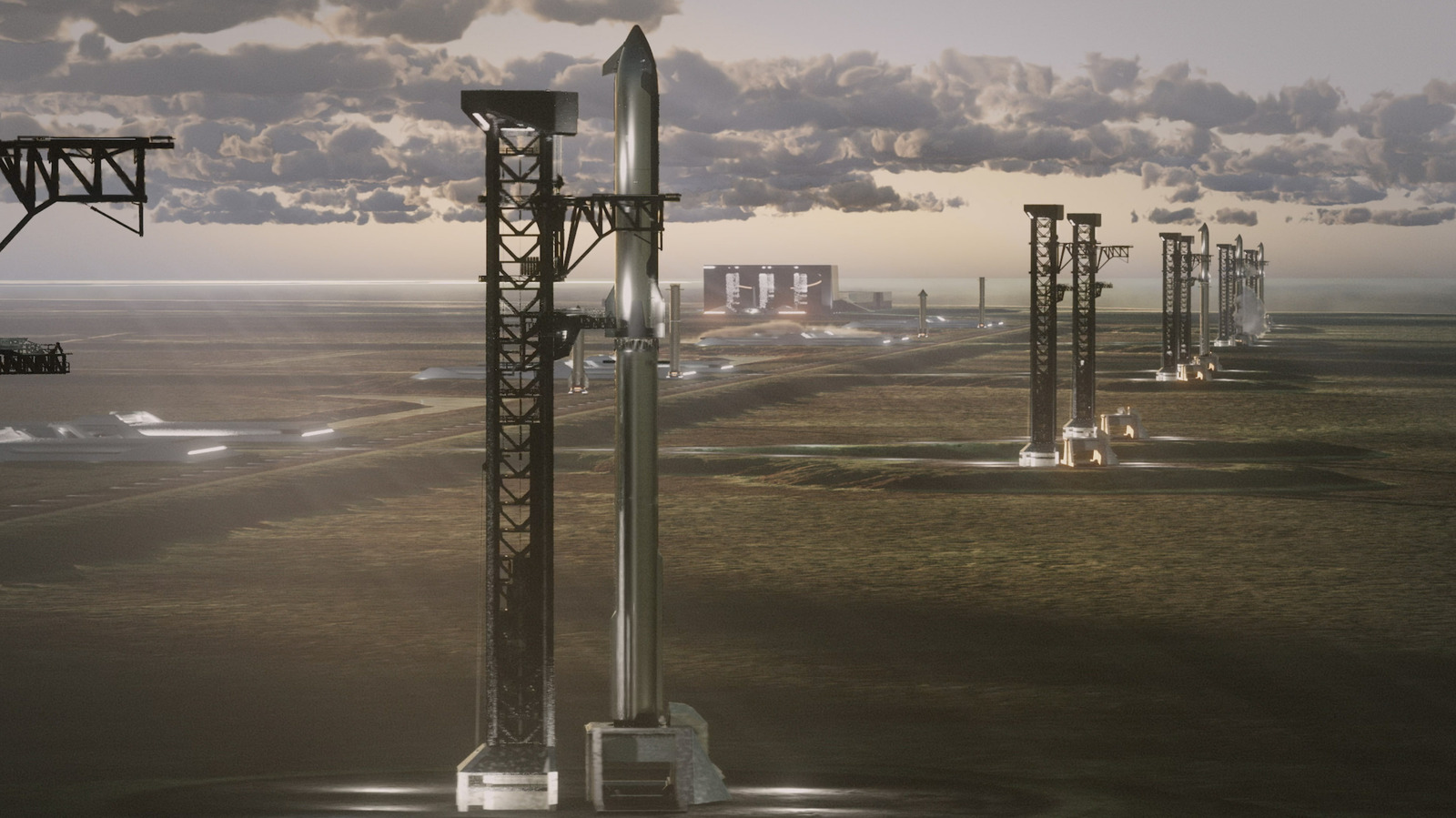
Elon Musk, speaking on the long-term vision of the site, framed it within the existential goals of his company. "We’re preparing to build a spaceport that, until now, has only existed in science fiction," Musk remarked. "SpaceX was founded to bring about a future where humans are out exploring amongst the stars, which will only be possible when we make going to space as routine as flying on an airplane. Starbase, Louisiana will unlock that future."
The state’s support is bolstered by the strict environmental stipulations attached to the project. As part of the agreement, SpaceX has pledged to work closely with state agencies on aggressive marshland preservation, wildlife protection, and the construction of advanced storm-protection infrastructure, which serves the dual purpose of protecting the facility and the surrounding coastal communities.
Implications: The Macro-Economic and Geopolitical Impact
The sheer scale of the $100 billion investment suggests that Starbase Louisiana is intended to be a cornerstone of the global space economy for decades to come.
1. The Privatization of Infrastructure
With the shift toward private-sector-led space development, SpaceX is essentially building the "railroads" of the 21st century. The ability to launch thousands of times a year would enable the deployment of massive orbital arrays that could eventually replace terrestrial fiber optics and local data centers. This creates a geopolitical paradigm where access to the internet, global compute, and orbital observation is dictated by private satellite constellations.
2. Economic Catalyst
The project is expected to generate tens of thousands of high-skill jobs. From aerospace engineers to data center technicians, the project will require a specialized workforce, likely leading to the creation of new academic partnerships with Louisiana’s university system. The "Starbase" community model mirrors the company’s approach in Texas, effectively creating a "company town" that prioritizes operational efficiency and proximity to the work site.
3. Environmental Stewardship
The requirement for SpaceX to restore the marshland around Pecan Island provides an interesting case study in industrial-environmental cooperation. By tying the success of the spaceport to the ecological health of the coastline, the project creates a model that other industrial giants may be forced to emulate. If successful, the project could prove that high-impact industrialization can coexist with—and perhaps even fund—large-scale environmental restoration.
4. The "Starmind" and AI Integration
The link between Starbase Louisiana and the SpaceXAI division cannot be overstated. By launching AI-heavy satellites directly into polar orbits, SpaceX is positioning itself to lead in the development of "Space-Edge Computing." In this model, data processing happens in orbit, reducing latency and reliance on terrestrial servers. This is a critical development for industries ranging from defense and logistics to real-time global financial services.
Conclusion: A New Horizon
As construction prepares to begin in 2027, the world will be watching Louisiana. The transition of the Pecan Island site from a contested piece of coastal land to a launchpad for the stars is emblematic of the broader shifts in technology and industry.
While the 2029 target for the first launch remains ambitious, the momentum behind SpaceX—fueled by its recent public offering and the successful integration of its chip manufacturing and launch capabilities—suggests that the company is moving with a level of confidence rarely seen in the private sector. Whether Starbase Louisiana becomes the "city of the future" that Elon Musk envisions remains to be seen, but the magnitude of the investment ensures that the Gulf Coast will be the focal point of human space exploration for the foreseeable future.