Nila Kartika Wati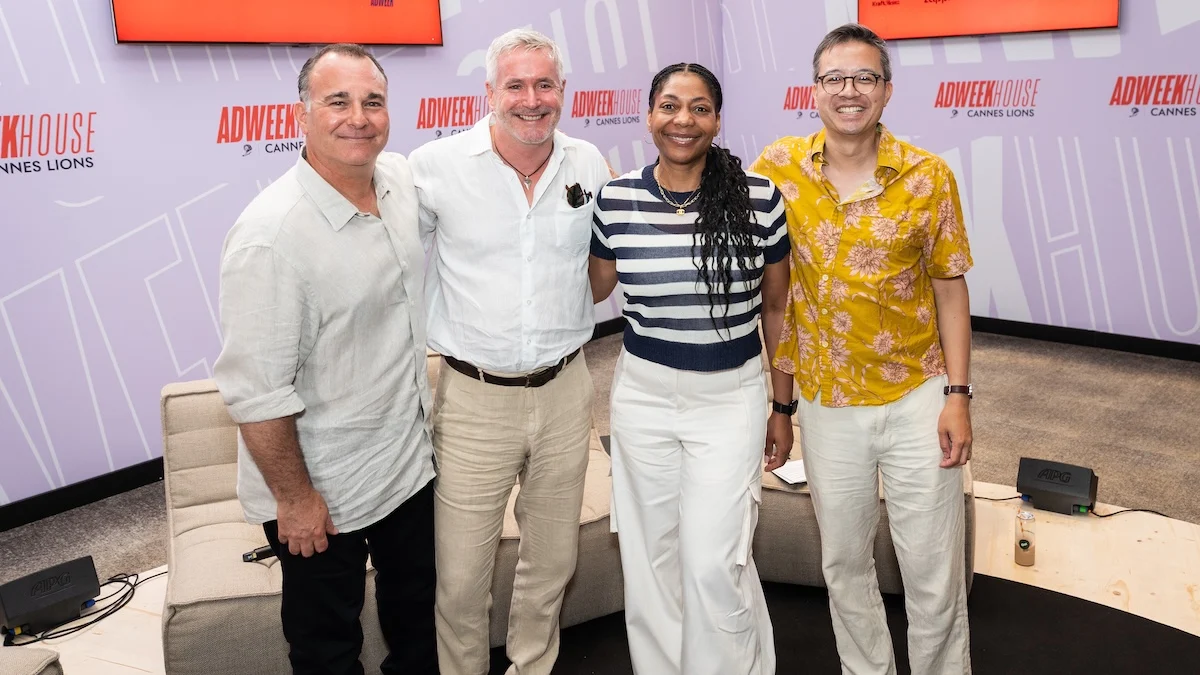
In the modern marketing landscape, few arenas offer the sheer scale and fervor of professional sports. For decades, the "logo slap"—a passive sponsorship model characterized by perimeter signage, stadium naming rights, and static broadcast placements—served as the gold standard for brand visibility. However, as the digital age fragments media consumption and fans grow increasingly skeptical of traditional advertising, the old playbook is losing its potency.
To explore this shifting paradigm, ADWEEK recently hosted an exclusive panel at the ADWEEK House during the Cannes Lions International Festival of Creativity. Moderated by Ryan Joe, editor-in-chief of ADWEEK, and co-hosted by consumer insights platform Zappi, the discussion brought together industry titans—including Todd Kaplan, CMO for North America at Kraft Heinz, and Gabrielle Wesley, CMO of confectionery at Mars Snacking North America—to dissect the future of engagement in the sporting world.
The consensus was clear: In an era of infinite content, mere presence is no longer synonymous with influence. To win the hearts of today’s fans, brands must evolve from passive observers into active participants in the cultural conversation.
The Death of the "Logo Slap"
The primary challenge facing legacy brands today is a paradox of plenty. While sports viewership remains at an all-time high, the market has become drastically oversaturated. Consumers are bombarded with branded content from the moment they check a score on their phone to the final whistle of a game.
“Awareness is not our issue,” noted Todd Kaplan of Kraft Heinz. “Doing a logo slap—‘presented by X,’ ‘sponsored by Y’—that’s not success for us anymore. That level of passive sponsorship is white noise to the modern fan.”
The Shift Toward Emotional Resonance
The panel argued that the traditional sponsorship model fails because it is inherently transactional. It treats the fan as a passive vessel for brand messaging rather than a participant in a shared experience. Brands that succeed in this new environment are those that prioritize authenticity over vanity metrics.
A prime example cited during the discussion was Dove’s World Cup activation. Rather than simply plastering their logo across soccer stadiums, Dove launched a limited-edition line of body wash and deodorant specifically tailored to the World Cup experience.
Steve Phillips, founder, chair, and chief innovation officer at Zappi, emphasized why this worked: “It wasn’t just imposing yourself on the event; it was being inspired by it. You really understood the fan experience and engaged with that experience in an interesting way.” By creating products that felt relevant to the intensity and environment of the sport, Dove moved from being a sponsor to being a component of the fan’s day-to-day journey.
Chronology of a Paradigm Shift: From Broadcast to Engagement
To understand how we arrived at this moment, one must look at the evolution of the fan journey over the last decade.
- Pre-2010 (The Broadcast Era): Sports marketing was defined by the "Big Four" leagues and the supremacy of television. A thirty-second spot during a major game was the ultimate achievement.
- 2010–2018 (The Social Media Inflection): The rise of Twitter (now X) and Facebook shifted the conversation from the television set to the handheld device. Fans began consuming highlights, memes, and commentary in real-time, creating a "second screen" experience.
- 2018–Present (The Participatory Era): The modern fan is no longer just a spectator; they are a creator. With the explosion of short-form video on TikTok and Instagram, fans create their own highlights and sub-cultures. Brands that attempt to "broadcast" to these audiences are often ignored or mocked, while brands that "engage" are invited into the fold.
This evolution requires a fundamental change in how marketers plan their sports budgets. As Gabrielle Wesley of Mars Snacking noted, “Consumers don’t want to be messaged; they want to engage. It’s a two-way conversation.”
Supporting Data and The Psychology of fandom
Why does "authenticity" matter more than reach? The data suggests that consumer trust is at a historic low. According to various industry benchmarks, younger demographics (Gen Z and Alpha) are significantly more likely to abandon a brand if they perceive its advertising as intrusive or culturally tone-deaf.
The Anatomy of an Engagement
The panel highlighted that the most effective sports campaigns share three distinct traits:
- Contextual Relevance: The brand provides value that fits the specific environment of the sport.
- Cultural Fluency: The brand speaks the language of the fan, often utilizing current trends or internet subcultures.
- Low Barrier to Entry: The activation is fun, sharable, and requires little effort for the fan to participate in.
This was exemplified by Kraft Heinz’s "unofficial" stadium ketchup and their TSA-compliant ranch dressing packs. By identifying a specific pain point (e.g., fans wanting better condiments or needing to travel with their favorites), the brand created an emotional connection that transcended any official league partnership.
Official Perspectives: Lessons from the Field
The panelists provided a roadmap for marketers looking to pivot their strategy. Their insights offer a glimpse into the internal deliberation of some of the world’s largest advertisers.
Todd Kaplan (Kraft Heinz) on "Ownable Assets"
Kaplan argued that the best marketing comes from "ownable" moments. He pointed to the "Wienie 500"—a stunt where Oscar Mayer raced its fleet of Wienermobiles at the Indianapolis Motor Speedway. It was bold, it was distinct, and it was inherently "Oscar Mayer." The result? Billions of earned media impressions and, remarkably, fans actually placing bets on the race through platforms like DraftKings.
“How you show up differently with ownable, distinctive assets—things that only your brand can do—that’s where the good stuff is,” Kaplan remarked.
Gabrielle Wesley (Mars Snacking) on Spontaneity
Wesley emphasized the importance of agility. She referenced Alex Freeman, the once-unknown U.S. men’s national soccer team player who became a viral sensation. Marketers who were already "in the culture" were able to capitalize on his rise in real-time.
“Those are engagements that are pure, that you can’t necessarily plan,” Wesley said. “Making sure that you’re engaged in culture allows you to participate in those moments.”
Steve Phillips (Zappi) on Emotional Intelligence
Phillips concluded that success is fundamentally about empathy. He highlighted Stella Artois’s World Cup commercial featuring David Beckham. The ad didn’t try to explain the rules of soccer or sell a specific technical feature of the beer; it captured the feeling of being a fan—the anxiety, the camaraderie, and the ritual of the watch party.
“That really deep understanding of your audience, of what’s happening—associating that with your brand, that’s the type of success I think brands are looking for,” Phillips added.
Implications for the Future of Sports Marketing
The implications of this shift are profound for both agencies and brands.
1. The Rise of the "Cultural Agency"
Agencies can no longer just be creative shops or media buyers. They must act as cultural intelligence units, monitoring the pulse of social media to help brands jump into conversations within minutes, not months.
2. Redefining ROI
If the goal is no longer just "impressions," how do we measure success? The panel suggested a pivot toward "participation metrics"—social sentiment, user-generated content (UGC) volume, and brand lift during peak cultural moments.
3. The Power of "Unofficial"
We are entering an era where "official" status is less important than "cultural" status. Brands that are willing to take risks, create their own sub-events, and exist on the fringes of the stadium experience may ultimately find more success than those that pay for the title of "Official Sponsor."
4. Continuous Engagement
The sports season doesn’t end when the final whistle blows. As fans continue to interact with clips and commentary in the days and weeks following a game, brands must maintain a presence that feels organic and persistent, rather than turning off the tap the moment the game clock hits zero.
Conclusion
The future of sports marketing belongs to those who view the game not as a billboard, but as a platform. The "logo slap" era is not necessarily dead, but it is certainly dying as a primary driver of brand affinity.
As Kraft Heinz, Mars Snacking, and other industry leaders have demonstrated, the path to the modern fan’s heart is paved with genuine empathy, cultural agility, and the courage to create something that is uniquely, undeniably your own. For marketers, the challenge is clear: stop buying space, and start earning a place in the conversation. The stadium is full, the game is on—but the real action is happening in the way brands choose to play along.

 Nana Wu
 Ammar Sabilarrohman