

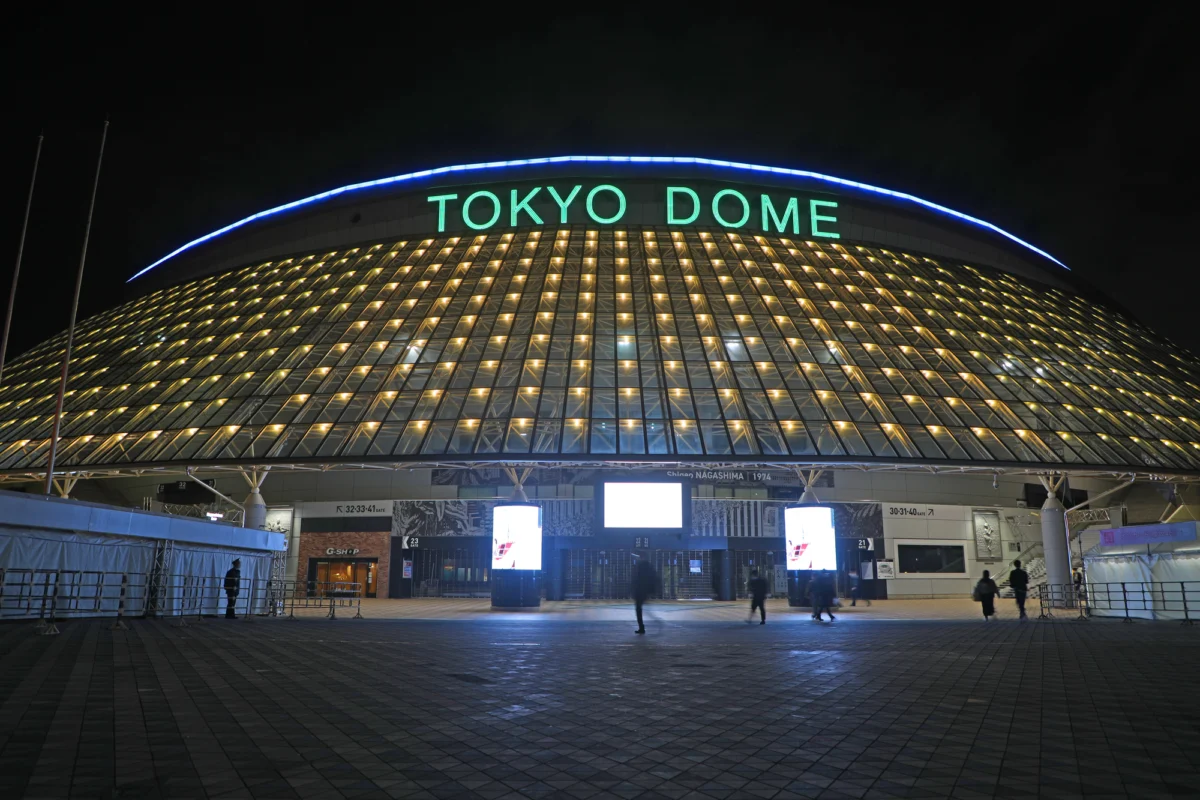
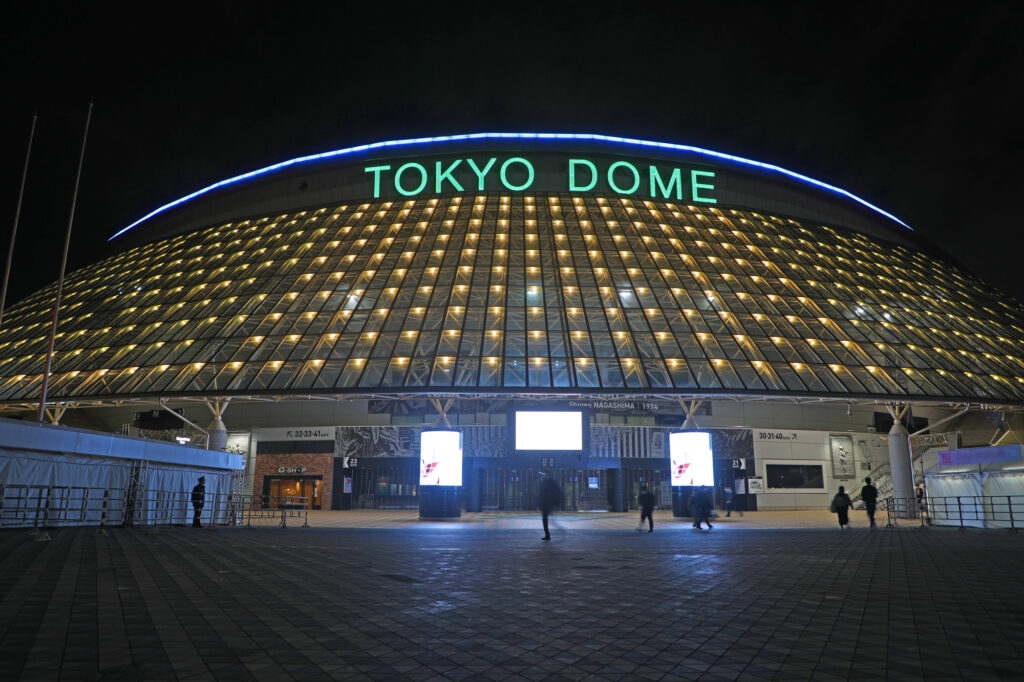
At the height of the 2010s, the Japanese government heavily promoted the “Cool Japan” initiative, a soft-power strategy designed to export the nation’s pop culture, fashion, and aesthetic sensibilities to the global stage. Yet, as manga and anime have successfully conquered international markets—becoming cultural staples in the West—the Japanese music industry (J-pop) remains stubbornly, and perhaps self-destructively, inaccessible. For global fans, the dream of attending a concert in Tokyo or streaming their favorite tracks is frequently met with a digital and bureaucratic "No Trespassing" sign.
The growing frustration reached a boiling point recently on social media, where foreign fans openly accused the Japanese music industry of xenophobia. While the industry points to legal mandates and risk management, the reality is a complex, often contradictory landscape that has left Japan’s music sector languishing while neighbors like South Korea have successfully globalized their own cultural exports.
A Digital and Physical Deadlock: The Debate Erupts
The discourse was ignited on X (formerly Twitter) by the Japanese artist NANO, who posted a candid reflection on the immense challenges Japanese artists face when attempting to organize international tours. “There is only a small percentage of artists that can rely on the power of big labels or agents to promote their shows internationally,” she wrote, highlighting the logistical and financial hurdles of global expansion.
While NANO’s intent was to advocate for better support for artists, the response from the English-speaking J-pop community was sharp and immediate. The conversation quickly pivoted from touring logistics to the systemic barriers preventing fans from accessing Japanese music at its source.
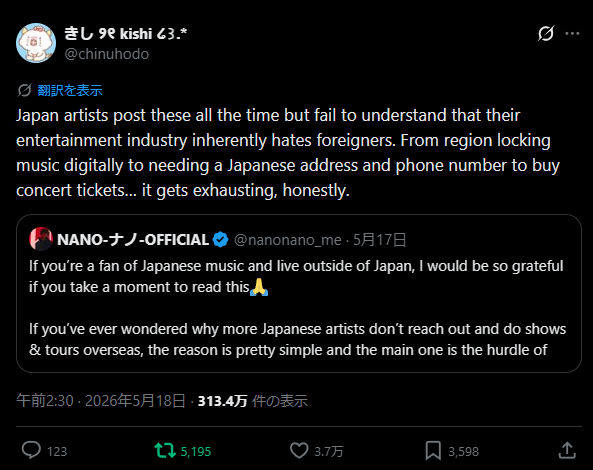
User @chinuhodo, whose post resonated with over 37,000 users, argued that the industry’s barriers are not merely logistical, but structural. “Japan artists post these [appeals] all the time but fail to understand that their entertainment industry inherently hates foreigners,” the user claimed. “From region-locking music digitally to needing a Japanese address and phone number to buy concert tickets… it gets exhausting, honestly.”
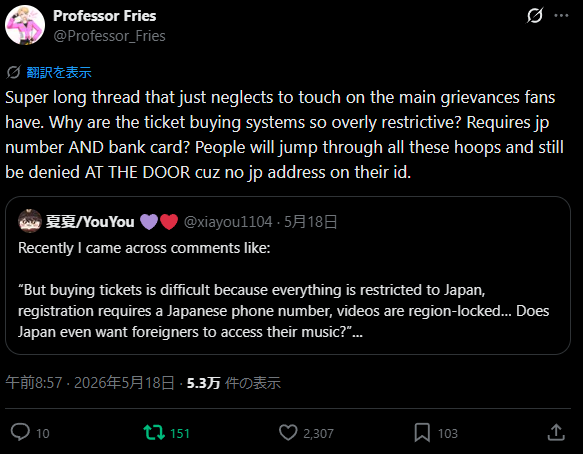
For many, the "ticketing wall" is the most egregious offender. Fans who are willing to travel to Japan, spend money in the local economy, and support artists directly find themselves unable to purchase tickets. Most Japanese ticketing platforms require a local phone number (which necessitates residency) and a valid Japanese address. Even those who bypass these rules via friends or proxies often face the nightmare of being turned away at the venue door if their physical ID does not match the information linked to the digital ticket.
The Justification: Anti-Scalping and the Regulatory Landscape
To understand why the industry maintains such rigid controls, one must look at Japan’s 2018/2019 Ticket Resale Prohibition Act. Designed to curb the rampant secondary market, the law criminalized the resale of tickets above face value, with violators facing up to one year in prison.
To comply with the law’s "best-effort" requirement to verify identities, organizers turned to strict digital vetting. The lottery-based system, which dominates ticket sales, is intended to prevent scalpers from using bots to vacuum up inventory. However, the byproduct of this "security" is a system that effectively filters out any potential attendee who does not possess a domestic mobile carrier account.
Industry defenders, including some with ties to the entertainment sector, have cited the 2025 Ministry of Economy, Trade and Industry (METI) 3-D Secure mandate as a further complication. This regulation shifts the burden of financial risk onto merchants in cases of unauthenticated fraud. If a foreign credit card is flagged as a "mismatch," the merchant faces potential chargebacks, leading many to simply block non-domestic transactions entirely.
Yet, critics argue that these regulations are a convenient shield. Despite the draconian verification measures, domestic ticket fraud remains rampant. In 2024, authorities in Sapporo arrested a syndicate that had utilized 8,000 fake fan club accounts to hoard tickets for resale at 200–300% of their face value. Similarly, STARTO Entertainment (formerly Johnny & Associates) recently exposed a massive resale ring on the platform Ticket Ryutsu Center, involving over 10,000 illicit listings. If the "strict" system cannot stop domestic scalpers, fans argue, then the exclusion of foreigners is not a security measure—it is simply a failure of innovation.
The "Galapagos" Effect: Why J-Pop Lagged Behind
The economic opportunity cost of this isolation is staggering. Analysts point to the "Galapagos" syndrome—a term used in Japan to describe products or technologies that have evolved in complete isolation from global standards.
Sociologist Nakayama Atsuo has noted that while Japan’s domestic music market is three to four times the size of South Korea’s, its global footprint is significantly smaller. During the 2010s, J-pop commanded roughly one-tenth of the global search interest of K-pop.
The industry’s reliance on what critic Matsutani Soichiro calls "AKB Commerce" (or "AKB shoho") is largely to blame. In this model, revenue is tied to fan loyalty via physical media purchases, fan club dues, and "meet-and-greet" voting ballots. A stark example of the insanity of this system was the 2018 release of AKB48’s single "Teacher, Teacher," which sold two million copies, only for thousands of those CDs to be discovered in trash bags on the streets shortly thereafter. Fans had bought the physical media solely to secure ballots for the group’s "General Election," ignoring the music itself.
This "oshi doping"—artificially inflating sales through obsessive fan rituals—lulled the industry into a false sense of security. Because domestic labels were making consistent, predictable revenue from their existing base, they saw no need to modernize for the international market. Consequently, Japan is currently the only major music market where physical media (CDs) still outsells streaming, a trend that stands in direct opposition to global consumption habits.
Exceptions to the Rule: The New Wave
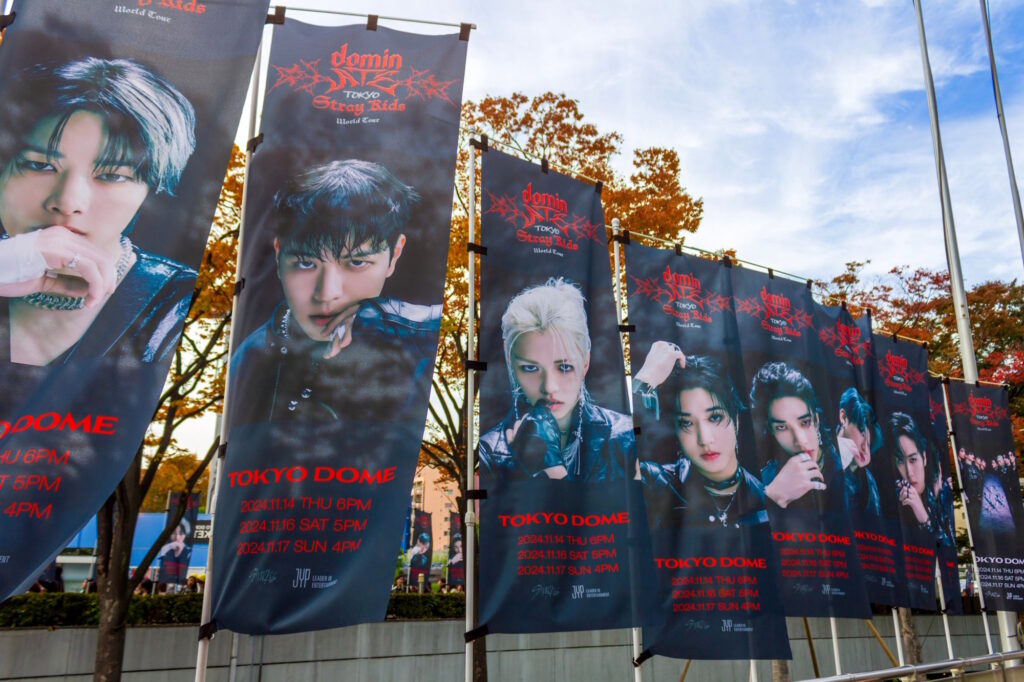
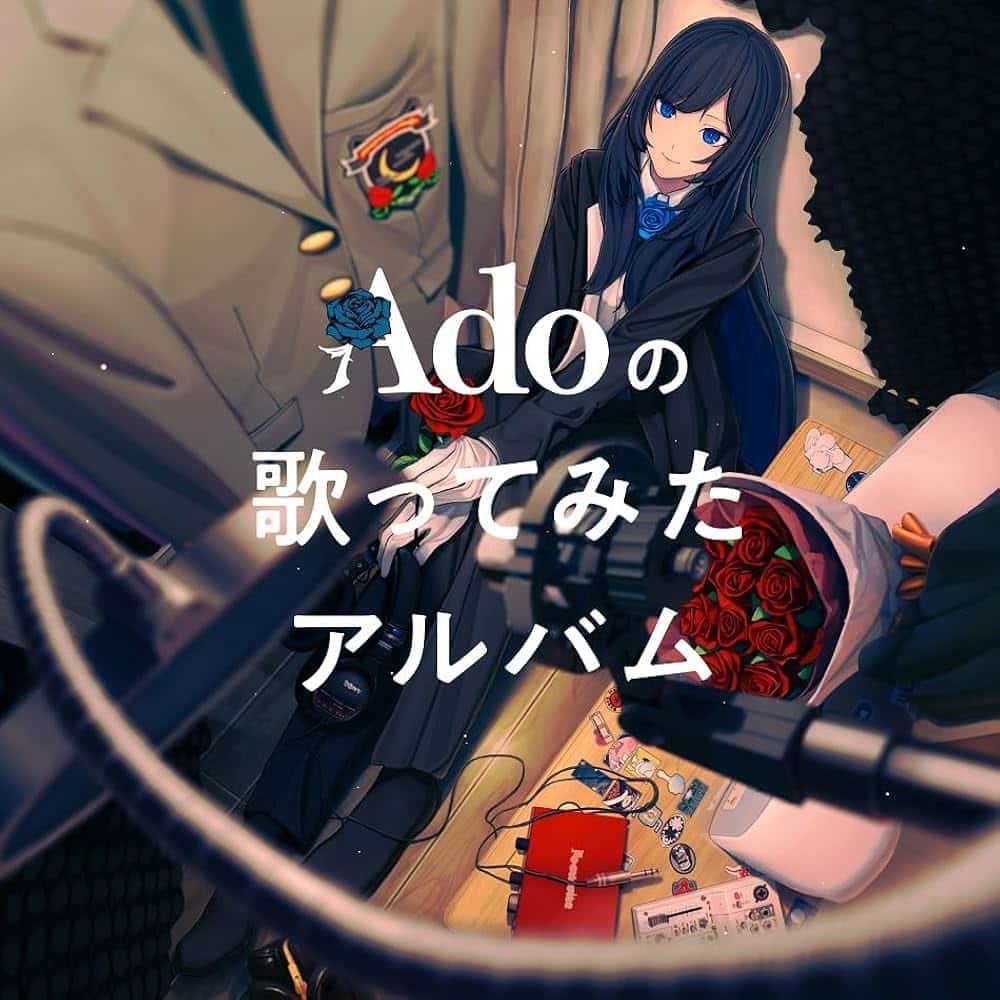
Not all Japanese artists are bound by these old-guard constraints. A new generation of stars—Ado, YOASOBI, and ATARASHII GAKKO!—has successfully bypassed the traditional labels’ isolationist tendencies.
These artists share a common origin: the Internet. Ado, a YouTube sensation, and YOASOBI, who gained global traction via the success of the Oshi no Ko anime theme song "Idol," did not rely on traditional, domestic-only marketing. They utilized digital platforms, worked with international sponsors like Crunchyroll, and actively courted overseas fanbases. Ado, in particular, has demonstrated a proactive commitment to her international audience, even investing time in mastering English.
These successes demonstrate that the infrastructure for global J-pop consumption does exist; it is simply not being utilized by the legacy labels that dominate the industry.
The Implications: A Soft Power Crisis
Japan is at a critical juncture. With a stagnant domestic economy and a declining population, the government is increasingly reliant on "Cool Japan" exports and tourism to drive growth. Yet, by maintaining barriers to its own culture, Japan is effectively leaving billions of dollars in revenue on the table.
The comparison to the anime industry is instructive. For years, anime was a hotbed of piracy because official, accessible streams were non-existent. It was only when platforms like Crunchyroll—which began as a pirate site—were legitimized and integrated into the industry that the sector exploded globally. The music industry is currently where the anime industry was two decades ago: stuck in a cycle of protectionism that only serves to encourage the very black-market activity it claims to hate.
Conclusion: A Choice, Not a Necessity
To suggest that the Japanese music industry is purely "xenophobic" is to overlook the inertia of a massive, legacy-burdened bureaucracy. However, the status quo is increasingly untenable.
There is no legal or technical requirement for Japan to remain isolated. The technology exists to verify international buyers without excluding them; the global appetite for Japanese music is at an all-time high; and the economic incentives are clear. The only missing ingredient is the political and corporate will to change.
Until the Japanese music industry decides that it values global reach as much as domestic control, it will remain a fortress—a collection of treasures behind a wall, accessible only to those who happen to live on the right side of the border. For those who love the music, it is a frustrating reality. For the industry, it is a missed opportunity that they may eventually regret as the global landscape moves on without them.












No comments yet. Be the first to join the conversation!