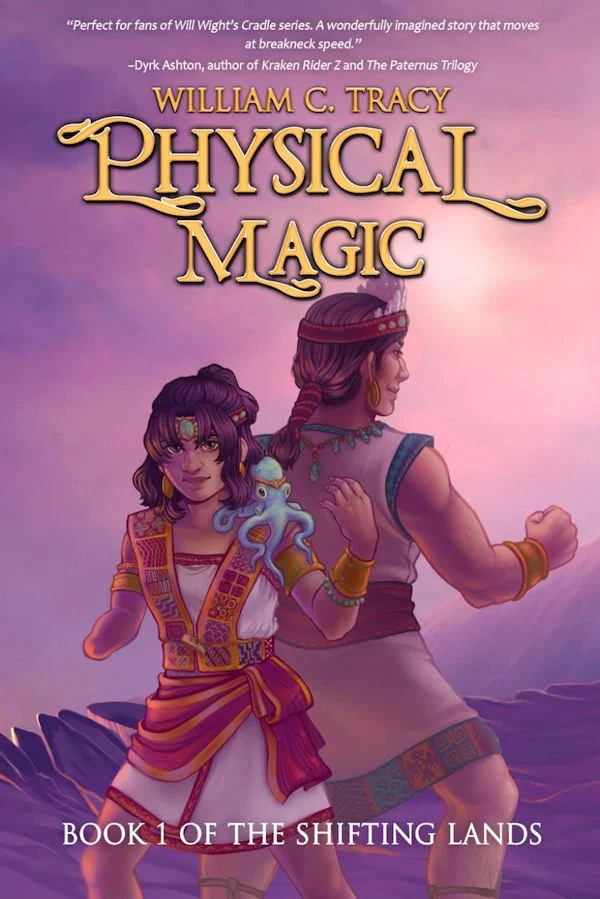
In the landscape of modern self-published fantasy, few titles have generated as much discourse during the 11th annual Self-Published Fantasy Blog-Off (SPFBO) as Physical Magic. By eschewing the standard tropes of Western medieval settings in favor of a Pacific Island-inspired tapestry, the novel has carved out a unique space that challenges both the physical and narrative limitations often imposed on protagonists. As the competition nears the conclusion of its first round, Physical Magic has emerged as a focal point for discussions on inclusivity, worldbuilding, and the mechanics of magical systems.
The Narrative Premise: A World in Flux
At the heart of the story is Silluka, a young woman living within the Huaca society, a culture that places immense value on physical perfection and the ability to perform exacting, ritualistic motions to summon divine favor. Born with a limb difference—missing one arm—Silluka finds herself marginalized by a system that equates physical ability with moral and civic worth.
After a failed attempt to prove her worth to her village results in the loss of her citizenship, Silluka’s path converges with the mysterious Elder Quilqi. This encounter introduces her to a revolutionary approach to the divine: a system of power that is not strictly bound by the rigid, ableist expectations of her community. Her journey is underscored by a ticking clock; a new, gargantuan island is on a collision course with her coastal home, precipitating catastrophic weather events and the arrival of a predatory, invasive species. As the village flees inland, Silluka must grapple with her own internal stigma and the failing health of her brother, Ichu, all while attempting to master a form of "Physical Magic" that may be the only hope for their survival.
A Chronology of Discovery: Judges’ Perspectives
The reception of Physical Magic among the SPFBO judging panel has been characterized by a blend of admiration for its technical ambition and critical evaluation of its execution.
The story’s early chapters immediately captured the judges’ attention. Eva, one of the primary reviewers, highlighted the novel’s ability to inject levity into high-stakes environments. She specifically cited a memorable sequence involving a small, octopus-like artificer whose "translation circlet" malfunctioned, leading to comedic, fragmented dialogue. This character arc, which introduces a blend of eldritch worship and technological tinkering, provided a necessary counterpoint to the impending doom of the island’s migration.
By the middle of the narrative, the focus shifts toward the grueling, often visceral reality of the characters’ journey. Julia, another judge, noted that the book’s greatest strength lies in its atmospheric departure from standard genre conventions. She praised the author’s decision to ground the magic system in balance, stance, and intention rather than esoteric, academic jargon. This "Physical Magic" is presented as a discipline that evolves alongside the character, reflecting the author’s commitment to exploring how different bodies interact with power.
However, the journey was not without its hurdles. Maureen observed that while the immersion was top-tier, the pacing suffered from the "start-stop" nature of the village’s migration, which occasionally felt clunky. Furthermore, Adawia pointed out a narrative disconnect regarding the protagonist: while the text frequently asserts that Silluka is "clever," the actual demonstrations of this intellect were sometimes overshadowed by the emphasis on her struggle with self-worth.
Supporting Data: Worldbuilding and Technical Execution
The world of Physical Magic is built upon a foundation of "chayus"—martial-arts-inspired forms that channel elemental forces. This system serves as the backbone for both the conflict and the character development.
- Cultural Inspiration: By drawing from Pacific Island-inspired cultures, the novel avoids the "European Medieval" fatigue that plagues much of the fantasy genre. The societal reliance on gods tied to storms and the inevitable impermanence of landmasses provides a high-stakes setting that feels fresh.
- The Magic System: The magic is described as highly technical. It relies on dexterity and physical precision. The inclusion of an assistive device for magic use sparked nuanced debate among the judges. While some expressed caution regarding "magical cures" for disability, the consensus leaned toward viewing these tools as aids that expand possibilities rather than erasing the protagonist’s identity.
- Representation: The novel features casual, matter-of-fact queerness. Silluka’s brother, Ichu, and other background characters exist in a world where diverse attractions are not treated as plot points or sources of conflict, but as natural aspects of the human experience. This reflects the author’s own identity as a bisexual/pansexual writer, which the judges felt added a layer of organic authenticity to the text.
Official Responses and Critiques
The judges’ feedback, while diverse, converges on the idea that Physical Magic is a "quietly ambitious" work. The critique from the panel can be synthesized into three primary observations:
- Character Development: There is a strong appreciation for the slow-burn nature of Silluka’s growth. Her journey is not one of sudden empowerment, but of questioning the deep-seated, internalized belief that she is "lesser."
- Pacing and Structure: The narrative suffers from occasional structural inconsistencies. As noted by Maureen, the transitions between the desperate flight of the village and the exploration of the world felt uneven at times.
- Technical vs. Emotional: There is a slight tension between the "hard" magic system (which is rules-heavy and technical) and the "soft" emotional beats of the story. For readers who enjoy technical systems, this is a major selling point; for those who prefer character-driven narratives, the technical detail can occasionally act as a barrier to complete immersion.
Implications for the Future of the Genre
The success of Physical Magic in the SPFBO competition signals a shifting appetite among fantasy readers. There is a palpable demand for settings that move beyond traditional Eurocentric boundaries and toward cultures that prioritize communal survival, oceanic landscapes, and alternative perspectives on physical capability.
The book’s exploration of disability—not as a burden to be "fixed," but as a facet of identity that informs one’s relationship with the world—offers a blueprint for future authors. By framing the protagonist’s struggle as an internal process of self-validation, the author has created a character who feels earned rather than archetypal.
Furthermore, the integration of technology—in the form of the octopus-like artificers and their translation inventions—into a fantasy setting adds an "inventive edge" that prevents the story from feeling stale. This cross-pollination of genres (fantasy, adventure, and speculative invention) creates a unique reading experience that leaves the audience anticipating the next installment in the series.
Conclusion: A Promising Contender
As the SPFBO moves into its final stages, Physical Magic stands as a testament to the power of independent publishing to push the boundaries of the fantasy genre. It is a work that does not shy away from the complexities of its own world, nor the limitations of its characters. While it may have minor pacing issues or technical flourishes that occasionally distract from the primary narrative, its core—a thoughtful, inclusive, and emotionally resonant journey—is undeniably compelling.
For readers seeking a story that respects both the intelligence of its audience and the emotional depth of its protagonist, Physical Magic offers a refreshing departure from the status quo. It is a work that stays with the reader, inviting them to reconsider not just the nature of magic, but the nature of strength itself. As we await the announcement of the finalists this coming Friday, June 26th, it is clear that Physical Magic has secured its place as a significant entry in this year’s competition.