
 Jia Lissa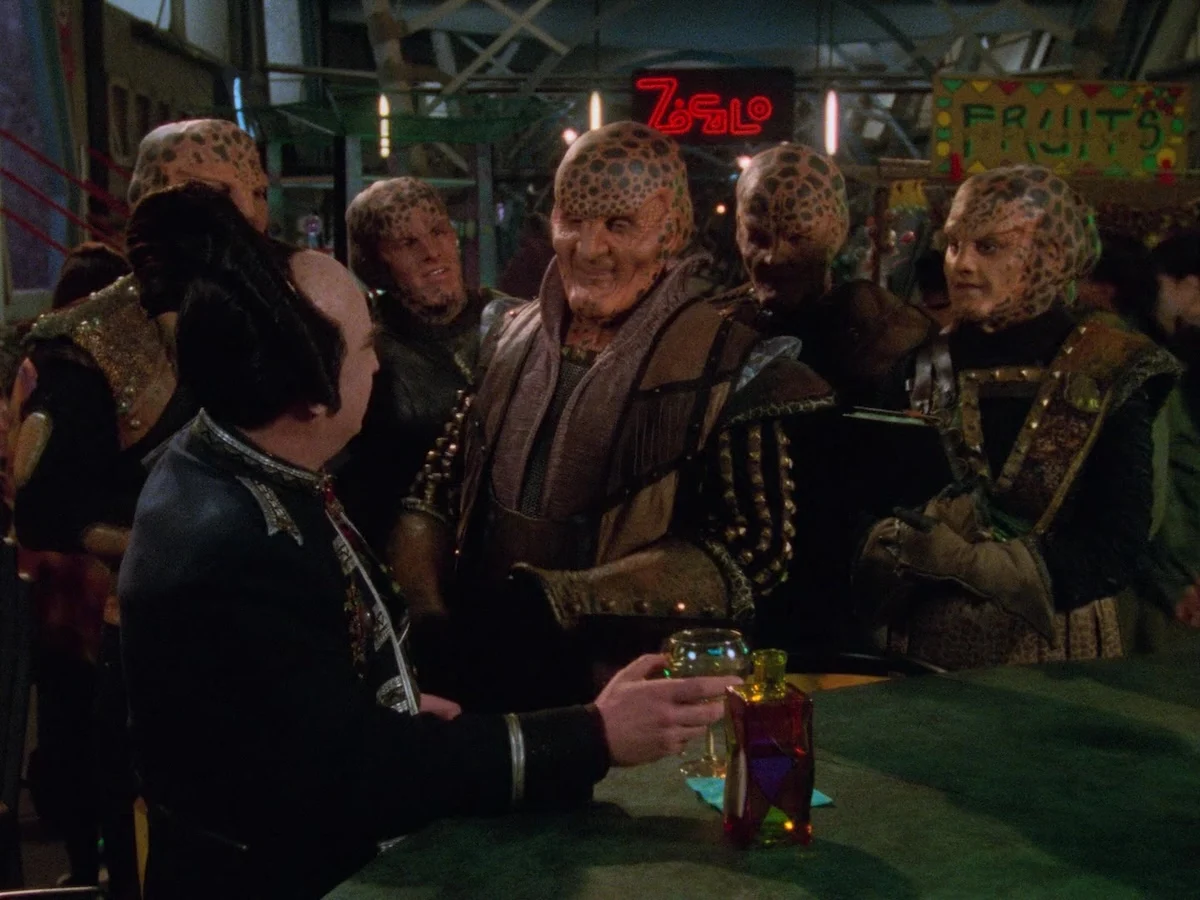
Episode Overview:
- “The Ragged Edge”
- Series: Babylon 5, Season 5, Episode 12 (Production 513)
- Original Air Date: April 8, 1998
- Writer: J. Michael Straczynski
- Director: John Copeland
As the Interstellar Alliance (IA) navigates the fragile stability of the "Third Age," the political and personal costs of leadership are becoming increasingly apparent. In the episode “The Ragged Edge,” the veneer of peace is stripped away by a series of brutal, coordinated attacks on shipping lanes, while internal struggles on Babylon 5 threaten to undermine the unity the Alliance was built to foster.
The Crisis of Security: A Political Deadlock
The dawn of the Third Age, heralded by the formation of the Interstellar Alliance, is currently facing its most severe administrative test. President John Sheridan, tasked with consolidating the security of the galaxy, finds himself trapped in a cycle of bureaucratic paralysis. While he remains diligent in his efforts to finalize treaties, his conference room sits empty.
Member worlds of the Alliance have initiated a de facto boycott, refusing to engage in diplomatic discourse until the security of their commercial shipping lanes is guaranteed. The loss of the Earth ship Red Star 9 serves as the catalyst for this crisis. The vessel was intercepted and systematically destroyed by unknown assailants, a tactical operation that suggests a level of sophistication and malice that the Alliance is currently ill-equipped to combat.
Chronology of Events: From Mystery to Betrayal
The investigation into the destruction of the Red Star 9 follows a harrowing trajectory, exposing the deep-seated prejudices and administrative failures inherent in the post-Shadow war galaxy.

- The Discovery: The Rangers recover the wreckage of the Red Star 9. Crucially, they discover that a lifepod was successfully ejected, raising hopes for a sole survivor—and a witness—to the ambush.
- The Diplomatic Impasse: Because the vessel was allegedly involved in smuggling operations for the Drazi, neither the Earth government nor the Drazi are willing to cooperate with the investigation. The political fallout is immediate, creating a vacuum of information that threatens to alienate the Alliance members further.
- The Drazi Incursion: Security Chief Michael Garibaldi, acting on intelligence from a private contact, travels to the Drazi homeworld to locate the missing pilot. He arrives to meet Tafiq Azir, an old acquaintance, only to find the situation compromised.
- The Execution: Before the pilot can be rescued, both the pilot and Azir are executed by mysterious, highly trained assailants. Garibaldi survives the encounter by the skin of his teeth, engaging in a desperate, lethal fight before signaling for a White Star extraction.
- The Revelation: Upon his return to Babylon 5, the true nature of the conspiracy is unmasked. A small, seemingly innocuous gold disc recovered from the scene is identified by Londo Mollari as an insignia worn exclusively by Centauri palace guards.
Supporting Data: The Personal Cost of Duty
While the political machinery of the galaxy churns, the human and alien elements of the station provide a stark look at the toll of these times.
The Literary Rise of G’Kar
Ambassador G’Kar, recently returned from Centauri Prime, finds his life irrevocably altered by his own pen. During his absence, his unfinished manuscript, The Book of G’Kar, was stolen and subsequently published by Narn followers. The work has become a cultural phenomenon, eclipsing even the religious cornerstone of Narn society, The Book of G’Quan.
G’Kar’s discomfort is palpable. He finds himself burdened by a sudden, quasi-religious status, with Narn “fangoobers” seeking his guidance at every turn. His attempt to suppress the fanaticism surrounding his text leads to a poignant scene where he physically demonstrates the danger of fundamentalism—violently closing his book on the nose of a follower to show that blind, literal interpretation of his words is a path to error, not enlightenment.
The Descent of Michael Garibaldi
The episode provides a harrowing look at the deterioration of Michael Garibaldi. His struggle with alcoholism has moved from a manageable vice to a professional liability. His decision to exclude Dr. Stephen Franklin from his mission to the Drazi homeworld—using a flimsy pretext about the contact not liking outsiders—is revealed as a strategic isolation. Garibaldi is terrified that a man of science and a fellow addict would see through his facade and recognize his relapse. The tragic consequence is the death of his contact, Azir, an event that serves as a grim indictment of Garibaldi’s inability to confront his own demons.
Official Responses and Strategic Implications
The final briefing in the War Room crystallizes the stakes of the current conflict. With the discovery of the Centauri palace guard button, the narrative shifts from a mystery regarding “who” to a terrifying inquiry into “why.”

The revelation that the attackers were not Drazi, but likely Centauri operatives, places Londo Mollari in an impossible position. He is already a man haunted by the assassination attempts he suffered on his home world; knowing that his own government is actively sabotaging the Interstellar Alliance is a weight that could break him. The surrounding staff, led by the astute G’Kar, opts to keep the truth from Londo for the moment, recognizing that if he discovers the depth of his government’s betrayal, his life—and his utility to the Alliance—will be extinguished.
A Shifting Medical Landscape
Amidst the geopolitical turmoil, Dr. Stephen Franklin receives a career-defining offer. He is being tapped to replace Dr. Kyle as the head of Xenobiological Research on Earth. While this represents a professional triumph, it serves as a harbinger of the changing guard on Babylon 5. Franklin’s departure will create a significant void, both in the station’s medical capabilities and in its social fabric, as the "old guard" of the station continues to disperse.
Analysis: The "Ragged Edge" of Authority
The episode title, “The Ragged Edge,” serves as a metaphor for the state of the Alliance. It is a government defined by its borders—the literal edge of the sector and the metaphorical edge of its patience.
From a narrative standpoint, this episode is a masterful example of the "slow-burn" political thriller. While the action on the Drazi homeworld provides the necessary kinetic energy, the real conflict remains in the boardrooms and the private quarters of the ambassadors. The show is moving away from the black-and-white morality of the Shadow War and into the murky, grey reality of building a lasting peace.
The episode is also a testament to the character-driven nature of Babylon 5. We see the characters not just as leaders, but as damaged, tired individuals. President Sheridan’s lament regarding the endless flow of paperwork is perhaps the most honest assessment of his presidency yet: the war was won in the stars, but the peace is being lost in the offices.

The inclusion of Ta’Lon and the return of characters from the station’s past, such as Dr. Kyle (via mention), reinforces the sense that the history of the station is a living, breathing entity. The tension is no longer about an external enemy at the gates; it is about the internal rot of mistrust and the inability of individuals to let go of their past traumas—whether it be the Narns clinging to their new, flawed prophet, or Garibaldi hiding the bottle in his drawer.
As the Interstellar Alliance looks toward the next challenge, the question remains: Can a government built on the wreckage of war survive the betrayal of its own members? With the Centauri Republic now confirmed as a hostile actor, the "Ragged Edge" has effectively pushed the Alliance to the brink of a new, potentially devastating conflict.


 Nana Wu
 Ali Ikhwan





