The literary world is currently witnessing a phenomenon that industry veterans are struggling to contextualize. Matt Dinniman, the powerhouse author behind the Dungeon Crawler Carl series, has achieved what many previously considered impossible: a clean sweep of the New York Times fiction hardcover bestseller list, placing six individual titles simultaneously. This unprecedented achievement marks a paradigm shift in how genre fiction—specifically LitRPG and web-novel-to-print adaptations—is perceived by the traditional publishing establishment.
As the industry analyzes the data from the final week of June and the beginning of July 2026, it is clear that Dinniman’s performance is not merely a fluke of a single release, but a sustained campaign of reader engagement that is rewriting the rules of the bestseller lists.
Main Facts: A Record-Breaking Run
The scale of Dinniman’s success is difficult to overstate. According to the most recent data tracking from Locus, Dinniman has successfully occupied six slots on the New York Times fiction hardcover list. To put this in perspective, the runner-up in terms of sustained presence, Rebecca Yarros, has enjoyed a significant run with three titles appearing on the list over a dozen times throughout 2025.
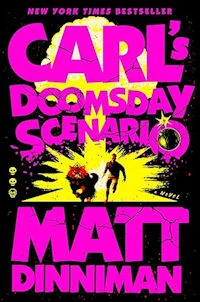
Dinniman’s dominance is bolstered by the massive, dedicated fan base that originated in the digital spaces of platforms like Royal Road and Patreon before transitioning into physical print. His titles, including Carl’s Doomsday Scenario, A Parade of Horribles, and The Dungeon Anarchist’s Cookbook, are not just selling; they are maintaining high-velocity movement across multiple tracking services, including USA Today, Publishers Weekly, and Amazon’s global sales charts in the UK and Canada.
Chronology of the Surge
The rise of the Dungeon Crawler Carl phenomenon was not an overnight event, but rather a slow, pressurized build that has reached a critical mass in the summer of 2026.
- Spring 2025: The series began its aggressive climb into the mainstream consciousness. Titles such as The Butcher’s Masquerade (April 2025) and The Gate of the Feral Gods (March 2025) started showing consistent, if modest, footprints on major charts.
- Late 2025: As the library of physical editions expanded, the "backlist effect" took hold. Readers discovering the series would immediately purchase the entire available catalog, creating a compounding sales velocity that pushed multiple books onto lists simultaneously.
- January 2026: The release of Carl’s Doomsday Scenario acted as a catalyst. It debuted on January 12 and has remained a fixture for 25 weeks, effectively serving as the "anchor" for the series’ broader chart performance.
- April 2026: A wave of new releases—including A Parade of Horribles—solidified Dinniman’s grip on the charts, proving that the audience was not just interested in the latest release, but was actively consuming the entire series in sequence.
- Late June 2026: The current reporting period shows a historical peak. With six titles on the New York Times list alone, Dinniman has effectively crowded out traditional blockbuster authors who previously held a monopoly on the top ten.
Supporting Data and Market Performance
The raw data provided by current industry trackers illustrates a stark contrast between traditional publishing models and the Dinniman model. While authors like James Burke (with Yesteryear) and R.F. Kuang (with the Babel Collector’s Edition) continue to perform strongly, they are competing in a market environment that is increasingly tilted toward serial, community-driven narratives.
Key Performance Indicators (June 29, 2026)
| Title | Format | Weeks on List | Current Status |
|---|---|---|---|
| Dungeon Crawler Carl | Paperback | 25 | #5 (NYT), #4 (USAT) |
| Carl’s Doomsday Scenario | Hardcover | 25 | #5 (NYT) |
| A Parade of Horribles | Hardcover | 10 | #7 (NYT) |
| The Dungeon Anarchist’s Cookbook | Hardcover | 21 | #10 (NYT) |
| The Gate of the Feral Gods | Hardcover | 23 | #11 (NYT) |
| The Butcher’s Masquerade | Hardcover | 21 | #12 (NYT) |
The data confirms that the paperback edition of Dungeon Crawler Carl is arguably the most successful individual volume, consistently appearing in the top five across almost every major list, including Publishers Weekly and USA Today. This indicates that the entry-level price point for the series is functioning as a massive funnel for the rest of the author’s bibliography.
Official Responses and Industry Sentiment
While publishers are rarely prone to public commentary on individual authors, the silence from major houses is telling. Analysts at Locus have noted that the "gatekeepers" of the traditional bestseller lists are currently navigating a crisis of definition.

The industry is divided on how to categorize this success. Some argue that the LitRPG genre is simply experiencing a "golden age" where the digital-to-physical pipeline is finally optimized. Others, however, suggest that the "Dinniman effect" represents a fundamental change in reader behavior.
"Readers are no longer waiting for the traditional marketing cycle," says one independent book retailer. "They are following creators who have built a ‘world’ that they can live in for months. The loyalty shown to the Dungeon Crawler Carl brand is more akin to a television franchise than a standard fiction book series. When you release a new book, you aren’t just selling one item; you are reactivating a community that buys the entire backlog."
Implications: The Death of the "Single-Title" Strategy
The implications of this record-breaking run are profound for the publishing industry at large:
1. The Value of the Backlist
Traditional publishing has long prioritized the "lead title"—the one big book per season. Dinniman’s success proves that in the modern era, the backlist is the engine. By maintaining a constant, high-quality stream of content, the author has rendered the "one book per year" model obsolete for high-engagement fiction.
2. The Power of Digital-First Communities
The fact that these books are selling in massive volumes in physical formats despite being available in various digital iterations for years is a testament to the "collector" mentality of modern fandom. Readers want the physical object as a trophy, a shift that benefits publishers who are willing to invest in high-quality slipcase editions and special designs, as seen with the success of the Red Rising Deluxe Slipcase Edition and the Babel Collector’s Edition.
3. The Genre Expansion
For years, the industry dismissed web-serials as niche. With Dinniman’s six-title sweep, it is no longer possible to treat this category as a sub-genre. It is a dominant force. Major publishers are likely to accelerate their scouting of web-novel platforms to find the "next Dinniman," leading to a potential influx of serialized fiction into the traditional retail space.
4. A New Baseline for Bestsellers
The "record" set this week will likely become the new benchmark. Authors who wish to compete at the top of the New York Times list will need to replicate this level of ecosystem building. It is no longer enough to write a book; an author must curate an entire universe that provides endless content for the reader to consume.
Conclusion
As we look toward the remainder of 2026, the question is not whether Matt Dinniman can maintain this pace, but whether the industry can adapt to a landscape where his style of success becomes the standard rather than the outlier. For now, Dinniman stands alone at the top of the charts, having proven that when an author owns their audience and delivers consistent, addictive narratives, the traditional gatekeepers of the literary world are more than happy to make room for them—six times over.