

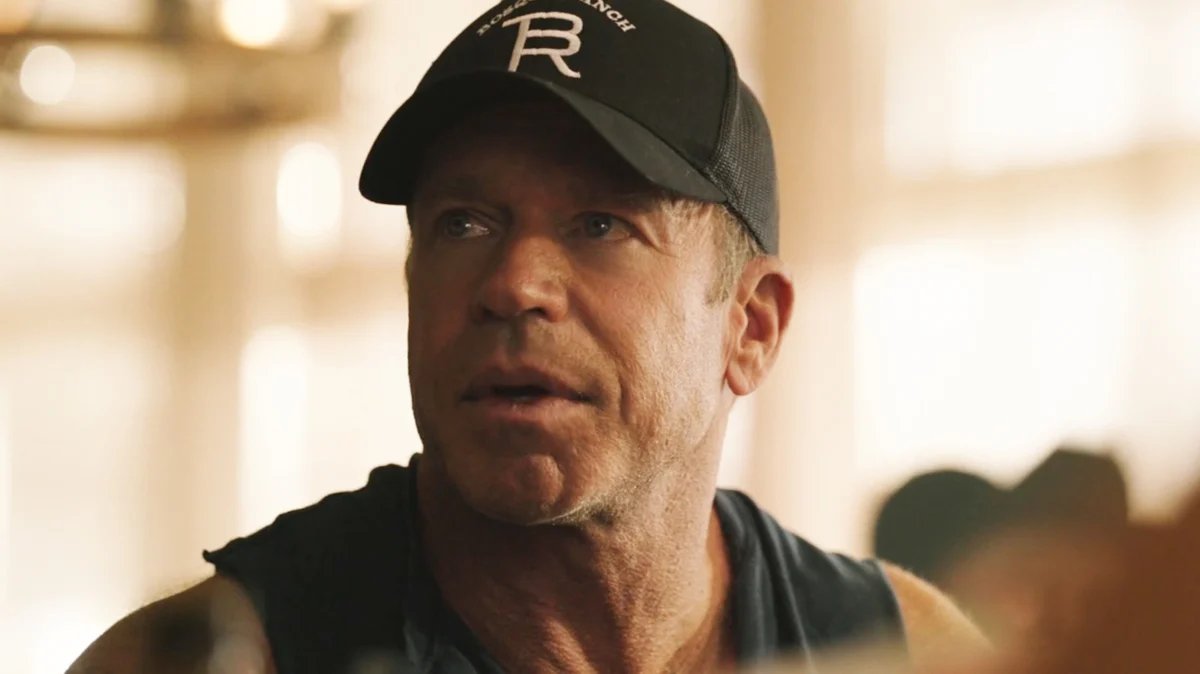
In the landscape of contemporary American television, few figures have cast a shadow as long—or as polarizing—as Taylor Sheridan. The architect of the sprawling Yellowstone cinematic universe and the powerhouse creative force behind Landman, 1883, and 1923, Sheridan has become the face of a new brand of populist prestige television. Yet, while his ratings continue to shatter records, his relationship with the critical establishment has soured into an open, and at times performative, conflict.
In a recent appearance on Bill Simmons’ The Bill Simmons Podcast, the creator addressed the elephant in the room with his trademark bluntness. When asked about his perception among industry critics, Sheridan did not mince words. "The critics and me—I don’t care what they think," he stated, adding, "and it annoys the s*** out of them that I don’t care."
The Main Facts: A Creative at Odds with the Canon
At the core of this friction is a fundamental disagreement over what constitutes "good" television. Critics, largely centered in coastal urban hubs, have frequently targeted Sheridan for what they perceive as one-dimensional characterization, particularly regarding his female leads, and a narrative reliance on tropes that lean into conservative, rural, and "middle-American" sensibilities.
Sheridan, conversely, views his work as a direct rebuttal to the "elitist" nature of modern critique. His shows, such as The Madison, frequently posit that city life is fundamentally soulless, contrasting it against the rugged, often brutal beauty of the American West. By rejecting the traditional Hollywood feedback loop, Sheridan has positioned himself as an outsider, even as he remains one of the most successful showrunners in the history of Paramount Global.
Chronology of the Conflict: From ‘Yellowstone’ to ‘Landman’
The tension between Sheridan and the critical press did not manifest overnight. It has been a slow-burning fuse lit by the meteoric rise of Yellowstone.
- The Early Years (2018–2020): When Yellowstone first premiered, reviews were mixed, with some critics dismissing it as a high-budget soap opera akin to Dallas. However, audiences flocked to the show, creating a massive discrepancy between audience scores on platforms like Rotten Tomatoes and the reviews from professional critics.
- The Accusations of Misogyny (2021–2023): As the franchise expanded, criticism intensified. Observers noted that female characters often seemed to lack agency or depth, serving merely as catalysts for the male leads. High-profile actresses, including Helen Mirren (1923) and Ali Larter (Landman), have publicly defended Sheridan’s writing, arguing that his characters are nuanced products of their environments.
- The "Rage-Bait" Era (2024–Present): With the release of Landman, Sheridan has moved from defensive to offensive. He openly admits to using narrative choices as "rage-bait," intentionally withholding information from critics during press screenings to provoke specific, negative reactions—reactions he then enjoys watching unfold in real-time.
Supporting Data: Ratings vs. Reviews
The most striking aspect of the Sheridan phenomenon is the gulf between critical reception and commercial success. While he has yet to secure a coveted Emmy Award for his flagship series—a point of clear frustration for his supporters—his metrics are undeniable.
- The Rotten Tomatoes Disconnect: Yellowstone maintains a solid critical standing, with its third season even reaching a 100% "Certified Fresh" rating (albeit on a limited sample of seven reviews). However, the critical consensus often fluctuates wildly, while audience approval remains consistently high.
- The ‘Landman’ Strategy: Both seasons of Landman have earned "Certified Fresh" status, yet Sheridan treats the critical review process with disdain. In his interview with Simmons, he revealed that he intentionally limited the number of episodes sent to critics for review. By providing only the first three episodes, he ensured they would be unable to see the "master plan"—a strategy he knew would lead to negative headlines about his pacing or character development.
Official Responses and Tactical Decisions
Sheridan’s strategy is not merely reactive; it is tactical. He views the act of storytelling as a conversation with his audience, not a service to the reviewer.
The Demi Moore Case Study
A primary example of this is the handling of Demi Moore’s character, Cami Miller, in Landman. Critics lambasted the show for "underutilizing" an actress of Moore’s caliber during the first season. Sheridan, however, revealed that he had explicitly told Moore she would essentially be an "extra" for seven episodes, only to have her character assume control of the oil company following her husband’s death in the second season.
"I’ll be the first to tell you that there are things that I do that rage-bait [critics] a bit," Sheridan admitted. By withholding the resolution of that arc, he successfully baited critics into writing premature reviews that he could later use to highlight their lack of insight into his long-term narrative structure.
The TCU Subplot in ‘Landman’
Similarly, in Landman Season 2, Sheridan introduced a storyline involving a non-binary character that challenged the patience of both the network and the audience. When urged to resolve the character conflict earlier, Sheridan refused. His reasoning was clear: "I want to piss you off a little, and then, how dare I? And then you watch the next week and go, ‘Oh, you got me.’"
Implications: The Future of Prestige Television
The implications of Sheridan’s war with the critics are significant for the industry. His success challenges the long-held belief that "prestige" television must adhere to the tastes and sociopolitical priorities of coastal critics to be validated.
The Death of the "Awards-Bait" Model
Sheridan has explicitly stated that his goal is not to win Emmys. "I’m pretty common and I’m going to tell stories that common people are going to understand," he remarked. This represents a pivot away from the "prestige" model—where creators craft shows specifically designed to appeal to the Television Academy—toward a model that prioritizes raw, visceral engagement.
Fanbase Divergence
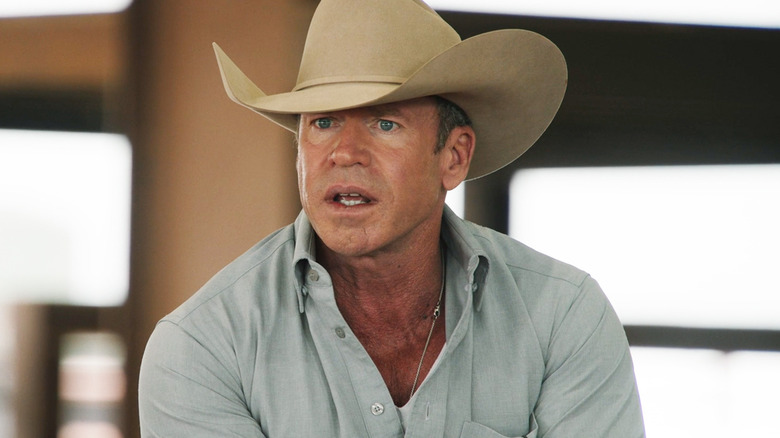
Interestingly, the most potent criticism of Sheridan is no longer coming from the press, but from his own fanbase. As Yellowstone has evolved, long-time viewers have begun to debate the show’s "lowest points," questioning whether the narrative has lost its way under the weight of its own expansion. This suggests that while Sheridan has successfully alienated the critics, his true challenge may be maintaining the quality that initially earned him his massive, dedicated following.
Conclusion: A Maverick’s Legacy
Whether one views Taylor Sheridan as a visionary re-inventing the American myth or a stubborn creator prone to self-indulgence, his impact is indisputable. He has successfully built a sprawling media empire by ignoring the traditional gatekeepers of taste.
By weaponizing the very critiques leveled against him, Sheridan has transformed the act of showrunning into a high-stakes game of psychological warfare. As he continues to churn out content that moves, scares, and excites millions of Americans, the question is no longer whether the critics like his work—it is whether the critics have any power left to influence the success of a creator who has learned that in the modern streaming era, the only review that truly matters is the one delivered by the audience at home.
In his own words, his goal is to "sit somebody on their couch and move them." For better or worse, Taylor Sheridan has proven that he knows exactly how to do that—and he is more than happy to make his critics miserable while he does it.










