Ammar Sabilarrohman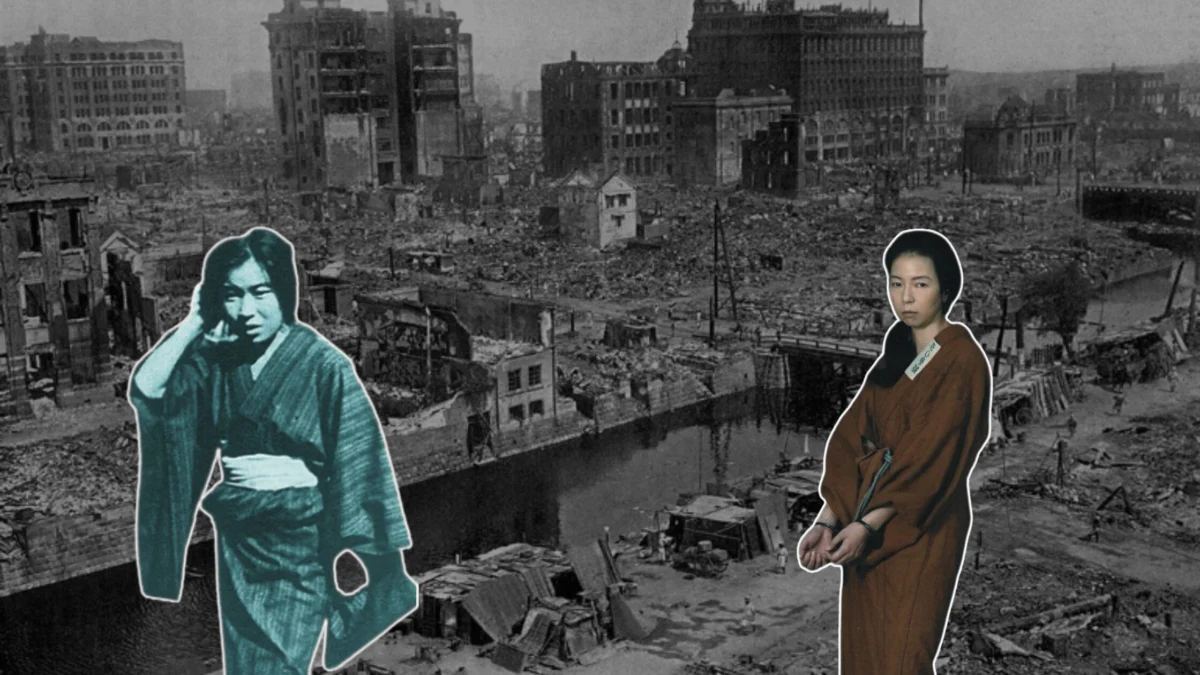
It is a maxim of political history that one should never pit oneself against the raw, unchecked power of the state. The danger increases exponentially when that state has deified its leader as a living god. Yet, that is precisely the path chosen by Kaneko Fumiko (1903–1926), an anarchist whose short, volatile life served as a direct indictment of the Japanese imperial machine.
Born so far outside the margins of society that her birth was never legally recorded, Kaneko endured years of systematic brutality. These experiences molded her into a firebrand who spent her final years not just criticizing, but actively seeking to dismantle, the Japanese imperial system. Her defiance was so absolute that, when offered a path to survival in the form of imperial clemency, she reportedly tore the document to shreds.
Now, exactly 100 years after her death in prison, a resurgence of historical scholarship and a new feature film are providing an unvarnished look at her life. These works move beyond the myth of the "anarchist martyr" to examine her complex flaws, her elitism, and the haunting, unanswered question that has shadowed her legacy for a century: Was her death a final act of state murder, or a meticulously chosen suicide?
The "Mukoseki": A Ghost in the Imperial Machine
Kaneko Fumiko was born in 1903 in Yokohama, toward the twilight of the Meiji Era. She came of age during the Taisho Era (1912–1926)—a period defined by its jarring contradictions. While Japan was embracing jazz, Western fashion, and the rise of the "modern girl" (moga) in the neon-lit districts of Ginza, the fist of imperial rule was tightening.
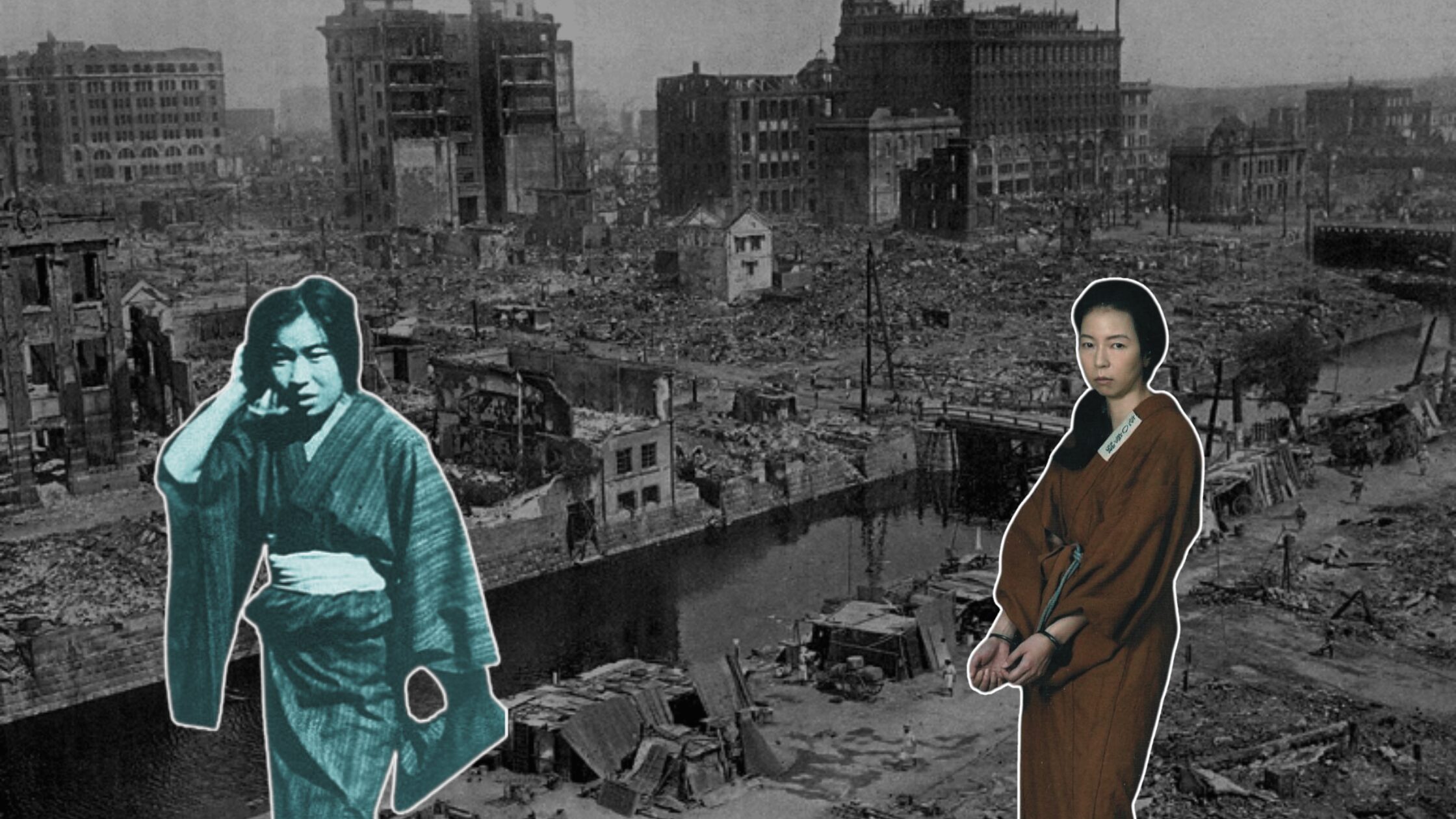
For most, this era represented progress; for Kaneko, it represented a void. Legally, she did not exist. Because her parents, Saeki Bun’ichi and Kiku, never formalized their marriage or registered her birth, Kaneko was mukoseki—a person without a family registry. In the context of the modern Japanese state, which implemented the koseki system in 1872 as a tool for economic planning and nationalistic consolidation, being mukoseki was a sentence of social death.
Kaneko famously recalled her grandmother explaining her status: she was "born, but not born." This profound alienation from the state apparatus became the bedrock of her political radicalization. She was not merely a rebel; she was a person who had been denied the most basic acknowledgment of humanity by the very system she would eventually dedicate her life to destroying.
Chronology of a Radicalization
The transformation of Kaneko from an abused child into a state-defined enemy is a narrative of trauma meeting ideology.
- 1912–1919: Sent to live with her paternal grandmother in occupied Korea, Kaneko was exposed to the brutal reality of Japanese colonialism. Her family lived as settlers, profiting from expropriated land. Kaneko was not only a victim of domestic abuse—she was a witness to the exploitation of the Korean populace.
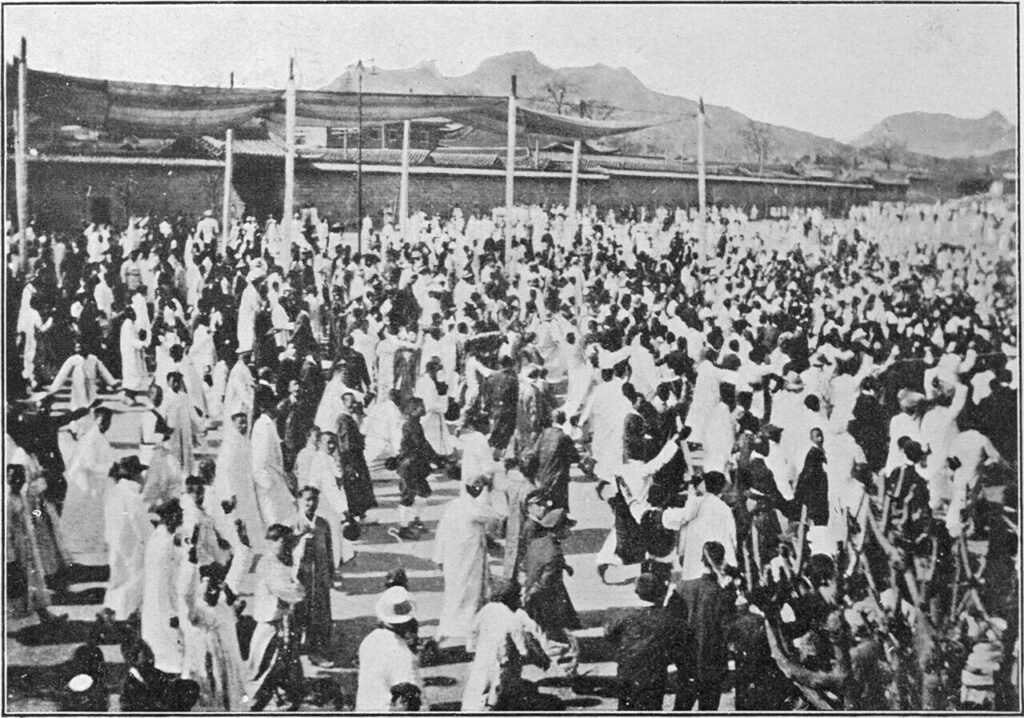
- 1919: The March 1st Movement, a massive, peaceful protest against Japanese occupation, serves as the defining catalyst for her awakening. Watching Koreans chant "Daehan Dongnip Manse!" (Long live Korean independence) from a hilltop, she realized she could not stand with her own people.
- 1920: Kaneko returns to Japan, drifting into socialist and anarchist circles in Tokyo.
- 1922: She meets Pak Yeol, a Korean anarchist. Their bond, defined by nihilism and mutual hatred of the imperial state, leads to the formation of the Futeisha (The Insolent Society).
- 1923: Following the Great Kanto Earthquake, a wave of state-sponsored xenophobia leads to the massacre of thousands of Koreans. Kaneko and Pak are arrested.
- 1926: After a high-profile trial, both are sentenced to death for treason. Kaneko dies in prison on July 23, 1926.
Colonialism and the Architecture of Hate
To understand Kaneko’s anarchism, one must look at the "dagger" pointed at the heart of Japan: Korea. Japanese strategic thinkers, most notably Yamagata Aritomo, viewed Korea as a necessary buffer zone, leading to the 1910 annexation.
Kaneko’s time in Korea was not a childhood in the conventional sense; it was an apprenticeship in the mechanics of oppression. She lived with the Iwashita family, whose wealth was predicated on the systematic dehumanization of their Korean laborers. The physical abuse she suffered at the hands of her own relatives mirrored the state’s abuse of the Korean people.
When she witnessed the March 1st Movement, her sympathy for the protestors was not mere altruism; it was an act of identification. She recognized in the colonized Korean people the same lack of agency she felt as an unregistered, abused girl. She famously wrote, "I couldn’t dismiss their protest as other people’s business." This realization transitioned her from personal resentment to political revolutionary.
The Futeisha and the Politics of Nihilism
Upon returning to Tokyo, Kaneko aligned herself with Pak Yeol. Their group, the Futeisha, was a direct provocation. By adopting the term futei-senjin—a slur used by the Japanese police to describe "insolent Koreans"—and re-appropriating it, they were engaging in a high-stakes psychological war against the establishment.
Their politics were not rooted in a structured party platform, but rather in a shared, nihilistic rejection of the "Living God" Emperor. In their writings, they advocated for the destruction of the status quo. When the Great Kanto Earthquake occurred in 1923, the state, desperate for scapegoats, used the chaos to frame the couple. The accusation—that they plotted to assassinate the future Emperor Hirohito during his wedding procession—was likely a fabrication, unsupported by physical evidence. Yet, for the imperial authorities, the lack of a bomb did not matter. The trial was not about a specific crime; it was about the threat of their ideas.
The Official Response: Clemency as a Weapon
The trial of Kaneko and Pak was a watershed moment for the Japanese legal system. The authorities used the proceedings to signal to the public that dissent—specifically, any alliance between the Japanese underclass and Korean revolutionaries—would be met with the ultimate penalty.
On March 25, 1926, the Supreme Court handed down death sentences. However, just weeks later, the imperial government issued a proclamation of clemency. This was a calculated political maneuver. By commuting their sentences to life imprisonment, the state sought to position the Emperor as a benevolent, god-like figure who possessed the power to grant life or death.
For Pak Yeol, the offer was a lifeline; he accepted and survived to see the end of the war. For Kaneko, it was an insult. The pardon was not seen by her as an act of grace, but as a mechanism to force her into submission. Her refusal to accept the mercy of the man she had sworn to topple was her final act of agency.
Implications: The Legacy of a Nameless Blade of Grass
The death of Kaneko Fumiko at age 23 remains a subject of intense debate. Was it the suicide of a woman who refused to be broken, or was the prison system complicit in her demise?
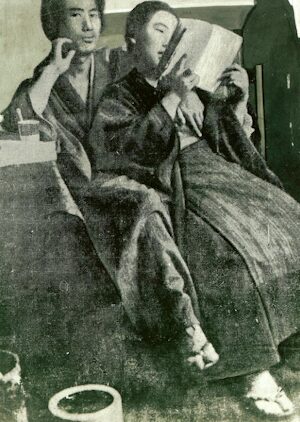
Recent scholarship, including the work of researcher Yasumoto Takako, provides a more human, and arguably more complex, portrait of Kaneko. She was not a saint; she was often vain, prone to superiority complexes, and deeply troubled. However, it is precisely these flaws that make her rejection of the imperial system so profound. She was an imperfect person who recognized that the system surrounding her was fundamentally corrupt.
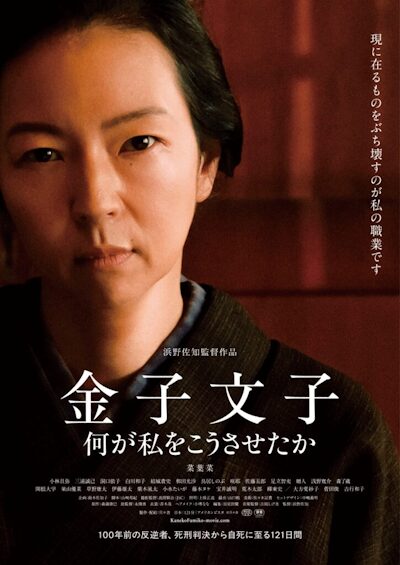
The 2026 film Kaneko Fumiko uses her surviving tanka poems to structure her final days. One poem, in particular, captures the essence of her struggle:
"Clinging to my fingers, a nameless blade of grass; when I pluck it, it faintly weeps, ‘I want to live.’"
This verse encapsulates the tragedy of her life. It is an admission of the desire to exist—to be a person, to be registered, to be recognized—colliding with the impossibility of doing so under a system that demanded total obedience. Kaneko Fumiko chose to die rather than live as a subject of the Emperor. In doing so, she transformed from a "mukoseki" nobody into an enduring symbol of resistance, proving that even a life "born, but not born" can leave an indelible mark on history. Her life remains a reminder that the power of the state is only as absolute as the citizens allow it to be.


 Neng Nana
 Asro
Asro