

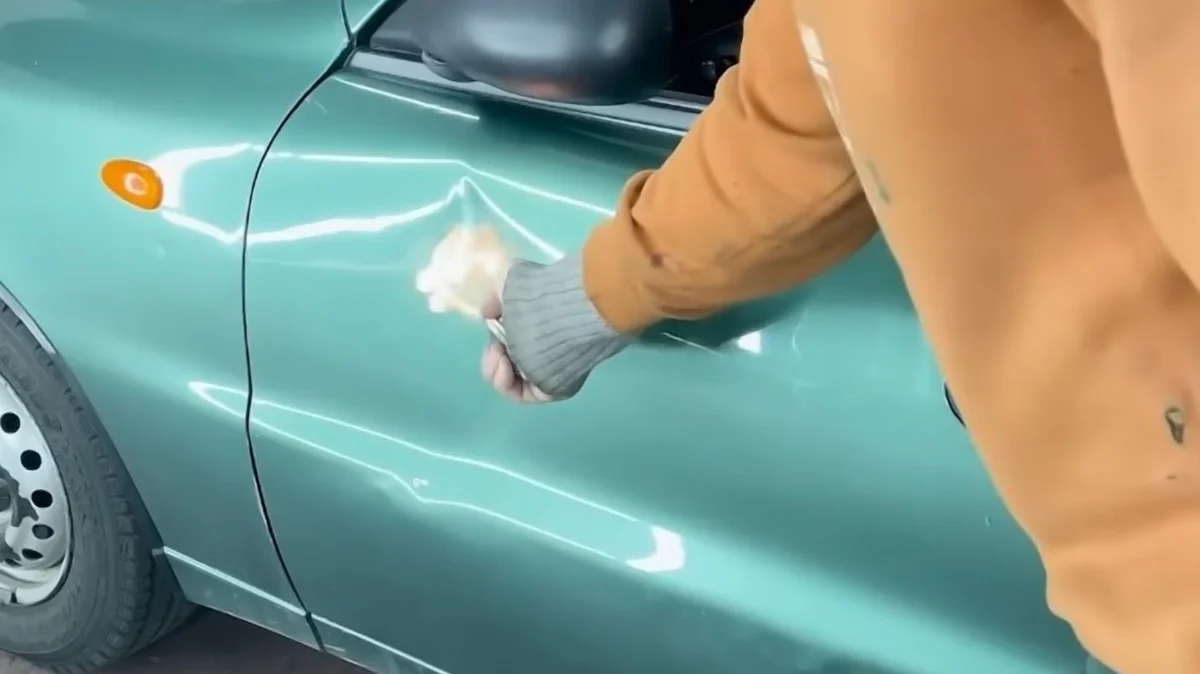
Even the most meticulous drivers eventually face the inevitable: the sickening "thud" of a shopping cart, the mysterious ding in a parking lot, or the subtle deformation of a fender after a minor mishap. When faced with a dent, the human instinct for self-reliance often kicks in. In the age of viral video content, the solution seems only a scroll away. However, automotive professionals warn that many of the "quick fixes" trending on social media platforms are not only ineffective but can cause permanent, expensive damage to your vehicle’s exterior.
The Viral Illusion: Fire and Folly
A recent viral clip circulating on YouTube, featuring popular automotive personalities like Supercar Blondie, has brought the "fire-repair" technique back into the spotlight. In the video, a mechanic demonstrates a method for removing a deep door dent by applying a direct flame to the metal before using a metal rod to pop the deformity out from behind.
To the casual observer, it appears like automotive alchemy—the fire magically loosens the metal, allowing it to snap back into place. In reality, the fire is little more than a theatrical prop. The actual work is performed by the metal rod, a tool known in the industry as a Paintless Dent Repair (PDR) rod. The flames, while visually striking, serve no functional purpose in the structural correction of the metal and, in fact, introduce a significant risk factor that the video conveniently overlooks.
The Anatomy of Automotive Paint
To understand why using an open flame on a car body is a disastrous idea, one must first appreciate the complexity of modern automotive paint. It is not merely a coat of color applied to steel or aluminum; it is a sophisticated, multi-layered chemical system.
A standard automotive finish consists of three primary layers:
- The Primer: The foundational layer that adheres to the metal and provides corrosion resistance.
- The Base Coat: The layer containing the actual pigments that give the car its color.
- The Clear Coat: A transparent, protective top layer designed to shield the base coat from environmental contaminants, UV radiation, and minor abrasions.
Modern automotive paint is engineered to be resilient, capable of withstanding ambient temperatures up to 300 degrees Fahrenheit. However, it is fundamentally a polymer-based system that degrades over time through thermal cycling and UV exposure. This is why ceramic coatings and waxes are essential—they act as a sacrificial barrier to slow this degradation.
When you introduce a blowtorch, which can produce temperatures exceeding 2,700 degrees Fahrenheit at the blue tip of the flame, you are subjecting the clear coat to heat nine times greater than its maximum threshold. Within seconds, the protective barrier is compromised, the clear coat blisters, and the base coat scorches. The result is not a smooth, dent-free door, but a panel with bubbled paint and charred primer that requires a complete, professional strip-and-respray—a repair bill that will dwarf the cost of a simple, non-invasive dent removal.
A History of DIY Automotive Repair
The intersection of DIY culture and automotive maintenance has a long, often fraught history. In the mid-20th century, home mechanics were limited to manuals like the Chilton or Haynes guides. These resources emphasized mechanical integrity—changing oil, replacing spark plugs, or adjusting carburetors.
As cars transitioned from simple mechanical machines to complex, computer-controlled, and aesthetically specialized vehicles, the nature of "DIY" changed. In the early 2000s, the rise of internet forums allowed enthusiasts to share "hacks" for cosmetic repairs. This era saw the birth of the "boiling water" method, where hot water was poured over plastic bumpers to reset them, and the "plunger" method, which utilized basic household physics to correct flat-panel dents.
While some of these early methods were grounded in basic principles of thermal expansion and vacuum pressure, they were largely harmless. The current era of viral content, however, prioritizes "shock value" over safety. The shift from a helpful forum post explaining how to use a hairdryer to a high-production video showing a torch-wielding mechanic creates a dangerous perception that aggressive techniques are standard practice.
Supporting Data: Thermal Dynamics in Dent Removal
Professional dent repair, specifically Paintless Dent Repair (PDR), relies on the principle that metal has "memory." When a dent occurs, the metal is stretched, but if the paint remains intact, it can often be massaged back into its original position using specialized pressure tools.
Temperature does play a role in this, but it is a subtle one.
- Controlled Thermal Expansion: When plastic bumpers or metal panels are slightly heated, the molecules in the paint and the underlying substrate become more pliable. This prevents the paint from cracking during the "massage" process.
- The Threshold of Failure: According to material science studies, the optimal temperature for manipulating automotive panels is between 120 and 150 degrees Fahrenheit. Anything beyond 200 degrees risks the integrity of the clear coat’s chemical bonds.
- Cryogenic Contraction: Conversely, the "dry ice" method works by utilizing rapid contraction. When dry ice is applied, the metal contracts sharply, which can sometimes "pop" a dent back to its original shape. However, this is an advanced technique; without precise control, the thermal shock can cause the paint to crack or "spiderweb" due to the difference in expansion rates between the metal and the paint.
Official Responses and Industry Standards
Leading organizations, such as the International Automotive Technicians Network (iATN) and various professional PDR associations, have consistently issued warnings regarding "internet-based" repair advice.
"We see the aftermath of these viral trends in the shop weekly," says Marcus Thorne, a master collision repair technician with over 30 years of experience. "The biggest misconception is that heat makes metal ‘soft.’ Metal is already soft enough to move—it’s the paint you have to worry about. When someone uses a flame, they aren’t fixing the metal; they are destroying the finish. We then have to spend hours sanding, color-matching, and blending the paint. What could have been a $150 PDR job turns into a $1,200 paint-and-body repair."
Manufacturers also provide strict guidelines on repair procedures. Every major automaker, from Toyota to Porsche, specifies that no open flame should ever be used near body panels during the repair process, citing the risk of heat-induced oxidation and paint failure.
Implications for Vehicle Value and Safety
The implications of botched DIY repairs extend beyond mere aesthetics. A vehicle’s paint is a significant factor in its resale value. A "factory finish" is a hallmark of a well-maintained vehicle. When a DIY repair goes wrong, the subsequent need for repainting means the car is no longer sporting its original finish. In the eyes of a discerning buyer or a dealership, this constitutes a "repainted" vehicle, which can significantly lower its trade-in or market value.
Furthermore, there is the risk of structural compromise. While most dents are superficial, some occur near crumple zones or sensor housings. Applying heat or improper pressure to these areas can interfere with the structural integrity of the panel or, in the case of modern vehicles, damage the sensitive ultrasonic sensors or cameras embedded in the bumpers and doors.
A Better Path: When to DIY and When to Call a Pro
If you are determined to tackle a dent yourself, it is essential to prioritize non-destructive methods.
- The Suction Method: For shallow, smooth dents on flat panels, a professional-grade suction cup puller is the safest route. It avoids heat and chemical agents entirely.
- The Hairdryer/Hot Water Method: If working with plastic bumpers, gentle heat from a hairdryer (kept at a safe distance) or a bucket of hot (not boiling) water can make the plastic pliable enough to be pushed back out from the inside.
- The Vacuum Trick: Using a bucket and a household vacuum can create a powerful, consistent suction that is often safer and more effective than a manual plunger.
However, the golden rule remains: if the paint is broken, or if the dent is creased, sharp, or located on a body line, do not attempt to fix it yourself. Sharp creases in metal are notoriously difficult to remove without professional training, and attempting to force the metal will almost certainly result in the paint cracking.
Conclusion
The digital age has democratized information, but it has also incentivized sensationalism. While a video of a mechanic using fire on a car door makes for compelling social media content, it is a reckless display that threatens the longevity and value of the vehicle.
True automotive care requires patience, the right tools, and an understanding of the delicate chemical and physical properties of the materials involved. The next time you find a dent in your door, resist the urge to reach for the lighter or the viral hacks. Instead, look for a certified PDR specialist who can restore your vehicle without leaving a trail of scorched paint and regret in their wake. Your car—and your wallet—will thank you.












No comments yet. Be the first to join the conversation!