
After a decade-long hiatus that left fans yearning for its unique brand of rhythmic absurdity, the beloved Rhythm Heaven series is finally making its grand return with Rhythm Heaven Groove. This highly anticipated title promises to reignite the inner metronome of long-time enthusiasts and introduce a new generation to its captivating, beat-driven challenges. From the whimsical act of jumping through hoops to precisely timing umbrella openings and even leaping over unpredictable windshield wipers, Rhythm Heaven Groove is poised to deliver the series’ signature blend of deceptively simple controls and profoundly challenging rhythm mechanics.
For many, the announcement of Rhythm Heaven Groove is a cause for celebration, marking the end of a protracted wait since the last mainline entry. Yet, for newcomers, or those whose rhythmic sensibilities may have grown a little "rusty" over the years, the prospect of diving into such a precise game can be daunting. Fear not, aspiring rhythm masters. Our comprehensive guide, featuring eight essential beginner’s tips and tricks, is designed to help you synchronize with the beat and find your groove from your very first press.
The Resounding Return: A Chronology of Rhythm Heaven’s Legacy
The Rhythm Heaven series, known as Rhythm Tengoku in Japan, first graced arcades in 2006 before finding its true home on Nintendo’s handheld and home consoles. Developed by Nintendo EPD in collaboration with TNX, the series quickly carved out a niche with its minimalist yet utterly charming art style, catchy music, and gameplay that prioritizes audio cues over visual prompts.
The original Rhythm Heaven for the Nintendo DS (2008 in Japan, 2009 internationally) introduced players to a touch-screen controlled rhythmic wonderland, establishing the core mechanics and quirky mini-games that would become hallmarks of the franchise. This was followed by the equally acclaimed Rhythm Heaven Fever for the Wii (2011/2012), which transitioned to traditional button controls and offered a more collaborative, party-friendly experience. The most recent release, Rhythm Heaven Megamix for the Nintendo 3DS (2016), served as a "best of" compilation, bringing together fan-favorite mini-games from across the series, alongside new challenges and a charming story mode.
The gap since Megamix‘s release, now approximately a decade, has been keenly felt by the series’ dedicated fanbase. In an era dominated by visually complex games, Rhythm Heaven‘s reliance on pure, unadulterated rhythm stands out. Its absence left a void, a testament to its unique appeal. The announcement of Rhythm Heaven Groove for a new generation of hardware, hinted at by its appearance in promotional materials and asset dates (e.g., 2026/06 in image URLs), signifies a renewed commitment from Nintendo to this beloved franchise. This new title isn’t just a sequel; it’s a revitalization, promising to deliver the same addictive gameplay and offbeat humor that has captivated players for years, while potentially introducing new mechanics and a fresh roster of memorable characters and scenarios. The anticipation isn’t merely for a new game, but for the continuation of a legacy that teaches rhythm not through explicit instruction, but through intuitive, immersive play.
Mastering the Metronome: Essential Tips for Rhythm Heaven Groove
Rhythm Heaven Groove challenges players to internalize and react to musical patterns with incredible precision. Unlike many rhythm games that rely heavily on visual indicators scrolling down a screen, Rhythm Heaven emphasizes listening to the beat and reacting instinctively. To help both veterans shake off the rust and newcomers find their footing, we’ve compiled a list of crucial strategies.
1. Don’t Skip the Practice: The Foundation of Rhythmic Mastery
In the fast-paced world of gaming, the temptation to skip tutorials and jump straight into the action is often overwhelming. However, in Rhythm Heaven Groove, doing so is akin to attempting to conduct an orchestra without knowing the score. Each mini-game in Rhythm Heaven Groove is preceded by a dedicated practice session, which serves as an invaluable tutorial. These sessions are meticulously designed to familiarize you with the specific audio cues for each action and the corresponding button presses required.

Supporting Data & Implications: The developers at Nintendo EPD and TNX intentionally craft these tutorials as more than just basic instructions; they are foundational learning experiences. They break down complex rhythmic sequences into manageable parts, allowing players to internalize the timing without the pressure of a full performance. Skipping practice almost guarantees failure, leading to frustration and hindering your progress. Think of it as a crucial warm-up for a musician; you wouldn’t perform a challenging piece cold. By dedicating a few moments to the practice session, you’re not just learning what to press, but when to listen and how to feel the rhythm, setting a strong precedent for successful gameplay and ensuring a much smoother, more enjoyable learning curve. It’s a fundamental step towards understanding the game’s unique rhythmic language.
2. Watch the Examples: Visualizing the Beat
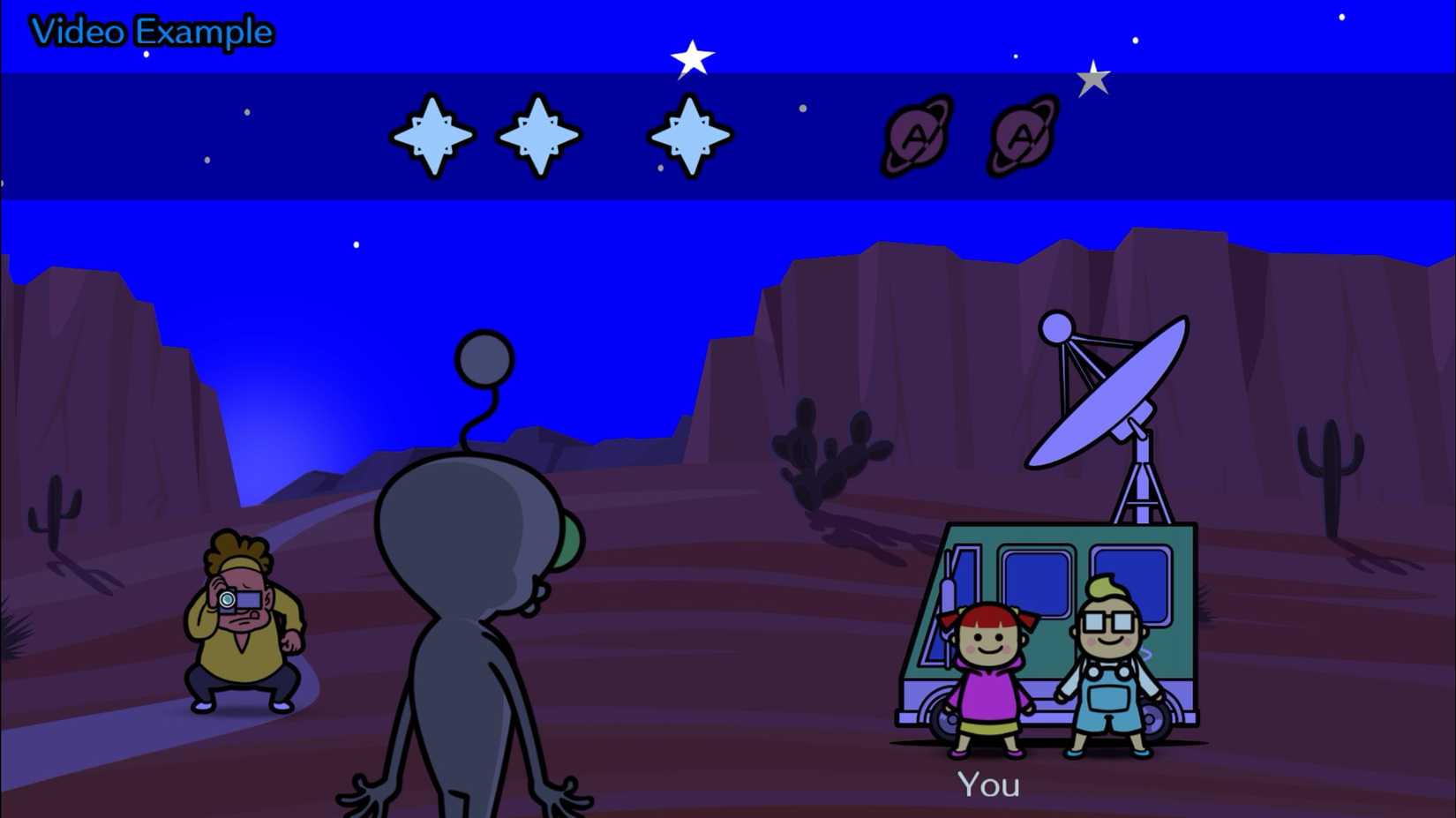
While practice sessions provide hands-on experience, sometimes observing a flawless execution can illuminate what words or simple actions cannot. Rhythm Heaven Groove offers video examples for each mini-game, a feature that should not be overlooked, especially if you find yourself struggling after initial practice. These examples showcase the optimal timing and sequence of actions, often performed by an in-game character or an unseen master.
Supporting Data & Implications: You can access these videos during practice by pressing ‘Y’ (or the equivalent button on your chosen controller) or by navigating to the "Video Examples" section from the main menu. These visual demonstrations are particularly helpful for those who are visual learners or when a specific rhythmic pattern feels counter-intuitive. Beyond the visual cues on screen, a subtle yet significant feature is the controller vibration. When watching the example, your controller will vibrate in sync with the required button presses. This haptic feedback provides an additional sensory input, reinforcing the timing and allowing you to literally feel the rhythm before you attempt to replicate it. This multi-sensory approach (audio, visual, haptic) significantly aids in pattern recognition and muscle memory development, bridging the gap between understanding the rhythm conceptually and executing it physically. It helps you anticipate the flow of the game, rather than just reacting to individual prompts.
3. Focus on Audio Cues: The Heartbeat of Rhythm Heaven
This is perhaps the most critical piece of advice for any Rhythm Heaven player. While many rhythm games overlay visual indicators onto music, Rhythm Heaven Groove primarily relies on distinct audio cues to signal when an action is required. The visuals, while charming and often hilarious, are secondary to the sound.
Supporting Data & Implications: Each mini-game features unique sounds that act as your precise trigger. As you gain familiarity, you’ll develop an acute sensitivity to these cues, allowing you to react with perfect timing. A common piece of advanced rhythm game advice is to close your eyes, effectively removing visual distractions and forcing absolute reliance on audio. In Rhythm Heaven Groove, this strategy can be incredibly effective for some songs once you’re familiar with them. However, for your initial attempts, it’s best to keep your eyes open. The game does incorporate subtle visual cues that complement the audio: characters often bounce or sway to the beat, providing a general tempo guide, and occasionally, numbers will appear on screen indicating the repetition count of an upcoming action. These visual aids are designed to support the audio, not replace it. The implication here is that Rhythm Heaven Groove is fundamentally an auditory challenge; training your ears to listen actively and precisely will unlock your true potential in the game. It emphasizes the game’s unique design philosophy where the music isn’t just background, but the primary interface.
4. Use Headphones If You Can: Enhancing Auditory Precision
Given the paramount importance of audio cues in Rhythm Heaven Groove, optimizing your sound experience is not merely a recommendation, but a significant advantage. Using headphones or earbuds can dramatically improve your performance.
Supporting Data & Implications: Headphones provide a direct, isolated audio feed, allowing you to focus intently on the in-game sounds without interference from external noise. This clarity is crucial for discerning the subtle nuances of each audio cue, which can make all the difference between a "Just Right" and an "OK." Stereo separation, often enhanced through headphones, can also help in games where certain cues might originate from specific channels. If high-quality headphones aren’t available, then blasting the volume (responsibly, of course!) is the next best option. The goal is to ensure that the game’s sounds are the most prominent auditory input you’re receiving. This tip directly addresses the core gameplay loop: precise timing relies on precise perception. By eliminating distractions and enhancing the clarity of the game’s audio, you create an optimal environment for your brain to process and react to the rhythmic demands, leading to more consistent performance and a deeper immersion into the game’s musical world. This is particularly important for games like Rhythm Heaven where a fraction of a second can determine success or failure.
5. Make Your Own Metronome: Internalizing the Beat
While Rhythm Heaven Groove provides all the necessary cues, the ultimate goal is to internalize the rhythm to such an extent that you become your own metronome. This means finding a physical or mental method to keep time with the game’s beat, independent of on-screen prompts or even specific audio cues.
Supporting Data & Implications: Whether it’s a subtle foot tap, a head nod, counting the beat aloud or silently (e.g., "1-2-3-4"), or even humming along, establishing a personal rhythm anchor is incredibly beneficial. This internal synchronization helps you anticipate the rhythm rather than merely reacting to it. While most songs in Rhythm Heaven Groove maintain a consistent tempo, some mini-games will intentionally alter their pace, making this internal metronome even more critical. For these tempo-shifting challenges, your personal rhythm-keeping method will help you adjust more fluidly. This technique draws from real-world musical training, where musicians often tap their foot or conduct to maintain timing. By actively engaging your body or mind in keeping the beat, you strengthen the neural pathways associated with rhythm perception and execution. It transforms passive listening into active participation, allowing for a more intuitive and less stressful performance, especially when the on-screen action gets hectic.
6. Practice Makes Perfect: The Pursuit of Flawless Execution
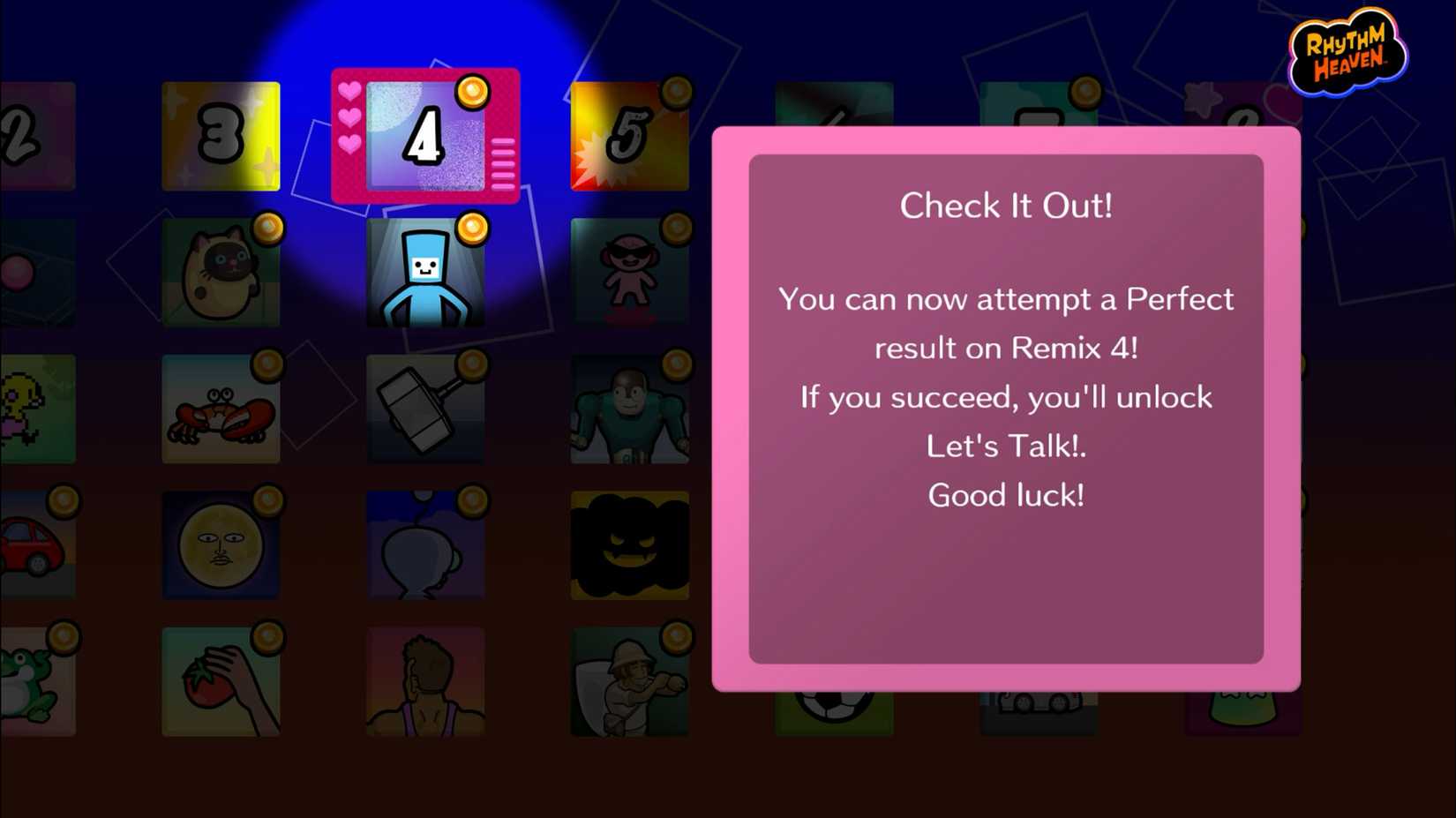
The "Perfect" rating is the ultimate badge of honor in Rhythm Heaven, signifying an impeccable, flawless performance on a mini-game. However, unlike simply achieving a high score, the opportunity to attempt a Perfect is presented by the game itself, typically after you’ve demonstrated proficiency. This rarity makes each attempt a high-stakes endeavor.
Supporting Data & Implications: Once the game prompts you with the chance for a Perfect, you are granted three attempts. A single mistake, a missed beat, or an imprecise input, counts as a "mishap," and after three such errors, the opportunity is lost, and you’ll have to wait for the game to present it again – which could take some time. This system encourages deliberate practice rather than frantic repetition. When a Perfect opportunity arises, resist the urge to rush in immediately. Instead, take a moment to revisit the tutorial, watch the video example one last time, and perhaps even play the song a few times without the pressure of the Perfect attempt. This meticulous preparation maximizes your chances. The implication of this design choice is to instill patience and a strategic approach to mastery. It teaches players the value of sustained effort and refined technique. Achieving a Perfect is not just about raw skill, but also about mental fortitude, focus, and making the most of a rare chance. It transforms a simple rhythm game into a deep, rewarding challenge for perfectionists.
7. Try Out the Minigames: Diversifying Your Rhythmic Training
Rhythm Heaven Groove isn’t solely about its main campaign; it’s also packed with delightful side content, such as "Beatspell" and the "Rhythm Toybox." These minigames offer a refreshing change of pace and serve as excellent supplementary training grounds.
Supporting Data & Implications: Taking a break from the relentless pursuit of "Just Right" ratings or the daunting challenge of a Perfect attempt can be incredibly beneficial. The "Rhythm Toybox," for instance, might feature more experimental rhythmic exercises or provide a sandbox for creative rhythmic expression, while "Beatspell" could be a word-based rhythm challenge that tests a different facet of your timing and cognitive skills. These diversions aren’t just for fun; they can indirectly enhance your main game performance by developing your overall rhythmic intuition, improving your reaction time, and reducing mental fatigue. They allow you to explore different rhythmic patterns and input methods in a low-stakes environment. As you progress through the main game, more of these unique minigames will unlock, ensuring a continuous stream of fresh challenges and ways to hone your skills. This breadth of content demonstrates Nintendo’s commitment to providing a holistic and engaging rhythm experience, preventing burnout and encouraging continuous engagement with the core mechanics of timing and rhythm.
8. Handheld Is Slightly Better: Mitigating Input Delay
In a game where milliseconds dictate success, even the most minuscule input delay can be the difference between a "Just Right" and a "Miss." For competitive players or those striving for Perfects, understanding and mitigating input lag is paramount.
Supporting Data & Implications: If you are playing Rhythm Heaven Groove on a docked Nintendo Switch, your setup introduces several potential sources of input delay. These include the latency of wireless controllers (even pro controllers have a tiny delay compared to wired connections), video processing in your television or monitor, and the inherent display latency of the screen itself. While these factors are often imperceptible in most game genres, they can be critical in rhythm games that demand frame-perfect inputs. Swapping to handheld mode largely bypasses these external variables. In handheld mode, the controller is directly integrated with the console, and the display is native, significantly reducing potential input lag. This direct connection ensures that your button presses are registered with the utmost immediacy. For casual play, docked mode is perfectly fine and often preferred for comfort. However, when you’re making a serious run for a Perfect, or find yourself consistently just missing the beat despite feeling your timing is correct, switching to handheld mode could provide that critical edge. This tip highlights the technical precision demanded by Rhythm Heaven Groove and empowers players to optimize their setup for peak performance, ensuring that any perceived failures are due to their own timing, not hardware limitations.
Implications for the Rhythm Game Genre and Beyond
The return of Rhythm Heaven with Groove is more than just a new game; it’s a significant event for the rhythm game genre. In an industry often focused on photorealism and complex narratives, Rhythm Heaven stands as a testament to the enduring appeal of pure, unadulterated gameplay mechanics. Its emphasis on audio cues challenges conventional rhythm game design, pushing players to develop a deeper understanding of musicality rather than relying solely on visual prompts.
This new title could introduce a fresh wave of players to the genre, demonstrating that rhythm games can be both accessible and profoundly challenging, whimsical and fiercely competitive. For Nintendo, it reinforces their commitment to unique, creatively driven experiences that defy easy categorization. The series has always been praised for its innovative approach, and Groove has the potential to continue this legacy, inspiring future rhythm game developers to explore new frontiers in interactive music.
Furthermore, Rhythm Heaven Groove could spark renewed interest in the series’ back catalogue, allowing new fans to discover the charm and genius of past titles. Its launch will undoubtedly foster a vibrant community of players sharing tips, competing for high scores, and celebrating the sheer joy of perfectly hitting a beat. The game’s implications extend beyond mere entertainment; it offers a fun, engaging way to develop rhythmic skills, a foundational element of musicality that can resonate far beyond the console screen.
Conclusion
The long wait for Rhythm Heaven Groove is nearly over, and the excitement is palpable. This new installment promises to deliver all the quirky charm, infectious music, and deceptively simple yet deeply challenging rhythm action that fans have come to adore. Whether you’re a seasoned veteran looking to recapture your rhythmic prowess or a complete newcomer eager to dive into the unique world of Rhythm Heaven, these eight beginner’s tips and tricks will serve as your essential guide. By embracing practice, focusing on audio, optimizing your setup, and internalizing the beat, you’ll be well-equipped to jump through hoops, open umbrellas, and dance your way to rhythmic perfection. Get ready to find your groove, because Rhythm Heaven Groove is set to make a triumphant, toe-tapping return.