Muslim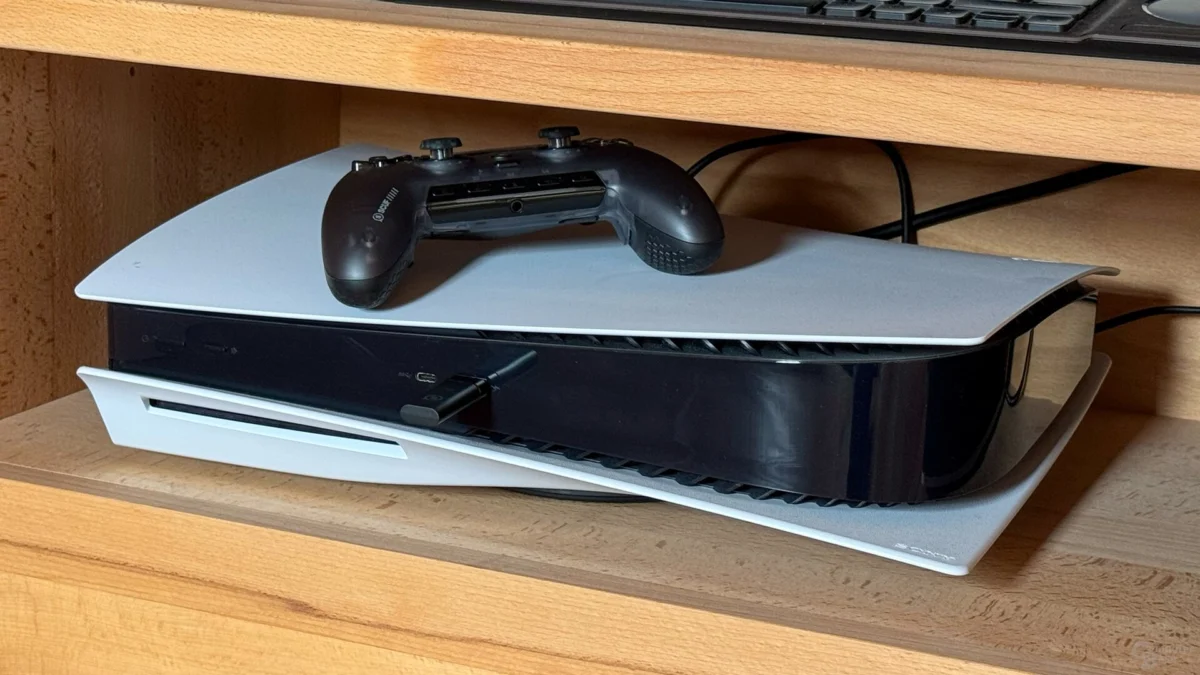
The market for high-end gaming controllers has become increasingly crowded, with manufacturers vying for the attention of competitive players who demand more than the standard factory-issued gamepad. Corsair’s peripheral brand, Scuf, has recently entered the ring with the "Omega," a controller designed with a singular, uncompromising vision: to serve as the ultimate precision tool for first-person shooters (FPS).
However, in its quest for absolute performance, the Omega positions itself as a direct, and often radical, antithesis to Sony’s own official premium offering, the DualSense Edge. As our comprehensive test reveals, this specialized design comes with significant trade-offs that force players to choose between raw performance and the comprehensive features expected of a modern luxury peripheral.

The Scuf Omega at a Glance: A New Philosophy
At its core, the Scuf Omega features a classic PlayStation-inspired layout, complete with horizontally aligned thumbsticks and a central touchpad. This design choice is widely considered the gold standard for competitive shooter enthusiasts. Yet, the similarities to standard controllers end there.
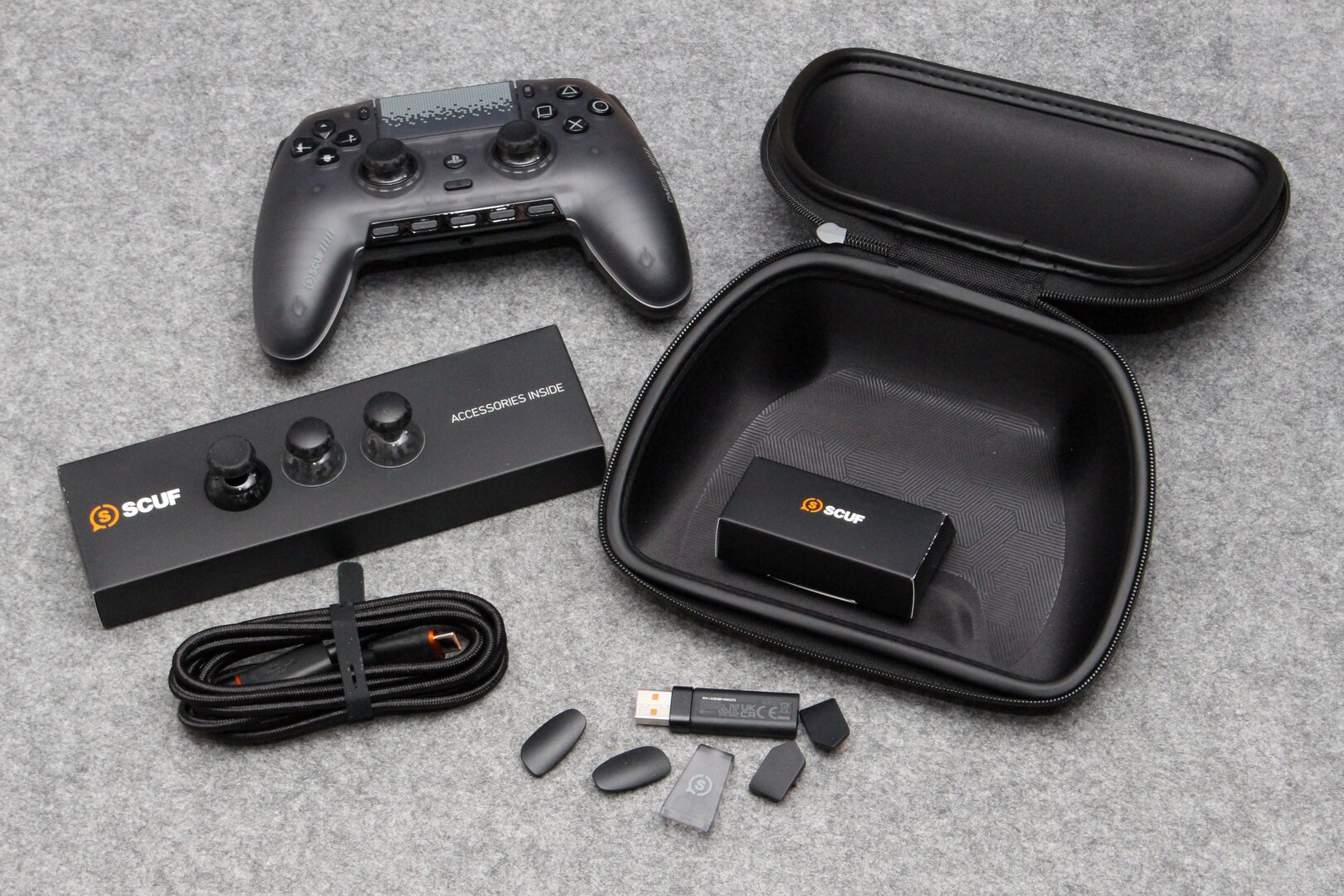
Technically, the Omega is a powerhouse. It utilizes state-of-the-art TMR (Tunneling Magnetoresistive) sticks, which offer superior durability and precision compared to traditional potentiometers. Furthermore, the controller is equipped with modular stick caps and tactile "mouse-click" switches across every button. This choice provides the immediate, crisp feedback that competitive players crave, ensuring that every action is registered with minimal delay and maximum physical confirmation.
Modular Engineering and Customization
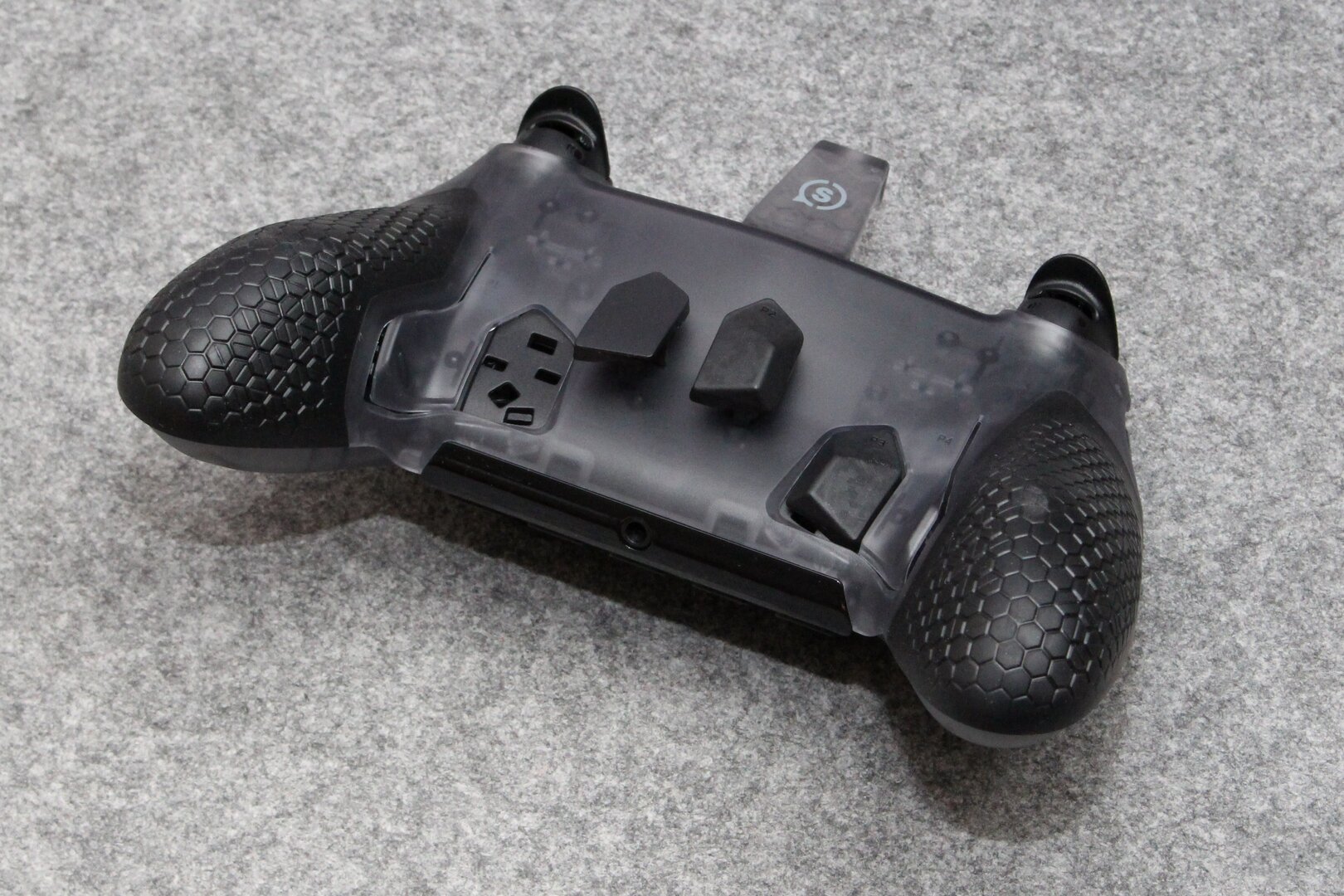
The Omega prioritizes a modular approach to physical input. It features two side-mounted buttons and four rear paddles, all of which are customizable. For those who find the additional buttons intrusive, Scuf provides blind-plate covers to deactivate two of the four paddles and the side buttons entirely. Additionally, the bottom edge of the controller houses five macro buttons—though their functionality is limited on the PlayStation 5, where they primarily serve as audio control interfaces, while offering full programmability on PC.
Personalization is a key pillar of the Scuf experience. Users can swap out 18 individual components, including the faceplate, D-pad, anti-friction rings, and the ABXY button caps. This level of aesthetic and ergonomic tailoring is intended to cater to the diverse preferences of the esports community.

Chronology: From Concept to Competitive Reality
The development cycle of the Omega was reportedly driven by the desire to strip away "unnecessary" features to minimize weight and maximize reaction time. When the controller was first conceptualized, the design team at Scuf made a conscious decision to omit traditional haptic feedback motors.
In the modern gaming landscape, where the DualSense’s advanced vibration is a flagship feature, this decision initially seemed like a massive oversight—or perhaps a "crazy idea." However, the reasoning became clear during testing: by removing the motors, Scuf achieved a lightweight, balanced chassis that reduces fatigue during intense, multi-hour gaming sessions.
The launch phase has seen the Omega positioned as a niche "pro-tier" device. Unlike mass-market controllers, its path to the consumer is one of deliberate, tactical choices. It requires a USB cable or a dedicated wireless dongle to operate on the PlayStation 5, as the device lacks native Bluetooth support for the console—a move that reinforces its status as a tethered or dongle-reliant competitive tool rather than a casual living-room companion.
Supporting Data: Performance and Technical Limitations
In the world of competitive gaming, milliseconds matter. The Omega attempts to bridge the gap between PC and console performance, though it faces hard-coded limitations imposed by Sony.

- Polling Rates: On PC, the Omega achieves a full 1,000 Hz polling rate, ensuring ultra-responsive input. However, when connected to a PlayStation 5, Sony limits all third-party peripherals to 250 Hz, effectively neutralizing some of the controller’s technical advantages over the competition.
- Haptics and Ergonomics: The decision to exclude force feedback is the most contentious element of the Omega. While this reduces the weight to a point where the controller feels "invisible" in the hand, it creates a sterile, almost hollow experience for single-player titles.
- Weight vs. Function: The Omega weighs approximately 80 grams less than the DualSense Edge. In the heat of an Apex Legends or Call of Duty match, this difference is palpable. The controller feels more agile, and the tactile mouse-switches provide a shorter travel distance (approx. 1mm) compared to the "mushier" rubber-dome buttons on standard controllers.
- Pricing: With an entry price of roughly €240, the Omega is firmly in the luxury bracket. Custom designs for esports teams can push this price even higher, raising the question of value—especially when compared to the feature-rich DualSense Edge, which is generally more affordable and better integrated into the PlayStation ecosystem.
Official Responses and Manufacturer Intent
Corsair has been transparent regarding the Omega’s design limitations. In official communications, the company frames the controller not as a "do-it-all" device, but as a surgical instrument. The removal of vibration, the reliance on a smartphone app for profile configuration, and the lack of native console power-on functionality are all deliberate trade-offs to prioritize performance metrics.
However, the "premium" feel is occasionally undercut by manufacturing tolerances. During our testing, the modular blind-plate covers were found to have slight play and a tendency to rattle, which is disappointing for a device at this price point. Furthermore, the reliance on a smartphone app for mapping—while functional—adds a layer of complexity that some users may find inconvenient compared to the system-level configuration offered by the DualSense Edge.

Implications: Who is the Omega Really For?
The implications for the gaming market are clear: we are seeing a divergence between "luxury" and "utility." The DualSense Edge is a luxury product that enhances the overall console experience; the Scuf Omega is a utility product that sacrifices the experience for a marginal gain in competitive output.
The Verdict for Different Player Types:
- The Competitive Purist: If your primary objective is to shave milliseconds off your reaction time in high-stakes online shooters, and you have long since disabled haptic feedback to avoid distraction, the Omega is a compelling, albeit expensive, choice.
- The All-Rounder: For those who play a mix of God of War, Elden Ring, and the occasional shooter, the Omega is likely to disappoint. The lack of immersion provided by the absence of haptics, combined with the higher price and the inconvenience of a required dongle, makes the DualSense Edge a much more sensible investment.
- The PC Player: The landscape is even more treacherous here. With competitors like the GameSir G7 Pro 8K offering similar technical specs, including vibration and superior PC integration, the Omega faces stiff competition that provides more value for the money.
Final Thoughts
The Scuf Omega is a fascinating study in product design. It is a device that is unapologetic about its limitations. While it succeeds in being an incredibly agile, responsive, and "fast" controller, it does so at the cost of the very features that make the PlayStation 5 ecosystem enjoyable.

Ultimately, the Omega is a specialized tool for a very narrow demographic. It is the "racing slick" of the controller world: unbeatable on the track, but potentially frustrating to use on the highway. For the average player, or even the enthusiast who values versatility, the industry standard remains the safer, more comfortable, and more capable choice. If you are not a dedicated, competitive shooter professional who lives and dies by the millisecond, the Scuf Omega is likely an unnecessary, if technically impressive, indulgence.

 Nila Kartika Wati
 Laily UPN