Iffa Jayyana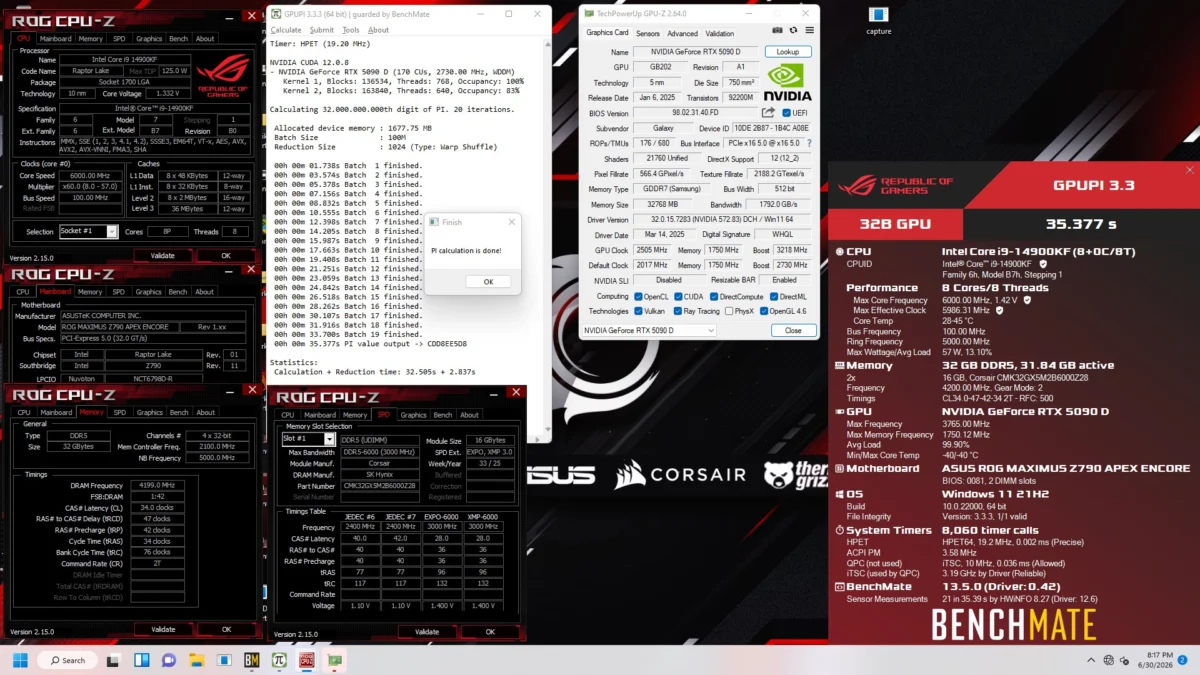
In the rarefied atmosphere of professional extreme overclocking, the quest for higher clock speeds is more than a hobby—it is a pursuit of the absolute limits of silicon architecture. This week, the legendary overclocking outfit Team OGS pushed the boundaries of Nvidia’s latest Blackwell architecture further than ever before. By successfully validating a core frequency of 4002MHz on a Galax GeForce RTX 5090D HOF (Hall of Fame) OC Lab Edition, the team has officially inaugurated the "4GHz club" for the Blackwell generation.
This achievement, verified via the HWBOT database, marks a significant psychological and technical milestone in the GPU industry. As core speeds continue to climb with each successive generation, the 4GHz barrier has long been considered the "four-minute mile" of the graphics card world. With this validation, the team has proven that Nvidia’s GB202 silicon, when paired with extreme cooling and specialized power delivery, possesses remarkable headroom for those willing to venture into the sub-zero temperatures of liquid nitrogen.
The Technical Breakdown: Achieving the Impossible
The validation was achieved using the GPUPI v3.3 32B benchmark, a computational workload that measures the time taken to calculate the value of Pi to 32 billion decimal places. The run was completed in a staggering 35 seconds and 377 milliseconds. While this benchmark is primarily a test of computational throughput rather than the heavy graphical rendering seen in modern AAA gaming, it remains the industry standard for stress-testing raw GPU clock stability.
To reach the 4002MHz threshold, Team OGS employed a sophisticated array of specialized hardware designed specifically for world-record attempts. The core of the operation was the Galax RTX 5090D HOF OC Lab Edition—a card already renowned for its over-engineered power delivery system and high-quality binning.
The Overclocking Rig Configuration
- GPU: Galax GeForce RTX 5090D HOF OC Lab Edition
- CPU: Intel Core i9-14900KF @ 6.0GHz
- Motherboard: Asus ROG Maximus Z790 Apex Encore
- Memory: 32GB Corsair Vengeance DDR5
- Power Supply: Corsair WS3000
- Thermal Management: Bitspower Strata LN2 GPU Pot with Thermal Grizzly Kryonaut Extreme
Central to the success of the run was the use of an Elmor External Clock Board, set to 28.7MHz. By bypassing the standard internal reference clock, the overclockers gained granular control over the GPU’s frequency scaling, allowing them to push the GB202 core beyond the safety limits imposed by the manufacturer’s stock VBIOS.
Chronology of the 4GHz Pursuit
The history of GPU overclocking is a narrative of incremental gains, but the jump to 4GHz is the result of years of refinement in both silicon fabrication and cryogenic engineering.
Early Blackwell Development: When the RTX 50-series was first announced, industry analysts speculated on the frequency potential of the Blackwell architecture. Built on a refined process node, the cards showed early promise for efficiency, but it was the "D" variant—specifically the HOF edition—that caught the eyes of professional overclockers.
The Initial Attempts: In the weeks following the global launch, various teams attempted to break the 3.8GHz and 3.9GHz barriers. Many struggled with thermal throttling or voltage instability, as the power density of the GB202 core creates immense heat pockets even when cooled with liquid nitrogen.
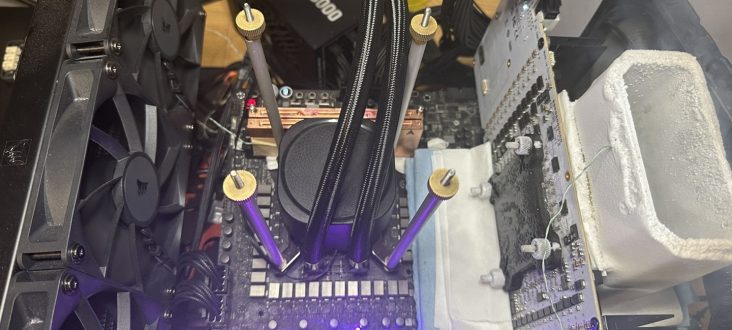
The Record-Breaking Run: On the day of the successful 4002MHz validation, Team OGS spent hours calibrating the "pot" temperature. Liquid nitrogen (LN2) is a volatile medium; if the GPU core becomes too cold (cracking the silicon) or not cold enough (causing thermal instability), the system crashes. By carefully balancing the LN2 flow and utilizing Thermal Grizzly Kryonaut Extreme, which maintains its viscosity at extreme sub-zero temperatures, the team finally stabilized the frequency at the 4GHz milestone.
Hardware Nuances: The "D" Distinction
It is important to note the specific hardware used in this feat. The submission utilized the original Galax RTX 5090D HOF OC Lab Edition, which features a specific PCB layout. This distinction is vital in the overclocking community, where even minor changes to power phases or memory trace routing can drastically affect the card’s ability to maintain high frequencies.
The "D" series, known for its regional configurations, maintains a robust architecture that sets it apart from the newer V2 version. The V2 variant, which has seen a reduction in memory configuration to 24GB and a narrower 384-bit bus, is a more consumer-oriented product. The original card used by Team OGS represents the pinnacle of the series’ design, providing the power stability necessary to maintain such aggressive voltage offsets without inducing catastrophic hardware failure.
Implications for the Blackwell Architecture
The implications of this 4GHz run extend far beyond a leaderboard entry on HWBOT. It provides researchers and enthusiasts with a deeper understanding of the Blackwell architecture’s behavior under extreme load.
Scaling and Efficiency
The fact that a GB202 core can remain stable at 4GHz suggests that the architecture is exceptionally well-binned. While this run was performed at a specialized, non-gaming load, it demonstrates that the underlying silicon has significant headroom. For the average gamer, this translates to improved stability and performance at stock or "boosted" factory settings, as the chips are capable of handling much higher voltages than they are officially rated for.
The Future of "Extreme" Gaming
While 4GHz is not sustainable for 24/7 gaming—due to the prohibitive cost of liquid nitrogen and the risk of component degradation—it establishes a "theoretical maximum" for the hardware. As we move into the future, the lessons learned by Team OGS will likely inform future iterations of custom BIOS and software overclocking utilities, potentially allowing home users to safely push their own RTX 5090 cards closer to these levels using high-end AIO or custom liquid cooling loops.
Industry and Community Responses
The achievement has sent ripples through the hardware community. Industry experts have lauded Team OGS for their meticulous approach to the bench.
"Hitting 4GHz is a testament to both the hardware design of the Galax HOF team and the sheer skill of the overclockers," says one prominent hardware analyst. "In the past, we saw 3GHz as the impossible wall. Seeing 4GHz broken so early in the Blackwell lifecycle suggests that Nvidia’s latest node is incredibly resilient."
Nvidia has not officially commented on the overclock, as the company typically distances itself from extreme sub-zero results that void warranties. However, the engineering teams at Galax have reportedly expressed pride in the HOF OC Lab series, viewing the record as validation of their decision to prioritize power delivery quality over cost-cutting measures.
The Road Ahead: What’s Next?
With the 4GHz barrier broken, the focus of the global overclocking community will inevitably shift. The question is no longer "can it hit 4GHz," but rather "how much higher can it go?"
Team OGS and their rivals will now likely attempt to stabilize the 4.1GHz or even 4.2GHz range. Such attempts will require even more precise control over the power delivery, likely involving the modification of the card’s voltage regulation modules (VRMs) and potentially the use of specialized, experimental cooling solutions that can manage even higher wattage loads.
Furthermore, we can expect a wave of new benchmarks. While GPUPI is a great indicator of core stability, the community is eager to see 3DMark scores—such as Time Spy or Port Royal—at these frequencies. Successfully navigating a 3D-heavy benchmark at 4GHz would be a feat of engineering that would redefine the current performance standards for high-end gaming hardware.
As we look toward the future of GPU development, the efforts of teams like OGS remind us that the hardware in our desktops is often capable of much more than the specifications suggest. Whether or not you plan to ever push your own hardware to its limits, the 4GHz milestone stands as a monument to human curiosity and the endless pursuit of technological perfection.
The question remains: are we witnessing the plateau of silicon-based graphics, or are we simply at the start of a new, high-frequency era? Given the results seen this week, it is safe to bet that the limits of Blackwell are still waiting to be tested.

 Ammar Sabilarrohman
 Nana Wu