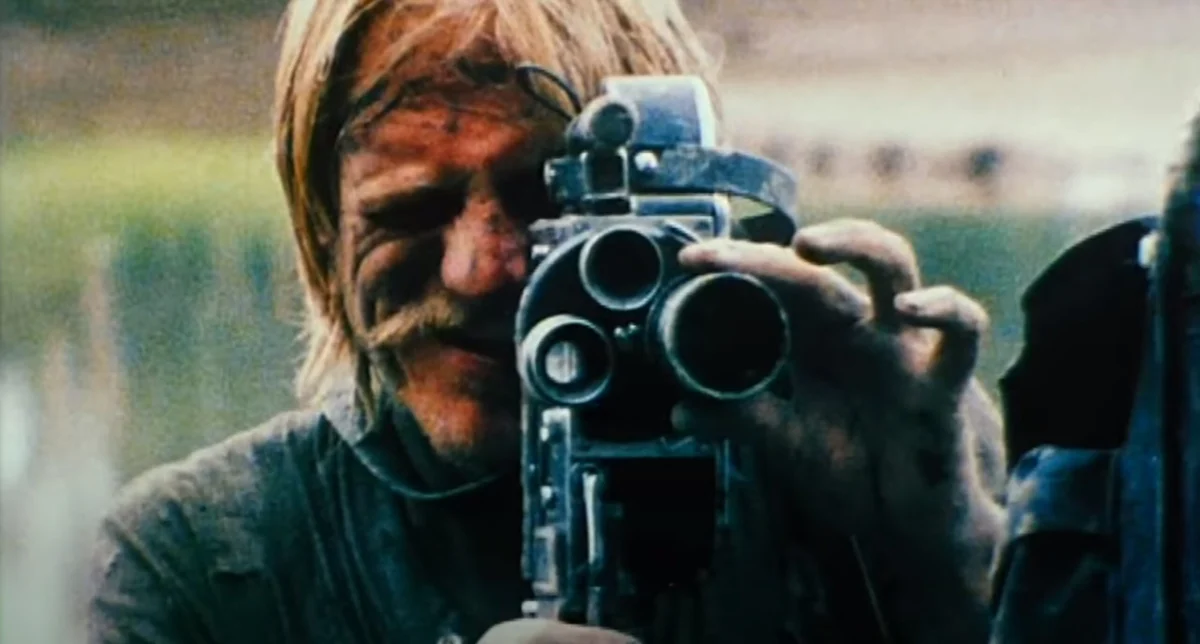
In the pantheon of transgressive cinema, few titles command as much notoriety—or provoke as much visceral repulsion—as Ruggero Deodato’s 1980 shocker, Cannibal Holocaust. A pioneering work of found-footage horror, the film tells the harrowing story of an anthropologist who ventures into the depths of the Amazon to locate a trio of missing documentarians. What he finds is a gruesome testament to human depravity, represented by the reels of film they left behind.
More than four decades later, Cannibal Holocaust remains a lightning rod for debate. Its technical brilliance is as undeniable as its moral ambiguity. However, thanks to a monumental effort by the preservationists at Grindhouse Releasing, the film is receiving a 4K restoration that aims to finalize its place in history, offering audiences a chance to grapple with its legacy in the highest fidelity possible.
The Genesis of a Found-Footage Landmark
Before The Blair Witch Project became a cultural phenomenon in 1999, Cannibal Holocaust established the blueprint for the found-footage subgenre. By blending a traditional narrative structure—the rescue mission—with the raw, gritty, handheld aesthetic of the "recovered" footage, Deodato created an experience that felt disturbingly real to audiences in 1980.
The film’s efficacy lies in its uncompromising commitment to its own conceit. Deodato employed techniques that would later become staples of the genre: shaky cameras, naturalistic lighting, and a narrative that suggests the audience is viewing the final, private moments of the protagonists. While modern audiences are desensitized to these tropes, at the time, the film’s "documentary" style was so effective that it allegedly led to legal investigations, with Italian authorities questioning whether the actors had actually been killed on camera.
A Legacy Marred by Controversy
It is impossible to discuss Cannibal Holocaust without addressing the elephant in the room: the film’s inclusion of genuine animal cruelty. While Deodato and his production team argued that the violence against animals was intended to highlight the inherent brutality of both the jungle and the filmmakers who encroached upon it, the act remains morally indefensible to many critics and viewers.

This controversy has often overshadowed the film’s technical innovation. The animal footage serves as a grim conditioning tool; by forcing the audience to witness real death, the film effectively lowers their defenses, making the subsequent, staged human horror seem all the more plausible. It is a cynical, manipulative piece of filmmaking, yet its importance as a piece of exploitation history is solidified by the very discomfort it generates. To watch Cannibal Holocaust is to engage with a work that challenges the boundaries of what is acceptable in fiction, forcing the viewer to confront the ethics of the camera lens itself.
The Restoration: A Herculean Task
The task of preserving this volatile piece of cinematic history fell to Grindhouse Releasing and editor Bob Murawski. An Academy Award-winning editor known for his work on The Hurt Locker and his frequent collaborations with Sam Raimi, Murawski approached the project with the precision of an archaeologist.
"This will be the definitive release of Cannibal Holocaust from here on in," Murawski stated in an interview with IndieWire. The restoration process was not merely a cleanup; it was a total reconstruction of the film’s elements. "Not only are our scans superior—they were done on the finest equipment by L’Immagine Ritrovata lab in Bologna, whereas the scans for all the other releases were done on inferior equipment in a facility in Rome—but our release will also contain three versions of the film."
The restoration project, which began in May 2021, required an exhaustive search for lost elements. This included tracking down missing audio for alternate takes and sourcing the original, uncut "Last Road to Hell" sequence, which had been missing from the conformed negative for decades.
Unveiling the "Special Edition" and Lost Footage
The highlight of this new release is undoubtedly the "Special Edition." Murawski, who previously worked on the restoration of Orson Welles’ The Other Side of the Wind, drew inspiration from that experience. Welles’ film, often cited as a precursor to the found-footage style, used mixed formats (16mm, Super 8mm, and 35mm) to delineate different narrative layers.

"I felt the decision was very successful, so I thought I’d create a version of Cannibal Holocaust using the same concept," Murawski explained. By presenting the 35mm search party footage in its standard 1.85:1 aspect ratio, and the 16mm "Green Inferno" documentary footage in its original 1.37:1 full-frame ratio, the restoration highlights the visual contrast between the two halves of the film. Furthermore, this method allows viewers to see approximately 50 percent more of the image area in the documentary sequences, revealing the meticulous composition Deodato employed, which had been cropped out in previous theatrical and home video releases.
Institutional Resistance and the Modern Audience
The path to restoring Cannibal Holocaust was as fraught as the film’s distribution history. In the mid-1990s, when Grindhouse Releasing first attempted to bring the film to a wider audience, they faced a wall of resistance. Independent theater chains refused to host the film, and even after The Blair Witch Project paved the way for found-footage, many bookers remained wary of the film’s toxic reputation.
"Theater bookers were now familiar with the title and interested in it, but once they actually saw the movie, they refused to return my phone calls!" Murawski recalled.
However, the cultural landscape has shifted. The film has since been canonized in various "Greatest Horror Film" lists and has transitioned from a forbidden bootleg item to a recognized piece of cinema history. Despite this, Murawski takes a certain pride in the fact that the film still manages to alienate some. "I’m still getting resistance from some of the more sensitive (or maybe sensible) bookers. I wouldn’t have it any other way!"
Implications for Future Preservation
The restoration of Cannibal Holocaust sets a new standard for how controversial or "fringe" cinema should be handled. By prioritizing original camera negatives, utilizing top-tier international labs, and involving experts who understand the filmmaker’s original intent, Grindhouse Releasing has proven that even the most reviled movies deserve technical excellence.

The project also highlights a growing trend in film archiving: the move toward restoring the "full aperture" of older films. Much like the recent restoration of The Evil Dead, the Cannibal Holocaust project argues that our historical understanding of film framing is often hampered by the limitations of past theatrical projection. By showing these films as they were shot, rather than how they were cropped for 1.85:1 projection, archivists are giving modern audiences a more accurate window into the past.
Final Word: The Future of the Film
As the film begins its theatrical run—including a highly anticipated screening at the Roxy Cinema in New York on July 6—the focus remains on the big screen experience. For Murawski, the goal has always been simple: "Grindhouse Releasing is firmly committed to playing our films in movie theaters. It’s always been our first priority since we started 30 years ago."
Following the theatrical circuit, a massive six-disc UHD box set is planned, which promises to be the final, exhaustive word on the film’s production, reception, and restoration. Alongside this, Grindhouse is also rolling out restorations of other exploitation classics, such as Scarlet Warning 666 and the legendary "gore-nography" pioneer, Scream Bloody Murder.
Yet, Cannibal Holocaust stands apart. It remains a singular, uncomfortable, and undeniably powerful artifact of the 1980s. As Murawski poignantly concluded, "It’s the most controversial movie ever made. There will never be another Cannibal Holocaust." Whether one views it as a masterpiece of subversion or a stain on the history of the medium, the new 4K restoration ensures that the debate will continue for generations to come.