

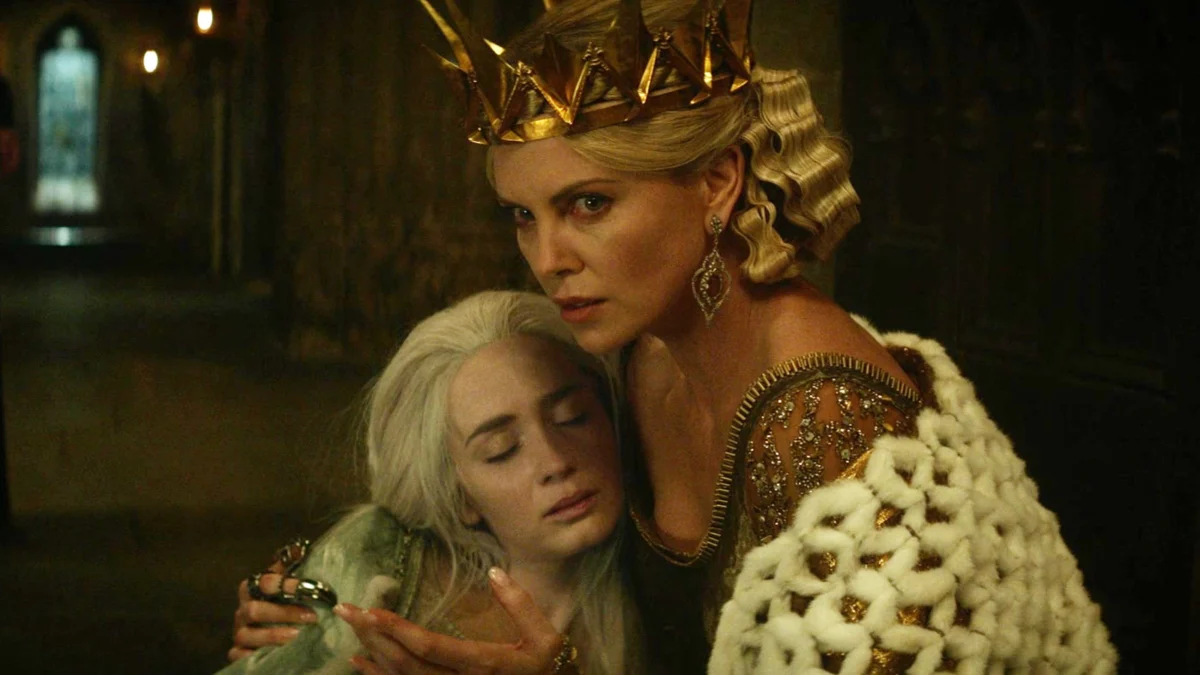
In the mid-2010s, Hollywood was gripped by an aggressive obsession with "cinematic universes" and franchise expansion. Following the moderate financial success of 2012’s Snow White and the Huntsman, Universal Pictures saw an opportunity to capitalize on the dark fantasy aesthetic that had grossed nearly $400 million globally. The result was 2016’s The Huntsman: Winter’s War, a high-budget prequel-sequel hybrid that featured a staggering A-list cast. Yet, despite the presence of powerhouses like Charlize Theron, Emily Blunt, Chris Hemsworth, and Jessica Chastain, the film collapsed at the box office, serving as a cautionary tale for studio executives regarding the limits of franchise longevity.
The Genesis of a Risky Bet
To understand the failure of The Huntsman: Winter’s War, one must first examine the precarious position of its predecessor. Snow White and the Huntsman was a moody, visually arresting reimagining of the classic fairy tale. While it successfully broke the $396 million barrier, its $170 million production budget meant the profit margins were thinner than the studio would have preferred.
When Universal greenlit a follow-up, the creative landscape had shifted significantly. Kristen Stewart, who headlined the first film, did not return, and the original director, Rupert Sanders, moved on to the polarizing Ghost in the Shell. To fill the void, the studio tapped Cedric Nicolas-Troyan—a visual effects veteran making his feature directorial debut. While the decision to reduce the budget to $115 million was a strategic move to mitigate risk, the film remained an expensive gamble in a market that was becoming increasingly saturated with superhero spectacles and established intellectual properties.
Chronology of a Downward Spiral
The trajectory of The Huntsman: Winter’s War can be mapped through a series of missteps that began long before the cameras started rolling.
The Casting Paradox
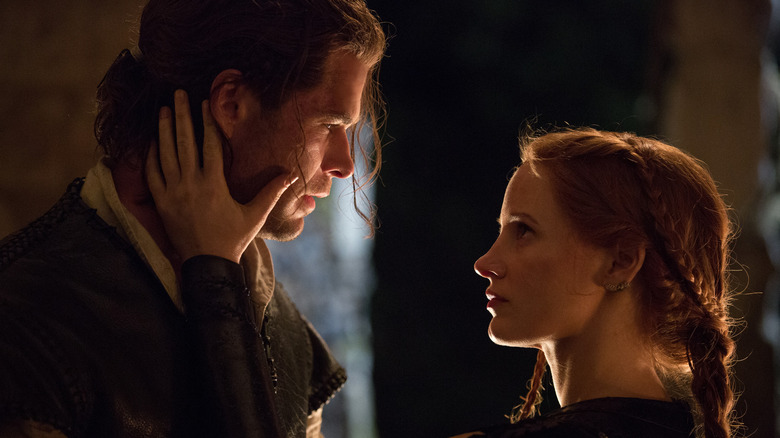
On paper, the casting was impeccable. Pairing Charlize Theron’s icy, regal menace with the addition of Emily Blunt as the tragic, grief-stricken Freya appeared to be a masterstroke of dramatic tension. The return of Chris Hemsworth, then riding the crest of his Thor fame, seemed to ensure a baseline of audience interest. However, the narrative, which attempted to split the focus between a prequel origin story and a post-Snow White quest, suffered from a lack of identity. By attempting to serve as both a sequel and a spin-off, the film alienated fans of the original while failing to provide a compelling enough hook for casual moviegoers.
The April 2016 Bottleneck
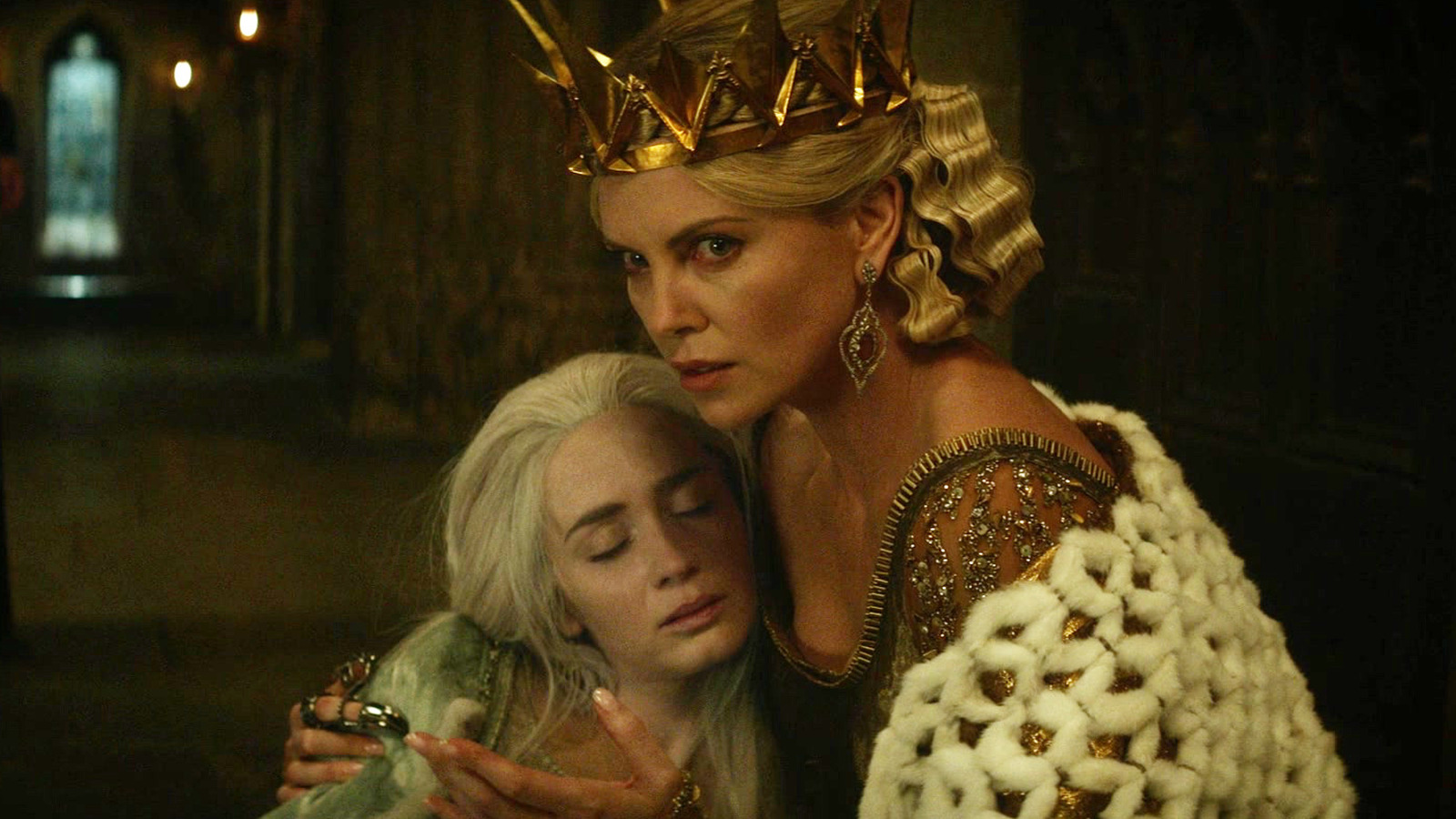
The film’s release on April 22, 2016, proved to be an exercise in poor timing. The theatrical landscape of early 2016 was dominated by a Disney juggernaut. Jon Favreau’s live-action The Jungle Book was in its second week, holding onto the number one spot with a commanding $61.5 million. The Huntsman opened to a lukewarm $19.4 million domestically—a number that signaled immediate trouble for a film with a nine-figure budget.
The Critical Chasm
The critical reception was nothing short of devastating. Holding a 19% approval rating on Rotten Tomatoes, the film was criticized for its derivative plot, lack of chemistry between the leads, and a general sense of "franchise fatigue." Audience sentiment mirrored the critical consensus, with a 45% score on Rotten Tomatoes, effectively killing the word-of-mouth momentum required for a film of this scale to legs its way to profitability.
Financial Data and Market Context
The cold, hard numbers of The Huntsman: Winter’s War paint a picture of a project that failed to justify its existence. With a final domestic gross of $48.3 million and an international haul of $116.5 million, the film ended its global run at roughly $164.9 million.
When accounting for marketing costs—typically 50% to 100% of the production budget for a blockbuster of this scale—the $115 million production price tag was a massive anchor. The Guardian and other industry analysts estimated that Universal stood to lose roughly $70 million on the project.
This loss was particularly painful when contrasted with the landscape of 2016. That year, Disney achieved historic dominance, with Captain America: Civil War hitting $1.1 billion, and films like Zootopia and Finding Dory shattering expectations. The contrast between The Huntsman and these runaway hits highlighted a growing divide in the industry: audiences were no longer willing to show up for "middle-of-the-road" blockbusters. They demanded either absolute spectacle or critical prestige, neither of which The Huntsman provided.
Comparative Analysis: The "Bomb" Landscape of 2016
The Huntsman was not alone in its misery, though it certainly stands as one of the most prominent casualties of the year.
- Monster Trucks: Paramount’s bizarre experiment was arguably the year’s largest catastrophe, projected to lose $115 million. It was a film that seemed to have no audience, proving that even a massive budget cannot force a trend into existence.
- The BFG: Steven Spielberg, one of the most bankable directors in history, saw his adaptation of the Roald Dahl classic falter, grossing $194.6 million on a $140 million budget.
- Ben-Hur: A remake that nobody asked for, this production was a commercial "train wreck," earning just $94 million on a $100 million budget.
These films shared a common thread: they were legacy-based properties or high-concept bets that lacked the cultural currency to survive in a high-stakes environment. In this lineup, The Huntsman represents a specific kind of failure—the "unnecessary sequel" that ignores the lack of audience demand for a franchise expansion.
Implications for Hollywood Studios
The failure of The Huntsman: Winter’s War forced a shift in how major studios approached mid-tier franchise extensions. The "lesson" learned was that the presence of A-list stars is not a substitute for a compelling script or a genuine creative reason to revisit a world.
The End of the "Dark Fantasy" Craze
Following this film, the trend of grim, dark-fantasy reboots of classic fairy tales saw a sharp decline. Studios pivoted toward more colorful, character-driven properties or original concepts, largely because the "gritty, serious" tone had become a parody of itself by 2016.
Risk Management and Greenlighting
For Universal, the film served as a harsh reminder that not every modest hit warrants a franchise. The studio became more selective, moving away from high-budget risks on non-essential sequels. This led to a more disciplined approach in the latter half of the decade, prioritizing IP with massive, built-in fan bases (such as the Fast & Furious or Jurassic World franchises) over attempts to manufacture interest in secondary properties.
The Rise of Content Scarcity
The fallout also highlighted a growing trend: the "blockbuster" was dying unless it could offer something truly unique. As streaming platforms began to rise in prominence, the type of film The Huntsman represented—a spectacle designed for the big screen that felt like a "second-tier" experience—found its home on home screens rather than in theaters. Today, a film like The Huntsman might have been sold directly to a streaming service, where its performance would be measured by hours watched rather than the brutal, binary metric of the theatrical box office.
Conclusion: The Cost of Persistence
The Huntsman: Winter’s War remains a study in the hubris of franchise-building. It had the budget, the talent, and the studio support required to succeed, but it lacked the one thing that cannot be bought: the audience’s investment in the story. In an era where Hollywood continues to hunt for the next big series, the story of Ravenna and Freya stands as a permanent fixture in the "hall of fame" of box office misfires—a clear reminder that in the movie business, sometimes the most profitable move is to know when to let a story end.










