

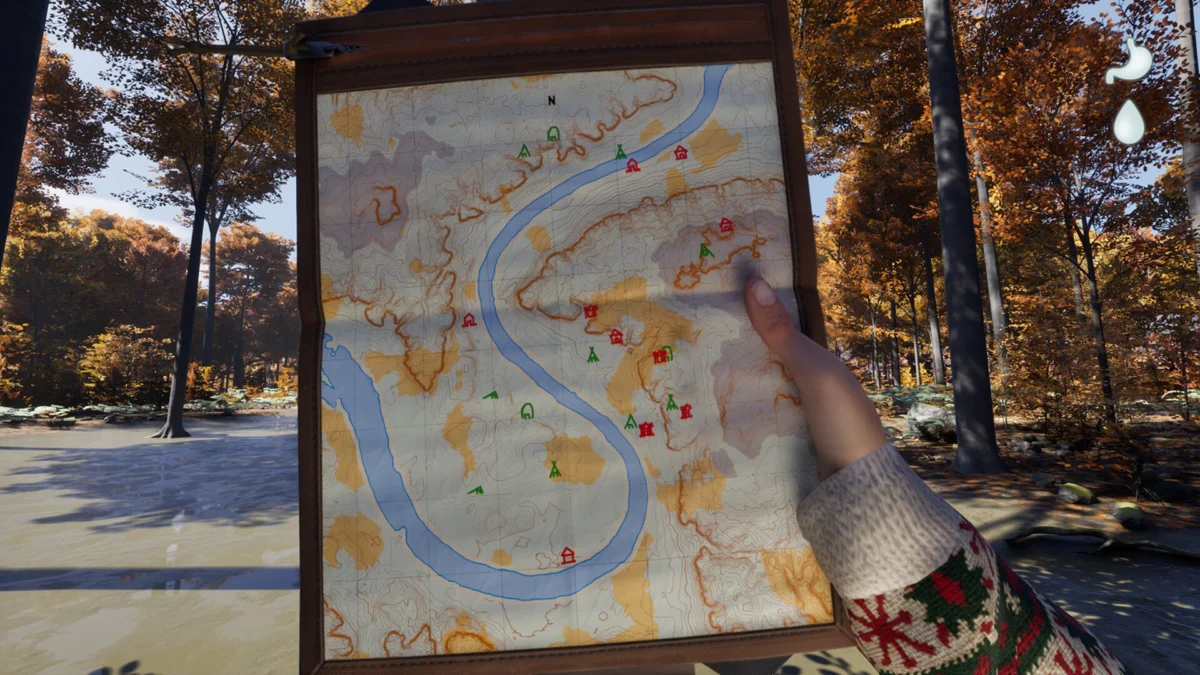
In a sobering development for the experimental gaming space, PlayerUnknown Productions—the studio founded by Brendan "PlayerUnknown" Greene—has officially announced the cessation of development on its exploration title, Prologue: Go Wayback. The decision marks a significant pivot for the studio, which has been attempting to push the boundaries of procedural generation and artificial intelligence-driven game design. As the project enters its final state, the studio has confirmed that the title will transition to a free-to-play model, effectively closing the chapter on this ambitious, if polarizing, technical showcase.
The Announcement and Immediate Impact
The news broke via an official statement released on the studio’s social media channels, citing financial constraints as the primary driver behind the sudden shift. Brendan Greene, the visionary behind the genre-defining PlayerUnknown’s Battlegrounds (PUBG), addressed the community with a candid admission of defeat regarding the project’s current funding model.
"I have reached the limits of how far I can continue to fund this journey in its current form," Greene stated. This financial wall has necessitated a major restructuring of PlayerUnknown Productions. While the studio will not be shuttering entirely, it is undergoing a significant downsizing. An undisclosed number of staff members have been laid off, leaving behind a "smaller team" tasked with pivoting the company’s remaining resources toward the development of "Melba," the proprietary game engine that underpinned the technology found in Prologue.
For players who invested in the title during its early access period, the studio is actively working with storefronts like Steam and the Epic Games Store to facilitate refunds. In the interim, Prologue: Go Wayback will be updated to be entirely free-to-play, allowing anyone interested in the technical experiment to experience the environment without financial barrier.
Chronology: From Ambition to Realization
To understand the significance of this closure, one must look at the timeline of the studio’s aspirations. Following his departure from the high-octane world of battle royale titles, Greene set his sights on the "Planet-Sized" dream.
- 2019–2021: The inception of the Amsterdam-based studio focused on research and development. The goal was to solve the problem of creating "earth-sized" game worlds without the bloat and development time associated with traditional asset-heavy design.
- Late 2023: Prologue: Go Wayback is released into early access. Marketed as an exploration simulator, it served as a "proof of concept" rather than a traditional game. It introduced players to a dense, procedurally generated wilderness where navigation and survival were influenced by machine learning agents.
- Early 2025: Critical analysis begins to mount. Critics and players alike acknowledge the "enchanting" nature of the simulation—noting the intricate details like bubbling water and functional generators—but express concern over the lack of a cohesive "gameplay loop" and the reliance on experimental AI systems that felt disconnected from traditional interactive design.
- Mid-2025: The announcement of the studio restructuring. The realization that the current iteration of the project is unsustainable leads to the suspension of development.
The Philosophy of "Melba" and the Tech Stack
At the heart of the controversy and the eventual failure of the project lies "Melba." Unlike standard engines such as Unreal or Unity, Melba was built on a philosophy of efficiency and scale. The core technical premise was the use of machine learning agents running on the user’s local system to manage the environment.
The goal was to create a simulation that didn’t require human designers to place every rock, tree, or building. Instead, the AI would generate the world according to a set of rules, creating a truly infinite and distinct experience for every player. In theory, this would allow for a game world the size of Earth, populated with realistic ecosystems and weather patterns.
However, the reality of Melba proved to be a double-edged sword. While it demonstrated impressive technical capabilities, it lacked the "soul" of hand-crafted level design. Players often found themselves lost in environments that, while technically fascinating, failed to provide the meaningful narrative or objective-driven experiences that the gaming market demands.
Supporting Data: Why Did it Fail to Gain Traction?
The failure of Prologue: Go Wayback to capture the public imagination can be attributed to several factors, both technical and market-related.
1. The "Metaverse" Fatigue
When Prologue was initially teased, the industry was in the midst of a "metaverse" craze. Investors were pouring billions into virtual spaces that promised infinite scale. By the time Prologue launched, the market sentiment had shifted drastically. Players became increasingly skeptical of projects that prioritized technical "solutions" over fun, character-driven gameplay.
2. Lack of Interaction Depth
As observed by industry analysts, the game was a "technical sandbox." While users could manipulate individual stove rings or carry items, there was no overarching progression system. In a landscape saturated with high-fidelity, story-rich experiences, an exploration sim that functioned more like a tech demo struggled to justify its price point, even in early access.
3. The Scaling Challenge
The very thing that made Melba unique—the use of machine learning agents—also made it computationally expensive. Players with mid-to-low-tier hardware found the performance to be erratic. This excluded a large portion of the potential player base, as the engine required significant overhead to process the simulation in real-time.
Official Responses and Studio Future
In its official statement, PlayerUnknown Productions was careful to emphasize that while this specific product is being shelved, the intellectual property and the core engine technology are not being abandoned.
"Our immediate priority is to support our affected employees to the best of our abilities during this difficult transition," the studio reiterated. The human cost of the restructuring is a sensitive topic, and the studio has been praised by some observers for its transparency regarding the layoffs.
Regarding the future, the statement provided a glimmer of hope: "We hope the studio can return to Go Wayback at a future point in time." This suggests that the project is not dead in the permanent sense, but rather "on ice." The focus for the remaining staff will now be the refinement of the Melba engine, perhaps with an eye toward licensing it to other developers or applying it to a more manageable, smaller-scale project in the future.
Implications for the Industry
The closure of Prologue: Go Wayback serves as a cautionary tale for studios attempting to lead with "disruptive" technology. The industry is currently witnessing a push toward AI-generated assets, and Greene’s work was arguably a few years ahead of the current wave. However, the lesson remains: technology, no matter how advanced, cannot replace the need for compelling game design.
The Rise of Proceduralism
While Prologue may have failed, the desire for massive, procedurally generated worlds has not disappeared. Other studios are watching the "Melba" experiment closely. If PlayerUnknown Productions can eventually turn their engine into a viable, stable tool for other developers, the legacy of this project might still be felt across the industry.
The Sustainability of Early Access
The situation also highlights the risks of the Early Access model. When a studio uses the community to fund experimental research rather than a near-finished game, the potential for "backer burnout" is high. When the project inevitably faces a pivot, the public perception of the studio can be damaged, regardless of the technological breakthroughs achieved.
Final Thoughts: A Chapter, Not a Book
Brendan Greene remains one of the most polarizing and innovative figures in modern gaming. His transition from the battle royale phenomenon to the abstract world of machine-learning-driven simulations was a bold move that few would dare.
While Prologue: Go Wayback will be remembered as a failed experiment by many, for the tech-focused community, it stands as a daring attempt to solve one of the greatest challenges in game development: scale. As the studio enters its period of contraction, the gaming world will watch to see if the "Melba" engine can be refined into something that changes the way we build virtual worlds, or if this marks the end of an era for PlayerUnknown Productions.
For now, the forests of Prologue remain, available for free to those who wish to walk through them, hear the generator throb, and wonder what could have been if the simulation had just a little more time to grow.











No comments yet. Be the first to join the conversation!