Asep Darmawan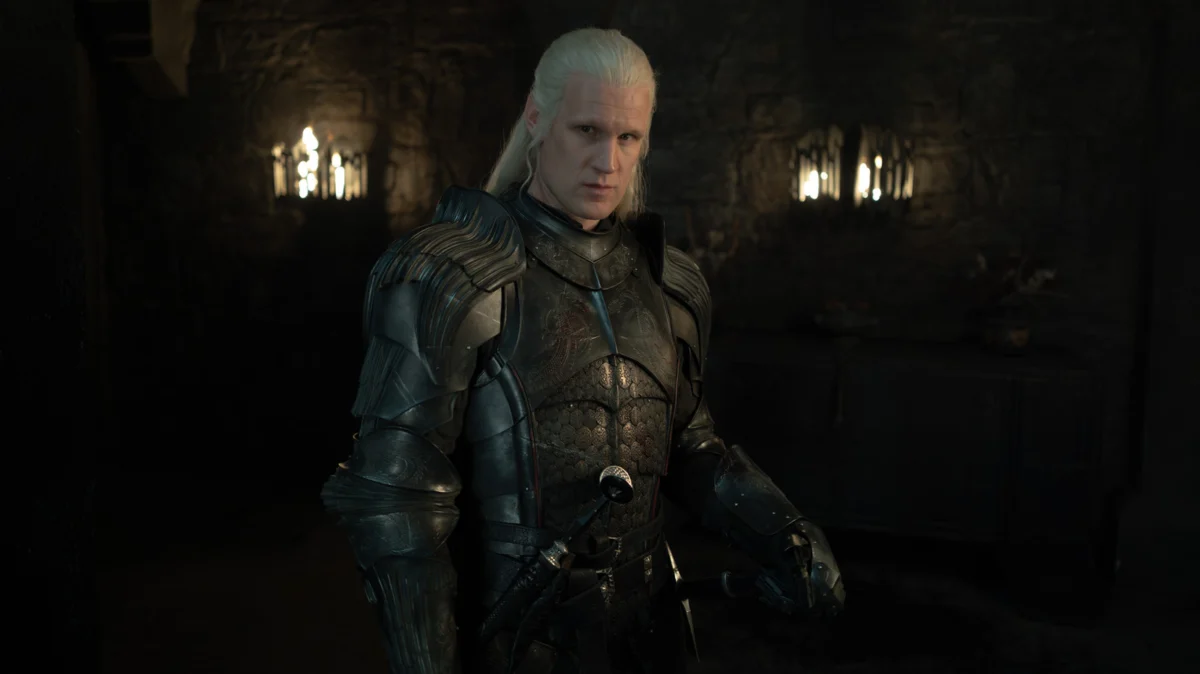
By Editorial Staff
The Dance of the Dragons is a conflict defined by its scale, its brutality, and its total disregard for the lives of the common folk caught between competing dragon-riding factions. As HBO’s House of the Dragon moves into the high-stakes narrative of Season 3, the showrunners are faced with an impossible task: distilling George R.R. Martin’s dense, history-textbook style of writing in Fire & Blood into a digestible, serialized television format.
However, the second episode of the third season has left book purists and casual viewers alike reeling, not because of what was shown, but because of what was relegated to the background. In a swift, blink-and-you’ll-miss-it sequence, the show confirmed that the "Fishfeed"—one of the most pivotal and harrowing land battles in Westerosi history—has occurred entirely off-screen.
Warning: This article contains major spoilers for House of the Dragon Season 3, Episode 2.
The Landscape of War: Contextualizing the Conflict
To understand the gravity of this omission, one must look at the current state of the board. The Dance of the Dragons has moved past the initial political maneuvering into a phase of total war. Last week’s depiction of the Battle of the Gullet was a grim, Pyrrhic victory for Rhaenyra Targaryen’s "Blacks," serving as a stark reminder that even when the dragon-riders win, the cost is often catastrophic.
Simultaneously, the "Greens" have faced their own upheavals. Aemond Targaryen’s occupation of Harrenhal, while strategically significant, has proven to be a psychological and physical crucible. His encounter with the enigmatic Alys Rivers has left him wounded and his future uncertain. Meanwhile, Rhaenyra has finally secured the Iron Throne, but her ascent is marred by the brutal execution of Otto Hightower, signaling that the seat of power is quite literally stained with the blood of the past.
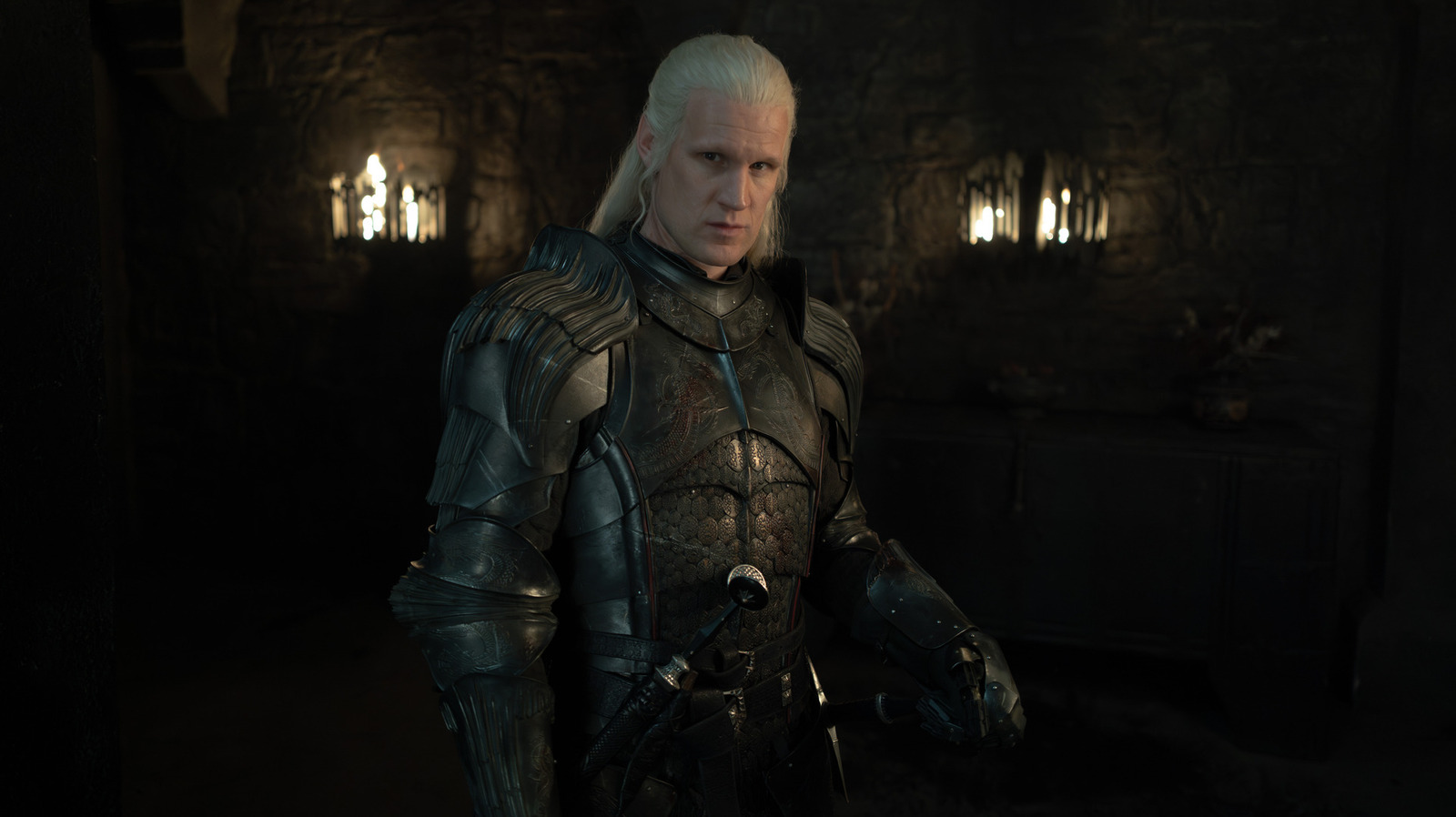
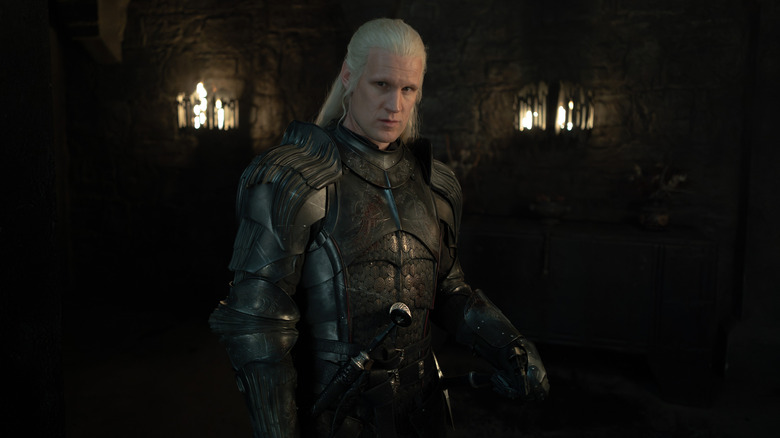
It is against this backdrop of chaos that we find Daemon Targaryen in Episode 2. While he celebrates a victory with his followers, the narrative glosses over the mechanics of how that victory was achieved. Through subtle dialogue and the triumphant, grim songs of his soldiers, we learn that the Lannister forces have been decimated. For those familiar with Fire & Blood, the realization hits hard: the show has just confirmed the conclusion of the Battle by the Lakeshore—the Fishfeed—without ever showing a single frame of the carnage.
A Chronology of Omission: From Page to Screen
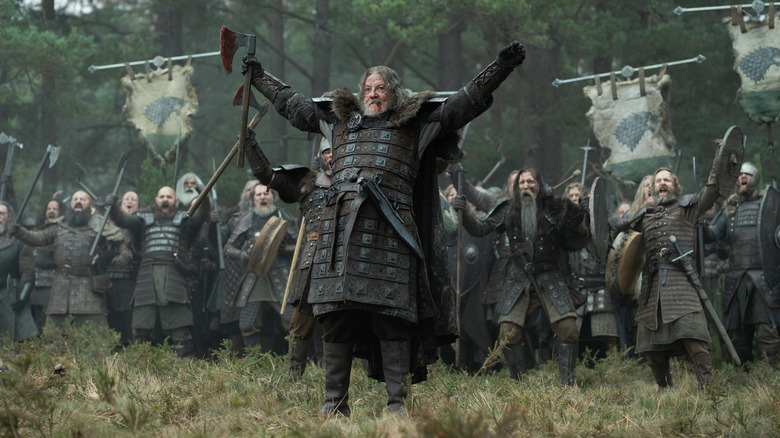
In the source material, the Fishfeed is a masterclass in tactical warfare. It is the moment where the Lannister army, marching under the banner of the Greens, finds its momentum shattered. Allied with the Winter Wolves—the fierce, northern vanguard led by the indomitable Roddy the Ruin—the Blacks orchestrate a trap that forces the Lannister host toward the shores of the Gods Eye lake.
The battle is named "The Fishfeed" for a reason: the sheer volume of casualties was so great that the lake’s aquatic life reportedly fed on the corpses for weeks, staining the water red. It is a defining moment for the Northern forces and a massive strategic shift that secures the Riverlands for Rhaenyra.
The Divergence in Adaptation
The decision to skip this battle is not merely a budgetary constraint; it is a structural choice. The production team, led by showrunner Ryan Condal, has opted to frontload the season with the high-octane events that were originally intended for the conclusion of Season 2. By featuring the Battle of the Gullet and the Fall of King’s Landing in rapid succession, the show has essentially "run out of air" for another massive set piece.
While logistically understandable—filming a sequence of that magnitude requires months of pre-production, massive CGI coordination, and stunt work—the absence leaves a narrative void. In the books, the Fishfeed serves as the necessary bridge between the early, tentative skirmishes and the total, apocalyptic war that follows. By skipping it, the show loses the "weight" of the transition.
Supporting Data: Why "The Fishfeed" Was Essential
The Fishfeed is frequently compared by scholars of Martin’s lore to the Battle of Antietam. It was not just a skirmish; it was a grinder.
- Tactical Significance: It neutralized the Lannister threat to the Riverlands for a significant portion of the war.
- Symbolic Value: It showcased the brutality of the Winter Wolves, contrasting the "chivalrous" warfare of the South with the "survivalist" ferocity of the North.
- Narrative Pacing: It provided a much-needed victory for the Blacks that felt earned through blood and iron, rather than through mere political machinations.
When a show as visceral as House of the Dragon chooses to hide its most "Game of Thrones" style battle behind a song, it creates a dissonance. The audience is told of the victory, but they do not feel the cost. This creates a disconnect between the show’s stated themes—the inherent tragedy of war—and its actual visual delivery.
Official Responses and Creative Philosophy
While HBO has not issued a formal statement regarding the exclusion of the battle, the creative team has spoken extensively about the challenges of adapting Fire & Blood. Ryan Condal has noted in several interviews that the "history book" nature of the source material allows for a level of narrative freedom that a standard novel does not.
"We have to prioritize what the audience needs to see to understand the emotional stakes," a production source indicated. The focus for Season 3 appears to be on the internal collapse of the Targaryen family and the psychological toll of the conflict, rather than the movement of secondary armies. By focusing on the intimate cruelty of Aemond, Daemon, and Rhaenyra, the show seeks to maintain a tighter focus on character-driven drama.
However, many critics argue that this approach misses the forest for the trees. Game of Thrones at its peak succeeded because it balanced the high-fantasy spectacle with the grounded, gritty reality of the battlefield. By removing the latter, House of the Dragon risks becoming a chamber drama that lacks the scope that made its predecessor a global phenomenon.
Implications: What This Means for the Future
The decision to relegate the Fishfeed to the background has several long-term implications for the series:
1. The "Off-Screen" Precedent
If the show continues to bypass major military engagements, it risks alienating a core segment of its audience: those who tune in for the large-scale fantasy warfare. If every major turn in the war happens "off-screen," the war itself begins to feel abstract and low-stakes.
2. The Development of New Characters
Roddy the Ruin, a fan-favorite character in the books, is relegated to a brief appearance. His character arc, which should have been defined by his prowess at the Fishfeed, is now diminished. This makes it harder for the audience to invest in the secondary players who are supposed to be the "boots on the ground" of this conflict.
3. The Shift in Pacing
By skipping the battle, the show has cleared the board for the events at the Gods Eye. This suggests that the production is prioritizing the final outcome—the duel between major characters—over the process of getting there. While this may speed up the narrative, it sacrifices the "slow burn" tension that made the first season so compelling.
Conclusion: A Missed Opportunity or a Necessary Evolution?
The omission of the Fishfeed is arguably the most significant missed opportunity of the season thus far. It was a chance to show the absolute carnage of the Dance, to re-introduce the brutal reality of the Northern armies, and to provide a visual spectacle that justified the show’s massive budget.
In an ideal adaptation, the Fishfeed would have been the centerpiece of the second episode. It could have even been modified to include characters like Daemon, bridging the gap between his personal journey and the wider war. Instead, we are left with a summary of events, a catchy song, and the lingering question of whether the show is losing its sense of scale.
As House of the Dragon continues its weekly run, the hope is that this is merely a blip—a logistical sacrifice to ensure that the later, more critical battles receive the budget and attention they deserve. The Dance of the Dragons is far from over, and if the showrunners intend to finish the story with the same intensity with which they began, they will need to ensure that the "blood" in Fire & Blood is seen, not just mentioned.
For now, viewers will have to settle for the echoes of the slaughter, left to imagine the bloody waters of the Gods Eye that, had the cameras been there, would have defined the season.


 Muslim