
 Muslim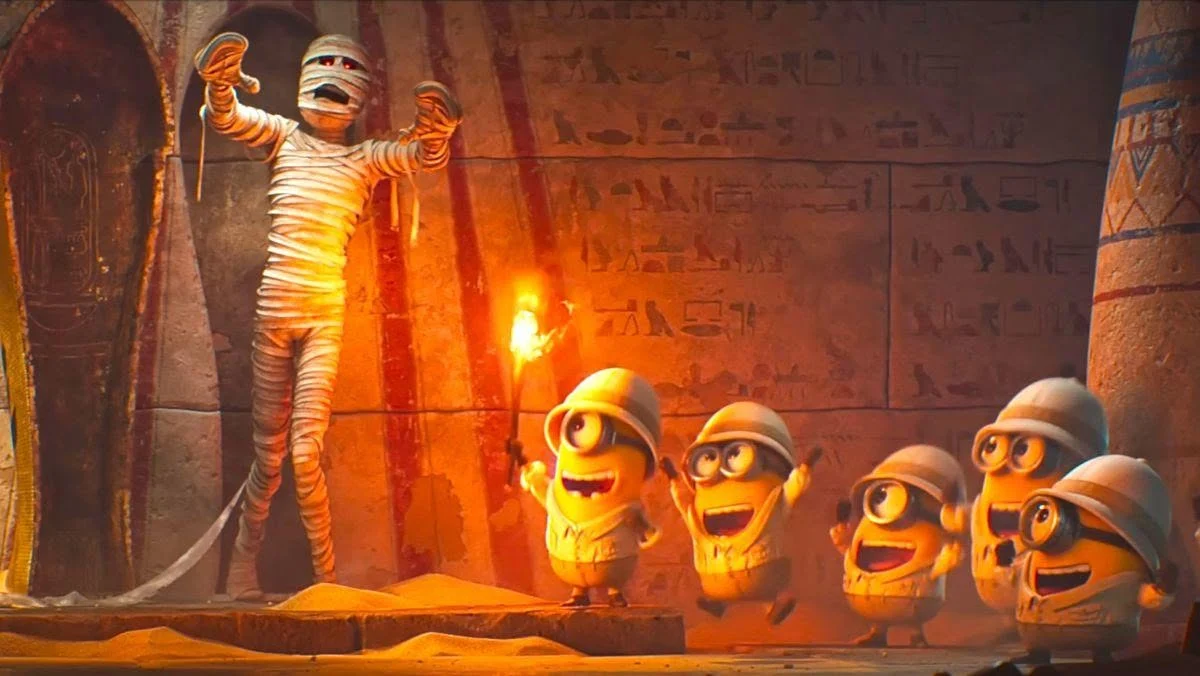
By David Crow
July 2, 2026
The Minions franchise has evolved into one of the most recognizable cultural juggernauts of the 21st century. Since their inception by filmmaker Pierre Coffin, Chris Renaud, and Eric Guillon, these banana-shaped, gibberish-speaking agents of chaos have become the modern-day equivalents of the Oompa-Loompas—ubiquitous, mischievous, and endlessly marketable. However, with the release of the seventh entry in the franchise, Minions & Monsters, director Pierre Coffin has pivoted away from pure commercial whimsy to deliver something unexpectedly profound: a love letter to the history of cinema itself.
Minions & Monsters is not merely a sequel; it is a meta-textual exploration of Hollywood history. Through a dizzying array of Easter eggs, stylistic homages, and narrative detours, Coffin challenges the audience—both young and old—to consider the origins of the visual language they consume every day.
The Architecture of Nostalgia: Opening with History
The film’s intent is established within its first sixty seconds. Before the audience is even introduced to the central conflict, they are treated to a chronological retrospective of the medium. The film opens with a nod to Eadweard Muybridge’s 1878 proto-cinematic studies of a galloping horse, rendered in the distinctive yellow, pill-shaped aesthetic of the Minions. This is immediately followed by a rapid-fire, reverse-chronological montage of every Universal Pictures title card dating back to the studio’s 1912 founding.
"I had the idea from the start," Coffin explains via Zoom, reflecting on the arduous task of archiving over a century of branding. "I went on YouTube and sourced every iteration of the Universal logo I could find. It was a simple, manual process of editing them together in reverse. I wasn’t sure if the studio would go for it, but it serves as a statement of intent. We aren’t just making another cartoon; we are acknowledging the lineage of the medium we’re playing in."
This opening sequence functions as a microcosm for the film’s larger goal: to bridge the gap between the hyper-modern, digital-first generation of young viewers and the foundational "Gods and Monsters" of early Hollywood.
Hollywood History: From Universal Icons to Modern Mayhem
The framing device of Minions & Monsters centers on a fictional Hollywood History museum. A guide, played with a dry, comedic flair by Allison Janney, leads a group of children through a hall of fame featuring iconic props: the hoverboard from Back to the Future Part II, E.T.’s bicycle, and nods to Alfred Hitchcock’s The Birds.
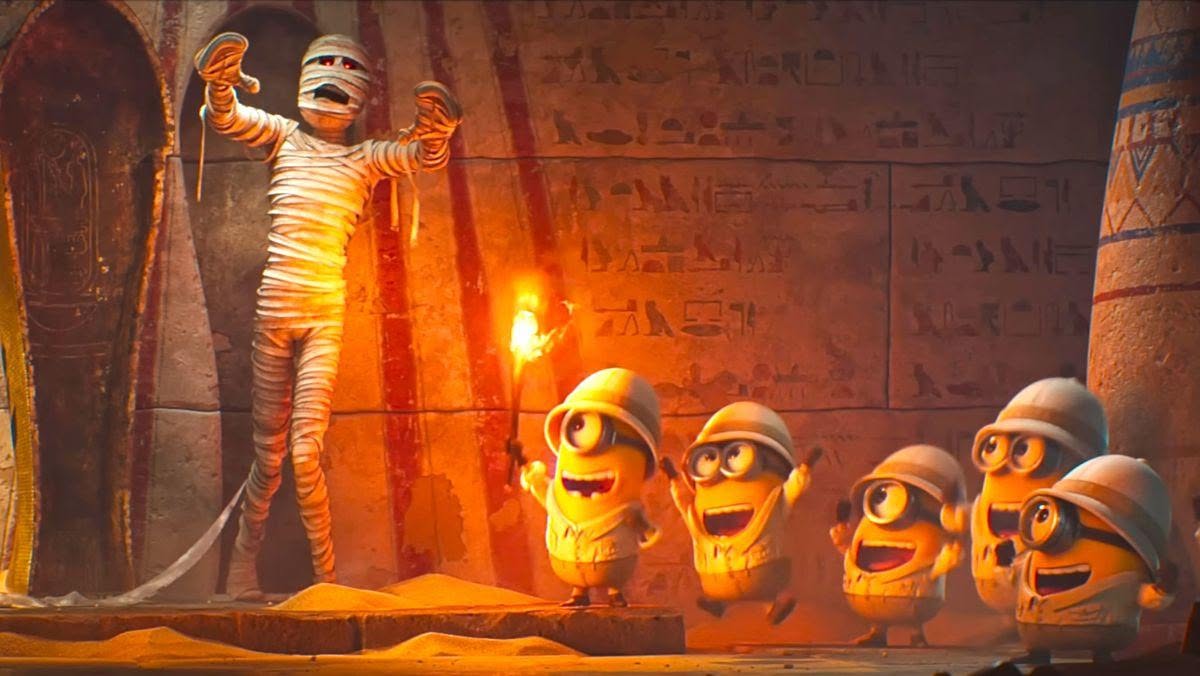
However, the plot truly ignites when the focus shifts to a forgotten corner of the museum dedicated to "Henry and James," two Minions who allegedly infiltrated the Golden Age of Hollywood. Their exploits are depicted through posters that parody iconic films like Fritz Lang’s Metropolis (1927), Boris Karloff’s The Mummy (1932), and the 1954 classic Creature from the Black Lagoon.
For Coffin, these references are deeply personal. "I moved to the United States in 1977, and I was suddenly exposed to an entire catalog of horror and creature features that simply weren’t broadcast on French television at the time," he recalls. "I was in awe of The Fly and Frankenstein. I had to chase them down on late-night channels. These weren’t just movies; they were my introduction to the American cultural zeitgeist."
The film’s antagonist, a Cthulhu-esque creature named "Irene," draws direct inspiration from the 1958 cult classic The Blob. Coffin admits the irony in this: "When I was a kid, The Blob terrified me. But watching it again as an adult for research, I realized the monster barely moves! It just sits there while people scream. It’s a completely different experience, but the perception of it as a child is what I wanted to capture for the film."
The Comedy Titans: Chaplin, Keaton, and Lloyd
If the "Monsters" portion of the title provides the aesthetic dread, the "Minions" portion provides the slapstick pedigree. The film’s centerpiece is an ambitious sequence where the characters find themselves caught in a runaway locomotive—a direct homage to 1903’s The Great Train Robbery—only to be pursued by the Keystone Cops.
This segment serves as a gateway to the giants of physical comedy. Coffin and his team meticulously recreated three legendary sequences:
- Harold Lloyd’s clocktower hanging from Safety Last! (1923).
- Buster Keaton’s house-falling stunt from Steamboat Bill Jr. (1928).
- Charlie Chaplin’s factory machine entanglement from Modern Times (1936).
"I think the Minions are the spiritual descendants of those geniuses," says Coffin. "Cartoons are inherently based on slapstick—physical violence, non-talking characters, the escalation of chaos. Whether it’s Tex Avery or Tom and Jerry, we are all standing on the shoulders of these guys who invented the language of visual comedy."
Coffin’s approach was to "affectionately desecrate" these scenes. By placing the Minions in these scenarios, he poses a playful, revisionist question: What if the disasters in cinema history weren’t accidents, but the result of Minion intervention?
Jazz, Flappers, and the Arrival of Sound
As the narrative progresses, Minions & Monsters moves into the transition from the silent era to the talkies. The film features a lavish, sequined production number modeled after the Singin’ in the Rain (1952) "Broadway Rhythm" sequence.
The party scenes, meanwhile, draw from a mixture of F. Scott Fitzgerald’s The Great Gatsby and the chaotic, elephant-fueled bacchanal of Damien Chazelle’s Babylon. Coffin also cites the influence of Blake Edwards’ 1968 comedy The Party, noting, "I wanted that sense of overwhelming wealth and absurdity. It’s a collectivist approach to comedy—get as many crazy elements on screen as possible and let the audience find the rhythm."
The "Rosebud" Punchline: Citizen Kane and the Studio System
No exploration of Hollywood’s Golden Age would be complete without a nod to the "gold standard" of cinema: Orson Welles’ Citizen Kane. In one of the film’s most talked-about scenes, a Minion attempts to deliver the iconic final line "Rosebud" on his deathbed, only to fumble the word repeatedly, eventually settling on "Oh poop!"
"We tried a dozen variations," Coffin explains. "We considered having them mess up on the set of Frankenstein or a biblical epic, but Citizen Kane felt like the ultimate punchline. It’s a way to show that for these characters, the introduction of sound was a nightmare."
The film also introduces the "Bright Brothers," studio heads modeled after the legendary Warner brothers. Coffin describes these characters as a study in contrast: "One is ruthless, the other is ruthless but ‘nice.’ Giving them a moment where they request Sam the piano player to play a song—a direct reference to Casablanca—humanized them. I didn’t want them to be simple caricatures. They needed to have a soul, even if they were being played by cartoon Minions."
Implications: Can Children Appreciate the Classics?
The most frequent criticism Coffin faces is whether these references go over the heads of the film’s target demographic. "I get asked that a lot," Coffin admits. "People say, ‘Kids don’t know who Orson Welles is.’ And that’s true. They don’t need to. The gag works because it’s a character who is clearly trying to say something important and failing. That’s universal."
However, Coffin remains optimistic about the potential for discovery. He compares the process to the current social media landscape, where a ten-second clip on TikTok can lead a curious viewer down a rabbit hole of discovery. "If they see a Harold Lloyd stunt and think it’s cool, maybe they look him up. Maybe they find The General or The Cameraman. Suddenly, they’re watching silent films and realizing that the storytelling still holds up today. It’s about planting a seed."
By synthesizing the history of cinema into a vibrant, chaotic, and often hilarious narrative, Minions & Monsters manages to be something rare: a blockbuster that respects the medium’s past while entertaining the future. It is, at its heart, an argument that while technology and sound may change the delivery of a story, the fundamental human joy of a well-timed gag remains timeless.
Minions & Monsters is currently playing in theaters worldwide.


 Pevita Pearce
 Asep Darmawan




