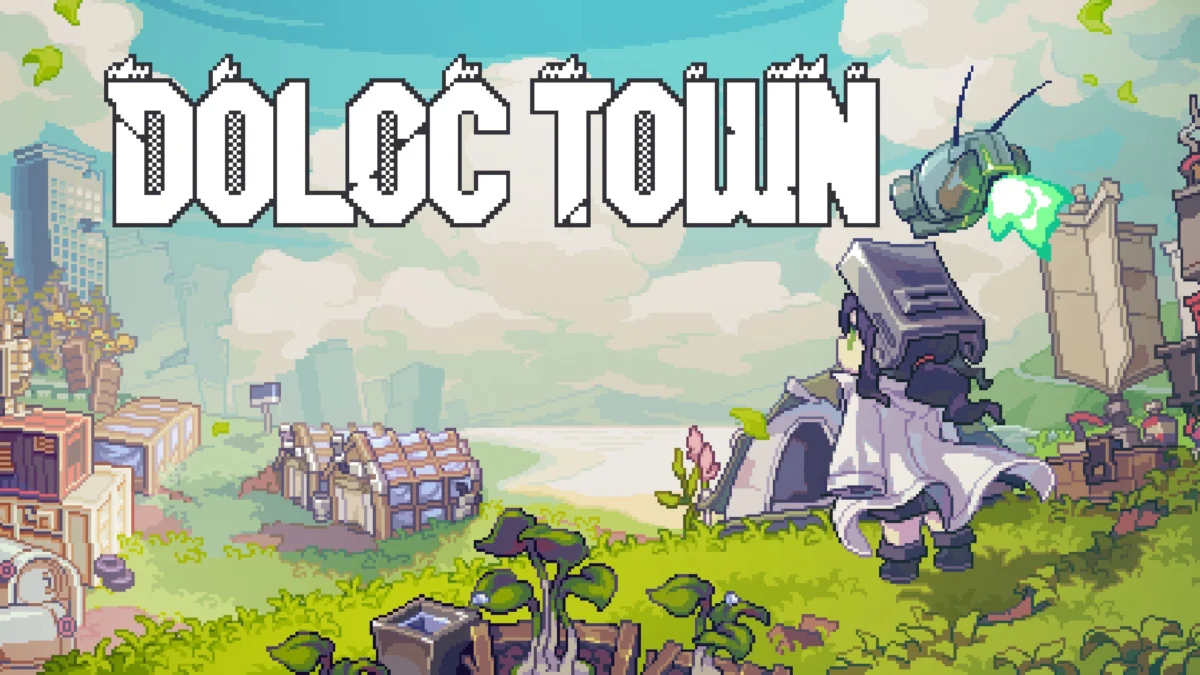
The post-apocalyptic genre has long been dominated by narratives of bleak desperation, where survival is a grim, singular pursuit. However, Doloc Town—the creative project that has captured the attention of the indie community—approaches the end of the world through a different lens: one of restoration, community, and the persistent, quiet beauty of growth. After a comprehensive year-long journey through Steam Early Access, the game is officially slated for its 1.0 release on August 6, 2026, marking a significant milestone for a title that blends cozy life-sim mechanics with a distinct "trash-punk" aesthetic.
Main Facts: A New Life Among the Ruins
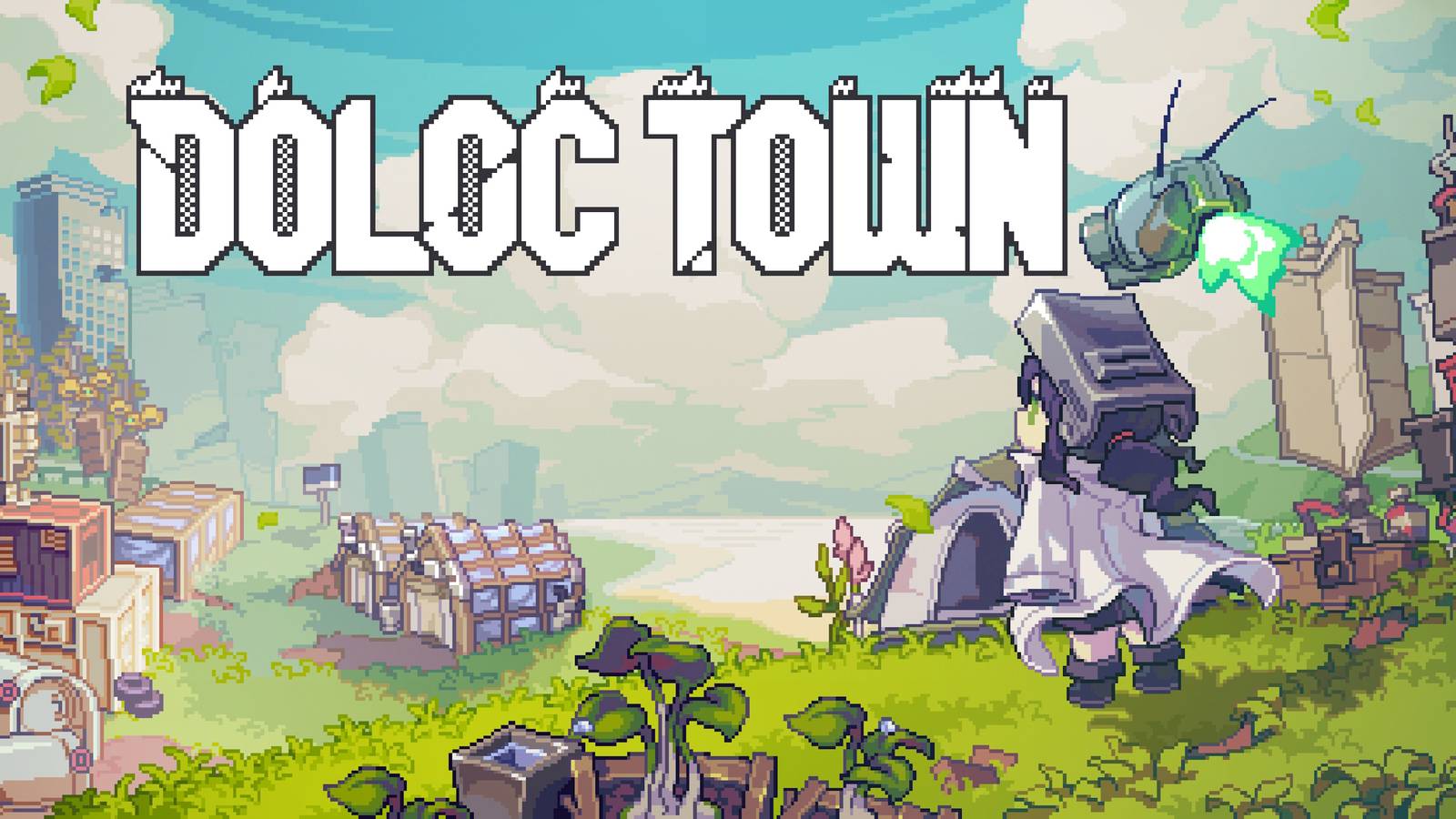
At its core, Doloc Town is a 2D side-scrolling farming simulator that tasks players with revitalizing a settlement built upon the literal scrap-heaps of a fallen civilization. Unlike traditional farming games that rely on sprawling, top-down fields, Doloc Town utilizes verticality as a core mechanic. Players build their homesteads upward, stacking platforms and modular structures amid the ruins of a broken world.
The narrative hook is simple yet evocative: a former resident returns to their hometown, only to find it a shadow of its former self, constructed from the wreckage of a derailed train and abandoned infrastructure. The player’s mission is to transform these salvaged materials into a thriving sanctuary. From gathering metal and plastic scrap to managing the environmental hazards of a scarred planet—such as corrosive acid rain—the game challenges players to balance the delicate nature of agriculture with the harsh realities of a post-disaster environment.
Chronology: From Early Access to Full Restoration
The trajectory of Doloc Town serves as a case study in effective community-driven development. Since entering Early Access, the developers have maintained a rigorous update cadence, steadily expanding the game’s scope.
- The Early Phase: The initial Early Access launch introduced players to the fundamental "trash-punk" mechanics: the struggle for resources, the basic crafting system, and the immediate need to protect fragile crops from the toxic atmosphere.
- The Expansion Period: Throughout the past year, the developers integrated a robust content roadmap. This included the introduction of livestock, a deeper cosmetic customization suite, and the implementation of social events that transformed the town from a collection of isolated survivalists into a cohesive community.
- The Final Polish: As of July 2026, the focus has shifted toward the 1.0 "Gold" milestone. The final build promises to tie up narrative loose ends, specifically through the introduction of the "Old City Ruins," a high-level area that serves as the backdrop for the game’s climatic story finale.
Supporting Data: Mechanics and Environmental Dynamics
The brilliance of Doloc Town lies in how it subverts standard genre tropes. By utilizing a 2D side-view perspective, the game forces players to consider structural integrity and spatial efficiency in ways top-down games often ignore.
The Verticality Challenge
The "stacking" mechanic is the most innovative aspect of the gameplay loop. Players are not merely planting seeds; they are engineers of their own vertical farm. Each crop requires a dedicated planter, and these planters are subject to the degradation of low-quality materials. As players progress, they unlock more durable, high-tech infrastructure that allows for the creation of massive, sky-high agricultural towers.
Environmental Hazards as Gameplay Drivers
The weather system in Doloc Town acts as a primary antagonist. Acid rain is not just a visual effect; it is a mechanical threat that necessitates protective measures, such as plastic sheeting or, eventually, advanced lighting systems that allow for indoor cultivation. This progression curve—moving from vulnerable, outdoor survival to protected, automated indoor farming—gives the player a tangible sense of mastery over their environment.
The Combat-Light Paradigm
While Doloc Town features hostile elements—specifically, robotic patrols that wander outside the town’s safe zone—it avoids the pitfalls of becoming a generic action-platformer. Players do not engage in hand-to-hand combat; instead, they command a drone. This design choice keeps the focus firmly on the "cozy" farming aspects while allowing for exploration and resource gathering in dangerous areas.
Official Responses and Developer Vision
The lead development team has been vocal about their desire to create a "living, breathing world" that rewards curiosity. In recent developer logs, the team emphasized that the inclusion of an automation system in the 1.0 update was a direct response to player feedback regarding the late-game experience.
"As players expand their homesteads to gargantuan proportions, the manual labor of managing hundreds of planters becomes a chore rather than a pleasure," a representative noted. "The new automation system, which utilizes robotic drones to handle the bulk of harvesting and maintenance, is designed to free up the player’s schedule. We want them to spend their final hours in the game socializing with NPCs, exploring the Old City Ruins, and soaking up the atmosphere we’ve built, rather than just clicking on crops."

The decision to conclude the story with the Old City Ruins update is also a deliberate move to provide a satisfying "ending" to the player’s journey, something that is often missing in the open-ended nature of the farming-sim genre.
Implications: The Future of the "Cozy-Punk" Genre
The impending release of Doloc Town carries several implications for the gaming landscape.
The Rise of "Trash-Punk"
Doloc Town is a leading example of the "trash-punk" aesthetic, where the player is not a hero in shining armor, but a scavenger making do with what remains. This aesthetic resonates with modern audiences who are increasingly interested in themes of sustainability, circular economies, and the idea of "upcycling." By gamifying the act of turning garbage into a garden, Doloc Town taps into a zeitgeist that values restoration over conquest.
Console Potential and Market Expansion
While the developers have yet to announce a console port, the game’s controller-friendly interface and side-scrolling mechanics make it a prime candidate for platforms like the Nintendo Switch or the PlayStation 5. Historically, indie titles that find success on Steam often bridge the gap to consoles within a year of their 1.0 release. Given the game’s accessible, pick-up-and-play loop, a console version could significantly broaden its demographic reach.
Setting a Benchmark for Early Access
Finally, Doloc Town serves as a testament to the viability of the Early Access model when managed with transparency. By providing a clear vision, respecting the feedback of the player base, and adhering to a strict release schedule, the developers have minimized the "feature creep" that often plagues similar titles.
As the August 6th release date approaches, the gaming community watches with anticipation. Doloc Town is poised to transition from an experimental, work-in-progress title to a definitive entry in the farming simulator genre. Whether you are a veteran of the 80s arcade era or a newcomer to the life-sim scene, the story of Doloc Town—of finding hope in the ruins and building something new from the wreckage of the old—is one that offers a refreshing, poignant experience in an industry often obsessed with the next big blockbuster.
The world may have ended, but as Doloc Town proves, the act of planting a seed remains one of the most powerful gestures of defiance against decay.