

Your client is staring at their quarterly dashboard, and the mood in the room is shifting from professional curiosity to pointed skepticism. You have provided three different reports, and they aren’t just slightly off—they are fundamentally contradictory. Meta claims 200 conversions; Google Analytics 4 (GA4) records 50; your CRM shows a completely different, third figure. You have 48 hours before the final budget review, and the gap between social’s perceived performance and the hard data is widening.
This is not a performance problem; it is an infrastructure crisis. Social media is likely driving more revenue than any single dashboard shows, but it is currently invisible because of how modern tracking is configured. The gap between these numbers is not a glitch; it is the result of incompatible attribution models, broken cross-device tracking, and the "dark social" phenomenon. To prove the value of your social strategy, you must stop treating attribution as a setting to be toggled and start treating it as a system to be engineered.
The Attribution Model Paradox: Asking the Right Question
The most common mistake marketers make is assuming that an attribution model is a truth-teller. In reality, an attribution model is simply a set of rules designed to answer a specific question. If you are frustrated by your data, it is likely because you are asking the wrong question, or you are forcing a model to answer a question it wasn’t designed to address.
The "Last-Click" Trap
GA4’s default attribution model is "last-click." It assigns 100% of the credit to the final touchpoint before a conversion. Consider a standard B2B journey: A prospect sees a product feature on a TikTok video. They don’t click, but they are intrigued. Three days later, they search for the brand name on Google. A week after that, they click a link in an email newsletter and convert.

Under a last-click model, the email gets all the credit. TikTok, which acted as the critical awareness catalyst, gets zero. The model isn’t lying; it is faithfully answering the question, "What was the last thing they clicked?" If you wanted to know what inspired the purchase, you are asking the wrong model for the wrong answer.
The Platform Self-Reporting Bias
Every native dashboard—Meta, LinkedIn, TikTok—is programmed to grade its own homework. Meta utilizes a 7-day click/1-day view window. LinkedIn uses a 30-day click window. When these platforms report their own successes, they do so based on their proprietary logic, which will never align with the cross-platform, cookie-limited environment of GA4. This structural mismatch is not something you can fix with a setting; it is a permanent feature of the modern marketing landscape.
The Chronology of an Attribution Failure
To understand why your reports are currently failing, you must look at how the digital tracking landscape has collapsed since 2021.
- The Pre-2021 Era: Advertisers relied heavily on third-party cookies and 28-day attribution windows. Tracking was broad, and cross-device movement was easily stitched together.
- The Apple/Privacy Shift (April 2021): The release of Apple’s App Tracking Transparency (ATT) framework was the primary turning point. Millions of users opted out of cross-app tracking, effectively blinding platforms like Meta. Meta was forced to shorten its attribution windows to 7 days, losing weeks of historical data overnight.
- The Cookiepocalypse: As browsers like Safari and Firefox blocked third-party tracking by default, and Chrome began its slow deprecation of cookies, the ability to follow a user from an Instagram ad to a Chrome-based desktop purchase vanished.
- The Current State: We are now in a "signal loss" environment. Attribution is no longer about precision; it is about triangulation. If you are still relying on a single, default GA4 report to justify your budget, you are effectively operating with one hand tied behind your back.
Supporting Data: The Cost of Misalignment
The financial implications of using the wrong model are severe. Research from Sellforte indicates that relying on last-click attribution undervalues Meta channels by as much as 2x to 9x, and TikTok by as much as 17x in e-commerce contexts.
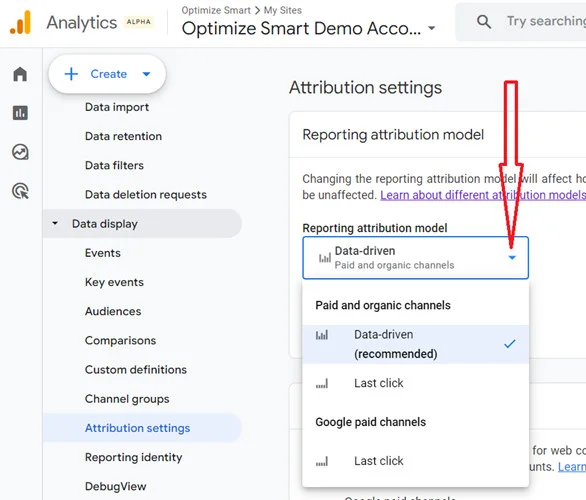
Furthermore, Dreamdata’s 2026 B2B Benchmarks highlight that the average LinkedIn-attributed buyer journey now spans 272 days across 88 distinct touchpoints. When GA4 defaults to a 30-day lookback window, you are essentially cutting off over 240 days of the customer journey. You are effectively erasing the vast majority of the "nurture" work that your social media team is performing every single day.
Designing the Right Infrastructure
If you want to move from "defending social" to "scaling social," you must build a robust attribution layer. This involves three distinct steps: standardization, configuration, and triangulation.
Step 1: The UTM Taxonomy
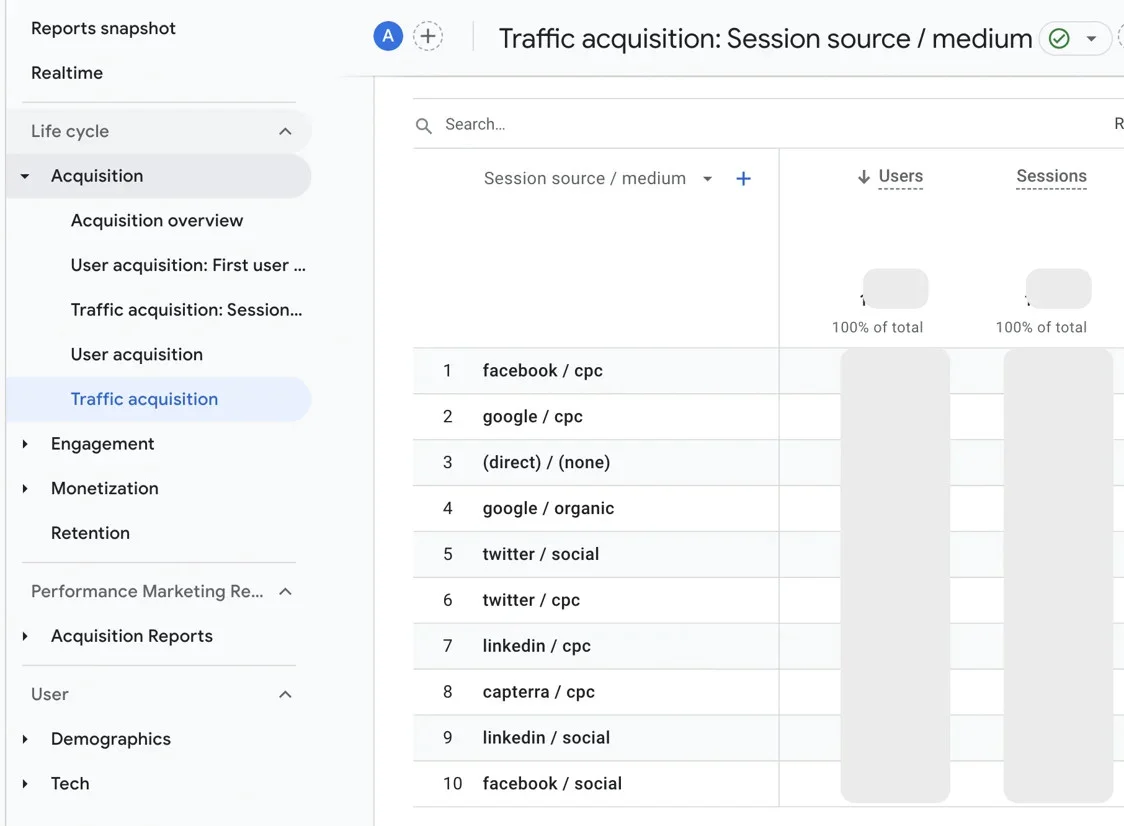
If you are not using a rigorous UTM taxonomy, your social traffic is arriving in GA4 as "Direct" or "Organic." To fix this, you must adopt a strict naming convention for every post: [client-id]-[platform]-[campaign-type]-[content-type]-[date].
By standardizing this across your entire agency, you ensure that every link is traceable. When you pull reports, you can filter by client-id and instantly see the performance of a specific campaign type across multiple platforms.
Step 2: Configuring GA4 for Reality
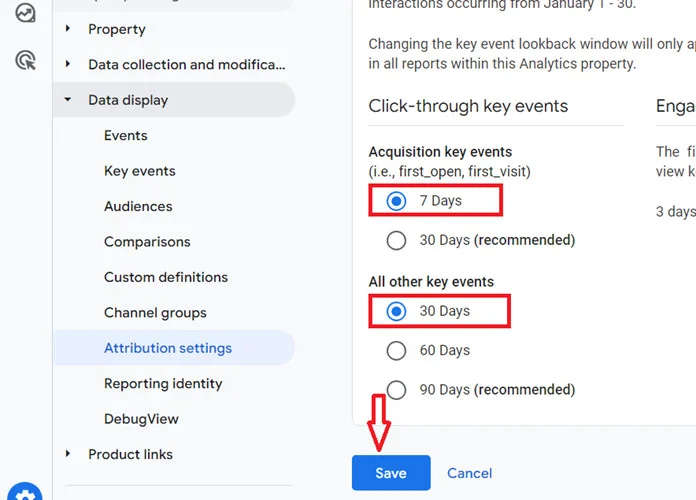
Stop accepting the default GA4 settings.
- Extend the Lookback Window: For B2B clients, move your attribution window to 90 days.
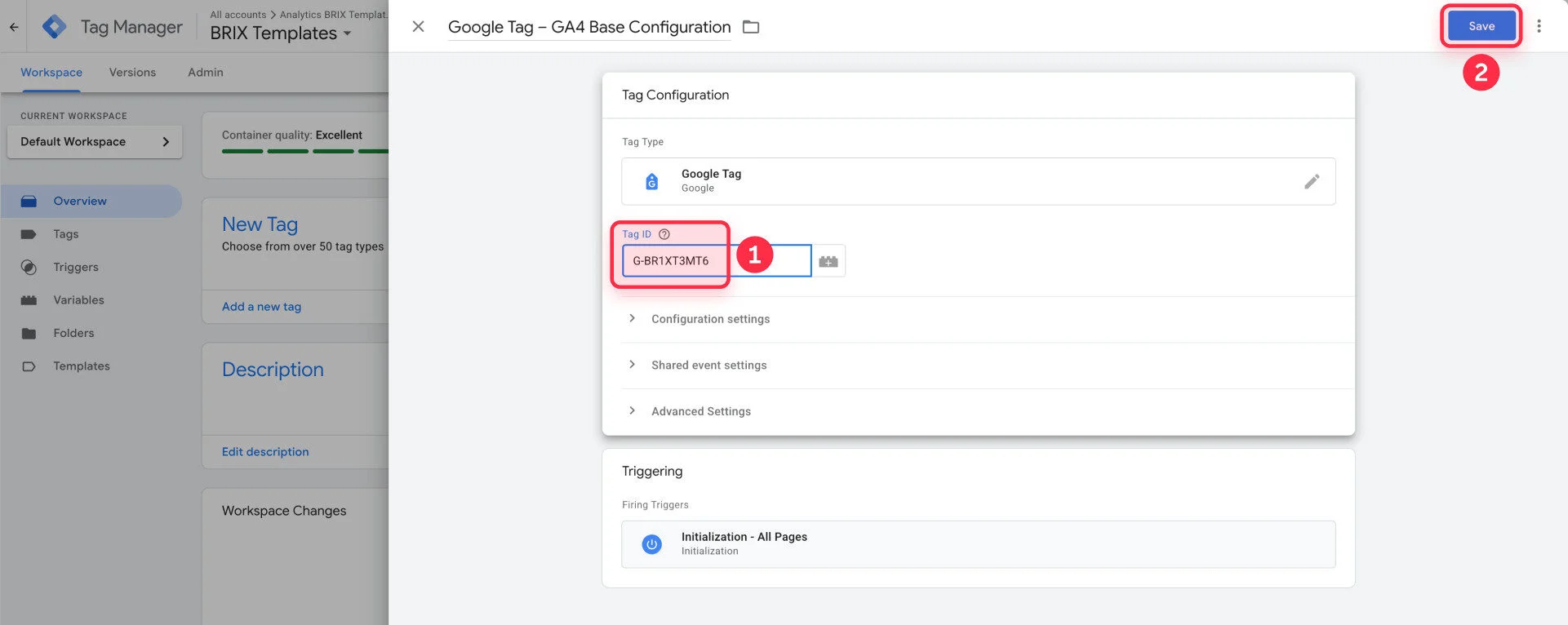
- Enable Cross-Device Tracking: Ensure User-ID is configured so that if a user logs in on mobile and desktop, GA4 sees them as a single person.
- Standardize Events: Ensure that a "lead" is named the same thing across all your clients. If one client uses
form_submitand another usesgenerate_lead, you cannot compare your portfolio performance.
Step 3: Triangulating with "Dark Social"
"Dark social"—private sharing via Slack, WhatsApp, and email—is the single largest source of untraceable traffic. Since you cannot track these clicks, you must estimate them.
- Post-Purchase Surveys: Implement a one-question survey on your thank-you page: "How did you hear about us?" When 40% of your customers tell you they heard about you on LinkedIn, but GA4 says it was "Direct," you have found your "Dark Social" impact.
- Dedicated Tracking URLs: Use URL shorteners like Bitly or Short.io to create specific links for social shares, tagged with custom UTMs, so that when a link is shared in a Slack group, the source is preserved.
Official Implications: Why This Is Your Responsibility
For many agencies, the "attribution problem" is treated as an external nuisance—a fault of Google or Apple. However, the agencies that win the most renewals are those that take ownership of the data infrastructure.
The shift is strategic:
- If you are reporting on conversion volume: Use the model that best matches your sales cycle (Position-Based for B2B, Time-Decay for B2C).
- If you are reporting on budget allocation: Stop using attribution models entirely. Instead, use Incrementality Testing. Pause a channel for 30 days and measure the drop in total traffic. This is the only way to prove a channel’s true worth.
- If you are reporting on "what’s working": Focus on leading indicators. If your social content is high-performing, you will see a corresponding lift in "Branded Search" volume and "Direct" traffic. Overlay your social calendar with these trends to show the correlation.
Conclusion: Building for the Future
The era of "set and forget" analytics is over. The agencies that thrive in this environment are those that stop chasing the "perfect" model—because it doesn’t exist—and start building a system that allows them to triangulate the truth.
By standardizing your UTMs, adjusting your GA4 windows to match your client’s actual sales cycle, and using post-purchase surveys to fill in the gaps, you change the nature of the conversation. You stop defending your existence and start advising on growth. When your data is consistent, clean, and triangulated, the question moves from "Why should we spend money on social?" to "Where exactly should we double down?"
Don’t wait for a client to ask why the numbers don’t match. Build the infrastructure today that makes those discrepancies clear, logical, and defensible. Your reputation as an agency depends on your ability to interpret the signal in the noise.











