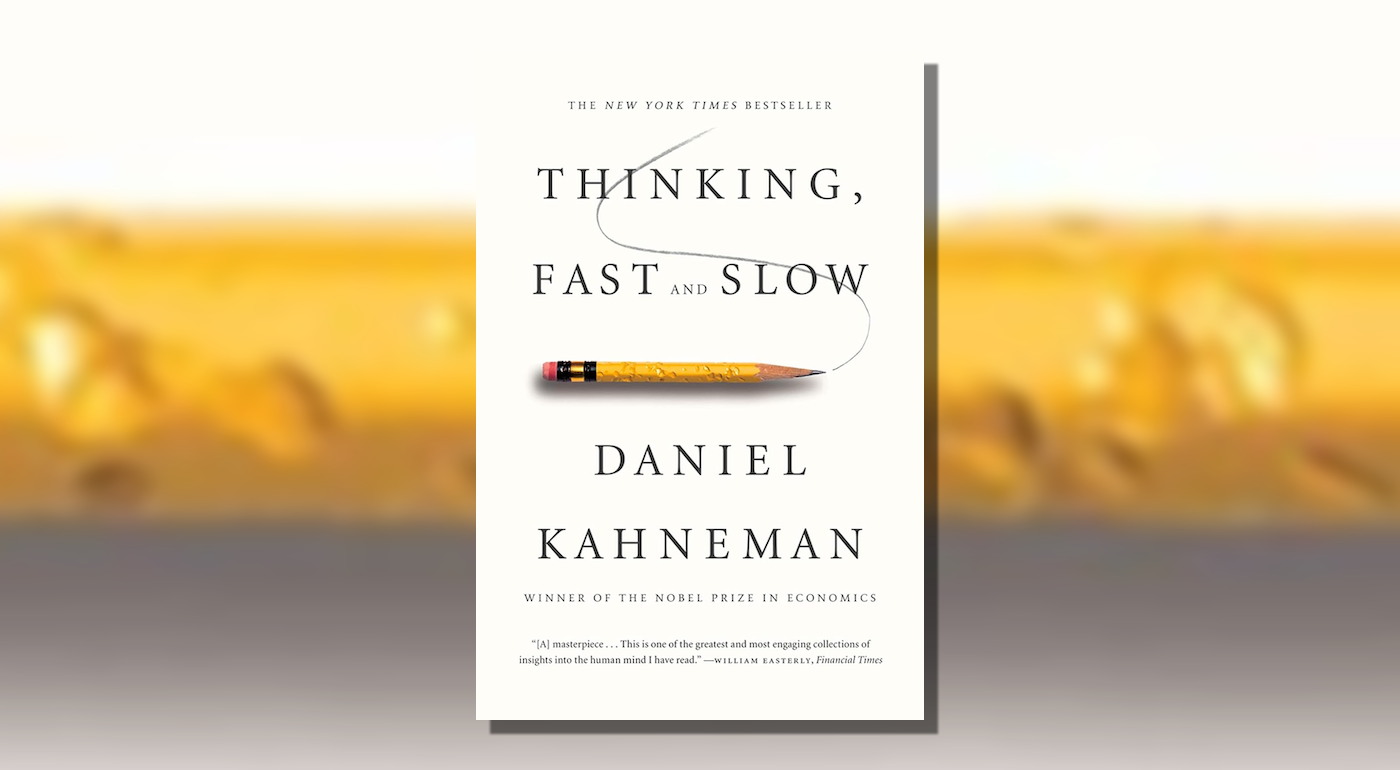
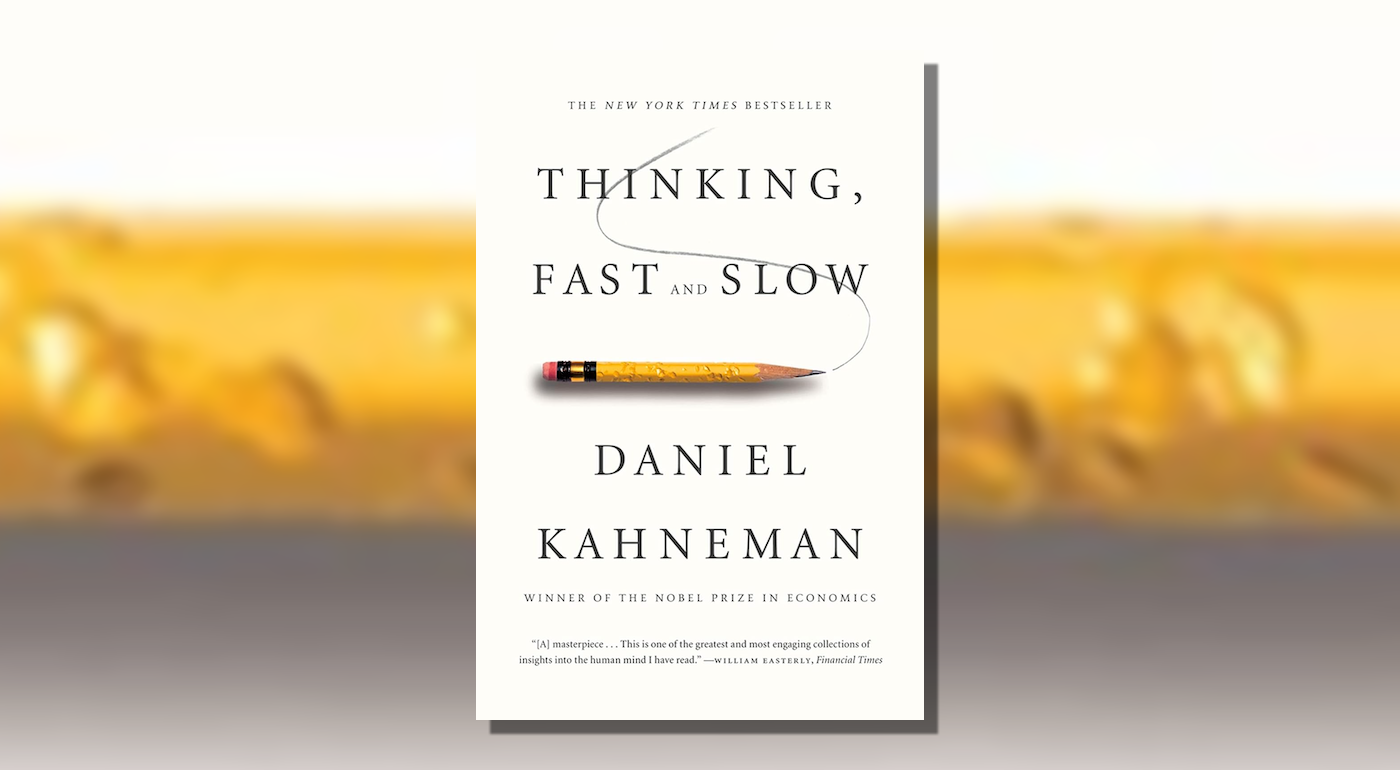
In the landscape of modern cognitive science, few works have achieved the cultural ubiquity and intellectual rigor of Daniel Kahneman’s Thinking, Fast and Slow. Originally published to bridge the gap between behavioral economics and experimental psychology, the book has become a foundational text for anyone seeking to understand the architecture of human decision-making. For writers, researchers, and curious minds alike, Kahneman’s exploration of why we think the way we do—and why we so often fail—offers a treasure trove of "seeds" for speculative fiction and critical analysis.
Main Facts: The Architecture of Thought
At the heart of Kahneman’s magnum opus is the distinction between two cognitive systems that govern our mental lives. Kahneman, a Nobel laureate in economics—a recognition bestowed upon him because the Nobel committee lacks a formal prize for psychology—meticulously deconstructs the myth of Homo economicus, the perfectly rational human actor long favored by classical economic theory.
Instead, Kahneman presents a portrait of a mind that is "squirmy and complicated." He argues that our brains are not logic engines, but rather adaptive survival machines. We operate in a world of limited time, scarce resources, and profound uncertainty. To navigate this, our minds utilize "heuristics"—mental shortcuts—which allow us to reach conclusions quickly, albeit with a propensity for systematic error.
The two systems are defined as follows:
- System 1: The intuitive, fast, and automatic processor. It operates below the level of conscious awareness, relying on instinct, habit, and pattern recognition. It is the mental equivalent of a "compost bin" of lived experience, ready to provide an immediate answer to complex problems.
- System 2: The deliberate, slow, and effortful processor. This is the domain of conscious thought, logical analysis, and second-guessing. While it has the capacity for precision, it is also easily overwhelmed by complexity and prone to "choice paralysis."
A Chronology of Discovery
The journey to Thinking, Fast and Slow began decades before its publication, rooted in the collaborative efforts of Kahneman and his late partner, Amos Tversky. Their work began by identifying isolated cognitive biases—such as the availability heuristic, where individuals judge the probability of an event by how easily they can recall examples of it.
Over the years, the field of cognitive psychology expanded these findings into a vast, sometimes overwhelming list of mental errors. However, in this book, Kahneman sought to synthesize these disparate phenomena into a unified theory. He moved the discourse away from simply labeling biases toward understanding the underlying cognitive architecture that gives rise to them.
This evolution—from identifying "how we mess up" to explaining "how the system is built"—represents a paradigm shift in how we perceive the limitations of human judgment. By tracing the history of this research, we see a transition from viewing humans as "flawed" (a scientific version of original sin) to viewing humans as "adapted" for a world that no longer exists in the form of our evolutionary past.
Supporting Data: When Intuition Fails
The effectiveness of System 1 versus System 2 depends heavily on the environment. Kahneman highlights the concept of "intuitive expertise," which he explored in an adversarial collaboration with psychologist Gary Klein.
Their research concluded that for human intuition to be truly reliable, two conditions must be met:
- A Regular, Predictable Environment: The subject must be operating in a space where patterns are consistent.
- Opportunity for Practice and Feedback: The subject must have the ability to observe the consequences of their actions and calibrate their intuition accordingly.
In fields like chess, firefighting, or clinical diagnostics, these conditions are often present. In contrast, fields characterized by extreme noise and lack of immediate feedback—such as high-frequency stock trading or political punditry—frequently lead to "experts" who possess high levels of confidence but low levels of accuracy. This discrepancy is a critical insight for anyone looking to understand why institutional, high-stakes decisions so often go awry.
Furthermore, the "availability heuristic" remains a primary culprit in modern anxiety. In an era of algorithmic social media, where rare but dramatic events are amplified, our internal probability calculators are fundamentally miscalibrated. We are more likely to fear events that are frequently reported than those that are statistically probable, a phenomenon that has profound implications for public policy and personal safety.
Official Responses and Theoretical Shifts
Within the academic community, the reaction to Kahneman’s work has been a mixture of veneration and critical scrutiny. Some researchers continue to argue that framing human cognition in terms of "error" is fundamentally flawed, suggesting that what we call "bias" is actually a rational adaptation to a social environment.
Notable figures like Hugo Mercier and Dan Sperber, in their work The Enigma of Reason, propose that human reasoning is not meant to be objective, but rather social—designed to win arguments and influence others. This shift toward a "social-evolutionary" model of the mind serves as a compelling counter-weight to Kahneman’s "systems" model.
Additionally, critics have pointed out that while the System 1/System 2 dichotomy is a useful heuristic for the layperson, it is an oversimplification of complex neurological processes. Kahneman himself acknowledges this, framing the systems as a way to talk about thinking rather than a literal mapping of brain geography.
Implications: Building Better Worlds
For the speculative fiction author or the narrative architect, Thinking, Fast and Slow provides a roadmap for creating compelling, realistic characters.
1. The "Adversarial Collaboration" as Narrative Structure
Instead of relying on the trope of the "lone genius," authors can utilize the method of adversarial collaboration. Two brilliant minds, working with different methodologies but toward the same goal, can create deep, nuanced conflict. This avoids the "idiot ball" trope—where smart characters act stupidly just to move the plot along—and instead allows for conflicts rooted in legitimate cognitive disagreements.
2. The Limits of Expertise
Speculative fiction is often populated by characters who possess "magical" intuition. Kahneman’s work suggests a more grounded approach: an expert character’s accuracy should be directly proportional to the predictability of their environment. If a character is an expert in a chaotic, unpredictable setting, their intuition should be wrong, even if they are confident. This adds a layer of realism to world-building that is often overlooked.
3. Cognitive Literacy as a Survival Skill
As we navigate an era of AI-generated content and mass disinformation, "cognitive literacy"—the ability to recognize one’s own susceptibility to confirmation bias—is becoming a vital survival skill. Narratives that explore how characters learn to challenge their own internal "System 1" impulses offer a powerful metaphor for modern challenges. Whether it is a character in a space opera realizing their tactical intuition is failing in an alien environment or a detective in a near-future thriller overcoming their confirmation bias to solve a case, the psychological stakes are as high as the physical ones.
4. Acknowledging the "Compost Pile"
Kahneman’s most humanizing insight is the idea that our cognitive processes are shaped by the "compost" of our past experiences. We are not just logic machines; we are the sum of the information we have fed into our minds. For writers, this means that a character’s background is not just flavor text—it is the very architecture of their decision-making process.
Conclusion
Daniel Kahneman’s work serves as a necessary humbling for the human ego. By understanding that we are governed by systems that favor speed over accuracy and intuition over analysis, we can begin to cultivate a more intentional way of thinking. Whether you are building a fictional world or simply trying to navigate the firehose of information that defines our modern existence, the lesson of Thinking, Fast and Slow is clear: we must treat our own minds with both trust and healthy skepticism. We are, at once, the gardener and the garden, constantly tending to the systems that define how we see the world.