

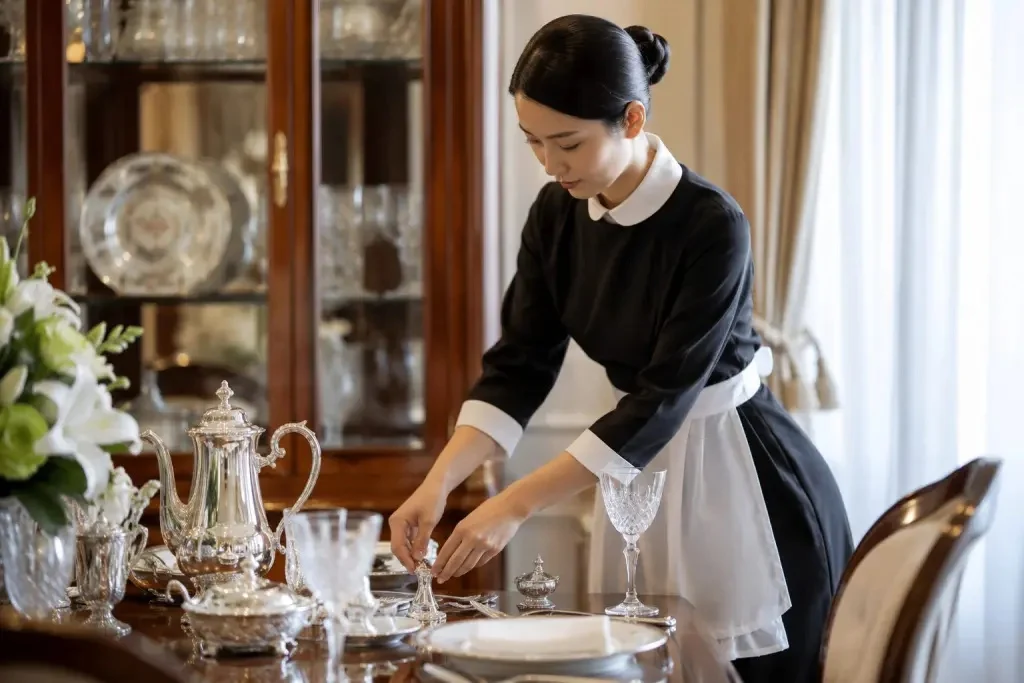
The term "maid" in modern Japanese pop culture is inextricably linked to the vibrant, neon-soaked aesthetics of Akihabara’s themed cafes. For many international observers, the imagery evokes cosplay, choreographed dances, and "moe" culture. However, a groundbreaking new initiative, Maid School Japan, is seeking to strip away the pop-culture veneer to reclaim the profession’s historical roots in high-end domestic service and elite hospitality.
Launched under the auspices of the Butler Association Japan, this new educational institution is moving away from the "service as entertainment" model. Instead, it aims to train students in the rigorous, highly technical, and deeply discreet world of private household management for wealthy clientele. By formalizing these skills, the school positions domestic service not as a performance, but as a sophisticated, high-stakes profession.
The Genesis of Professionalized Service
A Departure from Pop Culture
To the uninitiated, "Maid School Japan" sounds like the premise of a light novel or a seasonal anime series—a whimsical school setting where students learn the art of "kawaii" interactions. But the reality is a sharp pivot toward the professionalization of domestic labor. The Butler Association Japan, an organization dedicated to the elevation of hospitality standards, recognized a void in the Japanese labor market: while the country is world-renowned for its omotenashi (selfless hospitality), there was no standardized curriculum for private, high-end domestic staffing that mirrors the professional standards seen in the United Kingdom or Switzerland.
The Institutional Vision
The school is not aiming to churn out cafe staff. Its mission is to provide comprehensive, elite-level training in household services that cater to the ultra-wealthy. The instructors, all of whom are currently active professionals in the butler and maid sectors, have designed a curriculum that emphasizes discretion, technical precision, and the psychological nuances of working within a private, luxury home environment.
Chronology and Program Structure
The Inaugural Term
The program is structured as a concentrated, high-intensity course designed for working adults. The inaugural term is scheduled to run from July 28 to September 3, with classes held twice weekly—every Tuesday and Thursday from 9:00 p.m. to 10:30 p.m. JST. This schedule is specifically designed to accommodate individuals who are already employed in other fields, allowing for professional upskilling without requiring them to resign from their current positions.
The 12-Unit Curriculum
The school has structured its learning path into 12 core competencies, each aimed at molding a well-rounded professional capable of managing the complexities of a luxury residence:
- Professional Mindset: Defining the foundational character required for high-end service.
- Manners & Grooming: Mastery of deportment, etiquette, and personal presentation.
- Communication Dynamics: The art of mindful speech and subtle, effective interaction.
- Luxury Cleaning: Applied techniques for the care of delicate, high-value interiors.
- Meal Service: Practical training in table settings and formal dining service.
- Confidentiality: Strict protocols for data protection and privacy management.
- Wealthy Society Dynamics: Understanding the unique needs, lifestyle patterns, and expectations of high-net-worth individuals.
- Household Management: The logistics of running an efficient, high-functioning home.
- Care of Valuables: Expert techniques for managing clothing, jewelry, and rare artifacts.
- VIP Hospitality: Managing guest relations at the highest level of discretion.
- International Etiquette: Global standards for service in a multicultural environment.
- Capstone: Final comprehensive exercises and a concluding examination.
Supporting Data and Enrollment Logistics
Eligibility and Accessibility
Maid School Japan maintains an open-door policy regarding gender and previous experience. Any applicant aged 20 or older is eligible to apply, provided they demonstrate the requisite professional attitude. By welcoming both men and women, the school is breaking the gendered stereotypes that have long defined the "maid" role in Japan.
The program is conducted entirely via Zoom, facilitating participation from across the country. This digital-first approach ensures that the school remains accessible to students regardless of their physical location, while still providing the intimacy of a live, instructor-led session.

Costs and Commitment
The institution has set a tuition fee of 290,000 yen (approximately US$1,815) for the full 12-unit certification course. Recognizing that not every student may require the full suite of services, the school also allows for a modular approach, where individual lessons can be purchased for 29,000 yen each. However, to obtain the official certificate of completion, students must complete the full curriculum. The class size for the first term is strictly capped at 20 students, a move the administration says is necessary to ensure personalized feedback and quality control during the online sessions.
Beyond the Household: Implications for the Workforce
Transferable Skills
One of the most intriguing aspects of Maid School Japan is its explicit claim that these skills are not limited to domestic service. In an era where "soft skills"—empathy, active listening, and precision—are becoming increasingly vital in the automation age, the school argues that its curriculum is highly applicable to other sectors.
- Hospitality and Travel: For those working in luxury hotels or high-end tourism, the training in VIP hospitality and international etiquette is a direct value-add.
- Executive Assistance: The modules on confidentiality, household management, and communication are directly relevant to personal assistants and executive secretaries working for corporate leaders.
- Sales and Consulting: The emphasis on "mindful choice of words" and "professional mindset" provides a competitive edge for anyone in client-facing roles.
Professionalization of Domestic Labor
The implication of this school is clear: it seeks to elevate domestic service from a stigmatized or "informal" job to a career path with a clear pedagogical structure. By formalizing the training, the Butler Association Japan is essentially creating a "gold standard" for the industry. If successful, this could lead to the establishment of a certification system that provides a career trajectory for young professionals who value service, organizational management, and high-level interpersonal engagement.
Official Responses and Future Outlook
The launch has been met with both curiosity and skepticism. While some critics argue that the price point is high for a remote-learning experience, the organizers maintain that the value lies in the expertise of the instructors. The ability to learn directly from active, high-level butlers—who are often shielded from the public eye—is a unique professional opportunity.
The Butler Association Japan has emphasized that this school is a long-term project. Should the first term prove successful, they plan to expand the curriculum and potentially introduce in-person, hands-on workshops to supplement the virtual theory sessions.
A Shift in Social Perception
Ultimately, the success of Maid School Japan may depend on its ability to transcend its own name. By distancing itself from the "maid cafe" culture, it is attempting a difficult brand separation. However, in doing so, it taps into a growing desire in Japan for high-quality, personalized service in an increasingly disconnected world. Whether the students are aiming to serve the elite or simply polish their professional communication skills, the school represents a fascinating attempt to codify the "art of the service" in a modern, professionalized context.
As the first term approaches, the industry will be watching closely. If Japan can successfully export its version of "the professional household assistant," much as it has exported its pop culture, the "Maid School" could very well become a new, albeit unexpected, pillar of the nation’s service-oriented economy.
For more information on the curriculum or to view the application portal, interested parties are directed to the official Butler Association Japan website.











