Asep Darmawan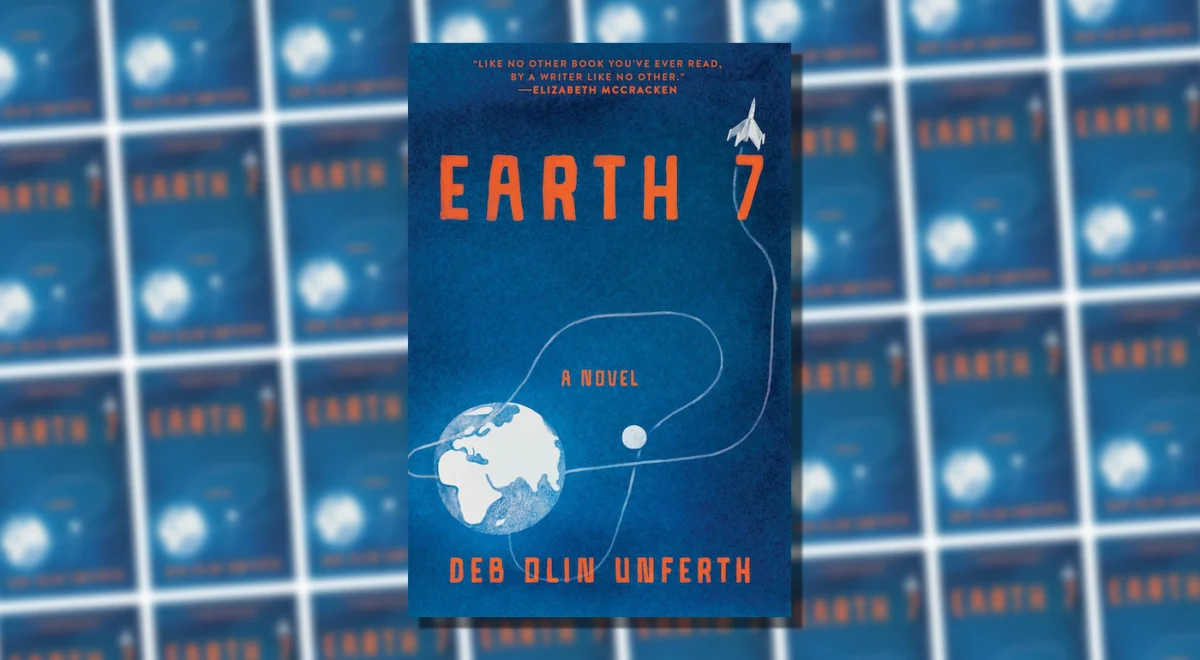
In the landscape of contemporary speculative fiction, few authors possess the restless, genre-defying intellect of Deb Olin Unferth. Known for her ability to weave the wryly comic with the profoundly existential, Unferth returns with Earth 7, a novel that serves as both a searing environmental cautionary tale and a tender meditation on the duty of witnessing. While the title suggests a bounty of alternative realities—a multiverse of possibilities—the narrative ultimately anchors itself in the stark, unyielding truth of our own climate crisis: There is no Planet B.
Unferth, whose previous work includes the critically lauded Barn 8—a dark, inventive heist novel centered on the liberation of a million chickens from factory farms—has once again pivoted to uncharted territory. Her bibliography, which spans sharp-witted short story collections and a harrowing memoir regarding her youthful immersion in Latin American revolutionary politics, establishes her as a writer who refuses to be pinned down. In Earth 7, she crafts a world that is oddly paced and darkly beautiful, challenging the reader to consider what remains when the world itself is beyond saving.
Main Facts: The Architecture of Decay
Earth 7 is set in a future defined by systemic collapse. Our original world, Earth 1, has been ravaged by two catastrophic waves of "depop"—a term that masks the sheer horror of mass extinction. The oceans are barren, the skies are empty of birds, and the terrestrial landscape has been reduced to an irradiated, shifting desert. Governance, such as it is, has been usurped by an opaque, sinister entity known only as "the company."
The protagonist, Dylan Stein, is a child of this ruin. Her formative years were spent in an experimental underwater pod community, an idealistic, failed endeavor intended to facilitate a resurrection of marine life that never occurred. Under the tutelage of her mother, Rosemary—a woman who prioritizes inscrutable scientific inquiry over maternal connection—Dylan grows up staring into the abyss of an empty sea. Her early life is defined by a desperate, imaginative correspondence with a Martian colonist, a fantasy of escape that eventually dissolves into the harsh reality of the surface.
Transitioning from the isolation of the sea to the sterile, dusty halls of a research institute, Dylan becomes a groundskeeper. The institute acts as a repository for the planet’s final genetic traces, a last-ditch effort to preserve what humanity has systematically destroyed. This archive is referred to as "Earth 6," with the intervening Earths 2 through 5 serving as grim milestones of past failures. Dylan’s life is one of repetition: she sweeps sand from the thresholds of the institute, a Sisyphean labor that evolves into a surprisingly profound study of the microscopic life inhabiting the grains she clears. It is from this vantage point of dust and decay that Dylan begins to conceptualize "Earth 7."
Chronology: From the Pod to the Sublime
The timeline of Earth 7 is deliberately bifurcated. The first portion of the novel follows the intimate, often melancholic development of Dylan’s life as she navigates a world of dwindling resources. Her path intersects with the life of Melanie, an employee at "Vacationland for Singles"—a post-apocalyptic retreat that utilizes virtual reality to simulate the splendor of pre-disaster Earth.
Melanie is a character of grotesque beauty. A former child star of Celebrity Plastics, her body is a bricolage of alloys, acrylics, and experimental fillers. She is a woman literally built to survive the apocalypse, yet her existence is defined by a haunting vulnerability to "spontaneous combustion" and the slow, glacial process of aging.
As the narrative progresses, the pace undergoes a seismic shift. In the final forty pages, Unferth abandons the singular focus on Dylan and Melanie to embrace a grander, more cosmic scope. Decades evaporate into single sentences, and millennia are compressed into paragraphs. This shift in perspective transforms the novel from a character-driven drama into a sweeping, speculative fable. We witness the failure of the Mars colony, the slow, agonizing emergence of new life on the scorched remains of Earth, and the eventual dissolution of our planet into a galactic fire.
Supporting Data: The Aesthetics of Extinction
The world-building in Earth 7 functions less like hard science fiction and more like an extended, elegiac parable. Unferth’s prose treats the apocalypse not as a high-octane thriller, but as a long, quiet sunset.
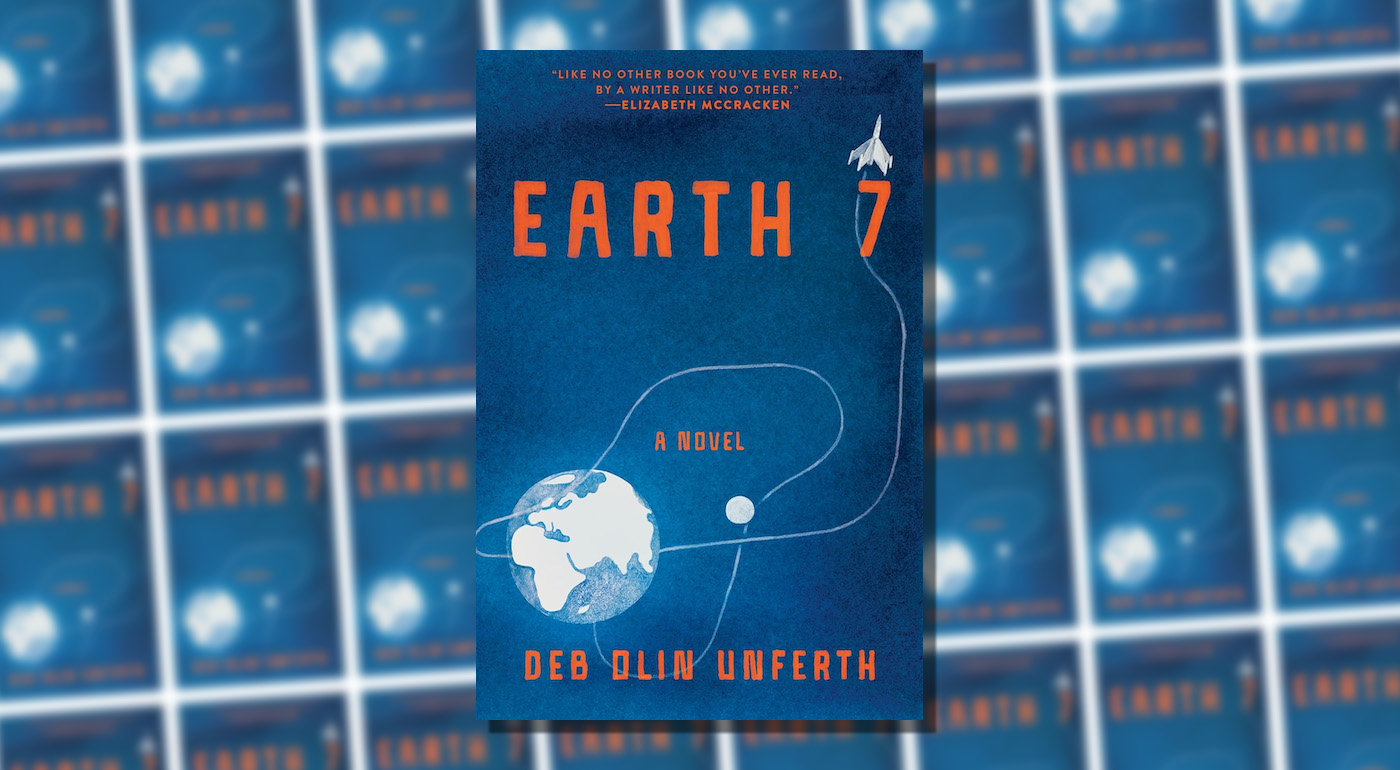
The "soft" science fiction elements—such as the VR-augmented skies of Vacationland or the consciousness-gaining molecules of the Regenerator—are tools designed to explore the human need for artifice in the face of annihilation. The following passage, extracted from the novel’s climax, crystallizes the central tension of the human-planet relationship:
"They left because they could see Earth wasn’t much more than a piece of burned coal anymore. They’d used her up. Well, they’d used each other up, really, Earth and humans. Earth had gotten the best the universe had to offer, in all categories, and the achievement had nearly killed her, and humans had gotten the best that Earth had to give, and that had nearly killed them too."
This reflection highlights the parasitic nature of our current existence. Unferth suggests that the tragedy is not merely the destruction of the environment, but the mutual exhaustion of both the creator (the planet) and the beneficiary (humanity).
Official Responses and Literary Implications
Critically, Earth 7 has been recognized for its departure from traditional apocalyptic tropes. By eschewing the "heroic survivor" narrative, Unferth forces the reader to confront the futility of our current trajectory. The "Earth 7" that Dylan attempts to create is not a triumph of engineering, but an act of mourning—a re-creation of ephemeral beauty for the benefit of a Martian audience that has never known the taste of rain or the smell of pine.
The implications for the reader are stark: if our efforts to save the planet are "futile," then what is the value of our labor? Unferth argues that the value lies in the act of attention. Even if the planet is a "piece of burned coal," it is our duty to see it, to document its microscopic inhabitants, and to love the singular, improbable grain of sand that is our world.
Conclusion: A Grain of Sand in the Cosmos
In an era of literary criticism where reviewers often reach for metaphors of preciousness—describing books as "gemlike," "sparkling," or "diamond-hard"—Unferth’s work demands a humbler comparison. Earth 7 is not a jewel. It is a grain of sand: common, seemingly insignificant, yet containing within its structure the entire geological history of the world.
Through the lens of Dylan and Melanie, we are reminded that even in a world that has been "used up," there remains the capacity for connection, for scientific curiosity, and for the preservation of beauty. Unferth’s latest novel does not offer a solution to the climate crisis; rather, it offers a way to exist within the wreckage. It is a haunting, necessary reminder that while we may not be able to build a new Earth, we are the stewards of the only one we have—until the final light goes out.
Earth 7 is published by Graywolf Press and is currently available for readers seeking a profound, if devastating, engagement with the future of our species and the planet we share.

 Lina Irawan
 Ammar Sabilarrohman