Asep Darmawan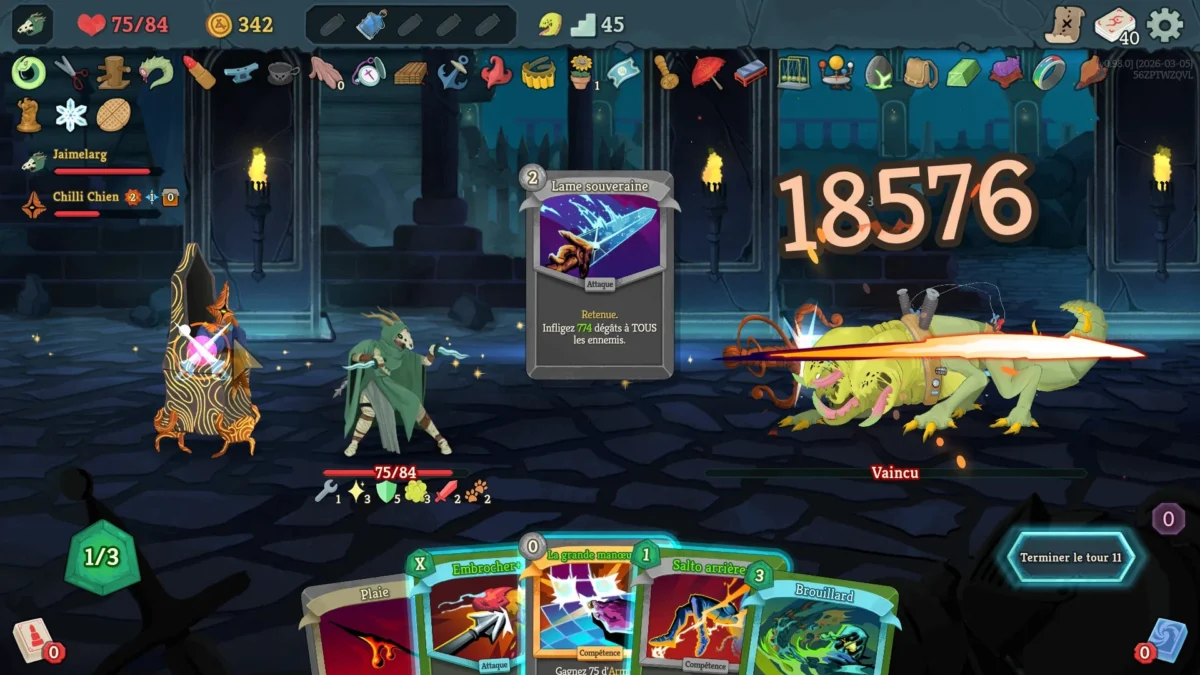
The highly anticipated sequel to the genre-defining deckbuilder, Slay the Spire 2, has received a massive infusion of tactical depth. Mega Crit, the studio behind the roguelite phenomenon, has deployed a significant update to the game’s Steam beta branch, specifically targeting the cooperative multiplayer experience. With a suite of new cards, reworked mechanics, and balance adjustments, this update aims to transform how players collaborate to topple the Spire.
For a community that has spent years optimizing solo runs, the transition to multiplayer has brought unique challenges. This latest patch addresses these by introducing mechanics that reward synergy, communication, and, in some cases, utter chaos.
The Core of the Update: A Multiplayer Renaissance
The primary focus of this update is the expansion of class-specific toolkits tailored for cooperative play. Each of the five classes—the Ironclad, the Silent, the Regent, the Necrobinder, and the Defect—has received a injection of new cards designed to foster interdependence.
Ironclad: Brute Force and Strategic Sacrifice
The Ironclad remains the powerhouse of the group, and the new cards lean heavily into this role.
- Midnight: This rare attack card is a game-changer. Dealing 99 damage (120 upgraded) for a cost of 12 energy, it initially seems unusable. However, its cost decreases by one for every card "Exhausted" by any player during the battle. It encourages a team-wide strategy of thinning decks to unleash a massive finisher.
- Blaze: A support tool that grants teammates a significant Strength boost (5, or 7 upgraded).
- Outrage: A zero-energy attack dealing 9/13 damage, which forces a copy into every ally’s discard pile. It’s a "hot potato" mechanic that turns damage output into a logistical puzzle.
The Silent: Tactical Synergy
The Silent continues to thrive on finesse, focusing on debuffs and resource distribution.
- Blade Symphony: A fan-favorite in early testing, this card adds 2 (3 upgraded) Shivs to the hands of every other player. It is a quintessential "force multiplier" that allows the Silent to turn their allies into glass cannons.
- Concoct & Fade: These utility cards allow the Silent to spread poison and distribute Dexterity across the party, respectively.
- Flanking: The rarity increase to Rare signals the developers’ intent to limit the ubiquity of this repositioning tool.
The Regent, Necrobinder, and Defect
The Regent receives "Plot" and "Constellation," focusing on team-wide card draw and energy/block generation. The Necrobinder leans into the macabre, with "Underworld" scaling damage based on team performance and "Cacophony" dealing massive area-of-effect damage based on total team card draw. Finally, the Defect gains "Hibernate" and "Imitation Learning," cementing its role as the team’s primary control unit.
The Menace of "The Ball"
Perhaps the most talked-about addition is the new colourless card: The Ball. Eschewing traditional deckbuilder logic, The Ball functions as a kinetic projectile. Upon activation, it bounces to a random ally’s draw pile, increasing its own damage output by 15 (or 25) for the remainder of the combat session.
The unpredictable nature of The Ball has already sparked debate within the community. Unlike targeted spells, The Ball is chaotic; it turns the deck into a pinball machine. It represents a shift in design philosophy for Mega Crit, moving away from deterministic "solve-the-puzzle" combat toward dynamic, emergent gameplay.
Chronology of the Beta Development
To understand the weight of this patch, one must look at the timeline of Slay the Spire 2’s early access journey.
- Initial Launch: The game debuted with a focus on solo stability, with multiplayer functionality introduced as a experimental feature.
- The Feedback Loop: Following the initial release, the community—known for its analytical rigor—began identifying "stagnant" playstyles in co-op. Many players found that cooperative play often devolved into two people playing separate single-player games.
- The Patch Phase: Mega Crit began internal testing for "synergy-heavy" cards in Q3, culminating in this current beta release.
- Community Scrutiny: As with the original Slay the Spire, the developers have encouraged an open dialogue. This includes the infamous "eight-hour video essays" by dedicated fans critiquing RNG balance, which have historically influenced developer hotfixes.
Supporting Data: Balancing and Bug Fixes
Beyond the flashy new cards, the patch introduces critical quality-of-life improvements. The reduction of enemy Block scaling in two-player modes is perhaps the most requested change. In previous versions, enemies gained Block at a rate that made sustained damage compositions feel mandatory, effectively punishing creative deck-building.
Balancing Metrics
- Ignition (Defect): Rarity decreased to Uncommon to allow for more consistent early-game setup.
- Legion of Bone (Necrobinder): Removal of the "Exhaustible" keyword makes it a reliable staple for longer encounters.
- Tank (Ironclad): Reworked from a double-damage penalty to a 50% increase, a mathematically significant change that makes "tanking" a viable long-term strategy in higher Ascension levels.
The update also includes a robust system for handling modded saves. Players can now import unmodded save data into modded environments, though the developers have clarified that the two paths remain bifurcated to prevent save corruption.
Official Responses and Developer Intent
Mega Crit’s official patch notes emphasize that these changes are "iterative." In a brief statement accompanying the update, the team noted: "Multiplayer should feel like a conversation between decks, not just a shared health bar."
The team has been actively monitoring social media and the Steam community hubs. They acknowledge that while some of the new mechanics—particularly those involving card-swapping or discard-pile manipulation—might seem "broken" at first glance, they are designed to test the limits of the game’s engine and player coordination.
Implications: The Future of Cooperative Roguelites
This update marks a pivot point for the genre. By introducing cards that affect other players’ hands and decks, Slay the Spire 2 is moving closer to the "party-based RPG" experience than a traditional card battler.
Competitive vs. Cooperative
The community remains divided on whether these changes will make the game "too easy." Some veteran players argue that the introduction of such powerful synergy cards necessitates an increase in enemy health pools or the introduction of "multiplayer-exclusive" elites.
The Modding Community
The new save-handling support is a massive win for the modding community. By streamlining the transition from vanilla to modded play, Mega Crit is essentially inviting players to experiment without the fear of losing their primary progress. This will likely accelerate the release of community-made expansions, potentially extending the game’s lifespan by years.
The "Broken" Factor
As the patch notes suggest, the developers are well aware that these changes could "break" the game. However, in the world of roguelites, "broken" is often just another word for "fun." The ability to create overpowered, synergistic combinations is the primary draw for many players. If this patch succeeds, it will be because it successfully balances that sense of god-like power with the need for genuine team cooperation.
The update is currently available on the Steam beta branch. While no official date has been set for a full release to the main branch, expectations are high that these changes will form the backbone of the next major content season. As players continue to stress-test these new cards, the meta will undoubtedly shift—and, as history has shown, there will likely be another exhaustive, multi-hour video critique waiting for the developers on the other side.

 Asro
Asro
 Muslim