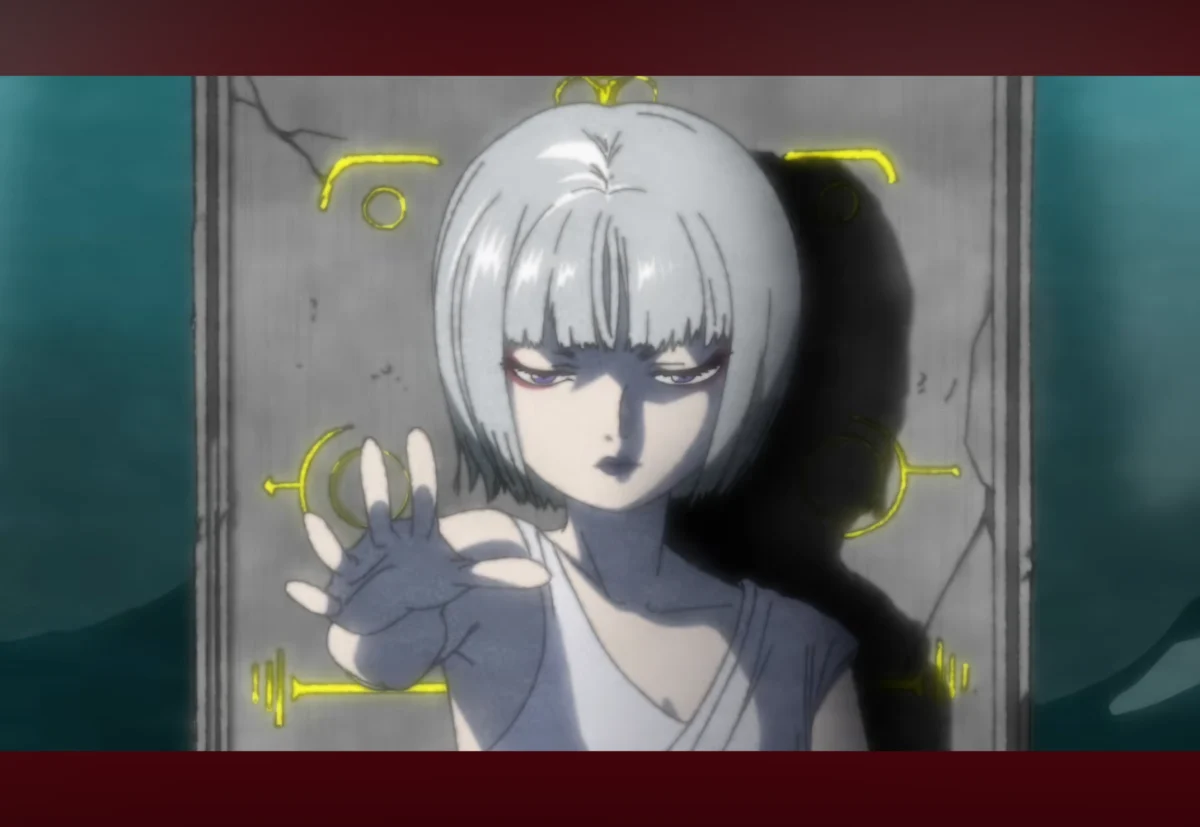
Los Angeles, CA – July 3, 2026 – In a highly anticipated revelation at Anime Expo 2026, legendary artist Yoshitaka Amano, whose distinctive work has indelibly shaped the landscapes of fantasy from Final Fantasy to Vampire Hunter D, offered the first glimpse into his ambitious new project, ZAN. The unveiling featured a proof-of-concept pilot, meticulously crafted with 100% hand-drawn animation, signaling a defiant return to traditional artistry in an increasingly digital industry. This bold move positions ZAN not merely as an adaptation of Amano’s original fantasy novel, Deva Zan, but as a potential benchmark for the future — or perhaps, a revival of the past — of anime production.
The announcement, delivered by Amano himself alongside a venerable team of industry veterans, sent ripples of excitement through the convention hall. The footage presented was a testament to the tactile beauty and expressive power of hand-drawn animation, a stark contrast to the often-homogenized aesthetic prevalent in contemporary anime. ZAN promises to be a love letter to the golden age of 1980s and 1990s anime, breathing vibrant, painterly life into Amano’s iconic, ethereal artwork.
The Genesis of a Hand-Drawn Epic
Yoshitaka Amano’s influence on global pop culture is difficult to overstate. For over half a century, his distinct blend of Art Nouveau elegance, Japanese ukiyo-e, and Western fantasy illustration has captivated audiences worldwide. His character designs and concept art for the Final Fantasy series are foundational to its identity, while his haunting illustrations for Vampire Hunter D defined a gothic aesthetic that resonated far beyond Japan. Yet, despite his monumental impact, one of Amano’s own original narratives, Deva Zan, has largely remained a hidden gem, waiting for the right medium and the right moment to fully blossom. Anime Expo 2026 marked that moment.
Deva Zan, Amano’s original fantasy novel, plunges readers into a mythic world where the boundaries between humans, gods, and supernatural entities are fluid and frequently breached. The narrative follows a young protagonist embroiled in an ancient, cosmic struggle that threatens to reshape the very fabric of existence, spanning both the physical and spiritual realms. It is a tale steeped in themes of destiny, sacrifice, and the enduring resilience of humanity amidst overwhelming cosmic forces. Characteristic of Amano’s broader oeuvre, the story is rich with dreamlike imagery, intricate symbolism, and a pervasive atmosphere that is as crucial to its identity as its epic battles and character arcs. The novel, first published years ago, has long been ripe for adaptation, its intricate world-building and profound themes offering fertile ground for a visual medium.
The decision to adapt Deva Zan into an animated series is a natural progression, given Amano’s deep roots in visual storytelling. However, the commitment to an almost entirely hand-drawn process elevates this project beyond a mere adaptation; it transforms it into an artistic statement. This approach is a deliberate counter-current to the prevailing tides of digital production, which, while offering efficiency and new creative avenues, often leads to a uniformity that can sometimes dilute the distinctiveness of individual artistic touch.
A Legacy Reimagined: The Vision Behind ZAN
The creative force behind ZAN is a veritable supergroup of seasoned animators and storytellers, carefully assembled to honor Amano’s vision. The limited series is being developed by a veteran creative team that includes the esteemed screenwriter Ryosuke Takahashi, known for his work on classics like Armored Trooper Votoms and Gasaraki. He is joined by co-directors Toru Yoshida and Masashi Ikeda, both acclaimed for their extensive experience in traditional animation, and producer Tatsuyoshi Matsumoto, whose expertise in bringing ambitious projects to fruition is invaluable. This assembly of talent, many of whom are reuniting after decades, signals a collective desire to recapture a particular era of anime craftsmanship.

Matsumoto, the project’s producer, articulated the sheer dedication required for this endeavor during the Anime Expo panel. He candidly remarked that the production is "drowning in paper," a vivid metaphor for the immense volume of physical drawings necessary to achieve the desired level of detail and fluidity. This tactile approach, he argued, is something that digital tools, for all their strengths, simply cannot replicate. The unique texture, the subtle imperfections, and the inherent warmth of hand-drawn lines convey a sense of life and artistic intention that often gets streamlined out in purely digital pipelines.
Co-director Toru Yoshida, whose career has been exclusively rooted in hand-drawn animation, echoed this sentiment. With a touch of humor, he noted that while "more than half the staff is over 60 years old," they are resolute in proving that their collective experience and skill are far from past their prime. This statement underscores a generational pride and a commitment to a craft that many feared was fading into obscurity. It’s a powerful declaration from a team that sees traditional animation not as a relic, but as a vibrant, essential form of artistic expression.
The Striking Aesthetics: A Painterly Return
The footage unveiled at Anime Expo was nothing short of breathtaking. It presented a world that felt both deeply familiar to Amano enthusiasts and refreshingly new within the context of contemporary anime. The animation, though acknowledged as a "rough" proof-of-concept, possessed a painterly quality, an organic vibrancy that is often absent in today’s highly polished digital productions. It overflowed with Amano’s signature ethereal color palette, characterized by soft pastels, deep blues, and incandescent golds, all interwoven with his intricate, almost calligraphic line work.
This deliberate choice harks back to an era of experimental animation from the late 1990s and early 2000s, where the individual touch of the animator was not only preserved but celebrated. Think of the visceral energy of Kite, the groundbreaking cinematic scope of Katsuhiro Otomo’s Akira, or the philosophical depth conveyed through the stunning visuals of Mamoru Oshii’s Ghost in the Shell. These works, considered benchmarks of Japanese animation, set a standard for visual storytelling where every frame felt imbued with purpose and artistic individuality. ZAN, with its commitment to this traditional methodology, seeks to evoke that same powerful, unmistakable artistic signature. It’s an ambition to create a visual experience where the artistry is not just seen, but felt, connecting the audience directly to the hands that brought the characters and worlds to life.
Anime R Reunited: A Collective Dream
The project also signifies a significant reunion of key staff members from the legendary anime studio Anime R, a studio celebrated for its pivotal contributions to the golden age of mecha anime and its strong emphasis on traditional animation techniques. This reassembly, specifically for ZAN, speaks volumes about the project’s gravity and the collective belief in its artistic mission. Ryosuke Takahashi, in articulating the core philosophy of the team, stated simply yet profoundly, their goal is to "Put lives into the characters we create." He added a powerful assertion: "original creators should never lose to creativity itself," emphasizing the importance of artistic integrity and vision over commercial pressures or technological expediency. This ethos permeates every aspect of ZAN‘s development, promising an anime that is not just visually stunning but deeply soulful.
The Road Ahead: Challenges and Implications
Despite the enthusiastic reception, the path to ZAN‘s full realization is acknowledged to be a long and arduous one. Hiroaki Ikegami, CEO of Yoshitaka Amano Inc., tempered immediate expectations during an interview with Polygon, explaining that audiences should not anticipate the finished series for "at least two or three years." He also clarified that while the pilot is 100% hand-drawn, the full series will likely require "some digital animation work… most likely for backgrounds." This pragmatic acknowledgment highlights the immense scope and ambition of the project, and the practical realities of producing a full-length series in the modern era, even with a strong commitment to traditional methods. The sheer volume of work, the meticulous nature of hand-drawing, and the need for seamless integration of various elements necessitate a considerable timeline and, in some areas, a judicious use of modern tools to support the overall artistic vision.

The implications of ZAN‘s approach extend far beyond this single project. In an industry often criticized for its grueling production schedules, low wages for animators, and increasing reliance on digital shortcuts and outsourcing, ZAN presents a radical alternative. It poses a fundamental question: can a return to labor-intensive, artist-centric traditional animation reignite a passion for craft and elevate the artistic quality of the medium? Or will it remain an outlier, a testament to what’s possible when resources and artistic will align, but not a scalable model for the broader industry? The project’s success could inspire a renewed appreciation for traditional techniques, potentially influencing future productions to incorporate more hand-drawn elements or to re-evaluate the balance between digital efficiency and artistic integrity.
Expanding the ZAN Universe: A Multi-Faceted Vision
Beyond the animated series, Amano and his team revealed a broader vision for the ZAN universe. A second edition of the original Deva Zan novel is slated for release, featuring a brand-new cover illustration personally painted by Amano, offering fans a fresh perspective on the source material. This re-release will undoubtedly draw new readers to the novel and allow existing fans to revisit the story with the animated project looming on the horizon.
Furthermore, a significant development announced was the establishment of a new Los Angeles-based studio, a project three years in the making, designed to support the ambitious production of ZAN. This international expansion underscores the global aspirations for the project and Amano’s desire to bridge artistic and production capabilities across continents. This LA studio could serve as a hub for international talent and collaboration, fostering a unique blend of Japanese animation traditions and global artistic influences. Complementing this, an immersive Amano art experience, which first captivated audiences in Milan, Italy, will also be touring, offering fans a deeper dive into the artist’s unparalleled visual lexicon and the intricate world of Deva Zan. These ancillary projects demonstrate a comprehensive strategy to build a robust and immersive franchise around Amano’s original creation.
A New Dawn for Traditional Animation?
As the dust settled on the Anime Expo announcement, Amano himself maintained a measured perspective on the monumental undertaking. "It’s only just getting started," he remarked, a humble acknowledgment of the immense journey that lies ahead. Yet, the sentiment among attendees and industry observers was one of profound optimism. If the meticulously hand-drawn proof of concept is any indication, ZAN is poised to become one of the most visually distinctive and artistically significant anime projects in recent memory.
In an era dominated by CGI and digital workflows, ZAN stands as a powerful reminder of the enduring beauty and expressive potential of traditional animation. It is a bold statement, a challenge to conventional production wisdom, and a profound love letter to the artistry that built the anime industry. As fans worldwide eagerly await its arrival, ZAN has already begun to carve out its place as a potential landmark, not just for Yoshitaka Amano’s illustrious career, but for the very future — or the glorious past revisited — of animated storytelling. The coming years will reveal whether this ambitious project can indeed spark a renaissance for hand-drawn anime and re-establish the tactile magic that once defined an entire generation of animated masterpieces.