In the competitive landscape of modern commerce, a brand’s visual identity is its most powerful asset. Before a consumer reads a mission statement or experiences a product, they are greeted by the logo—a silent ambassador that communicates the brand’s ethos, reliability, and market position. Selecting the perfect typeface for a logo is not merely an aesthetic choice; it is a strategic decision that determines brand recall and market authority. As we move further into 2026, the demand for clean, versatile, and high-impact typography has reached an all-time high, particularly for startups, creators, and AI-driven ventures.

The Strategic Importance of Logo Typography
A logo font acts as the "voice" of the company. Research in consumer psychology suggests that the geometry of a typeface can influence how a customer perceives a brand’s personality. A bold, geometric sans-serif may convey strength and innovation, while a delicate, high-contrast serif can signal luxury and tradition.

For modern startups, the challenge lies in balancing readability across digital touchpoints with a unique character that prevents the brand from blending into the background. Whether you are crafting a brand for a tech-forward AI platform or a high-end lifestyle boutique, the typography serves as the foundational element of your entire visual system.

A Chronological Evolution of Modern Font Trends
The evolution of font design has mirrored the rise of digital technology.

- Early 2020s: The design industry saw a massive shift toward "minimalist legibility." Brands moved away from decorative flourishes toward utilitarian, highly readable sans-serifs that performed well on small mobile screens.
- 2024–2025: The "AI Influence" emerged. Designers began favoring typefaces that felt "digitally native"—sharp, futuristic, and highly scalable. This era introduced a fascination with experimental display fonts that pushed the boundaries of traditional kerning and letterform geometry.
- 2026 and Beyond: We are currently seeing a hybrid movement. While digital efficiency remains paramount, there is a renewed interest in "warm modernism." This involves integrating the sharp, clean lines of the digital age with softer, more organic curves that make a brand feel approachable and human-centric.
Supporting Data: Why Your Choice Matters
According to recent industry audits, brands that prioritize consistent, custom-styled typography across their marketing collateral see a 23% increase in brand recognition compared to those using generic system fonts. Furthermore, testing fonts at multiple scales—from small favicon icons on browser tabs to large-format signage—is no longer optional. A font that looks stunning on a 27-inch monitor may lose its structural integrity when printed on a standard business card.

The most effective brands today are those that invest in "font families" rather than single weights, allowing for a cohesive visual hierarchy that extends from the primary logo to body text, social media headers, and email signatures.

Expert Perspectives on Branding Strategy
Leading design agencies emphasize that a logo should never be treated as a static image, but as a living piece of design. "Modern fonts give logos a clean voice before a single word is spoken," says one industry expert. This sentiment underscores why luxury brands are moving toward minimalist serif fonts—they suggest an "effortless" elegance—while tech startups favor "rounded" fonts to appear accessible, transparent, and user-friendly.

When selecting a font from a curated collection, designers are advised to:

- Stress-Test the Scaling: Ensure the font retains its "personality" at 16 pixels.
- Evaluate Cultural Connotation: Does the slant of the letterform suggest speed? Does the weight suggest stability?
- Cross-Reference Layouts: Test the font with various color palettes to ensure that contrast ratios remain compliant with accessibility standards.
Curated Selection: 25+ Modern Fonts for 2026
To aid in your creative process, we have curated a list of top-tier fonts that bridge the gap between form and function.

1. Betgal: The Master of Minimalist Furniture Branding
Betgal is defined by its smooth, organic curves. It is an ideal choice for home decor, real estate, and lifestyle brands that need a professional yet approachable aesthetic. Its oblique styles offer a sense of motion that feels sophisticated rather than aggressive.

2. Modern Cyber: The Future-Ready Display
As AI and machine learning continue to dominate the headlines, Modern Cyber provides a necessary visual aesthetic. With its sharp, calculated edges, it mimics the precision of hardware, making it the perfect choice for tech-heavy startups.

3. Monvera: Bold Condensed Efficiency
When space is limited, Monvera shines. As a condensed sans-serif, it maximizes the amount of information you can convey in a header without sacrificing the clean, "big-brand" feel required for modern marketing.

4. Modern Royale: Sans-Serif Versatility
Modern Royale is the "Swiss Army Knife" of fonts. Its friendly geometry makes it equally effective for a local café’s logo as it is for a high-end fashion advertisement.

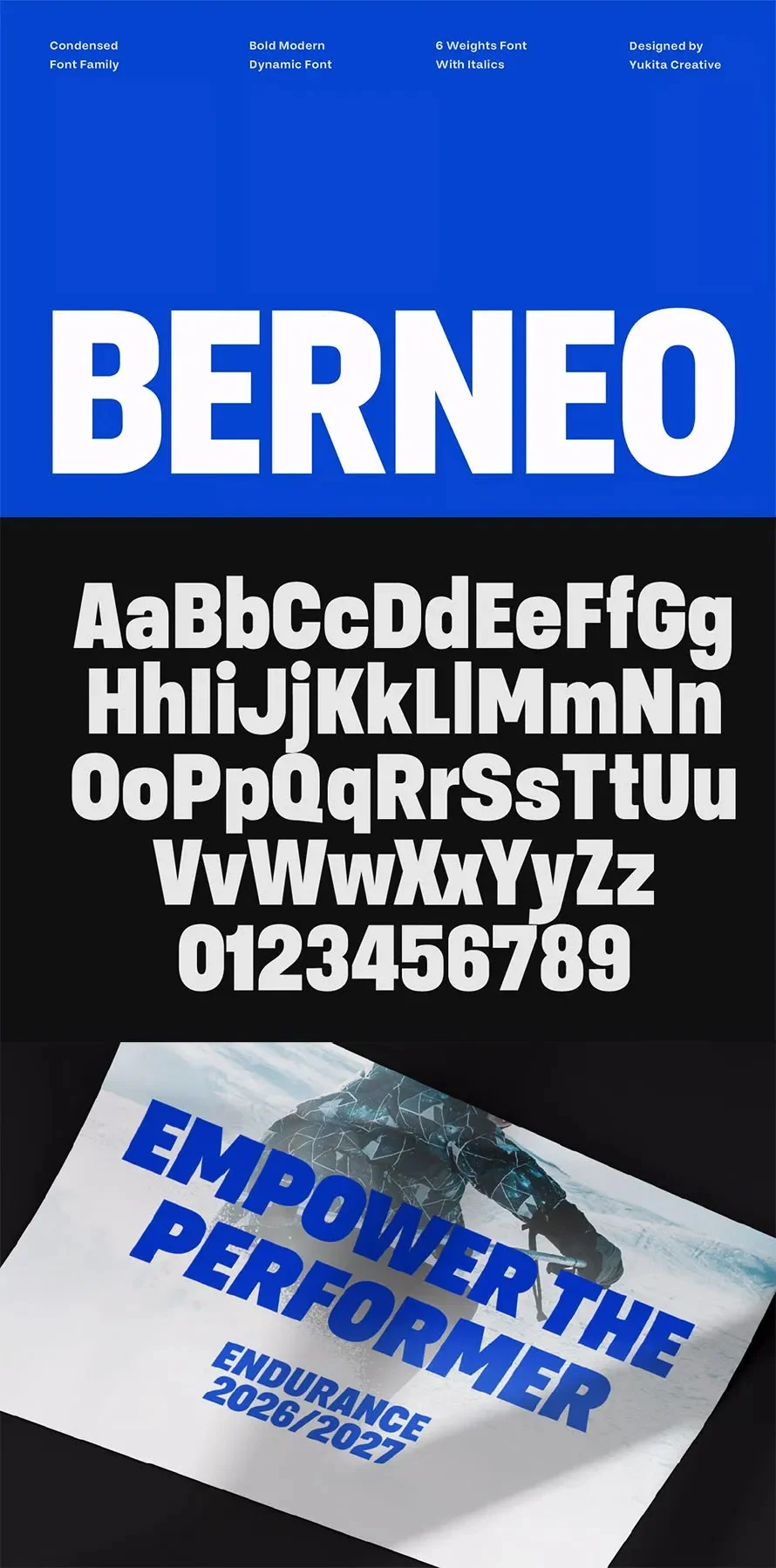
5. Berneo: The Athlete’s Choice
Berneo is built for impact. Its condensed, tight structure is specifically designed for sports teams, event branding, and music festivals where the typography needs to cut through visual noise.

(Further entries include Avonia for luxury scripts, Buetia for strong, corporate-ready sans-serifs, and Homay for a touch of expanded, retro-inspired charm.)

Implications for the Future of Branding
As we look toward the remainder of 2026, the reliance on high-quality, professional fonts will only increase. With the rise of AI-generated content, the "human touch"—the specific, intentional choice of a typeface—will be what separates a generic bot-generated logo from a premium, thoughtfully crafted brand identity.

Implementing Your Choice
Designers are encouraged to download these fonts, test them against their existing brand colors, and experiment with letter-spacing (tracking) to see how small adjustments can alter the tone of a brand. Whether you are building a personal portfolio or a corporate empire, remember that your font is the first thing a potential client will "hear" from you. Choose a voice that commands attention, ensures clarity, and stands the test of time.

Pro-Tip: Before finalizing your selection, always apply your chosen font to a mock-up of a business card or a mobile app interface. If the font loses its clarity at 100% zoom on a phone screen, it may be too complex for a responsive digital world.

Download your preferred assets today and join the conversation in the design community. By sharing your project results, you contribute to a collective library of branding knowledge that helps all designers push the boundaries of what is possible in 2026.